Kirjojen hintavertailu. Mukana 11 699 587 kirjaa ja 12 kauppaa.

Kirjahaku

Etsi kirjoja tekijän nimen, kirjan nimen tai ISBN:n perusteella.

2 kirjaa tekijältä Peter Mallios

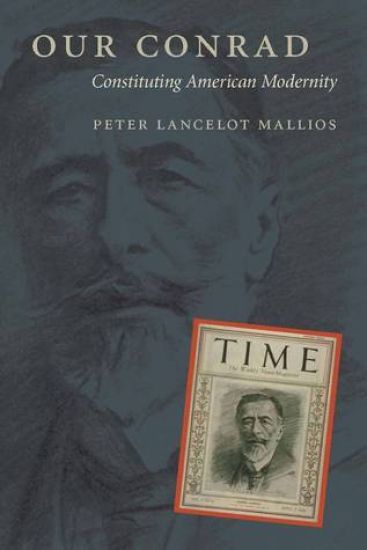
Our Conrad

Our Conrad

Peter Mallios

Stanford University Press
2010
sidottu
Our Conrad is about the American reception of Joseph Conrad and its crucial role in the formation of American modernism. Although Conrad did not visit the country until a year before his death, his fiction served as both foil and mirror to America's conception of itself and its place in the world. Peter Mallios reveals the historical and political factors that made Conrad's work valuable to a range of prominent figures—including Fitzgerald, Faulkner, Richard Wright, Woodrow Wilson, and Theodore and Edith Roosevelt—and explores regional differences in Conrad's reception. He proves that foreign-authored writing can be as integral a part of United States culture as that of any native. Arguing that an individual writer's apparent (national, gendered, racial, political) identity is not always a good predictor of the diversity of voices and dialogues to which he gives rise, this exercise in transnational comparativism participates in post-Americanist efforts to render American Studies less insular and parochial.
Our Conrad

Our Conrad

Peter Mallios

Stanford University Press
2011
pokkari
Our Conrad is about the American reception of Joseph Conrad and its crucial role in the formation of American modernism. Although Conrad did not visit the country until a year before his death, his fiction served as both foil and mirror to America's conception of itself and its place in the world. Peter Mallios reveals the historical and political factors that made Conrad's work valuable to a range of prominent figures—including Fitzgerald, Faulkner, Richard Wright, Woodrow Wilson, and Theodore and Edith Roosevelt—and explores regional differences in Conrad's reception. He proves that foreign-authored writing can be as integral a part of United States culture as that of any native. Arguing that an individual writer's apparent (national, gendered, racial, political) identity is not always a good predictor of the diversity of voices and dialogues to which he gives rise, this exercise in transnational comparativism participates in post-Americanist efforts to render American Studies less insular and parochial.