Kirjojen hintavertailu. Mukana 11 699 587 kirjaa ja 12 kauppaa.

Kirjahaku

Etsi kirjoja tekijän nimen, kirjan nimen tai ISBN:n perusteella.

6 kirjaa tekijältä Peter Manning

Electronic and Computer Music

Electronic and Computer Music

Peter Manning

Oxford University Press Inc
2013
nidottu
In this new edition of the classic text on the history and evolution of electronic music, Peter Manning extends the definitive account of the medium from its birth to include key developments from the dawn of the 21st century to the present day.After explaining the antecedents of electronic music from the turn of the 20th century to the Second World War, Manning discusses the emergence of the early 'classical' studios of the 1950s, and the subsequent evolution of more advanced analogue technologies during the 1960s and '70s, leading in turn to the birth and development of the MIDI synthesizer. Attention then turns to the characteristics of the digital revolution, from the pioneering work of Max Mathews at Bell Telephone Laboratoriesin the 1950s to the wealth of resources available today, facilitated by the development of the personal computer and allied digital technologies. The scope and extent of the technical and creative developments that have taken place since the late 1990s are considered in an extended series of new andupdated chapters. These include topics such as the development of the digital audio workstation, laptop music, the Internet, and the emergence of new performance interfaces.Manning offers a critical perspective of the medium in terms of the philosophical and technical features that have shaped its growth. Emphasizing the functional characteristics of emerging technologies and their influence on the creative development of the medium, Manning covers key developments in both commercial and the non-commercial sectors to provide readers with the most comprehensive resource available on the evolution of this ever-expanding area of creativity.
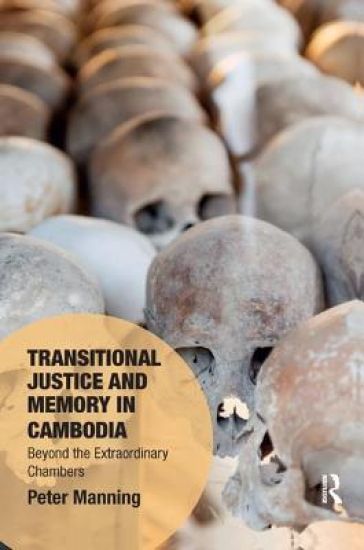
Transitional Justice and Memory in Cambodia
Memories of violence, suffering and atrocities in Cambodia are today being pulled in different directions. A range of transitional justice practices have been put to work in the name of redressing, restoring and renewing memory. At the centre of this stage is the Extraordinary Chambers in the Courts of Cambodia (ECCC), a hybrid tribunal established to prosecute the leaders of the Khmer Rouge regime, under which 1.6 million Cambodians died of hunger or disease or were executed. This book unpicks the way memory is reconstructed through appeals to a national memory, the legal reframing and coding of memories as crimes, and bids to locate personal memories within collective biographies. Analysing the techniques and interventions of the ECCC, as well as exploring the role of non-governmental organisations (NGOs), the book explores the relationships in which Cambodian communities navigate memories of political violence. This book is essential for understanding transitional justice in Cambodia in, and beyond, the courtroom. Transitional Justice and Memory in Cambodia shows that the governing logic of transitional justice interventions – that societies are unable to 'deal with' memories of atrocity and violence without some form of transitional justice mechanism – neglects the complexity of memory and remembering in post-atrocity contexts and the agency of the subjects to which such mechanisms are addressed.Drawing on documentary sources, legal transcripts, interviews and participant observation data, the book situates transitional justice processes in Cambodia within a wider context of social and cultural memory politics, examining (old and new) conflicts of memory that have emerged between the varied accounts and uses of the past that exist in Cambodia now. As such, it will appeal to students and scholars in sociology, human rights, law and criminology.
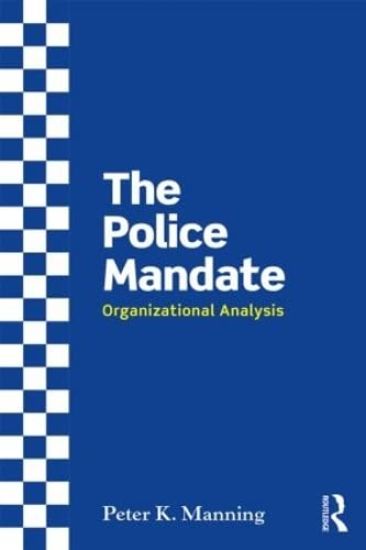
The Police Mandate

The Police Mandate

Peter Manning

Routledge
2026
sidottu
Peter K Manning has been a key figure in scholarship on police organization for the past three decades. His work has been widely celebrated for its contribution to key debates on democratic policing, crime analysis and technology.Building on a wealth of original ethnographic research, in this book Manning develops his dramaturgical framework to formulate a theory of police organization. The Police Mandate will be essential reading for all policing scholars, as well as sociologists and criminologists alike.
Representing Palestine

Representing Palestine

Peter Manning

I.B. Tauris
2020
nidottu
After more than half a century, the Israel-Palestine conflict continues to dominate headlines. But how has the coverage of Palestinians by foreign media changed? How did foreign correspondents influence the perception of Palestine amongst their audiences? And why is understanding this so important?Based on extensive original research in the archives of Australia's oldest newspaper, Peter Manning shows how the Sydney Morning Herald portrayed Palestine during three key periods - the end of World War I (1917-8); the Nakba and the creation of Israel (1947-8); and 9/11 and its aftermath (2000-2). In the process, he takes the reader on a unique journey from the moment information was gathered on the ground in Palestine, through to its final processing and publication. Crucially, when correspondents neglected to write about Palestinians, their perspective never made it to readers and a space emerged for stereotyping and misunderstanding. Manning reveals how the newspaper reported on key events such as Australian troops in Palestine and the Holocaust, but also how the newspaper failed to cover massacres and forced migrations. Combining close textual analysis of more than 10,000 articles with cutting-edge quantitative research methods, this book is important reading for anyone with an interest in how the print media has portrayed the conflict in Palestine - both in Australia and beyond.
Transitional Justice and Memory in Cambodia
Memories of violence, suffering and atrocities in Cambodia are today being pulled in different directions. A range of transitional justice practices have been put to work in the name of redressing, restoring and renewing memory. At the centre of this stage is the Extraordinary Chambers in the Courts of Cambodia (ECCC), a hybrid tribunal established to prosecute the leaders of the Khmer Rouge regime, under which 1.6 million Cambodians died of hunger or disease or were executed. This book unpicks the way memory is reconstructed through appeals to a national memory, the legal reframing and coding of memories as crimes, and bids to locate personal memories within collective biographies. Analysing the techniques and interventions of the ECCC, as well as exploring the role of non-governmental organisations (NGOs), the book explores the relationships in which Cambodian communities navigate memories of political violence. This book is essential for understanding transitional justice in Cambodia in, and beyond, the courtroom. Transitional Justice and Memory in Cambodia shows that the governing logic of transitional justice interventions – that societies are unable to 'deal with' memories of atrocity and violence without some form of transitional justice mechanism – neglects the complexity of memory and remembering in post-atrocity contexts and the agency of the subjects to which such mechanisms are addressed.Drawing on documentary sources, legal transcripts, interviews and participant observation data, the book situates transitional justice processes in Cambodia within a wider context of social and cultural memory politics, examining (old and new) conflicts of memory that have emerged between the varied accounts and uses of the past that exist in Cambodia now. As such, it will appeal to students and scholars in sociology, human rights, law and criminology.
Janet Venn-Brown

Janet Venn-Brown

Peter Manning

NewSouth Publishing
2016
nidottu
Australian painter Janet Venn-Brown has led an extraordinary life. Moving to Rome in the early 1960s, she joined a circle of intellectuals and artists, began exhibiting her work – and fell in love with Palestinian activist Wael Zuaiter. When Zuaiter was murdered by Mossad in 1972, it changed Venn-Brown’s life,bringing Palestinian activism to the forefront of her next four decades. Peter Manning’s richly illustrated book celebrates her life and her work – her 40 years in Rome, her artistic successes and experiments, her political engagement and travels in the Middle East, and her return to Australia in 2011.