
Kirjahaku
Etsi kirjoja tekijän nimen, kirjan nimen tai ISBN:n perusteella.
21 kirjaa tekijältä Peter Matthews
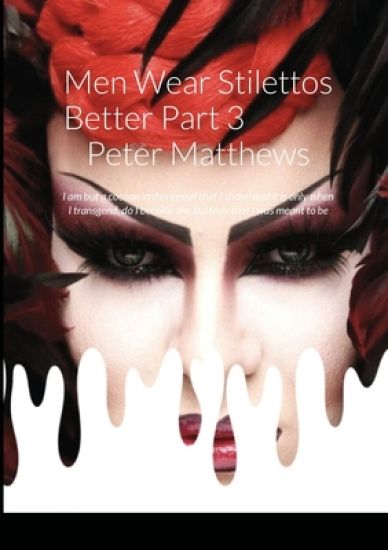
Men Wear Stilettos Better - Part 3 - Ruby's Story Peter Matthews
Peter Matthews
Lulu.com
2021
pokkari
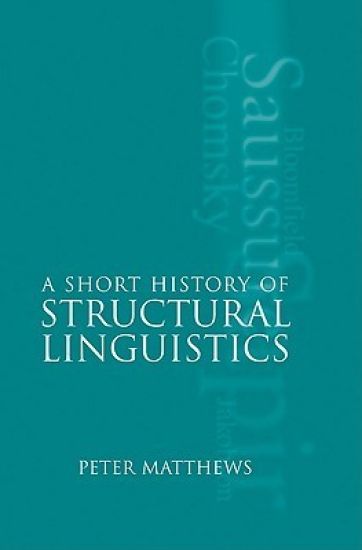
This concise history of structural linguistics charts its development from the 1870s to the present day. It explains what structuralism was and why its ideas are still central today. For structuralists a language is a self-contained and tightly organised system whose history is of changes from one state of the system to another. This idea has its origin in the nineteenth century and was developed in the twentieth by Saussure and his followers, including the school of Bloomfield in the United States. Through the work of Chomsky, especially, it is still very influential. Matthews examines the beginnings of structuralism and analyses the vital role played in it by the study of sound systems and the problems of how systems change. He discusses theories of the overall structure of a language, the ‘Chomskyan revolution’ in the 1950s, and the structuralist theories of meaning.
This concise history of structural linguistics charts its development from the 1870s to the present day. It explains what structuralism was and why its ideas are still central today. For structuralists a language is a self-contained and tightly organised system whose history is of changes from one state of the system to another. This idea has its origin in the nineteenth century and was developed in the twentieth by Saussure and his followers, including the school of Bloomfield in the United States. Through the work of Chomsky, especially, it is still very influential. Matthews examines the beginnings of structuralism and analyses the vital role played in it by the study of sound systems and the problems of how systems change. He discusses theories of the overall structure of a language, the 'Chomskyan revolution' in the 1950s, and the structuralist theories of meaning.
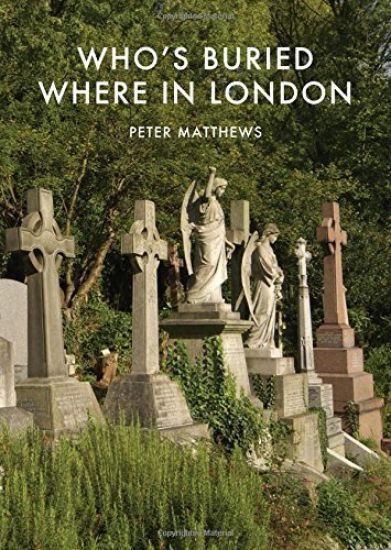
London’s many cemeteries, churches and graveyards are the last resting places of a multitude of important people from many different walks of life. Politicians, writers and military heroes rub shoulders with engineers, courtesans, artists and musicians, along with quite a few eccentric characters. Arranged geographically, this comprehensive guide describes famous graves in all the major cemeteries and churches in Greater London, including Highgate, Kensal Green, Westminster Abbey, and St Paul’s Cathedral, as well as the City churches and many suburban parish churches. The book gives biographical details, information on the monuments, and is richly illustrated. As well as being an historical guide, it also serves as an indispensable reference guide for any budding tombstone tourist.
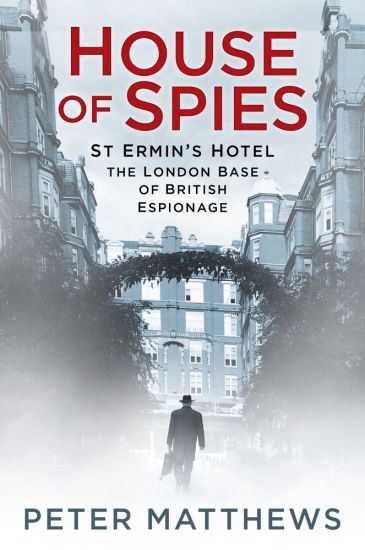
St Ermin’s Hotel has been at the centre of British intelligence since the 1930s, when it was known to MI6 as ‘The Works Canteen’. Intelligence officers such as Ian Fleming and Noel Coward were to be found in the hotel’s Caxton Bar, along with other less well-known names. Winston Churchill allegedly conceived the idea of the Special Operations Executive there over a glass (or two) of his favourite champagne in the early days of the Second World War, and the operation was started up in three gloomy rooms on the hotel’s second floor, with the traitorous Cambridge Spies among its founders. When Stalin’s Russia turned to a peacetime enemy in the Cold War that followed, Kim Philby and Guy Burgess handed over intelligence to their Russian counterparts in the dark corners of the hotel, while MI6 man George Blake operated as a Soviet double agent just across the road in Artillery Mansions. Meanwhile, St Ermin’s proximity to government offices ensured its continued use by both domestic and foreign secret agents. In this first book on St Ermin’s, Peter Matthews, a witness to the intelligence battle for supremacy between MI5, MI6 and the KGB, explores this remarkable true history that is more riveting than any spy novel.
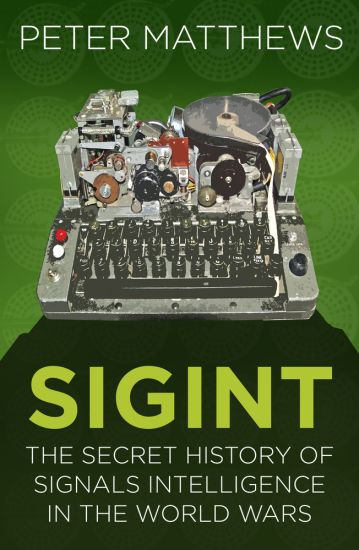
'SIGINT is a fascinating account of what Allied investigators learned postwar about the Nazi equivalent of Bletchley Park. Turns out, 60,000 crptographers, analysts and linguists achieved considerable success in solving intercepted traffic, and even broke the Swiss Enigma! Based on recently declassifed NSA document, this is a great contribution to the literature.' - The St Ermin's Hotel Intelligence Book of the Year Award 2014Signals Intelligence, or SIGINT, is the interception and evaluation of coded enemy messages. From Enigma to Ultra, Purple to Lorenz, Room 40 to Bletchley, SIGINT has been instrumental in both victory and defeat during the First and Second World War. In the First World War, a vast network of signals rapidly expanded across the globe, spawning a new breed of spies and intelligence operatives to code, de-code and analyse thousands of messages. As a result, signallers and cryptographers in the Admiralty’s famous Room 40 paved the way for the code breakers of Bletchley Park in the Second World War. In the ensuing war years the world battled against a web of signals intelligence that gave birth to Enigma and Ultra, and saw agents from Britain, France, Germany, Russia, America and Japan race to outwit each other through infinitely complex codes. For the first time, Peter Matthews reveals the secret history of global signals intelligence during the world wars through original interviews with German interceptors, British code breakers, and US and Russian cryptographers.

A history of Cheltenham Town Football Club since 1970.

This title tells the story of Don Rogers, the great footballer from Swindon Town, who later moved to Crystal Palace, with insights from those who played with him.
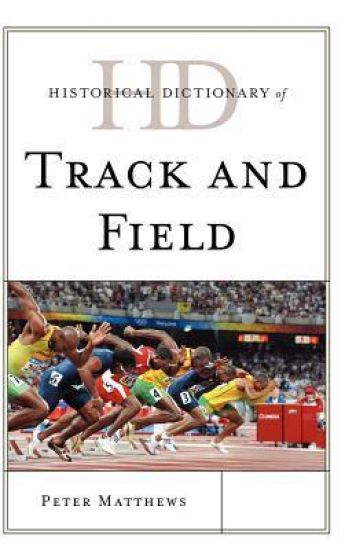
While the earliest evidence of organized running can be traced back to Egypt in 3800 BCE, the modern sport of track and field evolved from rural games and church and folk festivals, and rules were drawn up in the final quarter of the 19th century in those advanced societies where enough people had the leisure time to indulge their fancies. Today, in addition to the running events, track and field includes such events as the high jump, pole vault, long jump, shot, discus, javelin, hammer, and decathlon. The Historical Dictionary of Track and Field covers the history of this sport through a chronology, an introductory essay, appendixes, and an extensive bibliography. The dictionary section has over 500 cross-referenced entries on key figures, places, competitions, and governing bodies within the sport. This book is an excellent access point for researchers, students, and anyone wanting to know more about the history of track and field.


Amanda Daniels, was so very excited when her parents gave her a new sister; in which she named Rebecca. Rebecca was a quiet baby when born, and like many young babies; her mother was quite protective of her with illness's, so they had her vaccinated as soon as it was time. it was not until Rebecca was 2 years old, that they would come to realize; just how special this little girl would come to be. Rebecca was diagnosed with leukemia, which devastated the Daniels' household. However, this would not stop Rebecca from doing what she loved to do, as she never let her illness get in the way of her dreams and goals. Rebecca began to help others like herself, despite at times being too poorly to get out of bed; as she still put others first. At the age of 5, Rebecca started a new venture; which saw her bloom into an inspiring young lady, as she began to raise money for the awareness of childhood cancer. This was the first of many sponsored walks she held, as she also maintained a special bond with her sister Amanda.

Scraggy-tail squirrel, was named Scraggy-tail because his tail was not as fluffy as his brothers and sisters; so his mother made him stay at home until the day he grew the fur just like other squirrels had. Scraggy-tail decided that he would go out and pick up his pile of walnuts, that he had hidden the day before; so that his mother could bake him his favorite cake. He so loved walnut cake, and every time Scraggy-tail took some nuts home, his mother would bake his one. Today though Scraggy-tail had a shock of his life, as when he got to the walnut tree; all of his nuts had vanished. Now a shocked Scraggy-tail decided to visit all of his farmyard friends, and ask them if they had seen his pile of walnuts. Would he ever find who took his pile of nuts? and where was that lovely smell of home baking coming from.
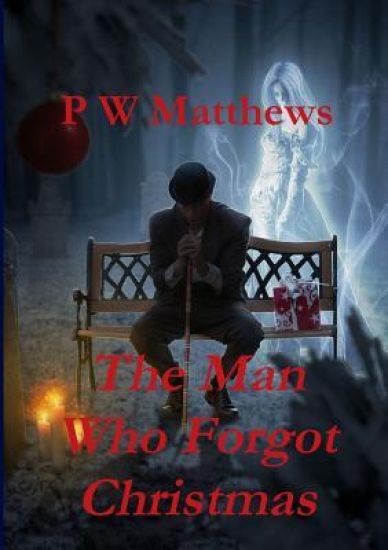
It was the Eve of Christmas 1990, when Anthony Miller lost his father in a road traffic accident. Not being able to cope with the grief, his mother places him in care, by the advice of her daughter and that of the local authorities; where over time she forgets about him. Those nine years in care would prove costly, as it would take away Anthony's Christmas spirit, as well as the trust in adults. Now an adult himself, Anthony became involved intimately with a co-worker; but it soon diminished as their relationship became toxic. Trying to make amends, because of the love he has for this woman, he goes to surprise her in the bar she frequents, when Anthony finds her in the arms of another man. With a scared childhood, and relationship; Anthony parts ways and then throws himself into his work, which pays off as he becomes the owner. He accepts a role in the local orphanage, where he soon comes across a young boy named Tyler. Could this young boy finally break his defences; and show him the meaning of Christmas?
Edmund is finally king, his wife is crowned queen with the holy oils of Christ. His daughter's are made known to him upon one of the last battles he engages in. as king he promises to the sear, lady Fletcher that her lands will be restored to her, as he promises her he will help rebuild her village, there they can live in peace. the Viking prince once again escapes the clutches of Edmund, there to escape and make his way back to the lands of the north. after more battle with the Danes and Norse, Edmund returns to his queen, only to be informed that the Viking prince does hold her prisoner, and his daughter Roselyn is feared dead. Will Edmund finally find peace and capture the traitors prince Haygen and lord Blaxton, or will he once again elude him?
And so the battle for the south continues, as the heathens swoop upon the lands of the Saxons, causing chaos in their wake. Lady Maude did cause an upset with the courtiers, as she began an affair with a low born, a farmer which could have brought to him a flogging. She cared not for court life, nor did they have any power over her to choose for her whom she could have court her, for she herself was one of the richest maidens in the south. Elizabeth had her children torn from her very arms moments after they were born, as she was told to forget about the prince for he was above her station, and therefore was forced to marry a man old enough to be her father. Prince Haygen was bold to show his face, letting both king and prince know he was not going away. that he would one day take his throne back from the usurper Arathorn. He had himself now become a fearless warrior, a Viking prince who wrecked havoc on the Saxon's, as well as raiding other tribes in Scandinavia.
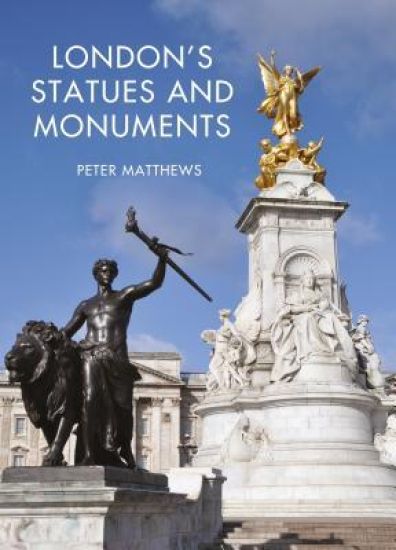
The streets and public spaces of London are rich with statues and monuments commemorating the city’s great figures and events – from Nelson’s Column in Trafalgar Square and Sir Christopher Wren’s Great Fire Monument to the charming Peter Pan statue in Kensington Gardens. Executed in stone, bronze and a range of other materials, London’s statues and monuments include work by some of the world’s greatest sculptors. This newly revised book takes account of the many statues erected between 2012 and 2017, including those of Mary Seacole at St Thomas’ Hospital and Amy Winehouse in Camden. London’s Statues and Monuments is a fully illustrated guide to these artworks and their stories: sometimes surprising and occasionally controversial, but always fascinating