Kirjojen hintavertailu. Mukana 12 016 877 kirjaa ja 12 kauppaa.

Kirjahaku

Etsi kirjoja tekijän nimen, kirjan nimen tai ISBN:n perusteella.

8 kirjaa tekijältä Peter Meinke

The Piano Tuner

The Piano Tuner

Peter Meinke

University of Georgia Press
1994
pokkari
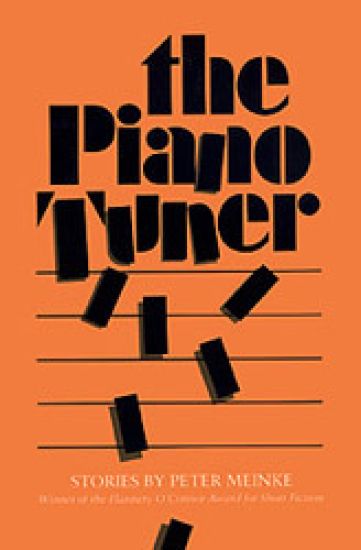
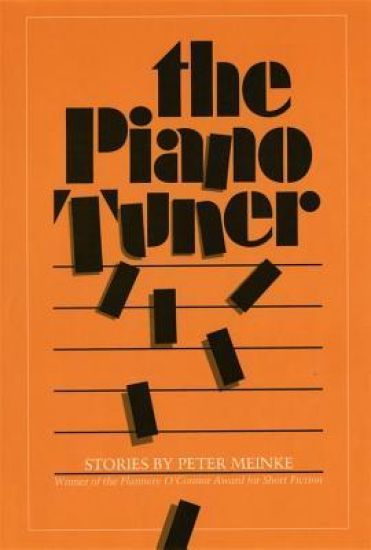
In The Piano Tuner, Peter Meinke writes of the foreignness that awaits us when we go abroad and when we answer our own front door to admit a stranger, that confronts us in unfamiliar cities and villages and in the equally disquieting surroundings of our memories and regrets.Often in these stories, what seems a safe, comfortable environment turns suddenly threatening. In the title story, a writer's quiet existence amid his antiques and books is dismantled, piece by piece, by a demonic, beer-bellied piano tuner. In "The Ponoes," a man recalls how, as a young boy living in Brooklyn during World War II, he became a collaborationist in the brutal pranks of two Irish bullies. In "The Twisted River," the sedate collegiality of a Polish university is disrupted when an American on a Fulbright grant attempts to blackmail two faculty members. And in "The Bracelet," a young anthropology student doing field work in Africa finds herself drawn further and further into the role of a priestess of Oshun, into a life dictated by the configuration of cowry shells cast upon the floor.Meinke writes of a world where our control over our lives seldom exists across a border, and often extends no further than our fingertips. Attempts to bridge two cultures, two lives are sometimes successful, as when an actor finds love in the arms of a tough-talking barmaid, but more usually lead to disillusionment, as when a hard-drinking salesman's career is shattered after he is drunk under the table one night by a Polish engineer, or when an English father struggles to find common ground with his American son. Riveting, almost terrifying, the stories in The Piano Tuner tell of decent men and women caught in events that they could never have predicted, would never have chosen.
The Piano Tuner

The Piano Tuner

Peter Meinke

University of Georgia Press
2017
sidottu
In The Piano Tuner, Peter Meinke writes of the foreignness that awaits us when we go abroad and when we answer our own front door to admit a stranger, that confronts us in unfamiliar cities and villages and in the equally disquieting surroundings of our memories and regrets.Often in these stories, what seems a safe, comfortable environment turns suddenly threatening. In the title story, a writer's quiet existence amid his antiques and books is dismantled, piece by piece, by a demonic, beer-bellied piano tuner. In "The Ponoes," a man recalls how, as a young boy living in Brooklyn during World War II, he became a collaborationist in the brutal pranks of two Irish bullies. In "The Twisted River," the sedate collegiality of a Polish university is disrupted when an American on a Fulbright grant attempts to blackmail two faculty members. And in "The Bracelet," a young anthropology student doing field work in Africa finds herself drawn further and further into the role of a priestess of Oshun, into a life dictated by the configuration of cowry shells cast upon the floor.Meinke writes of a world where our control over our lives seldom exists across a border, and often extends no further than our fingertips. Attempts to bridge two cultures, two lives are sometimes successful, as when an actor finds love in the arms of a tough-talking barmaid, but more usually lead to disillusionment, as when a hard-drinking salesman's career is shattered after he is drunk under the table one night by a Polish engineer, or when an English father struggles to find common ground with his American son. Riveting, almost terrifying, the stories in The Piano Tuner tell of decent men and women caught in events that they could never have predicted, would never have chosen.
Liquid Paper

Liquid Paper

Peter Meinke

University of Pittsburgh Press
1991
nidottu
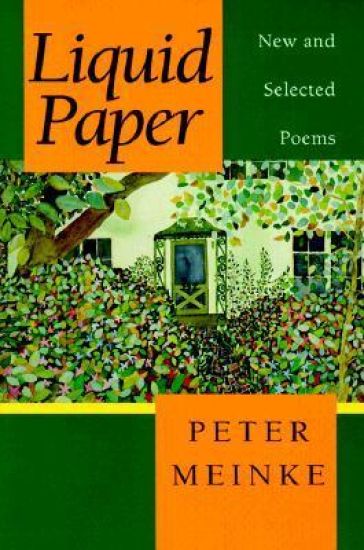
Peter Meinke was a master of traditional poetic forms long before the current interest in “the new formalism.” His work is, in turn, witty, comic, sane, deeply moving, and always readable. Liquid Paper collects the best of his previously published poems from the late 1960s on with a generous selection of new work.
Zinc Fingers

Zinc Fingers

Peter Meinke

University of Pittsburgh Press
2000
nidottu
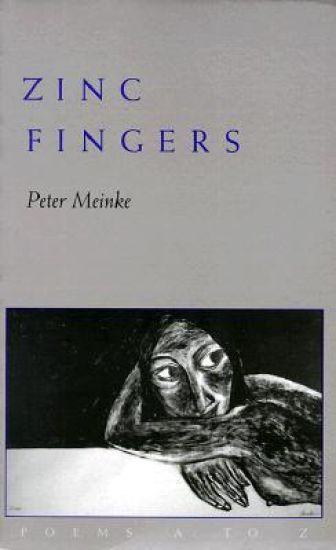
In Peter Meinke’s eleventh collection, he writes poems of humor and sadness. His poems speak truth with the self-assurance of a man willing to laugh at himself and, by extension, he invites us to laugh at ourselves as well.
Contracted World, The

Contracted World, The

Peter Meinke

University of Pittsburgh Press
2006
nidottu
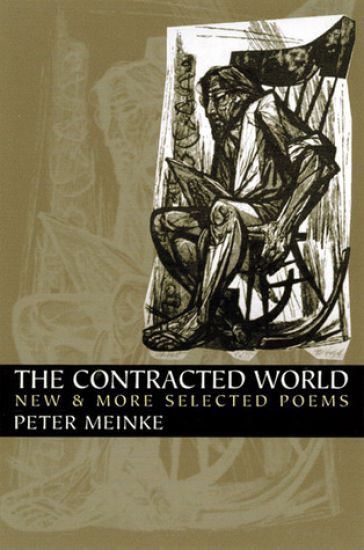
The Contracted World includes representative poems from four of Peter Meinke's previous collections. In poems that show us what it is like to grow up in America, love, nature, cities, sports, war, and peace are filtered through the imagination and verbal skills of one of our brightest poets. The new poems experiment with form, and address a life that is shrinking in specific ways: the poet is aging, the world is getting smaller, our post-9/11 freedoms are eroding, and our choices seem fewer and less attractive. Despite feelings of anger and loneliness, the narrator speaks to us in a personal, accessible, and often humorous voice.
Lucky Bones

Lucky Bones

Peter Meinke

University of Pittsburgh Press
2014
nidottu
In Lucky Bones, Peter Meinke moves fluidly through free and formal shapes, taking the reader on a tour through America in the 21st century: family, politics, love, war and peace, old age and death are looked at in ways that are surprising, clear, and warm-hearted. Lit by flashes of anger and laughter as he surveys his territory from the vantage point of old age, the poems are, in the end, both sane and profound, set to Meinke’s own music.Consisting of over sixty new poems, the book begins with a house-shaped poem about a family in a beloved old home, and then moves out into the world with poems about a fire-bug, drive-by shootings, and the often violent human condition before circling back to the home and a final epitaph. A clear-eyed feeling of loss permeates Lucky Bones, but not despair: in the midst of conflict, Meinke’s world is full of wonder, and wonderful people.