Kirjojen hintavertailu. Mukana 11 627 067 kirjaa ja 12 kauppaa.

Kirjahaku

Etsi kirjoja tekijän nimen, kirjan nimen tai ISBN:n perusteella.

12 kirjaa tekijältä Peter N. Miller

Peiresc's Europe

Peiresc's Europe

Peter N. Miller

Yale University Press
2000
sidottu
Nicolas-Claude Fabri de Peiresc (1580–1637) was, during his lifetime, one of Europe’s most famous men. A friend of Pope Urban VIII and Galileo, of Peter-Paul Rubens and Hugo Grotius, of Tommaso Campanella and Marin Mersenne, Peiresc played an important role in the intellectual culture of his time. This book is the first study in English of this extraordinary man, as well as a vivid portrait of his whole circle. Looking through the lens of Peiresc’s life, Peter N. Miller brings into focus the early-seventeenth-century world of learning—its people, places, and ideas. Drawing on the extensive Peiresc archive (more than 50,000 pieces of paper), Miller brilliantly evokes the lives of antiquaries, philosophers, theologians, and politicians of Peiresc’s day, only some of whom remain known today. He explores the age in which Peiresc’s toleration and sociability, his political action and cosmopolitanism, and his serious scholarship without dogmatism were identified as a set of virtues and practices by which to live. Peiresc’s notion of scholarship as a moral exercise, the sweep of his interests, and the cross-Continental reach of his intellectual life show with new clarity what it meant to be a man of learning during the decades around 1600.
Richard Tuttle

Richard Tuttle

Peter N. Miller

YALE UNIVERSITY PRESS
2022
sidottu
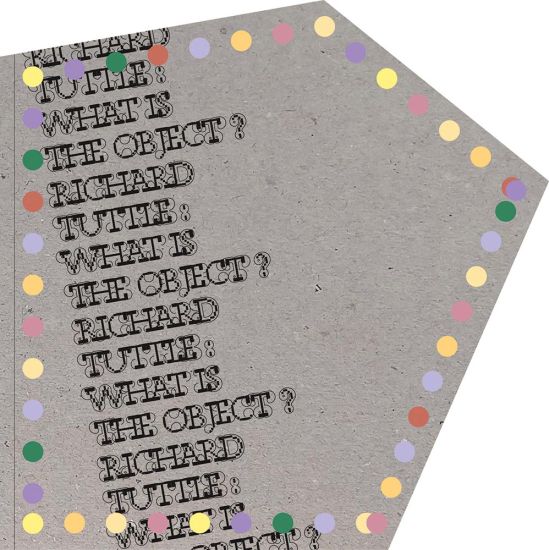
A beautifully designed volume exploring the object collection of the influential American artist Richard Tuttle For Richard Tuttle (b. 1941), the object, as well as the work, is intended for communication. Where others find in history answers to the questions objects pose, Tuttle instead finds the questions that drive his art—asking us to think about what objects mean, and how. Richard Tuttle: What Is the Object? is the first publication to explore the influential American artist’s object collection and the cards on which he has recorded his thoughts about these items over the past five decades. This volume, designed by the Belgian book artist Luc Derycke as a “book as object,” carries forth the challenging question of the meaning of objects. It includes an interview with Tuttle, an analysis of objects in poetic nonfiction by Renee Gladman, and an essay about Tuttle’s art as the pursuit of a kind of philosophical exploration by Peter N. Miller, as well as poems by Tuttle and a short, surrealist tale about the artist’s objects. Tuttle’s objects and index cards are beautifully photographed throughout by Bruce M. White in this lavishly illustrated volume. Distributed for Bard Graduate CenterExhibition Schedule:Bard Graduate Center, New York (March 25–July 10, 2022)
Defining the Common Good

Defining the Common Good

Peter N. Miller

Cambridge University Press
1994
sidottu
The theme of this book is the crisis of the early modern state in eighteenth-century Britain. The revolt of the North American colonies and the simultaneous demand for wider religious toleration at home challenged the principles of sovereignty and obligation that underpinned arguments about the character of the state. These were expressed in terms of the 'common good', 'necessity', and 'community' - concepts that came to the fore in early modern European political thought and which gave expression to the problem of defining legitimate authority in a period of increasing consciousness of state power. The Americans and their British supporters argued that individuals ought to determine the common good of the community. A new theory of representation and freedom of thought defines the cutting edge of this revolutionary redefinition of the basic relationship between individual and community.
Defining the Common Good

Defining the Common Good

Peter N. Miller

Cambridge University Press
2004
pokkari
The theme of this book is the crisis of the early modern state in eighteenth-century Britain. The revolt of the North American colonies and the simultaneous demand for wider religious toleration at home challenged the principles of sovereignty and obligation that underpinned arguments about the character of the state. These were expressed in terms of the ‘common good’, ‘necessity’, and ‘community’ - concepts that came to the fore in early modern European political thought and which gave expression to the problem of defining legitimate authority in a period of increasing consciousness of state power. The Americans and their British supporters argued that individuals ought to determine the common good of the community. A new theory of representation and freedom of thought defines the cutting edge of this revolutionary redefinition of the basic relationship between individual and community.
Peiresc’s Mediterranean World

Peiresc’s Mediterranean World

Peter N. Miller

Harvard University Press
2017
nidottu
Antiquarian, lawyer, and cat lover Nicolas Fabri de Peiresc (1580–1637) was a “prince” of the Republic of Letters and the most gifted French intellectual in the generation between Montaigne and Descartes. From Peiresc’s study in Aix-en-Provence, his insatiable curiosity poured forth in thousands of letters that traveled the Mediterranean, seeking knowledge of matters mundane and exotic. Mining the remarkable 70,000-page archive of this Provençal humanist and polymath, Peter N. Miller recovers a lost Mediterranean world of the early seventeenth century that was dominated by the sea: the ceaseless activity of merchants, customs officials, and ships’ captains at the center of Europe’s sprawling maritime networks. Peiresc’s Mediterranean World reconstructs the web of connections that linked the bustling port city of Marseille to destinations throughout the Western Mediterranean, North Africa, the Levant, and beyond.“Peter Miller’s reanimation of Peiresc, the master of the Mediterranean, is the best kind of case study. It not only makes us appreciate the range and richness of one man’s experience and the originality of his thought, but also suggests that he had many colleagues in his deepest and most imaginative inquiries. Most important, it gives us hope that their archives too will be opened up by scholars skillful and imaginative enough to make them speak to us.”—Anthony Grafton, New York Review of Books
On Conservation as a Human Science

On Conservation as a Human Science

Peter N. Miller

PRINCETON UNIVERSITY PRESS
2026
sidottu
Conservators as first responders in a world where our cultural heritage is increasingly at riskConservation can be understood as a form of knowing; conservators extract meaning about the past from what remains, while noting what is missing and sometimes repairing it. In this erudite and virtuosic book, the historian Peter Miller imagines the outlines of a new, expansive notion of conservation that links the world around us—natural and man-made—to the world inside us—our genome, our memories. Putting the work of conservation into conversation with history, philosophy, and literature yields a shift in perspective. It raises questions central to the work of the humanities: What does time mean? How do we write about knowledge? How does care connect humans not just with the world but also with each other? And where does freedom exist in a world of things? Miller casts conservators as first responders in a world as fragile as the things they work on. He argues that a broader conception of conservation can provide the necessary intellectual resources for grappling with the scale of the enormous challenges ahead. Offering a kind of sketch of a curriculum for that future, Miller suggests that shaping the person of the conservator is as important as shaping the field. For only those trained to think about change through the painstaking labor of preserving and restoring will be able to do the work of policy and advocacy required by our uncertain future.
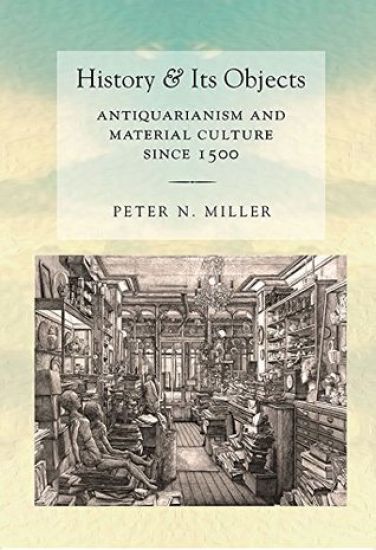
History and Its Objects

History and Its Objects

Peter N. Miller

Cornell University Press
2017
sidottu
Weaving together literary and scholarly insights, History and Its Objects will prove indispensable reading for historians and cultural historians, as well as anthropologists and archeologists worldwide. - Nathan Schlanger, École nationale des chartes, Paris Cultural history is increasingly informed by the history of material culture-the ways in which individuals or entire societies create and relate to objects both mundane and extraordinary-rather than on textual evidence alone. Books such as The Hare with Amber Eyes and A History of the World in 100 Objects indicate the growing popularity of this way of understanding the past. In History and Its Objects, Peter N. Miller uncovers the forgotten origins of our fascination with exploring the past through its artifacts by highlighting the role of antiquarianism-a pursuit ignored and derided by modem academic history-in grasping the significance of material culture. From the efforts of Renaissance antiquarians, who reconstructed life in the ancient world from coins, inscriptions, seals, and other detritus, to amateur historians in the nineteenth century working within burgeoning national traditions, Miller connects collecting-whether by individuals or institutions-to the professionalization of the historical profession, one which came to regard its progenitors with skepticism and disdain. The struggle to articulate the value of objects as historical evidence, then, lies at the heart both of academic history-writing and of the popular engagement with things. Ultimately, this book demonstrates that our current preoccupation with objects is far from novel and reflects a human need to reexperience the past as a physical presence.
Peiresc's Orient

Peiresc's Orient

Peter N. Miller

Routledge
2017
nidottu
The ten essays published in this volume were written over the space of a decade, but they were conceived from the start as a coherent whole, presenting Peiresc's study of discrete languages and literatures of the Near East and North Africa. For Peiresc the student of the Classical past, this described the eastern and southern space in which the Greeks and Romans lived and strove. For Peiresc the Christian, this was the world of the Bible that impacted upon the Greeks and Romans. And for Peiresc of the Mediterranean (for he was born in Aix, spent much time in Marseille, and lived outside of the region for only 6 of his 57 years), this was the territory that his friends and colleagues sailed to, lived in and, usually, came back from. The convergence of these axes in the life of one man, and a man of singular intellectual power and charm whose vast personal paper arsenal had survived, makes this such a compelling project. The essays are arranged in a roughly chronological order. They follow the course of Peiresc’s own projects from his early encounter with the ancient Near East in Greek and Roman literature, through his engagement with Arabic to his deepening kowledge of rabbinic texts to the wider world of the new oriental studies of the seventeenth century which he helped create: Samaritan, Coptic and Ethiopic.
Peiresc's Orient

Peiresc's Orient

Peter N. Miller

Ashgate Publishing Limited
2012
sidottu
The ten essays published in this volume were written over the space of a decade, but they were conceived from the start as a coherent whole, presenting Peiresc's study of discrete languages and literatures of the Near East and North Africa. For Peiresc the student of the Classical past, this described the eastern and southern space in which the Greeks and Romans lived and strove. For Peiresc the Christian, this was the world of the Bible that impacted upon the Greeks and Romans. And for Peiresc of the Mediterranean (for he was born in Aix, spent much time in Marseille, and lived outside of the region for only 6 of his 57 years), this was the territory that his friends and colleagues sailed to, lived in and, usually, came back from. The convergence of these axes in the life of one man, and a man of singular intellectual power and charm whose vast personal paper arsenal had survived, makes this such a compelling project. The essays are arranged in a roughly chronological order. They follow the course of Peiresc’s own projects from his early encounter with the ancient Near East in Greek and Roman literature, through his engagement with Arabic to his deepening kowledge of rabbinic texts to the wider world of the new oriental studies of the seventeenth century which he helped create: Samaritan, Coptic and Ethiopic.
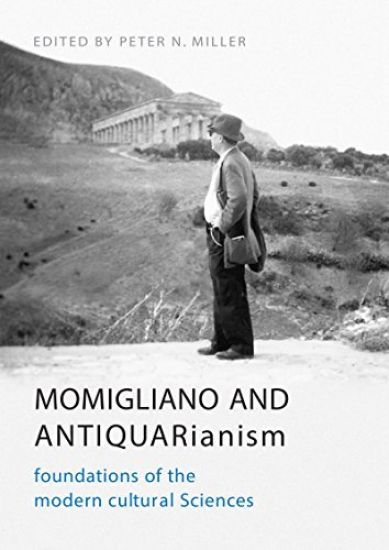
Momigliano and Antiquarianism

Momigliano and Antiquarianism

Peter N. Miller

University of Toronto Press
2014
pokkari
One of the greatest historians of the twentieth century, Arnaldo Momigliano (1908-1987) is known for his path-breaking studies of ancient Greek and Roman history. The encyclopedic knowledge of the ancient world that Momigliano brought to his work, however, enabled him to make connections between ancient history and the subsequent study of that history. His sweeping vision stretched from antiquity to the present day. In Momigliano and Antiquarianism, Peter N. Miller brings together an international and interdisciplinary group of scholars to provide the first serious study of Momigliano's history of historical scholarship. At its core, this collection is devoted to one of Momigliano's most celebrated subjects the history of antiquarianism, and one of his most audacious claims, that the decay of early modern antiquarianism actually gave birth to the modern cultural sciences - history, sociology, anthropology, art history, archaeology, and history of religion. Filling a gap in the scholarship, this erudite collection will prove fascinating to teachers and students of classics, history, and the human sciences.
Cultural Histories of the Material World

Cultural Histories of the Material World

Peter N. Miller

Bard Graduate Center, Exhibitions Department
2019
nidottu
Bringing together the work of over twenty international scholars from various disciplines, Cultural Histories of the Material World provides a substantial collection of works that explore materiality and material culture from a historical perspective. These scholars represent some of the most innovative voices in their respective fields, using historiographical lens to chronicle how the field of material culture has operated between multiple disciplines and has grown to prominence in the last two decades, both inside and beyond the academy. Essential reading for the study of material culture and including writing by Bill Brown, Nancy Troy, Horst Bredekamp, Ja&sacute Elsner, and Pamela H. Smith, this book builds on the recent proliferation of works that address materiality and offers unified collection of key perspectives on the material turn across the humanities.