Kirjojen hintavertailu. Mukana 11 342 296 kirjaa ja 12 kauppaa.

Kirjahaku

Etsi kirjoja tekijän nimen, kirjan nimen tai ISBN:n perusteella.

10 kirjaa tekijältä Peter Neville

Britain in Vietnam

Britain in Vietnam

Peter Neville

Routledge
2007
sidottu
This book is a study of the circumstances leading to British intervention in Vietnam in 1945, and the course and consequences of this intervention. The first part of the work links French colonialism with the native communist insurgency, while examining British and Foreign Office attitudes towards French Indochina. The study then looks at the key Anglo-American wartime relationship concerning Indochina and its impact. The second half of the book focuses on the local problems faced by the British in Southern Indochina, and whether commanding general Douglas Gracey was guilty (as critics have suggested) of collusion with French colonialism. It also examines the wider problems linked to available military resources, and the controversial issues of the role of the OSS and the use of Japanese troops to preserve law and order. Finally, the book makes a groundbreaking link between British intervention and the outbreak of the French-Vietminh war in 1946. Britain in Vietnam will be of interest to students of British foreign policy, military history and South-East Asian history in general.
Britain in Vietnam

Britain in Vietnam

Peter Neville

Routledge
2008
nidottu
This book is a study of the circumstances leading to British intervention in Vietnam in 1945, and the course and consequences of this intervention. The first part of the work links French colonialism with the native communist insurgency, while examining British and Foreign Office attitudes towards French Indochina. The study then looks at the key Anglo-American wartime relationship concerning Indochina and its impact. The second half of the book focuses on the local problems faced by the British in Southern Indochina, and whether commanding general Douglas Gracey was guilty (as critics have suggested) of collusion with French colonialism. It also examines the wider problems linked to available military resources, and the controversial issues of the role of the OSS and the use of Japanese troops to preserve law and order. Finally, the book makes a groundbreaking link between British intervention and the outbreak of the French-Vietminh war in 1946. Britain in Vietnam will be of interest to students of British foreign policy, military history and South-East Asian history in general.
Mussolini

Mussolini

Peter Neville

Routledge
2014
sidottu
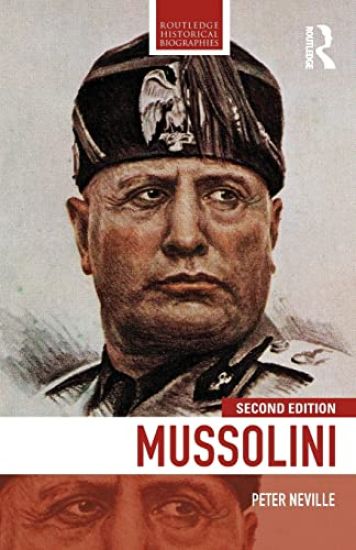
This new edition of Peter Neville’s Mussolini traces and analyses the life of one of the most fascinating twentieth century European dictators, Benito Mussolini, while placing his life in its historic Italian context. Engaging and accessible, the Duce’s career is traced from his roots as a journalist and socialist to his capture and execution in 1945, addressing crucial issues throughout: was Mussolini really a far right ideologist, or simply a political opportunist? How successful was he at communicating his core beliefs to the Italian people?This thoroughly updated new edition synthesises the scholarship of the last ten years to consider Italian atrocities in Africa, and the reaction to them by ordinary Italians, in addition to a consideration of the relationship between Mussolini and Hitler while other periods of Mussolini’s life are expanded upon and reconsidered. Finally, the author considers Mussolini’s legacy and his continuing influence in modern Italy.This biography gives students a useful analytical introduction to the period and the man and provides an explanation of what fascism was and why it resonated with so many people in Italy. It will be essential reading for all students of modern Italy and the history of fascism.
Mussolini

Mussolini

Peter Neville

Routledge
2014
nidottu
This new edition of Peter Neville’s Mussolini traces and analyses the life of one of the most fascinating twentieth century European dictators, Benito Mussolini, while placing his life in its historic Italian context. Engaging and accessible, the Duce’s career is traced from his roots as a journalist and socialist to his capture and execution in 1945, addressing crucial issues throughout: was Mussolini really a far right ideologist, or simply a political opportunist? How successful was he at communicating his core beliefs to the Italian people?This thoroughly updated new edition synthesises the scholarship of the last ten years to consider Italian atrocities in Africa, and the reaction to them by ordinary Italians, in addition to a consideration of the relationship between Mussolini and Hitler while other periods of Mussolini’s life are expanded upon and reconsidered. Finally, the author considers Mussolini’s legacy and his continuing influence in modern Italy.This biography gives students a useful analytical introduction to the period and the man and provides an explanation of what fascism was and why it resonated with so many people in Italy. It will be essential reading for all students of modern Italy and the history of fascism.
Historical Dictionary of British Foreign Policy
British foreign policy has always been based on distinctive principles since the setting up of the Foreign Office in 1782 as one of the two original offices of state, the other being the Home Office. As a small island nation, Britain was historically fearful of over mighty continental powers, which might seek to menace its trade routes, and naval primacy was essential. Britain must dominate at sea while avoiding, involvement in major continental wars and Britain accomplished this successfully until the end of the 19th century. After World War II and the Cold War Britain was no longer the global naval super power and they had to adapt to a secondary, supportive role. This was to be based on its membership of regional defense and economic organizations in Europe. The Historical Dictionary of British Foreign Policy provides an overview of the conduct of British diplomacy since the setting up of the Foreign Office in 1782. This is done through a chronology, an introductory essay, appendixes, an extensive bibliography, and over 300 cross-referenced dictionary entries on British prime ministers, foreign secretaries, foreign office staff and leading diplomats, but also on related military and political-economic aspects. This book is an excellent access point for students, researchers, and anyone wanting to know more about British foreign policy.
Ho Chi Minh

Ho Chi Minh

Peter Neville

Routledge
2018
sidottu
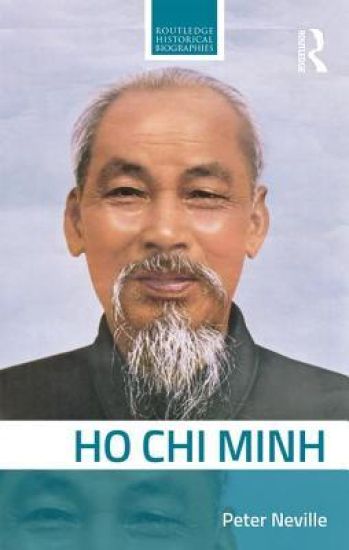
Ho Chi Minh explores the life of this globally important twentieth-century figure and offers new insights into his lengthy career, including his often-forgotten involvement with British intermediaries in 1945–46 and with the United States in 1944–45.Ho was the father of his nation, a major protagonist in the Cold War and anti-colonial struggle, and the promoter of a distinctive Vietnamese form of communism. This biography charts his life from his early years and education in Europe to his establishment of the revolutionary pro-communist movement, the Viet Minh, and his subsequent rise to power. Placing important emphasis on his role as a military organizer while stressing his preference for diplomatic solutions, this book contains detailed analysis of the complex talks with France and failure to prevent the Franco-Viet Minh war in 1946. It also follows Ho’s complex relationships with America, China, France, and Russia, and explores the Vietnam War and his legacy. In addition to providing extensive coverage of the 1954 Geneva Conference, the rivalry between Ho and First Secretary Le Duan, and the 1968 Tet Offensive, Ho Chi Minh is also the first English-language biography of Ho to pay close attention to his attitude to women and their role within the communist party. It is the perfect introduction for students of Vietnamese history and twentieth-century history more broadly.
Ho Chi Minh

Ho Chi Minh

Peter Neville

Routledge
2018
nidottu
Ho Chi Minh explores the life of this globally important twentieth-century figure and offers new insights into his lengthy career, including his often-forgotten involvement with British intermediaries in 1945–46 and with the United States in 1944–45.Ho was the father of his nation, a major protagonist in the Cold War and anti-colonial struggle, and the promoter of a distinctive Vietnamese form of communism. This biography charts his life from his early years and education in Europe to his establishment of the revolutionary pro-communist movement, the Viet Minh, and his subsequent rise to power. Placing important emphasis on his role as a military organizer while stressing his preference for diplomatic solutions, this book contains detailed analysis of the complex talks with France and failure to prevent the Franco-Viet Minh war in 1946. It also follows Ho’s complex relationships with America, China, France, and Russia, and explores the Vietnam War and his legacy. In addition to providing extensive coverage of the 1954 Geneva Conference, the rivalry between Ho and First Secretary Le Duan, and the 1968 Tet Offensive, Ho Chi Minh is also the first English-language biography of Ho to pay close attention to his attitude to women and their role within the communist party. It is the perfect introduction for students of Vietnamese history and twentieth-century history more broadly.
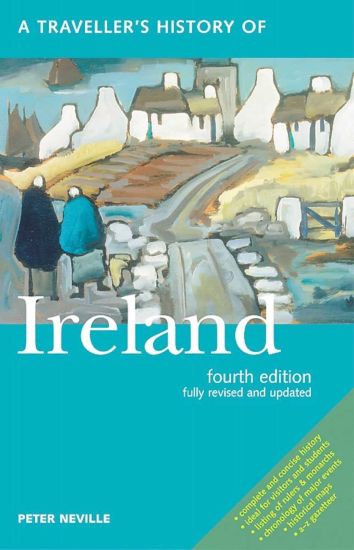
A Traveller's History Of Ireland

A Traveller's History Of Ireland

Peter Neville

INTERLINK PUBLISHING GROUP, INC
2022
nidottu
A Traveller's History of Ireland gives a full and accurate portrait of Ireland from its prehistory right up to the present. The story opens with mysterious, early Celtic Ireland where no Roman stood, through Saint Patrick's mission to Ireland which began the process of making it "an island of saints," to the legendary high King Brian Boru and his struggle with Viking and Irish enemies alike. It moves on through the arrival of the Norman "Strongbow" in the twelfth century, and the beginnings of the difficult and tragic Anglo-Irish relationship. Great historical figures like Hugh O'Neill, Oliver Cromwell, and Jonathan Swift figure, as well as ordinary people like the Londonderry "apprentice boys" who helped change the course of Irish history. The book then moves into modern times with the great revolts of 1798, the horrors of the potato famine, and the careers of the leading constitutional nationalists, Daniel O'Connell and Charles Parnell. The book ends with a description of modern Ireland, and of its two separate Catholic Nationalist and Protestant Unionist traditions.
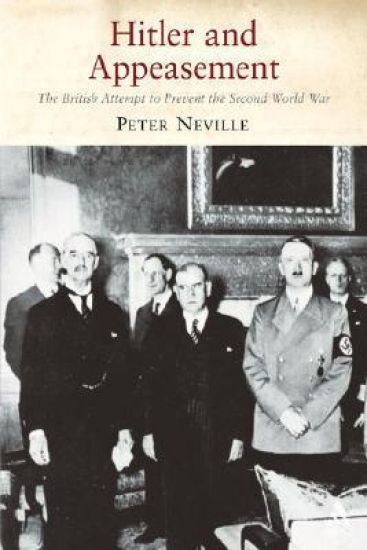
Hitler and Appeasement

Hitler and Appeasement

Peter Neville

Hambledon Continuum
2007
nidottu
Hitler, Mussolini and Japan posed a terrible threat to Britain and its empire. With America withdrawn into isolationism and Stalin's Russia hostile to the West, it is hardly surprising that Britain strove to sustain peace for as long as possible by the traditional tools of diplomacy and accommodation. Stigmatised as 'Appeasement', this has often been held to be a bankrupt policy, epitomised by Chamberlain's Munich Agreement in 1938, handing over the Sudetenland. "Hitler and Appeasement" shows, in contrast, that many of the government's policies were reasonable and well-thought-out; nor did ministers ignore rearmament. After the appalling experiences of the First World War, no one in Britain wished to be in another war. It was only the unpredictable catastrophes of the Russo-German agreement of 1939 and the Fall of France in 1940 that cast Appeasement into disrepute, leaving stains on the reputations of Baldwin and Chamberlain that are little deserved.
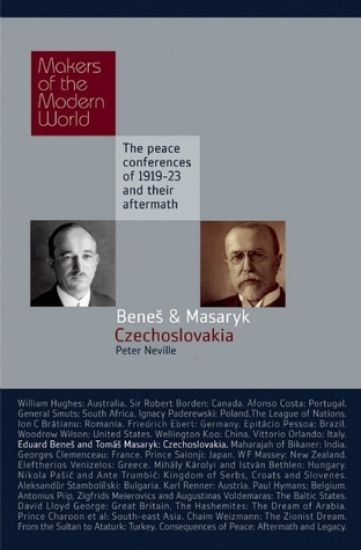
Benes & Masaryk: Czechoslovakia

Benes & Masaryk: Czechoslovakia

Peter Neville

Haus Publishing
2010
sidottu
Of even greater importance for Hungary's future were the activities of the champions of an independent state of Czechs and Slovaks. Tomas Masaryk, a Czech professor of philosophy and a future leader of his people, was hard at work within a month of the outbreak of war lobbying in Paris and London for an independent Bohemia, still a major component of the Austrian Empire within the Austro-Hungarian Monarchy, which would incorporate the predominantly Slovak regions of northern Hungary. Masaryk, who was assisted in his efforts by Eduard Benes, a bitter enemy of the Habsburgs. Thus the new state was effectively shaped before the Paris Peace Conference. But the Conference laid down the seeds of Czechoslovakia's later destruction. Only nine million Czechoslovaks lived in the state out of a population of fourteen million. A large discontented Hungarian minority lived in Slovakia, and the Polish majority area of Teschen poisoned Czech-Polish relations. Yet the greatest challenge came from the rise of the Nazis in Germany in 1930s: Masaryk always claimed that he did not want three and half million ethnic Germans, but he and Benes accepted them nonetheless. Masaryk died in 1937, and Britain and France would not support the Czechs over the Sudetenland, the infamous deal struck in Munich by Neville Chamberlain and Adolf Hitler.