Kirjojen hintavertailu. Mukana 12 016 292 kirjaa ja 12 kauppaa.

Kirjahaku

Etsi kirjoja tekijän nimen, kirjan nimen tai ISBN:n perusteella.

6 kirjaa tekijältä Peter Pesic

Sounding Bodies

Sounding Bodies

Peter Pesic

MIT PRESS LTD
2022
nidottu
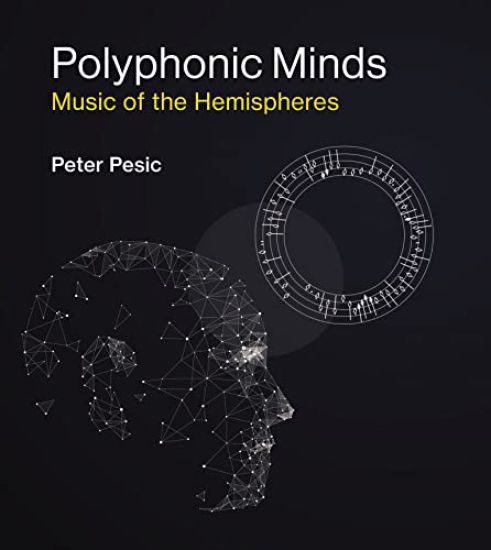
The unfolding influence of music and sound on the fundamental structure of the biomedical sciences, from ancient times to the present. Beginning in ancient Greece, Peter Pesic writes, music and sound significantly affected the development of the biomedical sciences. Physicians used rhythmical ratios to interpret the pulse, which inspired later efforts to record the pulse in musical notation. After 1700, biology and medicine took a "sonic turn," viewing the body as a musical instrument, the rhythms and vibrations of which could guide therapeutic insight. In Sounding Bodies, Pesic traces the unfolding influence of music and sound on the fundamental structure of the biomedical sciences. Pesic explains that music and sound provided the life sciences important tools for hearing, understanding, and influencing the rhythms of life. As medicine sought to go beyond the visible manifestations of illness, sound offered ways to access the hidden interiority of body and mind. Sonic interventions addressed the search for a new typology of mental illness, and practitioners used musical instruments to induce hypnotic states meant to cure both psychic and physical ailments. The study of bat echolocation led to the manifold clinical applications of ultrasound; such sonic devices as telephones and tuning forks were used to explore the functioning of the nerves. Sounding Bodies follows Pesic's Music and the Making of Modern Science and Polyphonic Minds to complete a trilogy on the influence of music on the sciences. Enhanced digital editions of Sounding Bodies offer playable music and sound examples.
Abel's Proof

Abel's Proof

Peter Pesic

MIT Press
2004
pokkari
The intellectual and human story of a mathematical proof that transformed our ideas about mathematics.In 1824 a young Norwegian named Niels Henrik Abel proved conclusively that algebraic equations of the fifth order are not solvable in radicals. In this book Peter Pesic shows what an important event this was in the history of thought. He also presents it as a remarkable human story. Abel was twenty-one when he self-published his proof, and he died five years later, poor and depressed, just before the proof started to receive wide acclaim. Abel's attempts to reach out to the mathematical elite of the day had been spurned, and he was unable to find a position that would allow him to work in peace and marry his fiance.But Pesic's story begins long before Abel and continues to the present day, for Abel's proof changed how we think about mathematics and its relation to the "real" world. Starting with the Greeks, who invented the idea of mathematical proof, Pesic shows how mathematics found its sources in the real world (the shapes of things, the accounting needs of merchants) and then reached beyond those sources toward something more universal. The Pythagoreans' attempts to deal with irrational numbers foreshadowed the slow emergence of abstract mathematics. Pesic focuses on the contested development of algebra-which even Newton resisted-and the gradual acceptance of the usefulness and perhaps even beauty of abstractions that seem to invoke realities with dimensions outside human experience. Pesic tells this story as a history of ideas, with mathematical details incorporated in boxes. The book also includes a new annotated translation of Abel's original proof.
Abels Beweis

Abels Beweis

Peter Pesic

Springer-Verlag Berlin and Heidelberg GmbH Co. K
2005
sidottu
Aus den Rezensionen zur englischen Auflage: "Die Leser von Pesics faszinierendem kleinen Buch werden zu dem unausweichlichen Urteil kommen: Niels [Henrik] Abel hat sich der Genialität im fünften Grade schuldig gemacht." William Dunham, Muhlenberg College und Autor von "Journey through Genius: The Great Theorems of Mathematics "Peter Pesic schreibt über Abels Werk mit Begeisterung und Einfühlungsvermögen, und ruft Erinnerungen an die großartigen Momente in der Entwicklung der Algebra wach." Barry Mazur, Gerhard Gade University Professor, Harvard University "Ein einzigartiges Buch. Peter Pesics Chronik des langen Weges der Mathematiker zum Verständnis, wann eine Gleichung gelöst werden kann - und wann nicht - ist amüsant, einleuchtend und leserfreundlich. Der Autor bemüht sich sehr, auch weniger bekannte Namen wie Viète und Ruffini gebührend zu würdigen und verlangt von seinen Lesern nicht mehr als Basiswissen in der Algebra - wovon ein Großteil angenehmerweise getrennt vom Haupttext plaziert wurde." Tony Rothman, Department of Physics, Bryn Mawr College "Peter Pesics Geschichte über die Entstehung der Mathematik ist genauso spannend wie ein Roman." Economist