Kirjojen hintavertailu. Mukana 11 244 527 kirjaa ja 12 kauppaa.

Kirjahaku

Etsi kirjoja tekijän nimen, kirjan nimen tai ISBN:n perusteella.

13 kirjaa tekijältä Peter Raina

John Sparrow: Warden of All Souls College, Oxford
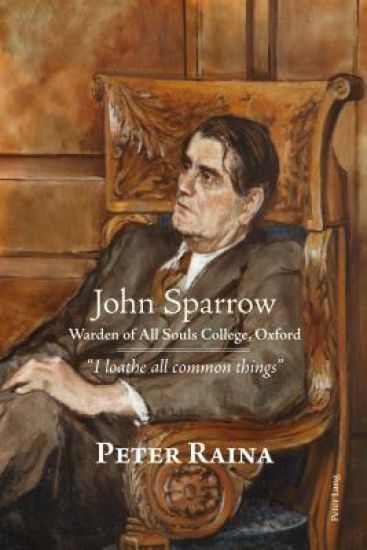
John Sparrow, Warden of All Souls, was a notable character in post-war Oxford. He was educated in the old-time classical humanist tradition, and this remained his field even as the world about him changed. A man with a brilliant mind, he is often remembered negatively - as a bogeyman to progressives because of his outspoken conservatism - and as a disappointment to those who expected a more solid academic achievement. It was felt that his talents were too widely scattered. Presenting hitherto unpublished letters and papers which vividly evoke the contemporary Oxford scene, Peter Raina traces this scattering of talent. Sparrow may have been a generalist, but he dabbled in depth in many disciplines. He was an expert on Latin, on law, on inscriptions, on rare books and on poetry. Above all he was a tireless supporter and friend of other academics and poets in a special generation. The book gives context to his circles of influence and to his uncompromising intelligence and distinct charm.
George 'Dadie' Rylands

George 'Dadie' Rylands

Peter Raina

Peter Lang International Academic Publishers
2020
sidottu
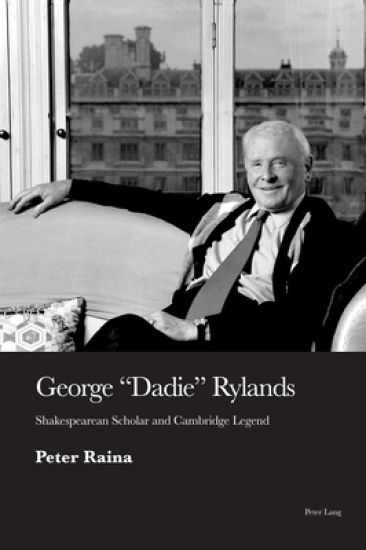
Just once in a while, actors and performers change the whole way in which they approach the words in their scripts. Such a change happened in the early-to-middle years of the twentieth century; and the person behind it was "Dadie" Rylands. He was a man with an ear acutely attuned to the nuances of poetry, and he insisted that it was the ear and not the eye that mattered most in productions of Shakespeare. It was Rylands who taught an exceptional generation of Shakespearean actors how to speak. Gielgud, Olivier, Ashcroft, Redgrave – all owed their superb diction to him. Moreover, they adored him as a person. Amazingly for a man with such influence, Rylands was not ensconced in the established Theatre. He taught undergraduates at Cambridge and his own productions were with the amateur Marlowe Dramatic Society there. Nor was his life confined to dramatics and the academic world. He was a fringe member of the Bloomsbury set – firm friends with Lytton Strachey, Virginia Woolf and John Maynard Keynes, all regular correspondents. And his circle of notable friends stretched to a wider group of literati including Maurice Bowra and T. S. Eliot. Rylands died, aged 97, in 1999. We no longer have his irrepressible presence, but he left a palpable legacy in gramophone recordings of all Shakespeare’s plays in which he directed star-studded casts. Now that legacy is augmented by Peter Raina’s study, with its admirable selection of Rylands’ marvellously lucid radio talks (hitherto unpublished) and its sampling of the multitude of letters he wrote and received.
Heinrich von Kleist Poems

Heinrich von Kleist Poems

Peter Raina

Peter Lang International Academic Publishers
2020
nidottu
This collection of poems by Heinrich von Kleist (1777-1811) translated into modern English rhyming verse by Peter Raina will bring the stature of this contemporary of Goethe and Schiller into sharp focus and will reach a new readership of English speakers across the world. The subjects treated in this anthology include reaction to major political events (particularly Napoleon’s incursions into German territory) and patriotic laudatory pieces as well as anti-military sentiments, down to shorter poems, especially the epigrams which explore everyday joys and tribulations. Embarking on this challenging task of translation, the author was inspired by the thoughts of John Sparrow in his book "Great Poetry", Independent Essays: [words in poetry] ‘move us simply by their sound and through the appeal of rhythm and metre to the ear’. Peter Raina was thus emboldened to replace the metre he found in the original with a new rhyme and rhythm in his English translation. The effect is a fresh, arresting comment on issues in Kleist’s background often not so dissimilar from those we experience today.
Doris Lessing - A Life Behind the Scenes

Doris Lessing - A Life Behind the Scenes

Peter Raina

Peter Lang International Academic Publishers
2021
sidottu
In March 1949 the security service MI5 received notice of a suspect person about to enter Britain and went to great pains to keep her under surveillance. This person was the author Doris Lessing. She would eventually go on to win the Nobel Prize for literature as an «epicist … who with scepticism, fire and visionary power has subjected a divided civilisation to scrutiny». And it was precisely this scrutiny that troubled the guardians of the status quo. Lessing grew up in colonial Rhodesia and hated the scorn with which the colonists treated the native population. She worked tirelessly for a more just society and this drove her into support for communism. But a communist, as one of her fictional characters says, «is hated, despised, feared and hunted». Peter Raina’s book, reproducing the secret files kept on Lessing, shows that this was largely true, even though her emphasis in these troubled times was always on Peace. Lessing was eventually disillusioned by communism, and sought a better understanding of human relations than Soviet-conforming clichés could provide. However, her understanding was much enriched by the experiences of her activism and knowledge of the opposition it aroused. The secret files show how strongly Lessing followed her convictions and throw new light on how her perceptions of society evolved. Peter Raina elucidates this in a short Introduction and an Epilogue discussing aspects of her writings.
Devolution of Power to Scotland, Wales and Northern Ireland:The Inner History

Devolution of Power to Scotland, Wales and Northern Ireland:The Inner History

Peter Raina

Peter Lang International Academic Publishers
2023
sidottu
In 1987 Tony Blair’s New Labour won a landslide victory in the British elections. To show it meant business, the new government immediately embarked on a major legislative programme, granting devolution to the outlying «Regions» joined with England in the UK. The cabinet papers concerned with this initiative have just been released, and Peter Raina is publishing them, with brief commentaries, in two volumes. This one concerns Scotland and Wales. The papers show just how much interdepartmental work was involved in this comparatively modest exercise, and how dependent ministers were on the Civil Service and their legal teams. They also raise questions which have recently been much amplified. The drive for devolution had contradictory aims – to offer more self-sufficiency and foster development; but also to take the sting out of nationalist movements, so as to preserve the Union. Readers can judge how democratic and how fruitful the scheme really was.
Devolution of Power to Scotland, Wales and Northern Ireland: The Inner History

Devolution of Power to Scotland, Wales and Northern Ireland: The Inner History

Peter Raina

Peter Lang International Academic Publishers
2023
sidottu
«Raina’s documentation provides invaluable insight into the high-powered and high-level political calculations that made it happen. It is perhaps the most signal achievement of the era and this expertly curated collection on its genesis and evolution is unquestionably of permanent value.» (Professor Marc Mulholland, Professor of Modern History, Oxford) This is the second volume in which Peter Raina presents the Blair government’s Devolution papers. Here, the focus shifts to Northern Ireland in the midst of the «Troubles» – a situation where discrimination and bigotry in a society divided by religious and national affiliations had erupted into hatred, violence and fear. Tony Blair, his minister Mo Mowlam and a team of civil servants and others reached for American help and worked intensely with Gerry Adams, Leader of Sinn Fein, and with the government of the Republic in the South of Ireland to bring the warring factions together. Their efforts were concentrated into an astonishing single month. The Devolution plans, as such, have not stood the test of time but, with effort from all sides, a fragile truce was achieved and a virtual end to the «Troubles». This was an enormous achievement. The papers are an object lesson in how patient diplomacy and negotiation can work, even in the most intractable of situations.
Seamus Heaney

Seamus Heaney

Peter Raina

Peter Lang International Academic Publishers
2024
sidottu
«An admirable undertaking, as impressive for its scholarship as its sympathy. Heaney is presented here at the centre of a worldwide network of correspondents, and what emerges is a vivid sense of both the great writer and the living man.» (Seamus Perry, Fellow of Balliol College and Tutor in English Literature, Professor of English, University of Oxford) «I just finished reading it. I found it very touching; Heaney’s influence on such a wide circle of correspondents comes through with great force.» (Professor Marc Mulholland, Senior Tutor, St Catherine’s College, Oxford) Seamus Heaney wrote hundreds of letters and postcards in long hand, answering almost all the letters he received from friends, fellow poets, university professors, arts councils and of course from ordinary fans. He was not only a master of English prose and poetry, but was also highly skilled in the art of writing letters. The author has selected fragments and parts of this vast correspondence to show how we can see the portrait of the man himself from the way in which he interacted with others.
The Seventh Earl Beauchamp

The Seventh Earl Beauchamp

Peter Raina

Peter Lang Ltd
2016
sidottu
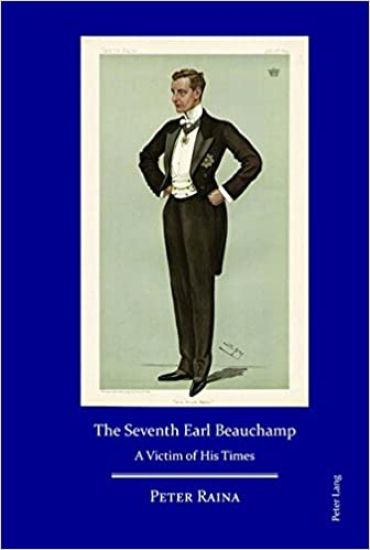
The 7th Earl Beauchamp was a prominent figure in English public life in the years 1900-30, but his career ended in scandal. He was barred from English soil, his reputation was destroyed and his papers were withheld from public view. In this book, Peter Raina uses previously unreleased documents to reassess Beauchamp's life and legacy. Born into the aristocracy, Beauchamp was driven by a sense of noblesse oblige and devoted his life to public service. Though some of this was ceremonial, Beauchamp was keen to involve himself in practical politics, where he showed his independence of mind. He joined the Liberals as they pushed through change against obstruction from his own landowning class. He championed Irish Home Rule. In 1914 he opposed entry into the war and lost any chance of promotion. However, he remained deeply loyal to his party even after its split and decline, and worked tirelessly in its cause. His life touched on great events such as the formation of Australia and, in Britain, the great reforms of 1906-9, the 1911 Parliament Act, the crisis of 1914, the creation of the Irish Free State, the Liberal collapse, the first Labour government and the economic slump. Through all these, he busied himself in party affairs, but one aspect of his private life worked against him and, in a Sophoclean twist, he fell from grace. This book documents the Earl's involvement in politics, explores his personality and looks carefully at the issues that brought him down. In the light of this analysis, it is hoped that historians will recognize his significant contribution to the events of his day.
House of Lords Reform: A History

House of Lords Reform: A History

Peter Raina

Peter Lang AG, Internationaler Verlag der Wissenschaften
2013
sidottu
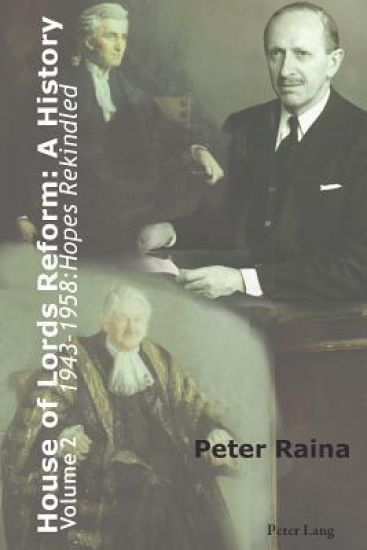
Peter Raina’s House of Lords Reform recounts the long struggle to bring an ancient institution up to date. The first volume ended in 1937, as crisis overwhelmed Europe. Reform issues were not forgotten, however. This second volume continues the story, presenting a wealth of illuminating records, a great many of them published here for the first time. The 4th Marquess of Salisbury planned changes to the Lords even before the war’s end. Further proposals followed after the establishment of the Labour government in 1945. Fearful that its legislation would be blocked, Labour amended the Parliament Act, 1911 to limit the Lords’ delaying powers to just one year. Some believed the Upper House would disappear altogether. Salisbury’s heir worked hard for preservation, and managed to secure an all-party conference. Its complex schemes and animated discussions are all presented here in original documents. Though the conference failed, Lords Reading, Exeter and Simon continued the effort, with ideas that would eventually bear fruit. They championed the rights of women, self-regulation through standing orders, and the creation of life peers. The Churchill government formed a Lords Reform Committee but could get no further. Then, in an unexpected twist, the cause finally triumphed when Harold Macmillan and the Earl of Home got a one-clause bill through parliament in 1958. The Life Peers Act transformed the nature of British politics.
House of Lords Reform: A History

House of Lords Reform: A History

Peter Raina

Peter Lang AG, Internationaler Verlag der Wissenschaften
2014
sidottu
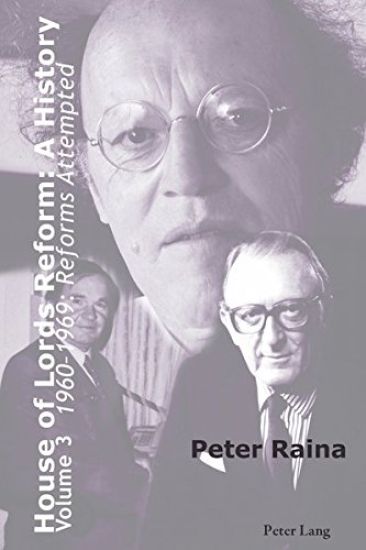
Volume 3 of Peter Raina’s magisterial history covers the 1960s and draws on newly released documents. In astonishing detail, it traces new plans drawn up during the Macmillan-Wilson era to reform the House of Lords. ‘Mission impossible,’ a civil servant declared. But when, to remain a Commons MP, Tony Benn insisted on disclaiming an inherited peerage, he started off a fresh willingness to tackle old problems. The Peerages Act 1963 allowed peers the option of disclaimer and, at last, gave equal rights in the Upper House to Scottish and women inheritors. A Labour government came in, and in 1967 gained the majority needed to embark on bold legislation. But it feared interference, so comprehensive plans were backed for changing the whole complexion of two-chamber politics. Led by Lord Shackleton and the intellectual Richard Crossman, schemes were devised and inter-party talks got under way – at first in a spirit of cooperation. But had the party elites listened to their fiery back-benchers? When a bill was introduced into parliament, the scenes were unforgettable … This volume tells not just the story, but reveals the intricate thinking of those who wanted to make a bicameral system work in the age of modern party politics.
A Daring Venture

A Daring Venture

Peter Raina

Peter Lang AG, Internationaler Verlag der Wissenschaften
2014
nidottu
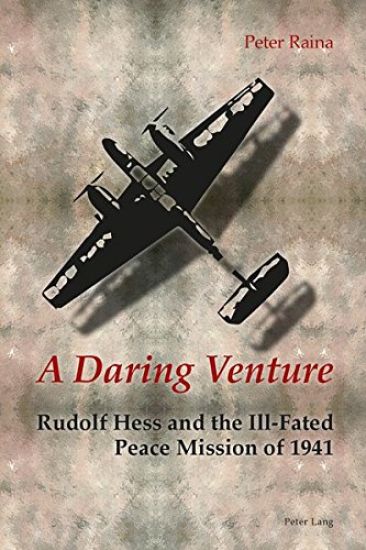
At the height of the Second World War, Hitler’s Deputy, Rudolf Hess, made a dramatic solo flight to the British Isles. His arrival there was sensational news – and it baffled everyone. Why had he come? Hess claimed he had flown to Britain entirely of his own initiative and was on a personal mission of peace. But so unlikely was the success of such an appeal in Churchill’s entrenched Britain that historians continue to wonder at his motives. In this book, Peter Raina publishes, for the first time, complete texts of Hess’s ‘peace proposals’ and a treatise he wrote in captivity outlining how he saw Nazi Germany’s role in Europe. These texts throw considerable light on Hess’s mission and also on how the Nazi leadership saw their programme of expansion and their relations with Britain. Disconcertingly single-minded and an unashamed disciple of Hitler, Hess was at heart an idealist. His friend and confidant Albrecht Haushofer was an idealist of a different kind, and joined the German Resistance Movement. The frame story of this book relates how the two men moved to their tragic ends.
House of Lords Reform: A History

House of Lords Reform: A History

Peter Raina

Peter Lang AG, Internationaler Verlag der Wissenschaften
2015
sidottu
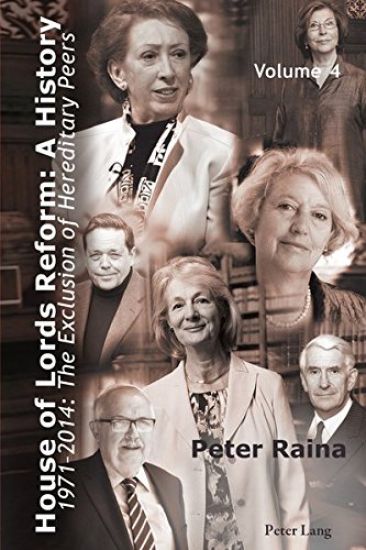
Peter Raina’s magnificent history of Lords reform has already brought into the public domain a mass of original documents and thrown light on the debates they fuelled. In Volume 4 he brings his study up to the present age. The Thatcher and Blair governments were both determined to shake up the system, and in such times the old House of Lords began to look more and more outdated. Mrs Thatcher’s inaction on the issue only increased calls for abolition or change. So the Blair government grasped the nettle. In one historic Act of Parliament it ejected hereditary peers from the House – except for 92 saved by a last-minute amendment. The negotiations and reactions surrounding this event are recorded here in lively detail. This concluding book brings Peter Raina’s History of Lords’ Reform up to the end of 2014. It follows on from the banishment of hereditary peers from the House in the name of democracy. This was proclaimed as only the start of more sweeping change. What was to happen next?
Bishop George Bell

Bishop George Bell

Peter Raina

Verlag Peter Lang
2009
nidottu
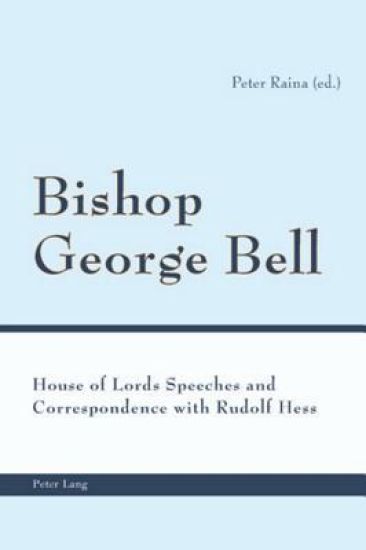
Bishop George Bell always felt that the Church must endeavour to meet the problems of the modern world. He was thus foremost in applying the precepts of the Christian faith to national and international issues. George Bell very often raised his voice in the House of Lords (of which he was a distinguished member from December 1937 till January 1958) against class and racial hatred, against war, and against totalitarianism, and spoke for the innocent and helpless victims of persecution. Complete texts of all Bell’s House of Lords speeches are presented here, published for the first time in one volume. The issues that Bell tackled are, in essence, still relevant today. This volume also includes unpublished correspondence between George Bell and Rudolf Hess, Hitler’s deputy. After the National Socialists came to power in Germany, Bell, as a committed Christian, felt that he had to act in defence of the German Church, which the Nazis were eager to destroy. The Bishop made strenuous efforts to contact people in power in Germany, people who, he knew, took decisions with momentous consequences. Rudolf Hess was one of them.