
Kirjahaku
Etsi kirjoja tekijän nimen, kirjan nimen tai ISBN:n perusteella.
74 kirjaa tekijältä Peter Smith
Memorials of Peter Smith. Born, Brechin, Scotland, Sept. 21, 1802. Died, Andover, Mass., July 6, 1880
Peter Smith
Outlook Verlag
2024
nidottu
Memorials of Peter Smith. Born, Brechin, Scotland, Sept. 21, 1802. Died, Andover, Mass., July 6, 1880
Peter Smith
Antigonos Verlag
2025
nidottu

The Indian Doctor's Dispensatory: Being Father Smith's Advice Respecting Diseases and Their Cure 1812
Peter Smith
Literary Licensing, LLC
2014
nidottu
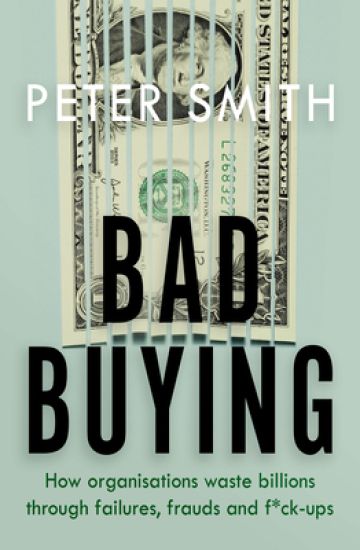
"A fascinating litany of the mistakes that can happen when buyers get it wrong" - Luke Johnson, The Sunday Times"Packed full with amazing examples' Jeremy Vine, BBC Radio 2"Colossal, costly disasters could be averted if those holding the purse strings read this book. - The TimesIn this hilarious, fascinating and insightful expose, industry insider Peter Smith reveals the massive blunders and dodgy dealings taking place around the world as private companies and public sector bodies buy goods and services. A recent report showed that over 90% of procurement projects fail. So, why are so many billions wasted on ineptitude, mismanagement and, in some cases, fraud? By turns an entertaining account of some of the worst procurement scams in history and also a resounding lesson in how not to operate, Bad Buying offers clear and practical advice on how to avoid embarrassing mistakes, minimise needless waste and make sound, strategic procurement decisions on your next initiative.'Had this been published pre-Covid, some of the recent f*ck-ups and waste might have been avoided. It's a must read for the public and private sector alike' Lt-Gen. Sir Andrew Gregory, SSAFA: The Armed Forces Charity 'Hilarious, enlightening and brilliant....This book will make you think twice about buying anything - but do buy this' Antonio Weiss, bestselling author of 101 Business Ideas That Will Change the Way you Work, and Director, The PSC
The ideas, people, and events that developed art education are described and analyzed so that art educators and educators in general will have a better understanding of what has happened (and is happening) to visual art in the schools. Peter Smith raises the issue of art education's inordinate emphasis on Eurocentric art. He challenges the often expressed notion that the field of education is the cause of art education's problems and proposes that confused conceptions within the art world are just as much a root of the difficulty. No other book in art education history gives such close and analytical attention to the careers of women in the field. The materials on Germanic cultural and historical influences are unequaled as is the scholarly treatment of Viktor Lowenfeld, probably the most influential single figure in 20th-century American art education.
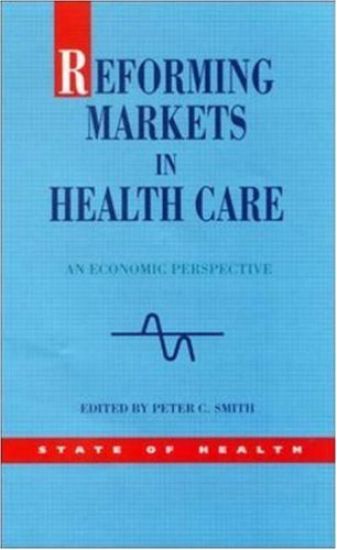
There has been an international move towards the creation of explicit markets in health care, in which the purchase of care is separated from provision. While the creation of such markets has undeniably led to improvements in certain aspects of health care, it has also raised important issues that have yet to be resolved - for example, is an escalation of management costs an inevitable consequence of the introduction of a market in health care? What sort of information is needed to make the market function efficiently? Can a market-based system be compatible with society's objectives relating to equity and solidarity? The UK government is introducing reforms to the internal health care market in the UK National Health Service which seek to address concerns such as these, and this book comprises a series of commentaries on their plans from a group of leading health economists. Authors examine the contribution of economics to the debate on the reforms, while seeking to make the analysis accessible to a general audience.Reforming Markets in Health Care is recommended reading for students and researchers of health policy and health economics, as well as health professionals and policy makers at all levels in the health services.
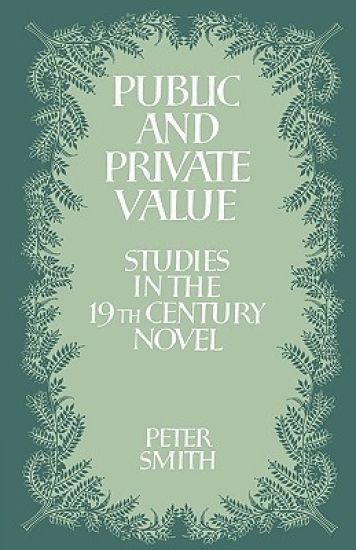
Originally published in 1984, this book argues that there is an inherited suspicion from the nineteenth-century that the historical novel after Scott is essentially a 'costume' affair, a dashing tale of times of old, suited only to minor talents and undiscerning readers. Though Scott inaugurated the period of the novel's greatest accomplishments, the specific tradition he founded seems to peter out into relative sterility. This book challenges such a view, and in doing so, offers a major reappraisal of the mainstream Victorian novel. Peter Smith argues that Scott's abiding concern was with the nature of historical change, not in remote but in modern times, and that a similar concern is equally fundamental to Dickens, Flaubert, Henry James and Conrad. In a series of readings of Little Dorrit, L'education sentimentale, Bouvard et Pecuchet, The Princess Casamassima, The Ambassadors and Nostromo, he offers a fresh interpretation not only of these works but of their authors' careers as a whole showing how each of them accommodated personal perceptions and stories of private life to an examination of public values and political upheavals.
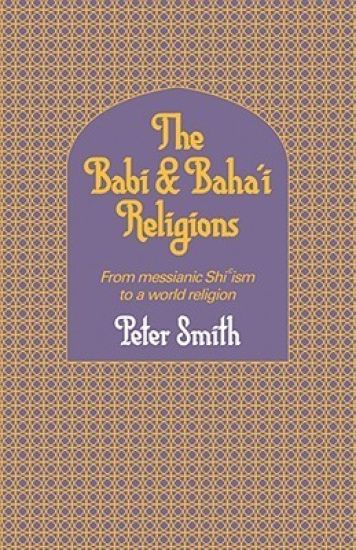
The development of the Baha'i Faith from the messianic Babi movement in nineteenth-century Iran to become an independent religion established in many countries and commanding the devotion of people from many different cultures provides a vivid example of religious change in the modern world. The process is more fully documented than that by which any other religion emerged and Peter Smith is able to trace in detail the development of the major beliefs and values in their social and historical contexts. Beginning with the rise of the dissident Babi sect within Shi'i Islam, the book examines the origin of the Baha'i Faith and its dominant religious concerns in Qajar Iran, its initial establishment and subsequent growth in the United States, the development of its administration, and its present global expansion. A conclusion outlines possible future developments. Chronologies of the main events, a glossary and a bibliographical guide add to the usefulness of the book for both students and general readers.
Chaotic dynamics has been hailed as the third great scientific revolution in physics this century, comparable to relativity and quantum mechanics. In this book, Peter Smith takes a cool, critical look at such claims. He cuts through the hype and rhetoric by explaining some of the basic mathematical ideas in a clear and accessible way, and by carefully discussing the methodological issues which arise. In particular, he explores the new kinds of explanation of empirical phenomena which modern dynamics can deliver. Explaining Chaos will be compulsory reading for philosophers of science and for anyone who has wondered about the conceptual foundations of chaos theory.
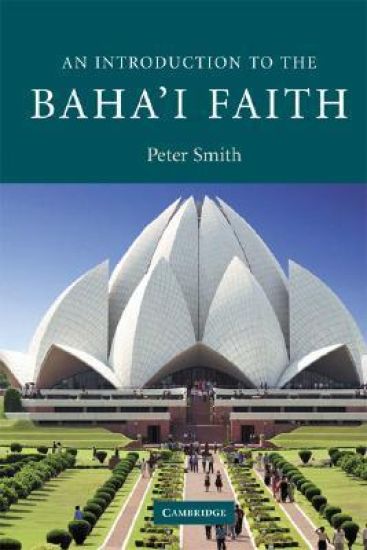
The Baha'i faith has some five million adherents around the world. It preaches the oneness of God, the unity of all faiths, universal education and the harmony of all people, but has no priesthood and few formal rituals. In this book Peter Smith traces the development of the Baha'i faith from its roots in the Babi movement of mid-nineteenth century Iran to its contemporary emergence as an expanding worldwide religion. • Explores the textual sources for Baha'i belief and practice, theology and anthropology and understanding of other religions. • Covers the concept of the spiritual path, Baha'i law and administration and aspects of community life. • Examines the Baha'i's social teachings and activities in the wider world. This introduction will be of particular interest to students of new religious movements, Middle East religions, and comparative religion and for those studying short courses on the Baha'i faith.
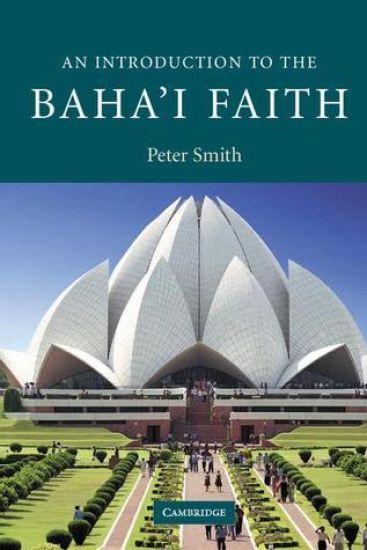
The Baha'i faith has some five million adherents around the world. It preaches the oneness of God, the unity of all faiths, universal education and the harmony of all people, but has no priesthood and few formal rituals. In this book Peter Smith traces the development of the Baha'i faith from its roots in the Babi movement of mid-nineteenth century Iran to its contemporary emergence as an expanding worldwide religion. • Explores the textual sources for Baha'i belief and practice, theology and anthropology and understanding of other religions. • Covers the concept of the spiritual path, Baha'i law and administration and aspects of community life. • Examines the Baha'i's social teachings and activities in the wider world. This introduction will be of particular interest to students of new religious movements, Middle East religions, and comparative religion and for those studying short courses on the Baha'i faith.
This slender, full-color volume--a work of art in itself--contains a gorgeous litany of ancient hymns to Apollo that are specifically chosen for their power to speak to the 21st Century mind. The impact that this "god to whom all Olympians bowed," and to whom we have owed, and continue to owe, so much, is simultaneously straightforward and enigmatic. Who is he today? Regardless, take the journey with this practice and sublime litany and see where you are taken. (55 pages)
Deepen your understanding of quantum physics and expanded states of awareness with Quantum Consciousness, an enlightening guide that helps you pull science and spirituality closer together. This book invites you to tour alternate realities, parallel lives, interdimensional consciousness, and even the very fabric of the universe. Specially emphasized are four aspects of quantum consciousness: the Creator Effect, Intanglement, Everywhereness, and Holographic Healing. You ll also find a detailed exploration of the various realms of consciousness, including stored consciousness, alternate consciousness, parallel consciousness, and interdimensional consciousness. Quantum Consciousness helps you make life-changing discoveries and move past the limitations of your current mindset.
This clear and accessible guide provides a comprehensive outline on how to convert your house into a more 'green' home. Buildings are the greates energy wasters and for those of us concerned about the environment, and household bills, this book presents the key design changes that we can implement to our own homes to remedy energy loss. This title covers the full range of design chanegs that are available to the homeowner and designer for renovation, from the roof to the basement, from insulation to windows. It also feature a selection of case studies illustrating the experiences of other homeowners and designers and how they have adapted and used the technology available to them in creating an energy efficient home. This is a practical, hands-on guide, ideal for architects, designers and homeowners.

The only book of its kind on the market, this book is the companion to our Valve Selection Handbook, by the same author. Together, these two books form the most comprehensive work on piping and valves ever written for the process industries. This book covers the entire piping process, including the selection of piping materials according to the job, the application of the materials and fitting, trouble-shooting techniques for corrosion control, inspections for OSHA regulations, and even the warehousing, distributing, and ordering of materials. There are books on materials, fitting, OSHA regulations, and so on, but this is the only "one stop shopping" source for the piping engineer on piping materials.
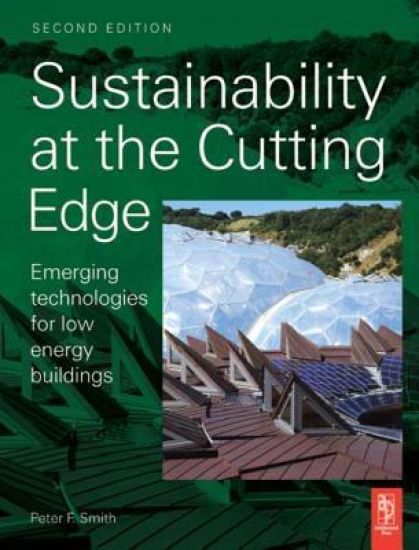
Sustainability at the Cutting Edge is an essential guide to understanding the future direction of sustainable technology. This fully updated new edition deals not only with current best practice and state of the art case studies, but with the very latest emerging technologies which will transform the relationship between buildings and energy. Professor Smith describes how buildings can be made to significantly reduce their reliance on fossil-based energy by the use of solar and geothermal resources. He also describes a range of renewable energy generating technologies. As sustainable building becomes increasingly essential with the advance of climate change, government legislation and international treaties, this is valuable knowledge for every architect, engineer and designer. This immensely practical book is packed with useful diagrams, charts and colour photographs to illustrate a variety of the most recent case studies, including the education building, the Core, at the Eden Project in Cornwall. As well as exploring cutting edge developments in photovoltaics (PV) this revised edition also includes the latest data from the 2006 Carbon Trust report on wave and tide, and new material on the latest advances in bioenergy and marine technologies. Buildings are currently a major part of the carbon emissions problem. This book indicates how they may become part of the solution.

• Details on planes like the German Stuka, the American Dauntless, the Japanese Aichi D3A1 "Val," the Soviet PE-2, and numerous others • Riveting accounts of aerial combat • Includes maps, diagrams, tables, and photos For many, it is a dive bomber that conjures the most dramatic, quintessential image of World War II: a screaming German Stuka hurtling toward the ground as part of the frightening blitzkrieg that opened the war. In this illustrated history of Allied and Axis dive bombers, Peter C. Smith traces these formidable aircraft from the earliest experiment, through the planes' first operation, to their emergence as devastatingly effective tools of aerial warfare in World War II.