Kirjojen hintavertailu. Mukana 12 293 207 kirjaa ja 12 kauppaa.

Kirjahaku

Etsi kirjoja tekijän nimen, kirjan nimen tai ISBN:n perusteella.

6 kirjaa tekijältä Peter Stanlis

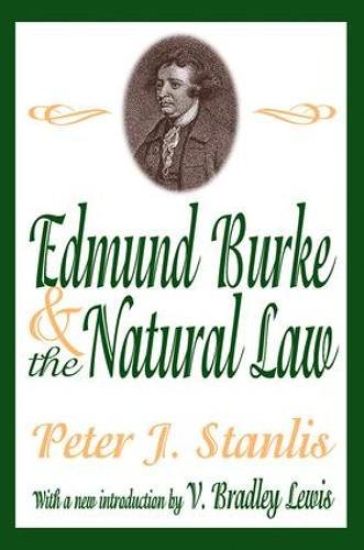
Edmund Burke and the Natural Law

Edmund Burke and the Natural Law

Peter Stanlis

Transaction Publishers
2003
nidottu
Today the idea of natural law as the basic ingredient in moral, legal, and political thought presents a challenge not faced for almost two hundred years. On the surface, there would appear to be little room in the contemporary world for a widespread belief in natural law. The basic philosophies of the opposition--the rationalism of the philosophes, the utilitarianism of Bentham, the materialism of Marx--appear to have made prior philosophies irrelevant. Yet these newer philosophies themselves have been overtaken by disillusionment born of conflicts between "might" and "right." Many thoughtful people who were loyal to secular belief have become dissatisfied with the lack of normative principles and have turned once more to natural law.This first book-length study of Edmund Burke and his philosophy, originally published in 1958, explores this intellectual giant's relationship to, and belief in, the natural law. It has long been thought that Edmund Burke was an enemy of the natural law, and was a proponent of conservative utilitarianism. Peter J. Stanlis shows that, on the contrary, Burke was one of the most eloquent and profound defenders of natural law morality and politics in Western civilization. A philosopher in the classical tradition of Aristotle and Cicero, and in the Scholastic tradition of Aquinas, Burke appealed to natural law in the political problems he encountered in American, Irish, Indian, and British affairs, and in reaction to the French Revolution.This book is as relevant today as it was when it was first published, and will be mandatory reading for students of philosophy, political science, law, and history.
Conversations with Robert Frost

Conversations with Robert Frost

Peter Stanlis

Routledge
2017
sidottu
These core conversations between Peter Stanlis and Robert Frost occurred during 1939-1941. They are written in the much larger context of nearly a quarter century of friendship that ended only with the passing of Frost in 1963. These discussions provide a unique window of opportunity to appreciate the sources of Frost's philosophical visions, as well as his poetic interests. The discussions between Stanlis and Frost were held between six consecutive summers (1939-1944), when Stanlis was a student at the Bread Loaf Graduate School of English. These were augmented by additional exchanges at Bread Loaf in 1961-1962. These conversations provide original insights on important subjects common to both men.Frost insisted that it was impossible to make a complete or final unity out of the conflicts between spirit and matter. Ordinary empirical experience and rational discursive reason and logic could not harmonize basic conflicts. He held that the best method to ameliorate apparent contradictions in dualistic conflicts was through the "play" of metaphorical thinking and feeling. Metaphors included parables, allegories, fables, images, symbols, irony, and the forms and techniques of poetry such as rhyme, rhythm, assonance, dissonance, personifications, and connotations.These are the arsenal from which poets draw their insightful metaphors, but such metaphors are also the common property of every normal person. A poem is "a momentary stay against confusion," a form of revelation for "a clarification of life," but not a final, absolute answer to the mysteries and complexities in man's life on Earth. So too-at their best-are science, religion, philosophy, education, politics, and scholarship as a means of ameliorating human problems.
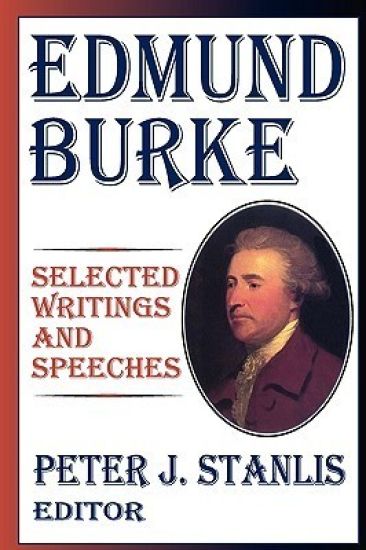
Edmund Burke

Edmund Burke

Peter Stanlis

Routledge
2017
sidottu
In this unique book, Peter J. Stanlis, the leading Burke scholar in America, has collected all the most important works and speeches of Edmund Burke (1729-1797), British statesman, political philosopher, and founder of modern conservative thought and, with due care to preserve the beauty of Burke's prose, edited them down to their essentials."The main purpose of these selections," Stanlis explains, "is to present extensive and in the main unbroken samples of Burke's most representative thought in his most characteristic style, on a great variety of subjects."In this major effort you can find--to name only a few topics covered--Burke's defense of ordered liberty, his advocacy of secure property rights, his love of Christianity and Europe's moral tradition, and his impassioned jeremiad against the orgy of destruction that the French Revolution became. Stanlis's general introduction gives important insight into Burke's early life, education, professional training, literary and political career, prose style, political philosophy, and more. In addition, each selection is preceded by a headnote that clarifies the selections in their historical context and includes a brief analytical interpretation. A chronology highlights important dates in Burke's life and career.In its compactness and comprehensiveness, this volume is the quintessential Burke reader. It will be of interest to historians, political scientists, and students of literature and intellectual history.
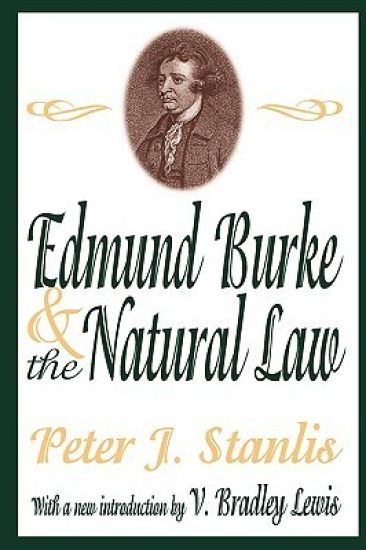
Edmund Burke and the Natural Law

Edmund Burke and the Natural Law

Peter Stanlis

Routledge
2017
sidottu
Today the idea of natural law as the basic ingredient in moral, legal, and political thought presents a challenge not faced for almost two hundred years. On the surface, there would appear to be little room in the contemporary world for a widespread belief in natural law. The basic philosophies of the opposition--the rationalism of the philosophes, the utilitarianism of Bentham, the materialism of Marx--appear to have made prior philosophies irrelevant. Yet these newer philosophies themselves have been overtaken by disillusionment born of conflicts between "might" and "right." Many thoughtful people who were loyal to secular belief have become dissatisfied with the lack of normative principles and have turned once more to natural law.This first book-length study of Edmund Burke and his philosophy, originally published in 1958, explores this intellectual giant's relationship to, and belief in, the natural law. It has long been thought that Edmund Burke was an enemy of the natural law, and was a proponent of conservative utilitarianism. Peter J. Stanlis shows that, on the contrary, Burke was one of the most eloquent and profound defenders of natural law morality and politics in Western civilization. A philosopher in the classical tradition of Aristotle and Cicero, and in the Scholastic tradition of Aquinas, Burke appealed to natural law in the political problems he encountered in American, Irish, Indian, and British affairs, and in reaction to the French Revolution.This book is as relevant today as it was when it was first published, and will be mandatory reading for students of philosophy, political science, law, and history.
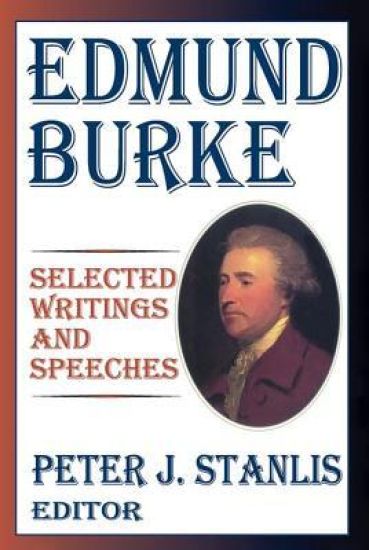
Edmund Burke

Edmund Burke

Peter Stanlis

AldineTransaction
2006
nidottu
In this unique book, Peter J. Stanlis, the leading Burke scholar in America, has collected all the most important works and speeches of Edmund Burke (1729-1797), British statesman, political philosopher, and founder of modern conservative thought and, with due care to preserve the beauty of Burke's prose, edited them down to their essentials."The main purpose of these selections," Stanlis explains, "is to present extensive and in the main unbroken samples of Burke's most representative thought in his most characteristic style, on a great variety of subjects."In this major effort you can find--to name only a few topics covered--Burke's defense of ordered liberty, his advocacy of secure property rights, his love of Christianity and Europe's moral tradition, and his impassioned jeremiad against the orgy of destruction that the French Revolution became. Stanlis's general introduction gives important insight into Burke's early life, education, professional training, literary and political career, prose style, political philosophy, and more. In addition, each selection is preceded by a headnote that clarifies the selections in their historical context and includes a brief analytical interpretation. A chronology highlights important dates in Burke's life and career.In its compactness and comprehensiveness, this volume is the quintessential Burke reader. It will be of interest to historians, political scientists, and students of literature and intellectual history.
Conversations with Robert Frost

Conversations with Robert Frost

Peter Stanlis

AldineTransaction
2009
nidottu
These core conversations between Peter Stanlis and Robert Frost occurred during 1939-1941. They are written in the much larger context of nearly a quarter century of friendship that ended only with the passing of Frost in 1963. These discussions provide a unique window of opportunity to appreciate the sources of Frost's philosophical visions, as well as his poetic interests. The discussions between Stanlis and Frost were held between six consecutive summers (1939-1944), when Stanlis was a student at the Bread Loaf Graduate School of English. These were augmented by additional exchanges at Bread Loaf in 1961-1962. These conversations provide original insights on important subjects common to both men.Frost insisted that it was impossible to make a complete or final unity out of the conflicts between spirit and matter. Ordinary empirical experience and rational discursive reason and logic could not harmonize basic conflicts. He held that the best method to ameliorate apparent contradictions in dualistic conflicts was through the "play" of metaphorical thinking and feeling. Metaphors included parables, allegories, fables, images, symbols, irony, and the forms and techniques of poetry such as rhyme, rhythm, assonance, dissonance, personifications, and connotations.These are the arsenal from which poets draw their insightful metaphors, but such metaphors are also the common property of every normal person. A poem is "a momentary stay against confusion," a form of revelation for "a clarification of life," but not a final, absolute answer to the mysteries and complexities in man's life on Earth. So too-at their best-are science, religion, philosophy, education, politics, and scholarship as a means of ameliorating human problems.