Kirjojen hintavertailu. Mukana 11 699 587 kirjaa ja 12 kauppaa.

Kirjahaku

Etsi kirjoja tekijän nimen, kirjan nimen tai ISBN:n perusteella.

14 kirjaa tekijältä Peter Stothard

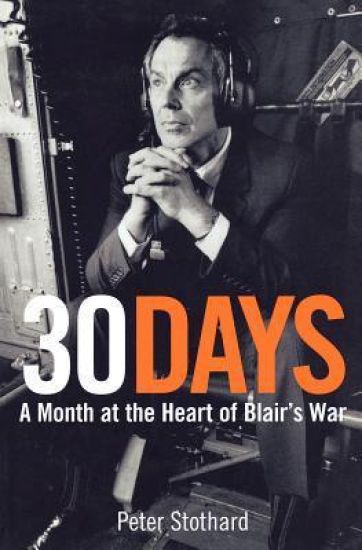
30 Days

30 Days

Peter Stothard

HarperCollins Publishers Ltd
2003
nidottu
A fly-on-the-wall account of a month spent behind the scenes with Tony Blair as he attempted to win support for a war against Saddam. The book, by a former editor of "The Times", is a diary which begins with the Prime Minister being slow hand-clapped in a TV studio and ends with the fall of Saddam.
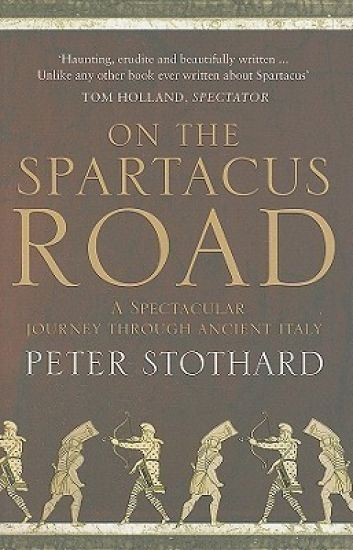
On the Spartacus Road

On the Spartacus Road

Peter Stothard

HarperPress
2011
nidottu
In this inspiring and original book, former editor of The Times, Sir Peter Stothard, re-traces the journey taken by Spartacus and his army of rebels. In the final century of the first Roman Republic an army of slaves brought a peculiar terror to the people of Italy. Its leaders were gladiators. Its purpose was incomprehensible. Its success was unprecedented. The Spartacus Road is the route along which this rebel army outfought the Roman legions between 73 and 71 BC, bringing both fears and hopes that have never wholly left the modern mind. It is a road that stretches through 2,000 miles of Italian countryside and out into 2,000 years of world history. In this inspiring and original memoir, the former editor of The Times, Peter Stothard, takes us on an extraordinary journey. The result is a book like none other – at once a journalist’s notebook, a classicist’s celebration, a survivor’s record of a near fatal cancer and the history of a unique and brutal war. As he travels along the Spartacus road – through the ruins of Capua to Vesuvius and the lost Greek cities of the Italian south – Stothard’s prose illuminates conflicting memories of times ancient and modern, the simultaneously foreign and familiar, one of the greatest stories of all ages. Sweepingly erudite and strikingly personal, On the Spartacus Road is non-fiction writing of the highest order.
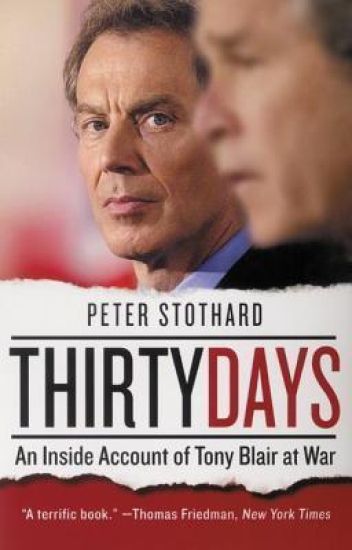
Thirty Days: An Inside Account of Tony Blair at War

Thirty Days: An Inside Account of Tony Blair at War

Peter Stothard

HARPERCOLLINS PUBLISHERS
2004
nidottu
For thirty days I was close by him at historic events -- in the places where writers never are.Before Britain could help the United States in the war against Saddam Hussein, Tony Blair faced a battle against his own voters, his own party, and his own allies in Europe. These were among the most tense and tumultuous weeks the world had seen since the fall of the Berlin Wall.In thirty days, Blair took on his opponents and won.Through it all, Peter Stothard had unprecedented access to Blair -- from Ten Downing Street and the House of Commons through the war summits in the Azores, Brussels, Belfast, and at Camp David. Stothard brings us inside the corridors of power during this extraordinary time, offering a vivid, up-close view of an enormously popular leader facing the challenge of his life.
The Last Assassin: The Hunt for the Killers of Julius Caesar
Many men killed Julius Caesar. Only one man was determined to kill the killers. From the spring of 44 BC through one of the most dramatic and influential periods in history, Caesar's adopted son, Octavian, the future Emperor Augustus, exacted vengeance on the assassins of the Ides of March, not only on Brutus and Cassius, immortalized by Shakespeare, but all the others too, each with his own individual story. The last assassin left alive was one of the lesser-known: Cassius Parmensis was a poet and sailor who chose every side in the dying Republic's civil wars except the winning one, a playwright whose work was said to have been stolen and published by the man sent to kill him. Parmensis was in the back row of the plotters, many of them Caesar's friends, who killed for reasons of the highest political principles and lowest personal piques. For fourteen years he was the most successful at evading his hunters but has been barely a historical foot note--until now. The Last Assassin dazzlingly charts an epic turn of history through the eyes of an unheralded man. It is a history of a hunt that an emperor wanted to hide, of torture and terror, politics and poetry, of ideas and their consequences, a gripping story of fear, revenge, and survival.
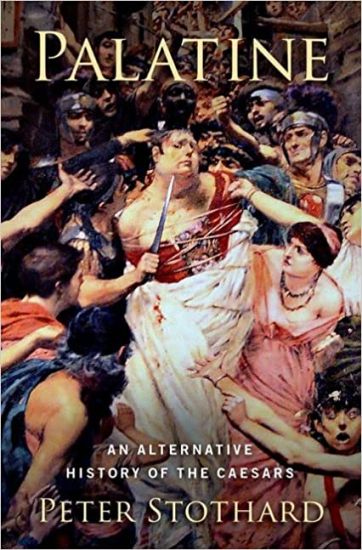
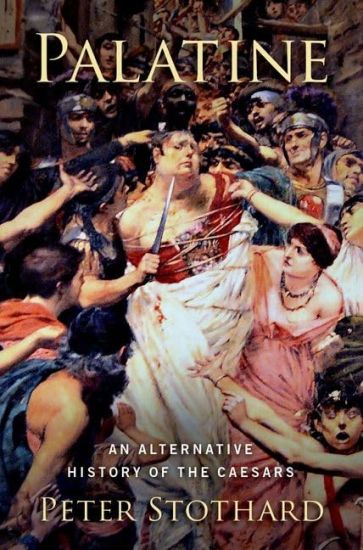
Palatine: An Alternative History of the Caesars

Palatine: An Alternative History of the Caesars

Peter Stothard

Oxford University Press
2023
sidottu
A unique and entertaining history of the Roman Empire's first dynasty 14 CE: The first Roman emperor is dead. A second is about to succeed. The Forum of Rome, once fought over so fiercely, has become hardly more than a museum. The house of all power is up above on the Palatine Hill, about to become the birthplace of Western bureaucracy, a warren of banqueting and bedrooms, a treacherous household where it takes special talents to survive. This is a history of ancient Rome's first imperial dynasty--the Julio-Claudians--with a cast of new men and newly dominant women, those reviled too often in the past as flatterers and gluttons, audacious slaves and former slaves, lawyers-for-hire, chancer arrivistes, and unhinged party animals. Palatine uncovers the lives of the Vitellii, perhaps Rome's least admired imperial clan, of Publius, an old-fashioned soldier snared in the politics of the new age, of Lucius, an exceptionally skilled and sycophantic courtier, and of Aulus a genial sluggard whose prowess at the table carries him all the way to the throne before collapsing his family's reputation forever. Few now remember them. Yet in their creeping ascent to the very summit of the imperial hierarchy lie neglected truths about a lasting legacy of Rome.
The Last Assassin: The Hunt for the Killers of Julius Caesar
Many men killed Julius Caesar. Only one man was determined to kill the killers. From the spring of 44 BC through one of the most dramatic and influential periods in history, Caesar's adopted son, Octavian, the future Emperor Augustus, exacted vengeance on the assassins of the Ides of March, not only on Brutus and Cassius, immortalized by Shakespeare, but all the others too, each with his own individual story. The last assassin left alive was one of the lesser-known: Cassius Parmensis was a poet and sailor who chose every side in the dying Republic's civil wars except the winning one, a playwright whose work was said to have been stolen and published by the man sent to kill him. Parmensis was in the back row of the plotters, many of them Caesar's friends, who killed for reasons of the highest political principles and lowest personal piques. For fourteen years he was the most successful at evading his hunters but has been barely a historical foot note--until now. The Last Assassin dazzlingly charts an epic turn of history through the eyes of an unheralded man. It is a history of a hunt that an emperor wanted to hide, of torture and terror, politics and poetry, of ideas and their consequences, a gripping story of fear, revenge, and survival.
Palatine

Palatine

Peter Stothard

OXFORD UNIVERSITY PRESS INC
2024
nidottu
A unique and entertaining history of the Roman Empire's first dynasty 14 CE: The first Roman emperor is dead. A second is about to succeed. The Forum of Rome, once fought over so fiercely, has become hardly more than a museum. The house of all power is up above on the Palatine Hill, about to become the birthplace of Western bureaucracy, a warren of banqueting and bedrooms, a treacherous household where it takes special talents to survive. This is a history of ancient Rome's first imperial dynasty -- the Julio-Claudians -- with a cast of new men and newly dominant women, those reviled too often in the past as flatterers and gluttons, audacious slaves and former slaves, lawyers-for-hire, chancer arrivistes, and unhinged party animals. Palatine uncovers the lives of the Vitellii, perhaps Rome's least admired imperial clan, of Publius, an old-fashioned soldier snared in the politics of the new age, of Lucius, an exceptionally skilled and sycophantic courtier, and of Aulus a genial sluggard whose prowess at the table carries him all the way to the throne before collapsing his family's reputation forever. Few now remember them. Yet in their creeping ascent to the very summit of the imperial hierarchy lie neglected truths about a lasting legacy of Rome.
Horace

Horace

Peter Stothard

YALE UNIVERSITY PRESS
2025
sidottu
A biography of Horace, one of the most popular poets from antiquity, revealing the little-known man behind his famous lines “Peter Stothard is a master of modern writing about ancient Rome, of vividly bringing to life its poetry and its poets.”—Mary Beard Quintus Horatius Flaccus (65–8 BCE) wrote some of ancient Rome’s greatest poetry, melding languages and cultures with youthful ideals and a realist’s recognition of the dictatorial world around him. Horace is famed for his fine phrases, lyric sex, and guidance on how to live, but he was a poet maddened by war, and many of his most self-revealing poems have rarely been read. He could be sublime and obscene, amusing and abusive, a model of moderation and anything but. In this book, the first modern retelling of Horace’s life, Peter Stothard follows the poet from his birth as the son of a formerly enslaved father through his rise to the highest circles of Roman society. He shines a light on how shattering experiences in the war to save Rome’s republic shaped the loyal servant and revolutionary artist he became. With astute scholarship and sympathy, Stothard follows Horace’s rise from humble beginnings to the social and political heights of the autocracy he had fought to prevent.
Crassus

Crassus

Peter Stothard

YALE UNIVERSITY PRESS
2023
pokkari
The story of Rome’s richest man, who died a humiliating desert death in search of military glory “A perfectly paced biography.”—Tom Holland, Times Literary Supplement Marcus Licinius Crassus (115–53 BCE) was a modern man in an ancient world, a pioneer disrupter of finance and politics, and the richest man of the last years of the Roman republic. Without his catastrophic ambition, this trailblazing tycoon might have quietly entered history as Rome’s first modern political financier. Instead, Crassus and his son led an army on an unprovoked campaign against Parthia into what are now the borderlands of Turkey, Syria, and Iraq, losing a battle at Carrhae which scarred Roman minds for generations. After Crassus was killed, historians told many stories of his demise. Some said that his open mouth, shriveled by desert air, had been filled with molten gold as testament to his lifetime of greed. His story, skillfully told by Peter Stothard, poses both immediate and lasting questions about the intertwining of money, ambition, and power.
Palatine

Palatine

Peter Stothard

ORION PUBLISHING CO
2024
nidottu
'Lets us see how power really worked, in public and private ... Stothard tells this story superbly'Dominic Sandbrook, SUNDAY TIMES14 CE: The first Roman emperor is dead. A second is about to succeed. The Forum of Rome, once fought over so fiercely, has become hardly more than a museum. The house of all power is up above on the Palatine Hill, about to become the birthplace of Western bureaucracy, a warren of banqueting and bedrooms, a treacherous household where it takes special talents to survive. This is a Roman history with a cast of new men and newly dominant women, those reviled too often in the past as flatterers and gluttons, uppity slaves and former slaves, lawyers-for-hire, chancer arrivistes and unhinged party animals. Palatine uncovers the lives of the Vitellii, perhaps Rome's least admired imperial clan, of Publius, an old-fashioned soldier snared in the politics of the new age, of Lucius, an exceptionally skilled and sycophantic courtier, and of Aulus a genial sluggard whose prowess at the table carries him all the way to the throne before collapsing his family's reputation for ever. Few now remember them. Yet in their creeping ascent to the very summit of the imperial hierarchy lie neglected truths about a lasting legacy of Rome.
Alexandria

Alexandria

Peter Stothard

Granta Books
2014
nidottu
Finding himself in Alexandria in the winter of 2010, Peter Stothard, editor of the TLS and former editor of The Times, is forced to contemplate his past in circumstances he does not expect. The aftermath of a bombing and the onset of the Arab Spring place obstacles in his plans to complete a long-delayed biography of Cleopatra. Minded by two guides, whose motives are mixed and mysterious, he visits Alexandria's ancient sites and revisits places and people from his own life, an Essex childhood among military engineers, Latin and Greek at Oxford and journalism high and low in London. In this extraordinary book, part memoir and part travel literature, written against the background of the fracturing police state of Egypt, a man and a woman from the author's school days are as pressing as the political minders of today.