Kirjojen hintavertailu. Mukana 11 717 486 kirjaa ja 12 kauppaa.

Kirjahaku

Etsi kirjoja tekijän nimen, kirjan nimen tai ISBN:n perusteella.

17 kirjaa tekijältä Peter Thomas

Trees

Trees

Peter Thomas

William Collins
2022
sidottu
Winner of the 2022 Marsh Book of the Year Award A long-awaited volume in the New Naturalist series examining the trees of Britain. Trees are immensely valuable. They give shape to our lives with wood, the material that makes our homes, our books, our belongings; they nourish us with the air we breathe and the fruits we eat; and they sustain us, with their shade and the comfort of their presence. They are also fascinating – they are the biggest and oldest living organisms on the planet and are essential components of many of the landscapes of Britain. Trees have been vital in determining the ecology of our planet as well as the development of human cultures and communities, yet how much do we really understand about them? How do trees live? How do they fit into their environments? Why are they so important to ecosystems on earth, and to us? And what does the future hold for trees? Can they solve the problems of climate change by absorbing enough carbon dioxide, and would we run out of oxygen if all the world’s trees disappeared? Do trees really talk to each other? There is much to learn about these silent giants. Ecologist Peter Thomas explores all these questions and many more, delving into the often hidden life of trees, using examples from around the world, from common trees to the unusual and bizarre. This comprehensive introduction to all aspects of tree biology and ecology presents the latest scientific and botanical discoveries and explores the wonders and mysteries of trees.
Trees

Trees

Peter Thomas

William Collins
2022
nidottu
Winner of the 2022 Marsh Book of the Year Award A long-awaited volume in the New Naturalist series examining the trees of Britain. Trees are immensely valuable. They give shape to our lives with wood, the material that makes our homes, our books, our belongings; they nourish us with the air we breathe and the fruits we eat; and they sustain us, with their shade and the comfort of their presence. They are also fascinating – they are the biggest and oldest living organisms on the planet and are essential components of many of the landscapes of Britain. Trees have been vital in determining the ecology of our planet as well as the development of human cultures and communities, yet how much do we really understand about them? How do trees live? How do they fit into their environments? Why are they so important to ecosystems on earth, and to us? And what does the future hold for trees? Can they solve the problems of climate change by absorbing enough carbon dioxide, and would we run out of oxygen if all the world’s trees disappeared? Do trees really talk to each other? There is much to learn about these silent giants. Ecologist Peter Thomas explores all these questions and many more, delving into the often hidden life of trees, using examples from around the world, from common trees to the unusual and bizarre. This comprehensive introduction to all aspects of tree biology and ecology presents the latest scientific and botanical discoveries and explores the wonders and mysteries of trees.
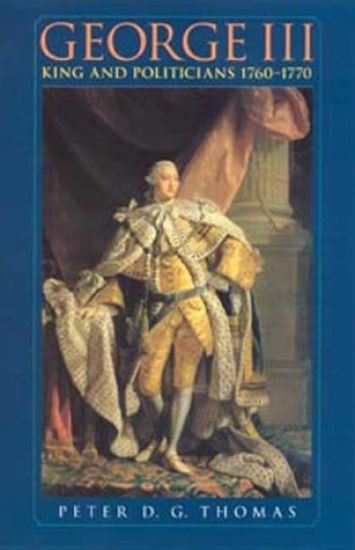
George III

George III

Peter Thomas

Manchester University Press
2002
nidottu
The eighteenth-century was long deemed 'the classical age of the constitution' in Britain, with cabinet government based on a two-party system of Whigs and Tories in Parliament, and a monarchy whose powers had been emasculated by the Glorious Revolution o. This study furthers the work of Sir Lewis Namier who argued in 1929 that no such party system existed, George III was not a cypher and that Parliament was an administration comprising of factions and opposition. George III was a high-profile and well-known character in British history whose policies have often been blamed for the loss of Britain's American colonies, around whom rages a perennial dispute over his aims: was he seeking to restore royal power, or merely excercising his constitutional rights?. The first chronological survey of the first ten years of George III’s reign through power politics and policy-making.An electronic edition of this book is freely available under a Creative Commons (CC BY-NC-ND) licence.
Yorkshire's Historic Pubs

Yorkshire's Historic Pubs

Peter Thomas

The History Press Ltd
2005
nidottu
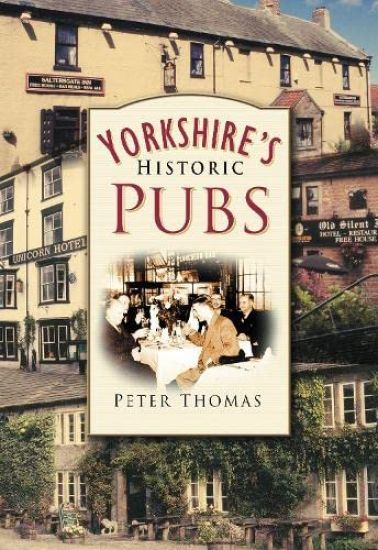
Peter Thomas's introduction to the county's pubs opens with a brief chapter about the history of brewing and pubs, and a short history of pub signs in Yorkshire. Most of the book is dedicated to a round-up of interesting inns - their history and architecture, ghosts and legends associated with them, and famous and infamous landlords and landladies.
Lancashire's Historic Pubs

Lancashire's Historic Pubs

Peter Thomas

The History Press Ltd
2006
nidottu
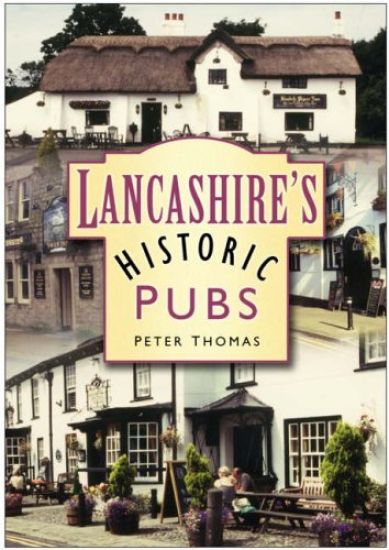
If you enjoy the occasional pub meal, a drink at the bar, or if you're interested in Lancashire's social history, you're sure to find something entertaining in Peter Thomas's introduction to the county's pubs. It opens with a round-up of the history of brewing, pubs and ale-selling, and a section on Lancashire's pub signs, though most of the book is dedicated to an A-Z of over fifty of the most interesting inns. Their history, architecture, ghosts and associated legends are all featured, as well as the exploits of their famous and infamous landlords and landladies.Peter's exhaustive research has resulted in a gem of a book which brings together the proud history, traditions and customs associated with Lancashire hostelries; from ale tasting at the Plough at Eaves to the Britannia Coconut Dancers at the Crown Inn at Bacup. A fascinating journey, with plenty of refreshment stops along the way, this will appeal to anyone with an interest in local history, and those who'd like to know more about the convival surroundings in which they might enjoy a pint.
Along the Penistone Line

Along the Penistone Line

Peter Thomas

The History Press Ltd
2007
nidottu
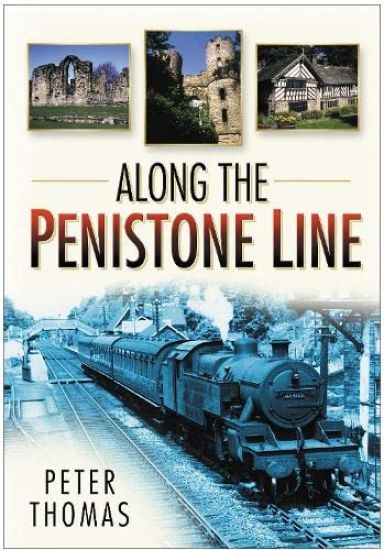
It is curious that the nineteenth-century railway builders should even have thought of a line linking Huddersfield with Sheffield, now known as the Penistone Line, with the risk of all sorts of disasters. As Along the Penistone Line makes clear, collisions, runaway trains, collapsed tunnels and viaducts: the Penistone Line had them all.
A Century of Exeter

A Century of Exeter

Peter Thomas

The History Press Ltd
2007
nidottu
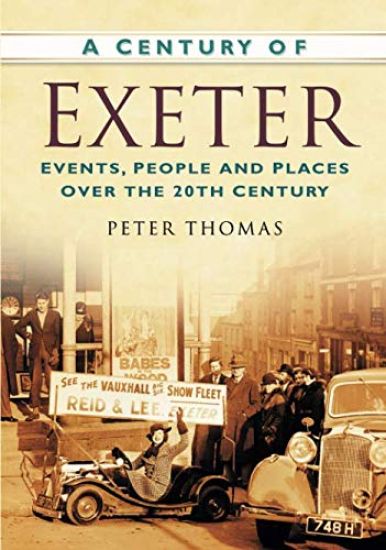
A Century of Exeter offers an insight into the daily lives and living conditions of local people and gives the reader glimpses and details of familiar places during a century of unprecedented change. Many aspects of Exeter's recent history are covered, famous occasions and individuals are remembered and the impact of national and international events is witnessed. A Century of Exeter provides a striking account of the changes that have so altered the city's appearance and records the process of transformation. Drawing on detailed local knowledge of the community, and illustrated with a wealth of black-and-white photographs, this book recalls what Exeter has lost in terms of buildings, traditions and ways of life. It also acknowledges the regeneration that has taken place and celebrates the character and energy of local people as they move through the first years of this new century.
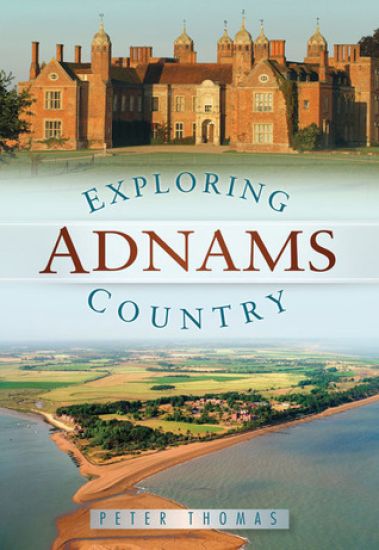
Exploring Adnams Country

Exploring Adnams Country

Peter Thomas

The History Press Ltd
2009
nidottu
When Adnams celebrated 650 years of brewing at Southwold in 1995 there had been an unbroken traditional way of life. Adnams country extends beyond the borders of Suffolk, but this book concentrates on this fine county and its history - from Southwold to Sudbury and Lowestoft to Lavenham. There are profound contrasts within Suffolk: Felixstowe's huge container port and ferry terminal and its near neighbour Ipswich, the busy county town just a stone's throw from the villages of the Gipping Valley. The wool towns of the Stour valley, such as Long Melford, are as handsome as they were hundreds of years ago and the coastline, some sixty miles of it, has some of the loneliest places in England, such as Shingle Street, and some of the most picturesque, like the Deben Estuary leading to Woodbridge and to Sutton Hoo - site of the famous burial now in the care of the National Trust.
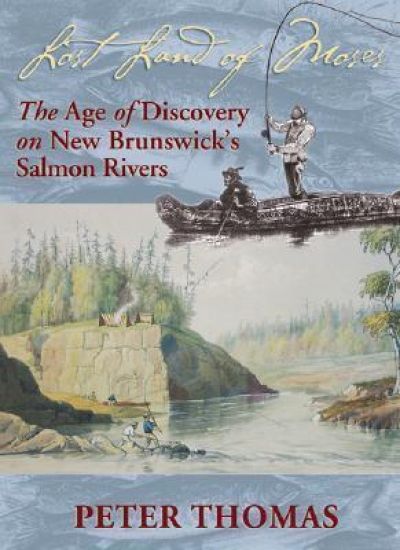
Lost Land of Moses

Lost Land of Moses

Peter Thomas

Goose Lane Editions
2001
pokkari
In the middle of the nineteenth century, most of New Brunswick was pristine wilderness. But by the end of the century the map of eastern Canada would be changed forever by the sport of salmon angling, and by the adventurers, gentlemen, rakes, and royalty, who were drawn together in their lust for the finest of fish. In Lost Land of Moses, Peter Thomas recounts the dramatic changes that occurred between 1840 and 1880, as strenuous wilderness idylls became the Victorian equivalent of adventure tourism. To illustrate his story, he has chosen more than fifty engravings, cartoons, maps, and photographs from archival collections and 19th century books and magazines. Moses Perley was a New Brunswick lawyer with a gift for contagious enthusiasm. Between 1839 and 1841, he published a series of articles in the British magazine Sporting Review describing his canoe trips with Mi'kmaq or Maliseet companions. The articles inspired a generation of young adventurers to visit New Brunswick. Soon, these young British gentlemen were joined by the rich and famous, as steamships brought fishermen right to the rivers, and needs were supplied by professional outfitters. In 1879, the Marquess of Lorne, then Governor General of Canada, and his daring wife, Princess Louise, spent two glorious weeks on the Restigouche, complete with a vice-regal retinue, a houseboat called Great Caesar's Ghost, and carpeted tents. The New Brunswick salmon waters were open for business. Many of the consequences of this influx were dire. Leases were let on the rivers, allowing only wealthy people to fish them. They founded clubs, built expansive camps, and hired wardens to patrol the pools. Most troubling of all, by the 1880s, the Mi'kmaq and Maliseet, at first respected as knowledgeable guides into their own territory, had been reduced to being perceived as mere servants. Moses Perley never foresaw the changes that large numbers of visitors would bring to New Brunswick's teeming salmon rivers. Lost Land of Moses reveals the consequences of his crusade to lure fly fishermen to New Brunswick. For good and ill, the legacy of those forty years is with us today.
Approaches to Learning and Teaching Literature in English

Approaches to Learning and Teaching Literature in English

Peter Thomas

Cambridge University Press
2018
pokkari
A subject-specific guide for teachers to supplement professional development and provide resources for lesson planning. Approaches to learning and teaching Literature in English is the perfect companion for teachers who want to understand key teaching techniques and use them to create effective and engaging lessons. Considering the local and global contexts when planning and teaching a syllabus, the title presents ideas for literature in English with practical examples that help put teaching theory into practice. Teachers can download online tools for lesson planning from our website. This book is ideal support for those new to teaching or wanting to refresh their ideas, and for those studying professional development qualifications or PGCEs.
Liberals Without Logic

Liberals Without Logic

Peter Thomas

Lulu.com
2006
pokkari
In July 2006, John W. Dean published "Conservatives Without Conscience," a book condemning the modern conservative movement for being authoritarian. Dean's book became an instant bestseller. But does it really prove that today's conservatives lack conscience? In his latest book, Peter Thomas explains why "Conservatives Without Conscience" is not persuasive to rational readers. Whether you've read Dean's book or not, you owe it to yourself to read "Liberals Without Logic."
To Climb a Mountain

To Climb a Mountain

Peter Thomas

River Birch Press
2020
pokkari
What questions do you have for God? Does God care what you think? Does God listen to us, or to the angels?"Who may ascend the mountain of the Lord" asks the Psalmist in Psalm 24:3. I would add to the question for today's generation: If we are called to ascend the mountain, then how should we do it with all the challenges and distractions today offered to us? Are we fooling ourselves by believing we can make it to the summit?That Luke should receive a call to climb the mountain is peculiar to the young angel, Gabriel. After all, his response to God's voice so far has been, let's say, less than perfect As Gabriel questions God, Luke begins to climb but faces challenges of a complex nature that will test his resolve and, more importantly, his trust of the God whose voice he tries to follow. Strategically placed along the route are detours, short cuts, and un-truths all used by Diablo to hold the young climber back, slow him down, and entice him away from the mountain. So, is it really possible to climb alone to the summit while facing dangerous overhangs and underhanded schemes of the enemy along the tortuous ascent? God and Gabriel watch as Luke climbs. And we must wait to see if it is worth the effort
Metal Implant Allergy and Immuno-Allergological Compatibility Aspects of Ceramic Materials

Metal Implant Allergy and Immuno-Allergological Compatibility Aspects of Ceramic Materials

Peter Thomas

Springer-Verlag Berlin and Heidelberg GmbH Co. K
2015
nidottu
Nickel, chromium and cobalt or bone cement might potentially trigger contact allergies and thus in turn lead to implant incompatibility. For the first time a clinical algorithm has been developped for procedures in clinical practice for when an implant allergy is suspected. Algorithm comes as a separate laminated loose insert.