Kirjojen hintavertailu. Mukana 11 699 587 kirjaa ja 12 kauppaa.

Kirjahaku

Etsi kirjoja tekijän nimen, kirjan nimen tai ISBN:n perusteella.

16 kirjaa tekijältä Peter Trawny

Heidegger and the Myth of a Jewish World Conspiracy

Heidegger and the Myth of a Jewish World Conspiracy

Peter Trawny

University of Chicago Press
2015
sidottu
In 2014, the first three volumes of Heidegger's Black Notebooks-the personal and philosophical notebooks that he kept during the war years-were published in Germany. These notebooks provide the first textual evidence of anti-Semitism in Heidegger's philosophy, not simply in passing remarks, but as incorporated into his philosophical and political thinking itself. In Heidegger and the Myth of a Jewish World Conspiracy, Peter Trawny, the editor of those notebooks, offers the first evaluation of Heidegger's philosophical project in light of the Black Notebooks. While Heidegger's affiliation with National Socialism is well known, the anti-Semitic dimension of that engagement could not be fully told until now. Trawny traces Heidegger's development of a grand "narrative" of the history of being, the "being-historical thinking" at the center of Heidegger's work after Being and Time. Two of the protagonists of this narrative are well known to Heidegger's readers: the Greeks and the Germans. The world-historical antagonist of this narrative, however, has remained hitherto undisclosed: the Jews, or, more specifically, "world Judaism." As Trawny shows, world Judaism emerges as a racialized, destructive, and technological threat to the German homeland, indeed, to any homeland whatsoever. Trawny pinpoints recurrent, anti-Semitic themes in the Notebooks, including Heidegger's adoption of crude cultural stereotypes, his assigning of racial reasons to philosophical decisions (even undermining his Jewish teacher, Edmund Husserl), his endorsement of a Jewish "world conspiracy," and his first published remarks on the extermination camps and gas chambers (under the troubling aegis of a Jewish "self-annihilation"). Trawny concludes with a thoughtful meditation on how Heidegger's achievements might still be valued despite these horrifying facets. Unflinching and systematic, this is one of the most important assessments of one of the most important philosophers in our history.
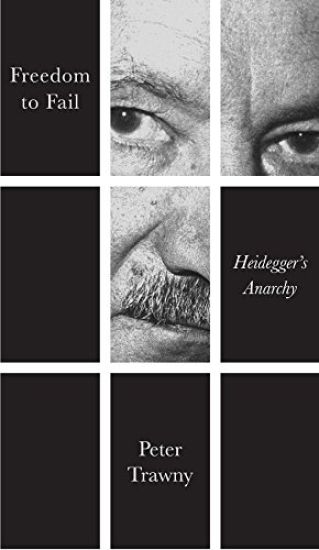
Freedom to Fail

Freedom to Fail

Peter Trawny

Polity Press
2015
sidottu
Martin Heidegger is widely regarded as one of the most influential philosophers of the twentieth-century, and his seminal text Being and Time is considered one of the most significant texts in contemporary philosophy. Yet his name has also been mired in controversy because of his affiliations with the Nazi regime, his failure to criticize its genocidal politics and his subsequent silence about the holocaust.Now, according to Heidegger's wishes, and to complete the publication of his multi-volume Complete Works, his highly controversial and secret 'Black Notebooks' have been released to the public. These notebooks reveal the extent to which Heidegger's 'personal Nazism' was neither incidental nor opportunistic, but part of his philosophical ethos. So, why would Heidegger, far from destroying them, allow these notebooks, which contain examples of this extreme thinking, to be published? In this revealing new book, Peter Trawny, editor of Heidegger's complete works in German, confronts these questions and, by way of a compelling study of his theoretical work, shows that Heidegger was committed to a conception of freedom that is only beholden to the judgement of the history of being; that is, that to be free means to be free from the prejudices, norms, or mores of one's time. Whoever thinks the truth of being freely exposes themselves to the danger of epochal errancy. For this reason, Heidegger's decision to publish his notebooks, including their anti-Jewish passages, was an exercise of this anarchical freedom. In the course of a wide-ranging discussion of Heidegger's views on truth, ethics, the truth of being, tragedy and his relationship to other figures such as Nietzsche and Schmitt, Trawny provides a compelling argument for why Heidegger wanted the explosive material in his Black Notebooks to be published, whilst also offering an original and provocative interpretation of Heidegger's work.
Freedom to Fail

Freedom to Fail

Peter Trawny

Polity Press
2015
nidottu
Martin Heidegger is widely regarded as one of the most influential philosophers of the twentieth-century, and his seminal text Being and Time is considered one of the most significant texts in contemporary philosophy. Yet his name has also been mired in controversy because of his affiliations with the Nazi regime, his failure to criticize its genocidal politics and his subsequent silence about the holocaust.Now, according to Heidegger's wishes, and to complete the publication of his multi-volume Complete Works, his highly controversial and secret 'Black Notebooks' have been released to the public. These notebooks reveal the extent to which Heidegger's 'personal Nazism' was neither incidental nor opportunistic, but part of his philosophical ethos. So, why would Heidegger, far from destroying them, allow these notebooks, which contain examples of this extreme thinking, to be published? In this revealing new book, Peter Trawny, editor of Heidegger's complete works in German, confronts these questions and, by way of a compelling study of his theoretical work, shows that Heidegger was committed to a conception of freedom that is only beholden to the judgement of the history of being; that is, that to be free means to be free from the prejudices, norms, or mores of one's time. Whoever thinks the truth of being freely exposes themselves to the danger of epochal errancy. For this reason, Heidegger's decision to publish his notebooks, including their anti-Jewish passages, was an exercise of this anarchical freedom. In the course of a wide-ranging discussion of Heidegger's views on truth, ethics, the truth of being, tragedy and his relationship to other figures such as Nietzsche and Schmitt, Trawny provides a compelling argument for why Heidegger wanted the explosive material in his Black Notebooks to be published, whilst also offering an original and provocative interpretation of Heidegger's work.
On Freedom

On Freedom

Peter Trawny

Bloomsbury Academic
2017
sidottu
How do we challenge the structures of late capitalism if all possible media through which to do do is inescapably capitalist? This urgent political question is at the heart of Peter Trawny's major new work. With searing precision Trawny demonstrates how our world has become wholly determined by technology, capital, and the medium. In this world of the ‘TCM’, we universal subjects remain in a state of apathy that is temporarily punctuated, but also reinforced, by the phantasmatic dream of difference offered us by the ‘Hollywood machine.’ Our sole motivation is to gain money and the power it brings. The only meaningful difference in the world of the TCM universal is the difference between wealth and poverty. Freedom is then only the freedom to dispose of things (particularly technological objects) and to gain pleasure. It makes our relation to our surroundings essentially ‘touristic,’ and our relation to the earth an essentially exploitative one.The notion of personal or societal freedom has never been more controversial or, seemingly, more far from our grasp. While exploring in details the difficulties we face in our attempts to be free, Trawny builds a vision of how to break out of the mediums in which we operate and experience a new kind of freedom. Escape from the TCM universal is impossible. Yet philosophy itself is the impossible. So when Trawny writes that “escape—the other—is impossible,” we can read this both as “escape is impossible” and as “escape is the impossible," that is, the only possible escape is through philosophy.
On Freedom

On Freedom

Peter Trawny

Bloomsbury Academic
2017
nidottu
How do we challenge the structures of late capitalism if all possible media through which to do do is inescapably capitalist? This urgent political question is at the heart of Peter Trawny's major new work. With searing precision Trawny demonstrates how our world has become wholly determined by technology, capital, and the medium. In this world of the ‘TCM’, we universal subjects remain in a state of apathy that is temporarily punctuated, but also reinforced, by the phantasmatic dream of difference offered us by the ‘Hollywood machine.’ Our sole motivation is to gain money and the power it brings. The only meaningful difference in the world of the TCM universal is the difference between wealth and poverty. Freedom is then only the freedom to dispose of things (particularly technological objects) and to gain pleasure. It makes our relation to our surroundings essentially ‘touristic,’ and our relation to the earth an essentially exploitative one.The notion of personal or societal freedom has never been more controversial or, seemingly, more far from our grasp. While exploring in details the difficulties we face in our attempts to be free, Trawny builds a vision of how to break out of the mediums in which we operate and experience a new kind of freedom. Escape from the TCM universal is impossible. Yet philosophy itself is the impossible. So when Trawny writes that “escape—the other—is impossible,” we can read this both as “escape is impossible” and as “escape is the impossible," that is, the only possible escape is through philosophy.
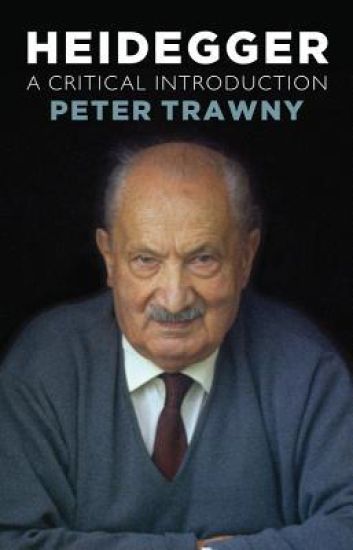
Heidegger

Heidegger

Peter Trawny

Polity Press
2018
sidottu
Martin Heidegger is one of the most influential figures of twentieth-century philosophy but his reputation was tainted by his associations with Nazism. The posthumous publication of the Black Notebooks, which reveal the shocking extent of Heidegger’s anti-Semitism, has only cast further doubt on his work. Now more than ever, a new introduction to Heidegger is needed to reassess his work and legacy. This book by the world-leading Heidegger scholar Peter Trawny is the first introduction to take into account the new material made available by the explosive publication of the Black Notebooks. Seeking neither to condemn nor excuse Heidegger’s views, Trawny directly confronts and elucidates the most problematic aspects of his thought. At the same time, he provides a comprehensive survey of Heidegger’s development, from his early writings on phenomenology and his magnum opus, Being and Time, to his later writings on poetry and technology. Trawny captures the extraordinary significance and breadth of fifty years of philosophical production, all against the backdrop of the tumultuous events of the twentieth century. This concise introduction will be required reading for the many students and scholars in philosophy and critical theory who study Heidegger, and it will be of great interest to general readers who want to know more about one of the major figures of contemporary philosophy.
Heidegger

Heidegger

Peter Trawny

Polity Press
2018
nidottu
Martin Heidegger is one of the most influential figures of twentieth-century philosophy but his reputation was tainted by his associations with Nazism. The posthumous publication of the Black Notebooks, which reveal the shocking extent of Heidegger’s anti-Semitism, has only cast further doubt on his work. Now more than ever, a new introduction to Heidegger is needed to reassess his work and legacy. This book by the world-leading Heidegger scholar Peter Trawny is the first introduction to take into account the new material made available by the explosive publication of the Black Notebooks. Seeking neither to condemn nor excuse Heidegger’s views, Trawny directly confronts and elucidates the most problematic aspects of his thought. At the same time, he provides a comprehensive survey of Heidegger’s development, from his early writings on phenomenology and his magnum opus, Being and Time, to his later writings on poetry and technology. Trawny captures the extraordinary significance and breadth of fifty years of philosophical production, all against the backdrop of the tumultuous events of the twentieth century. This concise introduction will be required reading for the many students and scholars in philosophy and critical theory who study Heidegger, and it will be of great interest to general readers who want to know more about one of the major figures of contemporary philosophy.
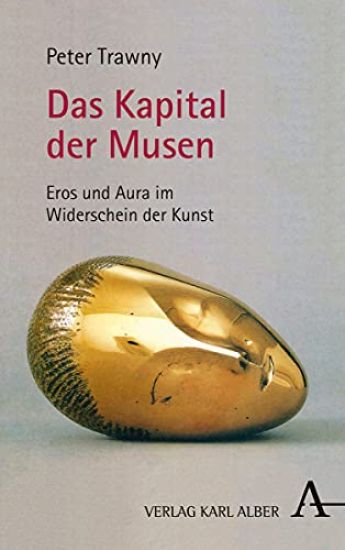
Das Kapital Der Musen: Eros Und Aura Im Widerschein Der Kunst
Nach dem Ende aller Ursprungs-Mythen der Kunst samt ihrer Anti-Mythen ist es um sie schlecht bestellt. Verkapselt im omnipotenten Markt feiert eine Gruppe von Kunstler-Stars internationale Erfolge mit imposanten Ausstellungen. Bedient von Theorie-Lieferanten verschafft sie sich ein gutes Theorie-Gewissen. In der hochtourigen Okonomie einer zur Schau gestellten Luxus-Kunst poliert eine nicht selten banale Theorie den stumpf gewordenen Geist noch auf. Warum man sich fur dieses sich in sich spiegelnde Kunst-System noch interessieren soll, ist im Lichte des grossartigen Verlusts seiner Geschichte nicht leicht zu sagen. Nicht unahnlich wie die Philosophie saugt die Kunst vampirisch an ihrer eigenen Vergangenheit, um sich uber ihre systemtheoretische Banalitat hinaus moglicherweise einen Zauber zu besorgen, der sich im Blut dieser Vergangenheit mitteilt. Der Zauber ist eine spate Form des Gottlichen und Erotischen, das in den abgespaltenen Anfangen vielleicht noch sein Wesen treibt. Das Buch beschreibt Tragodien, Skulpturen, Gedichte, Novellen, Musikdramen, Videoclips und Filme, um die Lebendigkeit der Kunst aus dem Licht der verlorenen Anfange einen Moment lang zum Leuchten zu bringen. Aus dem Inhalt: Eros und Aura * Musengesang * Von tragischen Zerruttungen und komischen Kompassnadeln * Platonische Erektionen * Corpus Christi und der goldene Pfeil * Velazquez und der unsterbliche Christus * Schopenhauer und die kleinen Maxillen der Frau * Wagners Weltatem * Die Unverborgenheit oder Courbets Ursprung der Welt * Rilkes coitus vacui * Kubrick liest Schnitzler und lasst Nicole Kidman das Wichtigste sagen * Houellebecqs Sex ohne Geschlecht * Tarkowski und Bjork interpretieren die Flamme des Begehrens * Erotische Maschinen * Porn-Kunst
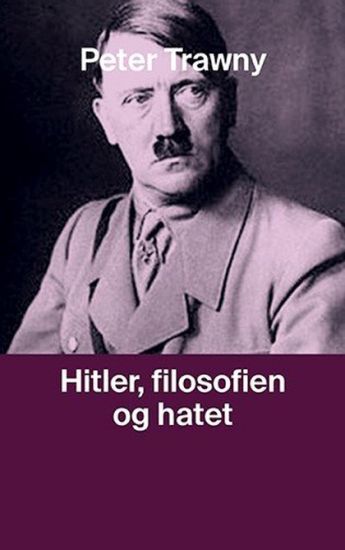
Hitler, filosofien og hatet

Hitler, filosofien og hatet

Peter Trawny

Existenz forlag
2022
nidottu
Å tro at vi europeere kan holde nasjonalsosialismen på avstand, som et objekt, er i beste fall en naiv antakelse, i verste fall en politisk feiltakelse. Og likevel, fra andre verdenskrig til i dag, har filosofer oversett nasjonalsosialismens viktigste framstilling av seg selv. Adolf Hitlers Min kamp blir fremdeles ansett som en bok det ikke er verdt å ta filosofisk på alvor. Men dette kaster et lys over filosofien selv. Finner den kanskje noe av seg selv i Min kamp? Og hva er det den finner der? Trawnys lesning av Hitlers bok ser ikke bort fra muligheten av en kontinuitet mellom filosofien og nasjonalsosialismen. Peter Trawny, født 1964 i Gelsenkirchen, er en tysk filosof og forfatter. Han er medredaktør for Martin Heideggers samlede verker og har skrevet en rekke bøker om politisk filosofi, etikk, kunst, medier, globalisering og kosmopolitisme.
Heideggeri fragmendid. filosoofiline biograafia

Heideggeri fragmendid. filosoofiline biograafia

Peter Trawny

Postimees kirjastus
2024
nidottu
Erandlik ja ebatavaline sissejuhatus Heideggeri mõtlemisse ja sellest kaugemale.Martin Heidegger oli 20. sajandi üks tähtsamaid filosoofe, aga ühtlasi ka üks kõige vastuolulisemaid. Kui "Mustade vihkude" avaldamisega tuli avalikuks tema antisemitism, näis olevat Heideggeri filosoofiline täht langenud. Kuid nii lihtsalt me tema mõtlemisest lahti ei saa.Peter Trawny, tunnustatud Heideggeri-ekspert, läheneb oma raamatus Heideggeri elule ja mõtlemisele ebatavalisel moel. Lühikestes fragmentides astub ta mõtlejaga dialoogi, katsub temaga jõudu, usutleb teda, heidab valgust vasturääkivustele tema elus, ei kohku tagasi ühestki konfliktist, ning kuulab järele, mida on Heideggeril talle ja meile veel täna öelda. Raamatu näol on korraga tegemist nii kirjanduse kui filosoofiaga, see veab lugeja sisse Heideggeri mõtlemisse, mõtlemisse ülepea, ning puudutab seda, mis filosoofias on olemuslikku, selle eksistentsiaalset tuuma.