Kirjahaku
Etsi kirjoja tekijän nimen, kirjan nimen tai ISBN:n perusteella.
25 kirjaa tekijältä Peter Wagner
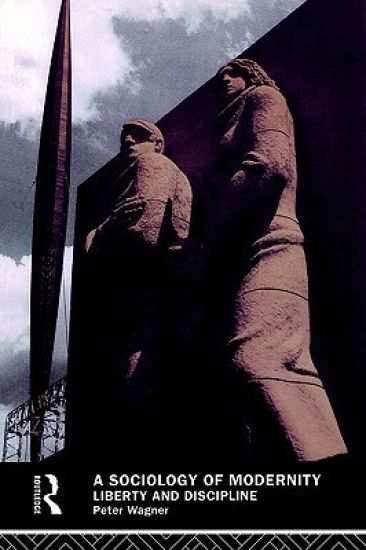
First Published in 2004. Confusion reigns in sociological accounts of the curent condition of modernity. The story-lines from the 'end of the subject' to 'a new individualism', from the 'dissolution of society' to the re-emergence of 'civil society', from the 'end of modernity' to an 'other modernoity' to 'neo-modernization'. This book offers a sociology of modernity in terms of a historical account of social transformations over the past two centuries, focusing on Western Europe but also looking at the USA and at Soviet socialism as distinct variants of modernity. A fundamental ambivalence of modernity is captured by the double notion of liberty and discipline in its three major dimensions: the relations between individual liberty and political community , betwen agency and structure, and between locally situated human lives and widely extended social institutions. Two major historical transformations of modernity are distinguished, the first one beginning in the late nineteenth century and leading to a social formation that can be called organized modernity, and the second being the one that dissolves organized modernity. It is this current transformation which revives some key concerns of the 'modern project', ideas of liberty, plurality and individual autonomy. But it imperils others, especially the creation of social identities as ties between human beings that allow meaningful and socially viable development of individual autonomy, and the possibility of politics as communicative interaction and collaborative deliberation about what human beings have in common.
We are all modern today. But modernity today is not what it used to be. Over the past few decades, modernity has been radically changed by globalization, individualization, new inequalities, and fundamentalism. A novel way of analysing contemporary societies is needed. This book proposes such an analysis. Every society seeks answers to certain basic questions: how to order life in common; how to satisfy human needs; how to establish knowledge. Sociology long assumed that the answers had been found once and for all: a liberal-democratic state, a market economy, and free scientific institutions. This trinity used to be called ‘modern society’. By contrast, this book is based on the idea that, under conditions of modernity, there are no stable and certain answers to these questions. There is a plurality of possible answers, every proposed answer can be criticized and contested, and every society needs to find its answer on its own. This new sociology of modernity proposes two key instruments through which to understand the answers given to those questions: the experiences human beings have of their own modernity and the interpretations they give to those experiences. It reviews the history of ‘Western’ modernity in this light and then focuses on the specific answers that were and are being developed in Europe.
We are all modern today. But modernity today is not what it used to be. Over the past few decades, modernity has been radically changed by globalization, individualization, new inequalities, and fundamentalism. A novel way of analysing contemporary societies is needed. This book proposes such an analysis. Every society seeks answers to certain basic questions: how to order life in common; how to satisfy human needs; how to establish knowledge. Sociology long assumed that the answers had been found once and for all: a liberal-democratic state, a market economy, and free scientific institutions. This trinity used to be called ‘modern society’. By contrast, this book is based on the idea that, under conditions of modernity, there are no stable and certain answers to these questions. There is a plurality of possible answers, every proposed answer can be criticized and contested, and every society needs to find its answer on its own. This new sociology of modernity proposes two key instruments through which to understand the answers given to those questions: the experiences human beings have of their own modernity and the interpretations they give to those experiences. It reviews the history of ‘Western’ modernity in this light and then focuses on the specific answers that were and are being developed in Europe.
We live in a modern age, but what does ‘modern’ mean and how can a reflection on ‘modernity’ help us to understand the world today? These are the questions that Peter Wagner sets out to answer in this concise and accessible book. Wagner begins by returning to the question of modernity's Western origins and its claims to open up a new and better era in the history of humanity. Modernity's claims and expectations have become more prevalent and widely shared, but in the course of their realization and diffusion they have also been radically transformed. In an acute and engaging analysis, Wagner examines the following key issues among others: - Modernity was based on the hope for freedom and reason, but it created the institutions of contemporary capitalism and democracy. How does the freedom of the citizen relate to the freedom of the buyer and seller today? And what does disaffection with capitalism and democracy entail for the sustainability of modernity? - Rather than a single model of modernity, there is now a plurality of forms of modern socio-political organisation. What does this entail for our idea of progress and our hope that the future world can be better than the present one? - All nuance and broadening notwithstanding, our concept of modernity is in some way inextricably tied to the history of Europe and the West. How can we compare different forms of modernity in a 'symmetric', non-biased or non-Eurocentric way? How can we develop a world-sociology of modernity?
We live in a modern age, but what does ‘modern’ mean and how can a reflection on ‘modernity’ help us to understand the world today? These are the questions that Peter Wagner sets out to answer in this concise and accessible book. Wagner begins by returning to the question of modernity's Western origins and its claims to open up a new and better era in the history of humanity. Modernity's claims and expectations have become more prevalent and widely shared, but in the course of their realization and diffusion they have also been radically transformed. In an acute and engaging analysis, Wagner examines the following key issues among others: - Modernity was based on the hope for freedom and reason, but it created the institutions of contemporary capitalism and democracy. How does the freedom of the citizen relate to the freedom of the buyer and seller today? And what does disaffection with capitalism and democracy entail for the sustainability of modernity? - Rather than a single model of modernity, there is now a plurality of forms of modern socio-political organisation. What does this entail for our idea of progress and our hope that the future world can be better than the present one? - All nuance and broadening notwithstanding, our concept of modernity is in some way inextricably tied to the history of Europe and the West. How can we compare different forms of modernity in a 'symmetric', non-biased or non-Eurocentric way? How can we develop a world-sociology of modernity?
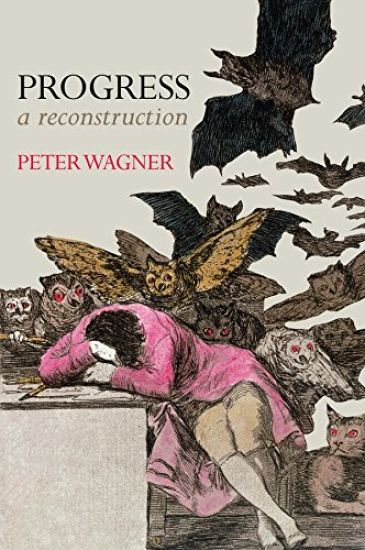
The idea of progress guided human expectations and actions for over two centuries. From the Enlightenment onwards, it was widely believed that the condition of humankind could be radically improved. History had embarked on an unstoppable forward trajectory, realizing the promise of freedom and reason. The scientific revolution, the industrial revolution, and the French Revolution, in some views also the socialist revolution, were milestones on this march of progress.But since the late twentieth century the idea of progress has largely disappeared from public debate. Sometimes it has been explicitly declared dead. The wide horizon of future possibilities has closed. The best we can hope for, some say, is to avoid regress. What happened to progress? Why did we stop believing in it, if indeed we did? This book offers answers to these questions. It reviews both the conceptual history of progress and the social and political experiences with progress over the past two centuries, and it comes to a surprising conclusion: The idea of progress was misconceived from its beginnings, and the failure of progress in practice was a result of this flawed conception. The experiences of the past half century, in turn, has allowed us to rethink progress in a more adequate way. Rather than the end of progress, they may herald the beginning of a new, reconstructed idea of progress.
The idea of progress guided human expectations and actions for over two centuries. From the Enlightenment onwards, it was widely believed that the condition of humankind could be radically improved. History had embarked on an unstoppable forward trajectory, realizing the promise of freedom and reason. The scientific revolution, the industrial revolution, and the French Revolution, in some views also the socialist revolution, were milestones on this march of progress.But since the late twentieth century the idea of progress has largely disappeared from public debate. Sometimes it has been explicitly declared dead. The wide horizon of future possibilities has closed. The best we can hope for, some say, is to avoid regress. What happened to progress? Why did we stop believing in it, if indeed we did? This book offers answers to these questions. It reviews both the conceptual history of progress and the social and political experiences with progress over the past two centuries, and it comes to a surprising conclusion: The idea of progress was misconceived from its beginnings, and the failure of progress in practice was a result of this flawed conception. The experiences of the past half century, in turn, has allowed us to rethink progress in a more adequate way. Rather than the end of progress, they may herald the beginning of a new, reconstructed idea of progress.
This book argues that sociology has lost its ability to provide critical diagnoses of the present human condition because sociology has stopped considering the philosophical requirements of social enquiry. The book attempts to restore that ability by retrieving some of the key questions that sociologists tend to gloss over, inescapability and attainability. The book identifies five key questions in which issues of inescapability and attainability emerge. These are the questions of the certainty of our knowledge, the viability of our politics, the continuity of our selves, the accessibility of the past, and the transparency of the future. The book demonstrates how these questions are addressed in different forms and by different intellectual means during the past 200 years and shows how they persist today.
This book argues that sociology has lost its ability to provide critical diagnoses of the present human condition because sociology has stopped considering the philosophical requirements of social enquiry. The book attempts to restore that ability by retrieving some of the key questions that sociologists tend to gloss over, inescapability and attainability. The book identifies five key questions in which issues of inescapability and attainability emerge. These are the questions of the certainty of our knowledge, the viability of our politics, the continuity of our selves, the accessibility of the past, and the transparency of the future. The book demonstrates how these questions are addressed in different forms and by different intellectual means during the past 200 years and shows how they persist today.
Divided into two parts, this book examines the train of social theory from the 19th century, through to the 'organization of modernity', in relation to ideas of social planning, and as contributors to the 'rationalistic revolution' of the 'golden age' of capitalism in the 1950s and 60s. Part two examines key concepts in the social sciences. It begins with some of the broadest concepts used by social scientists: choice, decision, action and institution and moves on to examine the 'collectivist alternative': the concepts of society, culture and polity, which are often dismissed as untenable by postmodernists today. This is a major contribution to contemporary social theory and provides a host of essential insights into the task of social science today.
Divided into two parts, this book examines the train of social theory from the 19th century, through to the 'organization of modernity', in relation to ideas of social planning, and as contributors to the 'rationalistic revolution' of the 'golden age' of capitalism in the 1950s and 60s. Part two examines key concepts in the social sciences. It begins with some of the broadest concepts used by social scientists: choice, decision, action and institution and moves on to examine the 'collectivist alternative': the concepts of society, culture and polity, which are often dismissed as untenable by postmodernists today. This is a major contribution to contemporary social theory and provides a host of essential insights into the task of social science today.
First Published in 2004. Confusion reigns in sociological accounts of the curent condition of modernity. The story-lines from the 'end of the subject' to 'a new individualism', from the 'dissolution of society' to the re-emergence of 'civil society', from the 'end of modernity' to an 'other modernoity' to 'neo-modernization'. This book offers a sociology of modernity in terms of a historical account of social transformations over the past two centuries, focusing on Western Europe but also looking at the USA and at Soviet socialism as distinct variants of modernity. A fundamental ambivalence of modernity is captured by the double notion of liberty and discipline in its three major dimensions: the relations between individual liberty and political community , betwen agency and structure, and between locally situated human lives and widely extended social institutions. Two major historical transformations of modernity are distinguished, the first one beginning in the late nineteenth century and leading to a social formation that can be called organized modernity, and the second being the one that dissolves organized modernity. It is this current transformation which revives some key concerns of the 'modern project', ideas of liberty, plurality and individual autonomy. But it imperils others, especially the creation of social identities as ties between human beings that allow meaningful and socially viable development of individual autonomy, and the possibility of politics as communicative interaction and collaborative deliberation about what human beings have in common.
The term 'Global South' marks a new attempt at providing order and meaning in the current global political constellation, replacing the term 'Third World'. But the term 'Global South' is fraught with many ambiguities. This book explores the possible meanings of this new distinction and assesses the advantages and disadvantages of adopting it for understanding the contemporary world. It casts a wide exploratory net, addressing historical transformations of world-interpretation and wider cultural-intellectual meanings.
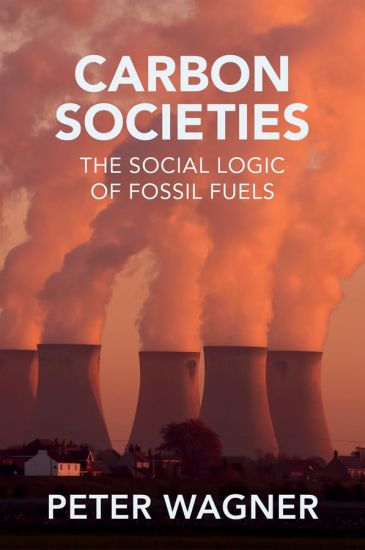
The climate crisis is humanmade. Its main cause is the burning of fossil fuels. To combat climate change, we have to understand how we arrived at where we are. This book explores the reasons why human societies have embarked on the trajectory of ever-increasing use of fossil fuels.Population growth, desire for freedom from want and profit-seeking all played major roles in shaping human history, but there has been no inevitable drive towards heating up the atmosphere in the pursuit of social objectives. To sustain a growing population, more natural resources are required, but their use does not need to generate climate change. No logic of modernity links freedom with a kind of material abundance that requires the burning of fossil fuels. No logic of capital necessarily ties the search for profit to the extraction of fossil resources.Examining the critical junctures in human history when resource regimes changed, this book identifies the social problems that were meant to be solved by burning fossil fuels and the power hierarchies that shaped the decisions to use them. Wagner argues that the key choices that led to the climate emergency were made relatively recently, during the second half of the 20th century: they are close enough in time for us to undo the prevailing social logic of fossil fuels. By redefining the key problems that humankind is facing and reshaping the existing mechanisms of power, we can take the decisive action needed to reduce our dependence on fossil fuels and avert the worst consequences of climate change.
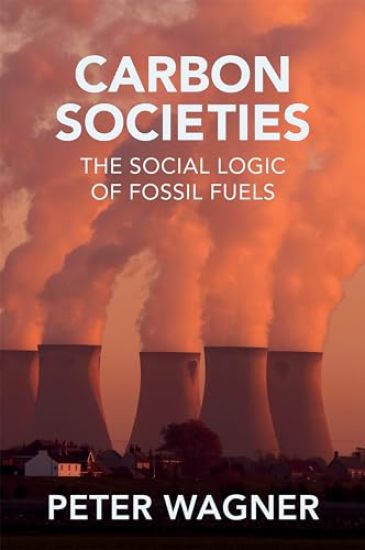
The climate crisis is humanmade. Its main cause is the burning of fossil fuels. To combat climate change, we have to understand how we arrived at where we are. This book explores the reasons why human societies have embarked on the trajectory of ever-increasing use of fossil fuels.Population growth, desire for freedom from want and profit-seeking all played major roles in shaping human history, but there has been no inevitable drive towards heating up the atmosphere in the pursuit of social objectives. To sustain a growing population, more natural resources are required, but their use does not need to generate climate change. No logic of modernity links freedom with a kind of material abundance that requires the burning of fossil fuels. No logic of capital necessarily ties the search for profit to the extraction of fossil resources.Examining the critical junctures in human history when resource regimes changed, this book identifies the social problems that were meant to be solved by burning fossil fuels and the power hierarchies that shaped the decisions to use them. Wagner argues that the key choices that led to the climate emergency were made relatively recently, during the second half of the 20th century: they are close enough in time for us to undo the prevailing social logic of fossil fuels. By redefining the key problems that humankind is facing and reshaping the existing mechanisms of power, we can take the decisive action needed to reduce our dependence on fossil fuels and avert the worst consequences of climate change.

800 Tage Das Dutch Oven Rezeptbuch f r Anf nger, Berufst tige und FauleEinfache und schmackhafte Gerichte f r Freunde und Familie♦ inkl. Beilagen, Desserts und Snacks ♦Wer ihn kennt, liebt ihn und m chte ihn nicht mehr missen: den Dutch Oven, den robusten Koch- und Backtopf, traditionell aus Gusseisen gefertigt. Von w rzig-deftigen Eintopfgerichten bis zu k stlichen Desserts ist mit den passenden Rezepten und Anleitungen alles drin mit dem Allesk nner.Der Name verr t es schon: Er stammt h chstwahrscheinlich aus Holland, von wo er gemeinsam mit den Siedlern schlie lich in den Vereinigten Staaten angekommen ist und hier zun chst vor allem im Siedlungsgebiet der Pennsylvania Dutch seine Verbreitung fand.Seine lange Geschichte, die bereits in der Vorzeit ihre Wurzeln hat, beweist eindr cklich, dass sich das Kochen, Backen und Braten mit dem Dutch Oven ber Jahrhunderte bestens bew hrt hat.Dementsprechend viele Anwendungsm glichkeiten er ffnen sich. Eine lange Reihe von Hausfrauen, K chinnen und K chen hat an Rezepten und Zubereitungsarten get ftelt, hat ausprobiert und verkostet, das Potential des so einfachen und doch so universell anwendbaren Kochkessels erweitert und an die jeweils n chste Generation weitergegeben.Heute sch tzt man ihn, weil er mit seiner urigen Form und problemlosen Anwendung oft bei Camping und Outdoor-Aktivit ten eingesetzt wird - und daher auch von M nnern gerne verwendet wird. Doch findet er in einer leicht abge nderten Form, hnlich einem Br ter, in der Indoor-K che ebenso seinen Platz, zus tzlich zu Herd und Backrohr.

800 Tage Das Dutch Oven Rezeptbuch f r Anf nger, Berufst tige und FauleEinfache und schmackhafte Gerichte f r Freunde und Familie♦ inkl. Beilagen, Desserts und Snacks ♦Wer ihn kennt, liebt ihn und m chte ihn nicht mehr missen: den Dutch Oven, den robusten Koch- und Backtopf, traditionell aus Gusseisen gefertigt. Von w rzig-deftigen Eintopfgerichten bis zu k stlichen Desserts ist mit den passenden Rezepten und Anleitungen alles drin mit dem Allesk nner.Der Name verr t es schon: Er stammt h chstwahrscheinlich aus Holland, von wo er gemeinsam mit den Siedlern schlie lich in den Vereinigten Staaten angekommen ist und hier zun chst vor allem im Siedlungsgebiet der Pennsylvania Dutch seine Verbreitung fand.Seine lange Geschichte, die bereits in der Vorzeit ihre Wurzeln hat, beweist eindr cklich, dass sich das Kochen, Backen und Braten mit dem Dutch Oven ber Jahrhunderte bestens bew hrt hat.Dementsprechend viele Anwendungsm glichkeiten er ffnen sich. Eine lange Reihe von Hausfrauen, K chinnen und K chen hat an Rezepten und Zubereitungsarten get ftelt, hat ausprobiert und verkostet, das Potential des so einfachen und doch so universell anwendbaren Kochkessels erweitert und an die jeweils n chste Generation weitergegeben.Heute sch tzt man ihn, weil er mit seiner urigen Form und problemlosen Anwendung oft bei Camping und Outdoor-Aktivit ten eingesetzt wird - und daher auch von M nnern gerne verwendet wird. Doch findet er in einer leicht abge nderten Form, hnlich einem Br ter, in der Indoor-K che ebenso seinen Platz, zus tzlich zu Herd und Backrohr.