

Kirjahaku
Etsi kirjoja tekijän nimen, kirjan nimen tai ISBN:n perusteella.
16 kirjaa tekijältä Peter Walther


'Gripping and all too timely' James Hawes'A brilliant mix of detailed research and vivid storytelling' Julia Boyd'History at its very best – and a fabulous translation, too' Graham HurleyIn March 1930, after the collapse of the coalition that had ruled Germany since 1928, President Hindenburg asked Heinrich Bruning, bespectacled and scholarly leader of the Catholic Centre Party, to form a government. Some three years later, in January 1933, Hindenburg appointed as chancellor the demagogic, virulently anti-Semitic leader of the National Socialist party. Within weeks, Adolf Hitler has begun the process of dismantling the flawed democracy of the Weimar Republic and replacing it with a one-party totalitarian state.Darkness Falling depicts in compelling fashion the serial crises and mounting violence of a febrile era. Peter Walther examines the slow death of Weimar through the prism of nine colourful protagonists, including leading German politicians of right, left and centre, the clairvoyant and occultist, Erik Jan Hanussen and the formidable American journalist Dorothy Thompson. He profiles these heterogeneous characters in intriguing detail, pulling together the threads of their lives to chart the demise of German parliamentary democracy and the rise of National Socialist tyranny. Along the way we gain fascinating insights into the machinations in the corridors of power to keep the 'Bohemian corporal' from the chancellorship, and the venality of the Nazi elite and its fellow travellers from the demi-monde of early 1930s Berlin. Walther evokes the louche nightlife of the German capital – 'a playground for charlatans and prophets, madmen and crooks' – memorably and atmospherically.A masterly fusion of meticulously researched historical writing and vividly propulsive storytelling, Darkness Falling is a distinctive and enthralling account of Germany's slide from democracy to dictatorship.Translated by Dr Peter Lewis.

'Gripping and all too timely' James Hawes'A brilliant mix of detailed research and vivid storytelling' Julia Boyd'History at its very best – and a fabulous translation, too' Graham HurleyIn March 1930, after the collapse of the coalition that had ruled Germany since 1928, President Hindenburg asked Heinrich Bruning, bespectacled and scholarly leader of the Catholic Centre Party, to form a government. Some three years later, in January 1933, Hindenburg appointed as chancellor the demagogic, virulently anti-Semitic leader of the National Socialist party. Within weeks, Adolf Hitler has begun the process of dismantling the flawed democracy of the Weimar Republic and replacing it with a one-party totalitarian state.Darkness Falling depicts in compelling fashion the serial crises and mounting violence of a febrile era. Peter Walther examines the slow death of Weimar through the prism of nine colourful protagonists, including leading German politicians of right, left and centre, the clairvoyant and occultist, Erik Jan Hanussen and the formidable American journalist Dorothy Thompson. He profiles these heterogeneous characters in intriguing detail, pulling together the threads of their lives to chart the demise of German parliamentary democracy and the rise of National Socialist tyranny. Along the way we gain fascinating insights into the machinations in the corridors of power to keep the 'Bohemian corporal' from the chancellorship, and the venality of the Nazi elite and its fellow travellers from the demi-monde of early 1930s Berlin. Walther evokes the louche nightlife of the German capital – 'a playground for charlatans and prophets, madmen and crooks' – memorably and atmospherically.A masterly fusion of meticulously researched historical writing and vividly propulsive storytelling, Darkness Falling is a distinctive and enthralling account of Germany's slide from democracy to dictatorship.Translated by Dr Peter Lewis.



"WikipeteR ist unsere Antwort auf geradlinige Antworten. Dieser Mann wei , wo der Frosch die Locken hat. Noch wichtiger ist aber, dass er auch wei , wer den Frosch frisiert hat, wann das ganze stattgefunden hat, wo der Frosch zuvor einkaufen war und was die KPD mit alldem zu schaffen hat. Dieses personifizierte Konzentrat an menschlicher Weisheit der Menschheit vorzuenthalten w re ein unentschuldbares Vergehen, und so konnten wir WikipeteR davon berzeugen, unseren W hlern und W hlerinnen einmal pro Woche eine ihrer dr ngendsten Fragen zu beantworten." In seiner Kolumne "Nicht verzagen - WikipeteR fragen" hat der Autor nach diesem Aufruf ein knappes Jahr lang merkw rdige Fragen wie "W rde die Kakerlake wirklich als einzige den Krieg berleben, wenn es nur zwei m nnliche Exemplare g be?", "Was siegt in Wirklichkeit: Dummheit oder Intelligenz?" oder "Sollte man sich, wie Kant meint, seines eigenen Verstandes bedienen? Oder reicht in vielen F llen auch schon das Internet?" beantwortet. In diesem Band sind nun s mtliche, manchmal seltsam gewendete, aber stets akkurat recherchierte Antworten versammelt, mit denen Peter Walther seinen Beinamen "WikipeteR, das einzige Wesen im Universum au er Gott, das wirklich alles wei " Woche f r Woche gerechtfertigt hat.




“Through these travels and the photographs, I got to love the United States more than I could have in any other way.” — Jack Delano Amid the ravages of the Great Depression, the United States Farm Security Administration (FSA) was first founded in 1935 to address the country’s rural poverty. Its efforts focused on improving the lives of sharecroppers, tenants, and very poor landowning farmers, with resettlement and collectivization programs, as well as modernized farming methods. In a parallel documentation program, the FSA hired a number of photographers and writers to record the lives of the rural poor and “introduce America to Americans.” This book records the full reach of the FSA program from 1935 to 1943, honoring its vigor and commitment across subjects, states, and stylistic preferences. The photographs are arranged into four broad regional sections but otherwise allowed to speak for themselves—to provide individual impressions as much as they cumulatively build an indelible survey of a nation. The images are both color and black-and-white, and span the complete spetrum of American rural life. They show us convicts, cotton workers, kids, and relocated workers on the road. We see subjects victim to the elements of nature as much as to the vagaries of the global economic market. We find the work of such perceptive, sensitive photographers as Marion Post Wolcott, Jack Delano, Russell Lee, Walker Evans, Ben Shahn, and Dorothea Lange, and read their own testimonies to the FSA project and their encounters with their subjects, including Lange’s worn, weather-beaten and iconic Migrant Mother. What unites all of the pictures is a commitment to the individuality and dignity of each subject, as much as to the witness they bear to this particular period of the American past. The subjects are entrenched in the hardships of their historical lot as much as they are caught in universal cycles of growing, playing, eating, aging, and dying. Yet they face the viewer with what is utterly their own: a unique, irreplaceable, often unforgettable presence.

Photographer, teacher, and sociologist Lewis W. Hine (1874–1940) shaped our consciousness of American working life in the early 20th century like no other. Combining his training as an educator with his humanist concerns, Hine was one of the earliest photographers to use the camera as a documentary tool, capturing in particular labor conditions, housing, and immigrants arriving on Ellis Island. His images, including those of children in cotton mills, factories, coal mines, and fields, became icons of photographic history that helped to transform labor laws in the United States. This book brings together a representative collection of Lewis W. Hine’s photography from all periods of his work. It spans his earliest forays into social-documentary work through to his more artistic and interpretative late photographs, including his phenomenal images of the construction of the Empire State Building and his symbiotic staging of human and machine as a comment on increasing industrialization. Alongside the near 350 photographs, the book includes an essay by the editor, introducing Hine’s life and pioneering work.
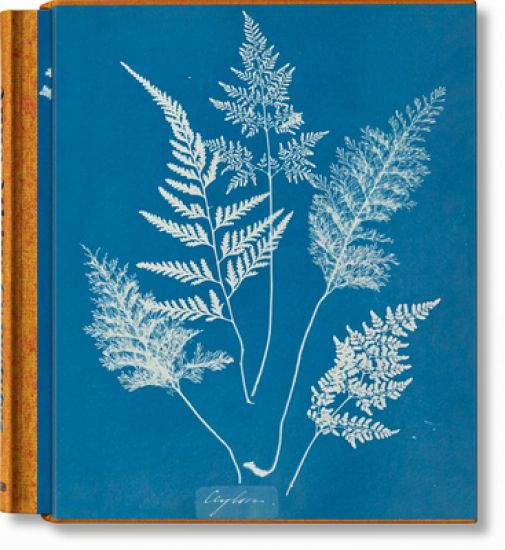
At the dawn of the Victorian era in her open-air laboratory in Halstead, Kent, Anna Atkins embarked on a radical experiment to document botanical species using a completely new artistic medium. The inimitable cyanotype photograms of algae and ferns she created were made into the first books to feature photographic images. Striking yet ethereal, these albums are a perfect synthesis of art and science.Although the cyanotype technique was discovered by her friend John Herschel, Atkins was the first to realize both its practical purpose for her own interests in botany and taxonomy, and its intriguing artistic potential. The process, which involved fixing the object on sensitized paper and exposing it directly to sunlight, results in the Prussian blue pigment that forms the unmistakeable backdrop to these artworks.Atkins’ albums British Algae (1843–1853) and Cyanotypes of British and Foreign Ferns (1853), the latter of which was produced with her friend Anne Dixon, are works of remarkable rarity. Reprinted here in their entirety for the first time, they reveal her mastery of multiple disciplines: While the cyanotype process allowed Atkins to meet the challenges of accurate representation, the delicate contours of the specimens, set above the intense blue background, has lent the images a timeless aesthetic appeal.This edition, drawing extensively from the copies of the New York Public Library and J. Paul Getty Museum, has carefully compiled cyanotypes from several sources to reprint Atkins’ seminal works in full. Over 550 cyanotype impressions are accompanied by a series of introductory essays from Peter Walther, placing Atkins’ work in its scientific and art-historical contexts and paying rightful tribute to the groundbreaking contributions of a female pioneer.
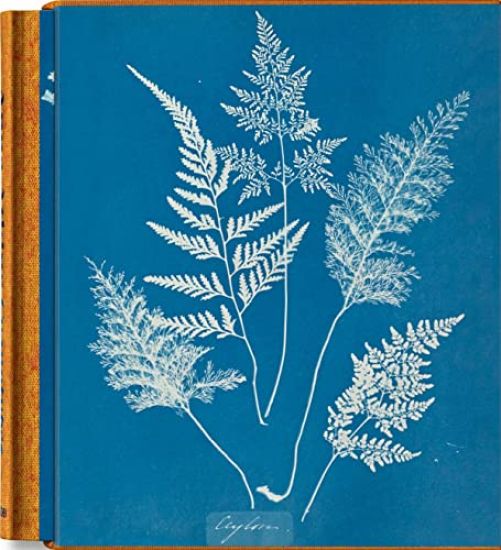
At the dawn of the Victorian era in her open-air laboratory in Halstead, Kent, Anna Atkins embarked on a radical experiment to document botanical species using a completely new artistic medium. The inimitable cyanotype photograms of algae and ferns she created were made into the first books to feature photographic images. Striking yet ethereal, these albums are a perfect synthesis of art and science.Although the cyanotype technique was discovered by her friend John Herschel, Atkins was the first to realize both its practical purpose for her own interests in botany and taxonomy, and its intriguing artistic potential. The process, which involved fixing the object on sensitized paper and exposing it directly to sunlight, results in the Prussian blue pigment that forms the unmistakeable backdrop to these artworks.Atkins’ albums British Algae (1843–1853) and Cyanotypes of British and Foreign Ferns (1853), the latter of which was produced with her friend Anne Dixon, are works of remarkable rarity. Reprinted here in their entirety for the first time, they reveal her mastery of multiple disciplines: While the cyanotype process allowed Atkins to meet the challenges of accurate representation, the delicate contours of the specimens, set above the intense blue background, has lent the images a timeless aesthetic appeal.This edition, drawing extensively from the copies of the New York Public Library and J. Paul Getty Museum, has carefully compiled cyanotypes from several sources to reprint Atkins’ seminal works in full. Over 550 cyanotype impressions are accompanied by a series of introductory essays from Peter Walther, placing Atkins’ work in its scientific and art-historical contexts and paying rightful tribute to the groundbreaking contributions of a female pioneer.

Edward S. Curtis. The North American Indian. The Complete Portfolios
Peter Walther
TASCHEN GMBH
2025
sidottu
Edward Sheriff Curtis (1868–1952) dedicated his entire life to a project all his own, to use a camera to preserve the cultural heritage of the indigenous peoples of North America. For three decades, he traveled in every region of the continent, through every kind of terrain and weather, via land or water, in the 50°C heat of the Mojave Desert or the -20°C chill of the Arctic; moving on foot, by horse, wagon, donkey, boat or train, or later by automobile. More than 40,000 photos were produced during those years. During his lifetime, the finest of these photographs entitled The North American Indian, were presented in twenty elaborate, large-scale portfolios with which Curtis raised a monument to commemorate the disappearing culture of North America’s indigenous peoples and to bring it fully back to life. In addition, the book holds a selection of photographs from the text volumes. Without Edward S. Curtis we would hardly know a thing about the rites of the Hopi in America’s southwest, nor be able to picture the Qagyuhl winter dancers, or have any idea of the ceremonies on Nunivak Island. The basic humanistic message that shines from his pictures is highly relevant, namely peaceful coexistence in which you can overcome hatred and prejudice if you are always willing, on meeting a stranger, to seek some idea in common.

At the dawn of the Victorian era in her open-air laboratory in Halstead, Kent, Anna Atkins embarked on a radical experiment to document botanical species using a completely new artistic medium. The inimitable cyanotype photograms of algae and ferns she created were made into the first books to feature photographic images. Striking yet ethereal, these albums are a perfect synthesis of art and science. Although the cyanotype technique was discovered by her friend John Herschel, Atkins was the first to realize both its practical purpose for her own interests in botany and taxonomy, and its intriguing artistic potential. The process, which involved fixing the object on sensitized paper and exposing it directly to sunlight, results in the Prussian blue pigment that forms the unmistakeable backdrop to these artworks. Atkins’ albums British Algae (1843–1853) and Cyanotypes of British and Foreign Ferns (1853), the latter of which was produced with her friend Anne Dixon, are works of remarkable rarity. They reveal her mastery of multiple disciplines: While the cyanotype process allowed Atkins to meet the challenges of accurate representation, the delicate contours of the specimens, set above the intense blue background, has lent the images a timeless aesthetic appeal. This edition, drawing extensively from the copies of the New York Public Library and J. Paul Getty Museum, has carefully compiled cyanotypes from several sources to reprint Atkins’ seminal works. Almost 400 cyanotype impressions are accompanied by a series of introductory essays from Peter Walther, placing Atkins’ work in its scientific and art-historical contexts and paying rightful tribute to the groundbreaking contributions of a female pioneer.