Kirjahaku
Etsi kirjoja tekijän nimen, kirjan nimen tai ISBN:n perusteella.
34 kirjaa tekijältä Peter Weiss
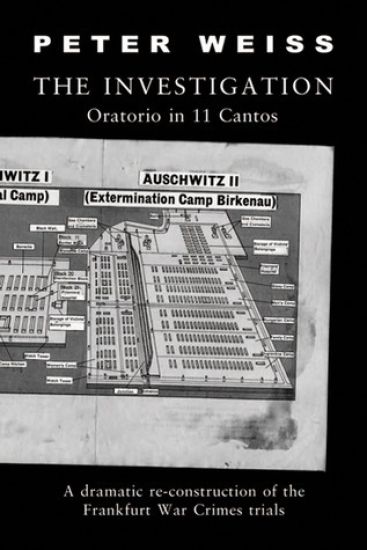
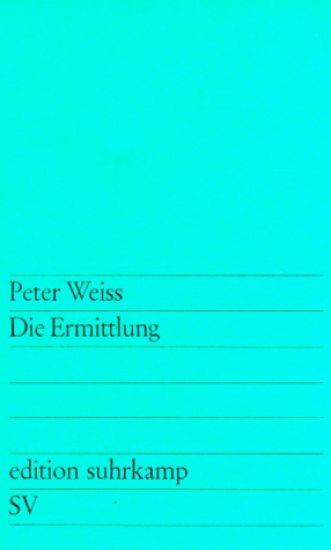
The Investigation is a dramatic reconstruction of the Frankfurt War Crimes trials, based on the actual evidence given. This testimony, concerning Auschwitz and the atrocities which were enacted there, has been edited and extracted by Peter Weiss into a dramatic document that relies solely and completely on the facts for its effectiveness. There is no artistic license, no manipulation of facts and figures, no rearrangement of events for theatrical effect. Nameless witnesses stand and recall their appalling memories of Auschwitz, allowing us to bear witness to their painful and painstaking search for truth and, ultimately, justice. What emerges is a chastening and purging documentary of deeply moving power. Peter Weiss was born in 1916 and settled in Sweden before the outbreak of World War II. Apart from his writing, he was also well known as a painter, theatrical and operatic director, and a film maker. His magnificent play Marat/Sade, which is also available from Marion Boyars Publishers, established his reputation among English-speakling audiences as a revolutionary dramatist, and has continued to be a bestselling classic. He died in 1982.
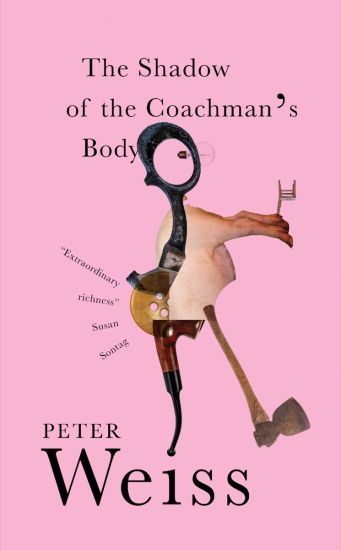
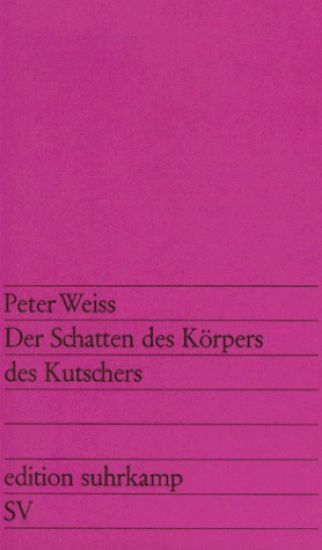
Peter Weiss’s first prose work, The Shadow of the Coachman’s Body, was unanimously praised as an original and perfect work of art by critics when it appeared in 1960. Here, in poet Rosmarie Waldrop’s stunning translation, Weiss arranges a dark, vividly alive comedy of inert objects in a dismal boarding house—stones, buttons, hooks, needles, chairs, newspapers in an outhouse, clinking tin cups, celestial orbs, sewing machines, an overwound windup music box—which have oblique characters’ shadows as their supporting cast. Described by Weiss as a “micro-novel,” The Shadow of the Coachman’s Body can be obscene, trivial and brutal, and yet it is also peculiarly intimate and offers endless possibilities—like a telescope and kaleidoscope rolled into one.
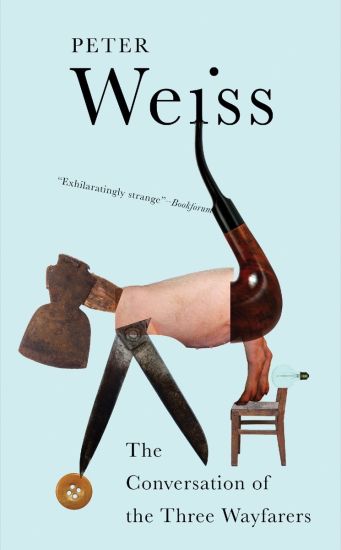
Conversation of the Three Wayfarers is a tale overheard, rather than told directly. Abel, Babel, and Cabel, the wayfarers, carry on a three-sided monologue, each reporting curious incidents—the effect is of three capers rolled into one: a steeplechase performed on a floating pontoon. But are they really three distinct individuals? Why do their lives blend in such a fantastic manner? Weiss’s strikingly original prose has an impossibly contained quality, with each sentence doing a perfect double-double backflip before neatly landing. This essential rediscovered work, from the masterful and acclaimed German modernist Peter Weiss, will be a delightful discovery for readers of Kafka, Musil, and Gombrowicz.

The New Trial is Peter Weiss’s final drama, completed only months before his death in 1982 and never before published in English. One of Europe’s most important twentieth century playwrights-often considered as influential as Brecht and Beckett-Weiss is best known to American audiences as the author of the Broadway play Marat/Sade and the three-volume novel The Aesthetics of Resistance, which has elicited comparison with Joyce’s Ulysses and Garcia Marquez’s One Hundred Years of Solitude. Initially influenced by Franz Kafka and later by the American Henry Miller, Weiss worked to expose the hypocrisy, the deception, and the nature of aggression in the contemporary world. A transformative “updating” of Kafka’s novel The Trial, The New Trial presents a surreal, hallucinatory look at the life of “Josef K.,” chief attorney in an enormous multinational firm that exploits both his idealism and his self-doubt in order to present to the world a public face that will mask its own dark and fascistic intentions. Fusing Marxist and capitalist perspectives in a manner that anticipates aspects of the current global market expansion, Weiss evokes a world in which nothing is private and everything is for sale. This edition of The New Trial is designed to facilitate theatrical teaching and stage production of the play. An extensive introduction by James Rolleston and Kai Evers situates the work in the full context of Weiss’s life, including his Swedish exile during the regime of the Third Reich. In addition, the play’s text is followed by interviews with Weiss and his original codirector (and wife) Gunilla Palmstierna-Weiss, as well as an account of the challenges of the first English staging by director Jody McAuliffe.
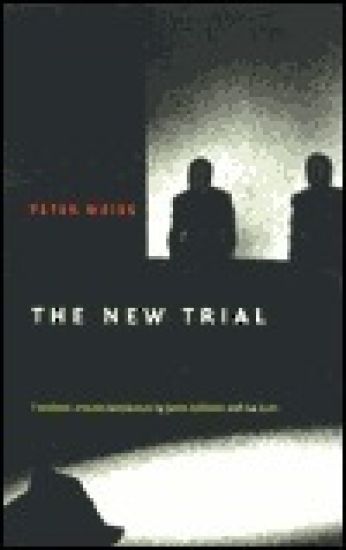
The New Trial is Peter Weiss’s final drama, completed only months before his death in 1982 and never before published in English. One of Europe’s most important twentieth century playwrights-often considered as influential as Brecht and Beckett-Weiss is best known to American audiences as the author of the Broadway play Marat/Sade and the three-volume novel The Aesthetics of Resistance, which has elicited comparison with Joyce’s Ulysses and Garcia Marquez’s One Hundred Years of Solitude. Initially influenced by Franz Kafka and later by the American Henry Miller, Weiss worked to expose the hypocrisy, the deception, and the nature of aggression in the contemporary world. A transformative “updating” of Kafka’s novel The Trial, The New Trial presents a surreal, hallucinatory look at the life of “Josef K.,” chief attorney in an enormous multinational firm that exploits both his idealism and his self-doubt in order to present to the world a public face that will mask its own dark and fascistic intentions. Fusing Marxist and capitalist perspectives in a manner that anticipates aspects of the current global market expansion, Weiss evokes a world in which nothing is private and everything is for sale. This edition of The New Trial is designed to facilitate theatrical teaching and stage production of the play. An extensive introduction by James Rolleston and Kai Evers situates the work in the full context of Weiss’s life, including his Swedish exile during the regime of the Third Reich. In addition, the play’s text is followed by interviews with Weiss and his original codirector (and wife) Gunilla Palmstierna-Weiss, as well as an account of the challenges of the first English staging by director Jody McAuliffe.
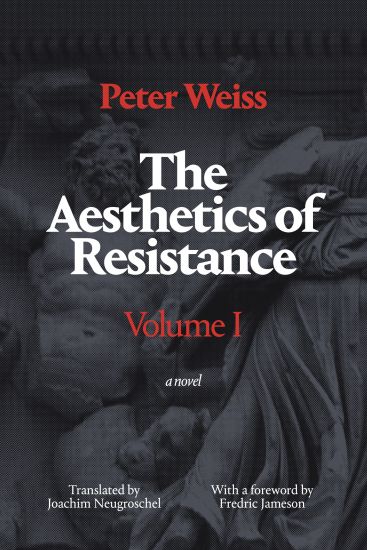
A major literary event, the publication of this masterly translation makes one of the towering works of twentieth-century German literature available to English-speaking readers for the first time. The three-volume novel The Aesthetics of Resistance is the crowning achievement of Peter Weiss, the internationally renowned dramatist best known for his play Marat/Sade. The first volume, presented here, was initially published in Germany in 1975; the third and final volume appeared in 1981, just six months before Weiss’s death. Spanning the period from the late 1930s to World War II, this historical novel dramatizes antifascist resistance and the rise and fall of proletarian political parties in Europe. Living in Berlin in 1937, the unnamed narrator and his peers-sixteen- and seventeen-year-old working-class students-seek ways to express their hatred for the Nazi regime. They meet in museums and galleries, and in their discussions they explore the affinity between political resistance and art, the connection at the heart of Weiss’s novel. Weiss suggests that meaning lies in embracing resistance, no matter how intense the oppression, and that we must look to art for new models of political action and social understanding. The novel includes extended meditations on paintings, sculpture, and literature. Moving from the Berlin underground to the front lines of the Spanish Civil War and on to other parts of Europe, the story teems with characters, almost all of whom are based on historical figures. The Aesthetics of Resistance is one of the truly great works of postwar German literature and an essential resource for understanding twentieth-century German history.
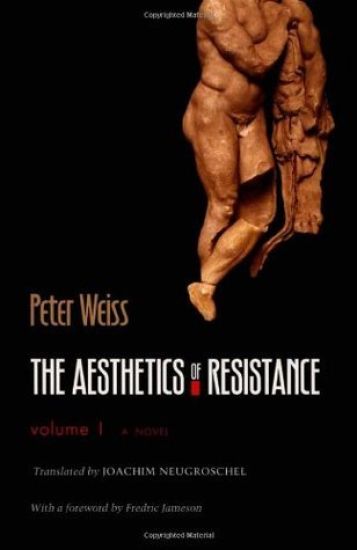
A major literary event, the publication of this masterly translation makes one of the towering works of twentieth-century German literature available to English-speaking readers for the first time. The three-volume novel The Aesthetics of Resistance is the crowning achievement of Peter Weiss, the internationally renowned dramatist best known for his play Marat/Sade. The first volume, presented here, was initially published in Germany in 1975; the third and final volume appeared in 1981, just six months before Weiss’s death. Spanning the period from the late 1930s to World War II, this historical novel dramatizes antifascist resistance and the rise and fall of proletarian political parties in Europe. Living in Berlin in 1937, the unnamed narrator and his peers-sixteen- and seventeen-year-old working-class students-seek ways to express their hatred for the Nazi regime. They meet in museums and galleries, and in their discussions they explore the affinity between political resistance and art, the connection at the heart of Weiss’s novel. Weiss suggests that meaning lies in embracing resistance, no matter how intense the oppression, and that we must look to art for new models of political action and social understanding. The novel includes extended meditations on paintings, sculpture, and literature. Moving from the Berlin underground to the front lines of the Spanish Civil War and on to other parts of Europe, the story teems with characters, almost all of whom are based on historical figures. The Aesthetics of Resistance is one of the truly great works of postwar German literature and an essential resource for understanding twentieth-century German history.
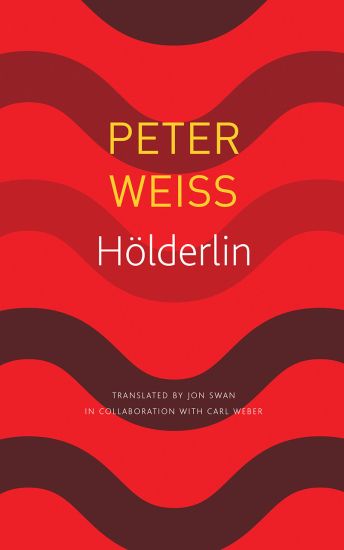
The work of German poet Frederich Hölderlin (1770–1843) has inspired countless poets and philosophers from Paul Celan to Rainer Maria Rilke to Martin Heidegger and Friedrich Nietzsche. Yet, despite the international renown and respect his hymns and elegies have since earned for their lyric style and innovative approach to Greek myth, his work was not widely celebrated during his lifetime. Diagnosed with a severe case of hypochondria at a young age, he was beset by mental illness for much of his life, living the final decades in the care of a carpenter. In Hölderlin, distinguished German playwright Peter Weiss brings to the page the life and times of one of Germany’s greatest poets. Like Trotsky in Exile, Hölderlin presents a biography in the form of a two-act drama. Following its opening in 1971 in Stuttgart, the play was staged numerous times in Germany and Switzerland, and as Robert Cohen explains in his introduction, it was “greeted by accolades as well as by intense criticism since Weiss had dared to revise the image of one of the great heroic figures of German Culture.” Weiss explains that he was motivated “to describe something of the conflict that arises in a person who suffers to the point of madness from the injustices, the humiliations in his society, who completely supports the revolutionary upheavals, and yet does not find the praxis with which the misery can be remedied.” The resulting dramatic biography is as captivating and divisive today as it was forty years ago, and it has yet to be matched by any other biographic treatment of Hölderlin. Presented here for the first time in English, Weiss’s play is a lyrical investigation of the intense and influential poems of Hölderlin and the turbulent life behind them.
A major literary event, the publication of the second volume of Peter Weiss's three-volume novel The Aesthetics of Resistance makes one of the towering works of twentieth-century German literature available to English-speaking readers for the first time. The crowning achievement of Peter Weiss, the internationally renowned writer best known for his play Marat/Sade, The Aesthetics of Resistance spans the period from the late 1930s to World War II, dramatizing antifascist resistance and the rise and fall of proletarian political parties in Europe. Volume II, initially published in 1978, opens with the unnamed narrator in Paris after having retreated from the front lines of the Spanish Civil War. From there, he moves on to Stockholm, where he works in a factory, becomes involved with the Communist Party, and meets Bertolt Brecht. Featuring the narrator's extended meditations on paintings, sculpture, and literature, the novel teems with characters, almost all of whom are based on historical figures. Throughout, the narrator explores the affinity between political resistance and art-the connection at the heart of Weiss's novel. Weiss suggests that meaning lies in embracing resistance, no matter how intense the oppression, and that we must look to art for new models of political action and social understanding. The Aesthetics of Resistance is one of the truly great works of postwar German literature and an essential resource for understanding twentieth-century German history.
A major literary event, the publication of the second volume of Peter Weiss's three-volume novel The Aesthetics of Resistance makes one of the towering works of twentieth-century German literature available to English-speaking readers for the first time. The crowning achievement of Peter Weiss, the internationally renowned writer best known for his play Marat/Sade, The Aesthetics of Resistance spans the period from the late 1930s to World War II, dramatizing antifascist resistance and the rise and fall of proletarian political parties in Europe. Volume II, initially published in 1978, opens with the unnamed narrator in Paris after having retreated from the front lines of the Spanish Civil War. From there, he moves on to Stockholm, where he works in a factory, becomes involved with the Communist Party, and meets Bertolt Brecht. Featuring the narrator's extended meditations on paintings, sculpture, and literature, the novel teems with characters, almost all of whom are based on historical figures. Throughout, the narrator explores the affinity between political resistance and art-the connection at the heart of Weiss's novel. Weiss suggests that meaning lies in embracing resistance, no matter how intense the oppression, and that we must look to art for new models of political action and social understanding. The Aesthetics of Resistance is one of the truly great works of postwar German literature and an essential resource for understanding twentieth-century German history.
A major literary event, the publication of the final volume of Peter Weiss’s three-volume novel The Aesthetics of Resistance makes one of the towering works of twentieth-century German literature available to English-speaking readers for the first time. Weiss’s crowning achievement, The Aesthetics of Resistance spans the period from the late 1930s to the end of World War II, dramatizing antifascist resistance and the rise and fall of proletarian political parties in Europe. Volume III, initially published in 1981, teems with characters, many of whom are based on historical figures. It commences in May of 1940, as the narrator’s parents flee Nazi forces in Eastern Europe and reunite with their son in Sweden. While in Stockholm, the narrator and other Communist activists living in exile struggle to build structures in the German underground. The story then follows Communist resistance fighter Charlotte Bischoff as she is smuggled to Bremen on a freighter. In Berlin, she contacts the narrator’s friends and joins the Red Orchestra resistance group. Soon, the Gestapo cracks the underground group’s code, arrests a number of its members, and takes them to Plötzensee Prison, where most of them are executed. Featuring the narrator’s meditations on paintings, sculpture, and literature throughout, The Aesthetics of Resistance demonstrates the affinity between political resistance and art. Ultimately, Weiss argues that we must look to art for new models of political action and social understanding.
A major literary event, the publication of Peter Weiss’s monumental three-volume novel The Aesthetics of Resistance makes one of the towering works of twentieth-century German literature available to English-speaking readers for the first time. The crowning achievement of Peter Weiss-the internationally renowned writer best known for his play Marat/Sade-The Aesthetics of Resistance spans the period from the late 1930s to the end of World War II, dramatizing antifascist resistance and the rise and fall of proletarian political parties in Europe. Published between 1975 and 1981, the trilogy follows an unnamed narrator and his peers-sixteen- and seventeen-year-old working-class students-as they explore the affinity between political resistance and art while fighting fascist regimes in Germany and Spain. In 1937 they begin meeting in Berlin’s museums and galleries, where they engage in extended meditations on the political meanings of paintings, sculpture, and literature. Moving from the Berlin underground to the Spanish Civil War to Paris, the narrator later finds himself in Stockholm, gets a job in a factory, joins the Communist Party, and meets Bertolt Brecht. The novel teems with characters, almost all of whom are based on historical figures. By August 1942, many of the narrator’s friends, acquaintances, and fellow members of the anti-Nazi resistance in Berlin are arrested by the Gestapo and executed. Throughout this epic work, Weiss suggests that meaning lies in embracing resistance, no matter how intense the oppression, and that we must look to art for new models of political action and social understanding. The Aesthetics of Resistance is one of the truly great examples of postwar German literature and an essential resource for understanding twentieth-century German history.
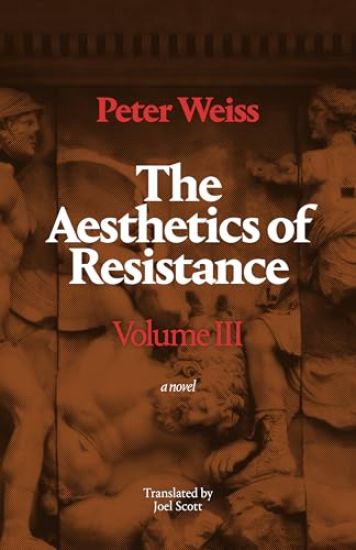
A major literary event, the publication of the final volume of Peter Weiss’s three-volume novel The Aesthetics of Resistance makes one of the towering works of twentieth-century German literature available to English-speaking readers for the first time. Weiss’s crowning achievement, The Aesthetics of Resistance spans the period from the late 1930s to the end of World War II, dramatizing antifascist resistance and the rise and fall of proletarian political parties in Europe. Volume III, initially published in 1981, teems with characters, many of whom are based on historical figures. It commences in May of 1940, as the narrator’s parents flee Nazi forces in Eastern Europe and reunite with their son in Sweden. While in Stockholm, the narrator and other Communist activists living in exile struggle to build structures in the German underground. The story then follows Communist resistance fighter Charlotte Bischoff as she is smuggled to Bremen on a freighter. In Berlin, she contacts the narrator’s friends and joins the Red Orchestra resistance group. Soon, the Gestapo cracks the underground group’s code, arrests a number of its members, and takes them to Plötzensee Prison, where most of them are executed. Featuring the narrator’s meditations on paintings, sculpture, and literature throughout, The Aesthetics of Resistance demonstrates the affinity between political resistance and art. Ultimately, Weiss argues that we must look to art for new models of political action and social understanding.

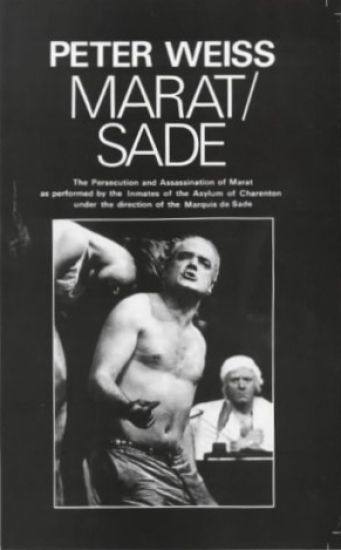
The Persecution and Assassination of J-P Marat As Performed by the Inmates O.T.A. O.C.U.T. Direction of the Marquis De Sade
Peter Weiss
Waveland Pr Inc
2001
pokkari

Allgemeinverstandlich stellt der Leitfaden ein Qualitatssystem vor, das sich auf die neue revidierte ISO-Norm 9001:2000 bezieht. Gleichzeitig wird die Qualitatsphilosophie des TQM deutlich. Die konkreten Praxis-Beispiele konnen direkt ubernommen werden. Die Lekture unterstutzt den Aufbau eines anstaltseigenen Qualitatssystems und bietet Argumente zur Entscheidung fur eines der gangigen Modelle.