Kirjojen hintavertailu. Mukana 12 083 983 kirjaa ja 12 kauppaa.

Kirjahaku

Etsi kirjoja tekijän nimen, kirjan nimen tai ISBN:n perusteella.

58 kirjaa tekijältä Peter Williams

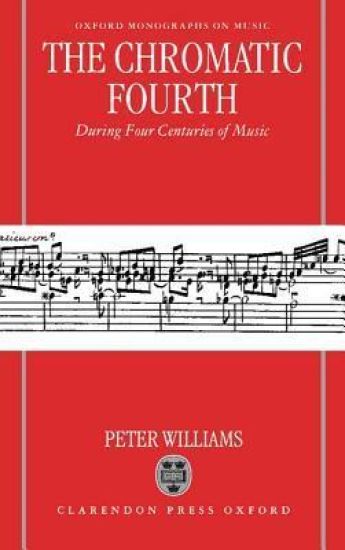
The Chromatic Fourth During Four Centuries of Music
Despite its rather forbidding name, the `Chromatic Fourth' is one of the most familiar short themes in virtually all western music over the four hundred years before the middle of our century. It is a sequence of six notes that can be heard in a huge variety of ways, most originally, effectively, and beautifully in the work of the greatest composers, from the madrigalists to Stravinsky, from Byrd to Bartók, with telling examples in the operas of Monteverdi, Mozart, and Wagner, or in the keyboard music of Bull, Bach, and Schubert. Although the existence of the chromatic fourth has long been recognized, and occasionally mentioned by music historians, this is the first thorough-going attempt to trace its likely origins and its evolution over four hundred years. With over 200 music examples, Peter Williams demonstrates the theme's wonderful variety, and shows that it was used by composers not only as a means of emotional expression, but also as a structural device.
Bach: The Goldberg Variations

Bach: The Goldberg Variations

Peter Williams

Cambridge University Press
2001
pokkari
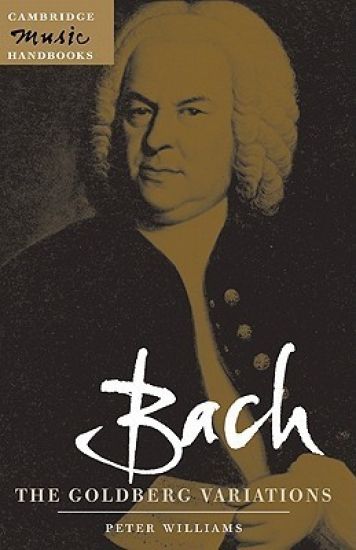
Many listeners and players are fascinated by Bach’s Goldberg Variations. In this wideranging and searching study, Professor Williams, one of the leading Bach scholars of our time, helps them probe its depths and understand its uniqueness. He considers the work's historical origins, especially in relation to all Bach’s Clavierübung volumes and late keyboard works, its musical agenda and its formal shape, and discusses significant performance issues. In the course of the book he poses a number of key questions. Why should such a work be written? Does the work have both a conceptual and a perceptual shape? What other music is likely to have influenced the Goldberg and to what extent is it trying to be encyclopedic? What is the canonic vocabulary? How have contemporaries or musicians from Beethoven to the present day seen this work and, above all, how has its mysterious beauty been created?
J. S. Bach

J. S. Bach

Peter Williams

Cambridge University Press
2012
pokkari
Peter Williams approaches afresh the life and music of arguably the most studied of all composers, interpreting both Bach's life by deconstructing his original obituary in the light of more recent information and his music by evaluating his priorities and irrepressible creative energy. How, even though belonging to musical families on both his parents' sides, did he come to possess so bewitching a sense of rhythm and melody and a mastery of harmony that established nothing less than a norm in Western culture? In considering that the works of a composer are his biography, the book's title A Life in Music means both a life spent making music and one revealed in the music as we know it. A distinguished scholar and performer, Williams re-examines Bach's life as an orphan and family man, as an extraordinarily gifted composer and player and as an ambitious artist who never suffered fools gladly.
The Organ Music of J. S. Bach: Volume 3, A Background

The Organ Music of J. S. Bach: Volume 3, A Background

Peter Williams

Cambridge University Press
1989
pokkari
This book, first published in 1984, is the third volume of Peter Williams' important reference work, The Organ Music of J. S. Bach. In this volume, Peter Williams lays before the reader the salient points that serve as an appropriate bckground to the pieces: notes on the church services of the area in question (Thuringia - Saxony), the fitful tradition of recitals, the duties of organists, the composer's indebtedness to former and contemporary styles in music, his knowledge of organs, the relevance (often over-valued today) of theorists, details of the instruments he was acquainted with and what can be assumed about the way they were registered and played. Throughout, the author has aimed to present a background to this music and its playing and has avoided stepping into areas of high conjecture, such as chronology or how specific pieces are to be played.
The Life of Bach

The Life of Bach

Peter Williams

Cambridge University Press
2003
pokkari
Bach, like Shakespeare, is known largely by his works, exceptional in quantity as well as quality, and only a few original documents convey any idea of his life and character. Peter Williams’s thoroughly new look at Bach’s biography asks many questions about the so-called evidence. What was he like as a young man, as a father, as an ageing church servant? What were his preoccupations? What music did he know and how did he compose and perform such an amazing amount of music? Was he a disappointed man? Reading the available documentation critically, especially from the viewpoint of a performer, and going back to the first substantial ‘biography’ of Bach, namely his Obituary, Williams suggests new interpretations of the composer’s life and his work. In addition, he asks if our understanding of Bach has been hindered by the unremitting deference displayed towards him since his death.
The Organ in Western Culture, 750–1250

The Organ in Western Culture, 750–1250

Peter Williams

Cambridge University Press
2005
pokkari
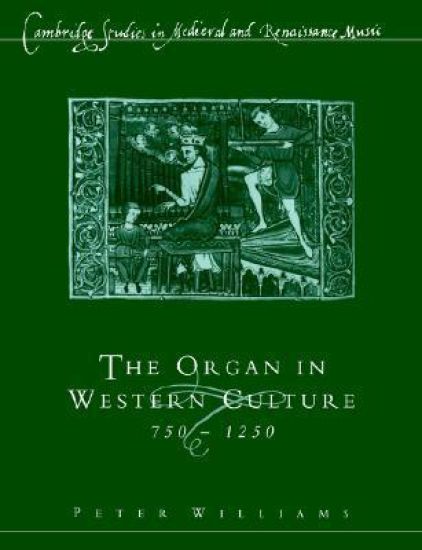
How did the organ become a church instrument? How did it develop from an outdoor, Mediterranean noisemaker to an instrument which has become the embodiment of Western music and responsible for many of that music's characteristics? In this fascinating investigation, Peter Williams speculates on these questions and suggests some likely answers. He considers where the organ was placed and why; what the instrument was like in 800, 1000, 1200 and 1400; what music was played, and how. He re-examines the known references before 1300, covering such areas as the history of technology, music theory, art history, architecture, and church and political history. Central to the story he uncovers is the liveliness of European monasticism around 1000 AD and the ability and imagination of the Benedictine reformers. Professor Williams's approach is new in both tactics and strategy, giving an interdisciplinary idea of musical development relevant to those both in and out of music.
Bach: The Goldberg Variations

Bach: The Goldberg Variations

Peter Williams

Cambridge University Press
2001
sidottu
Many listeners and players are fascinated by Bach's Goldberg Variations. In this wideranging and searching study, Professor Williams, one of the leading Bach scholars of our time, helps them probe its depths and understand its uniqueness. He considers the work's historical origins, especially in relation to all Bach's Clavierübung volumes and late keyboard works, its musical agenda and its formal shape, and discusses significant performance issues. In the course of the book he poses a number of key questions. Why should such a work be written? Does the work have both a conceptual and a perceptual shape? What other music is likely to have influenced the Goldberg and to what extent is it trying to be encyclopedic? What is the canonic vocabulary? How have contemporaries or musicians from Beethoven to the present day seen this work and, above all, how has its mysterious beauty been created?
The Life of Bach

The Life of Bach

Peter Williams

Cambridge University Press
2003
sidottu
Bach, like Shakespeare, is known largely by his works, exceptional in quantity as well as quality, and only a few original documents convey any idea of his life and character. Peter Williams's 2003 look at Bach's biography asks many questions about the so-called evidence. What was he like as a young man, as a father, as an ageing church servant? What were his preoccupations? What music did he know and how did he compose and perform such an amazing amount of music? Was he a disappointed man? Reading the available documentation critically, especially from the viewpoint of a performer, and going back to the first substantial 'biography' of Bach, namely his Obituary, Williams suggests new interpretations of the composer's life and his work. In addition, he asks if our understanding of Bach has been hindered by the unremitting deference displayed towards him since his death.
J. S. Bach

J. S. Bach

Peter Williams

Cambridge University Press
2007
sidottu
Peter Williams approaches afresh the life and music of arguably the most studied of all composers, interpreting both Bach's life by deconstructing his original obituary in the light of more recent information and his music by evaluating his priorities and irrepressible creative energy. How, even though belonging to musical families on both his parents' sides, did he come to possess so bewitching a sense of rhythm and melody and a mastery of harmony that established nothing less than a norm in Western culture? In considering that the works of a composer are his biography, the book's title A Life in Music means both a life spent making music and one revealed in the music as we know it. A distinguished scholar and performer, Williams re-examines Bach's life as an orphan and family man, as an extraordinarily gifted composer and player and as an ambitious artist who never suffered fools gladly.
The Organ Music of J. S. Bach

The Organ Music of J. S. Bach

Peter Williams

Cambridge University Press
2003
pokkari
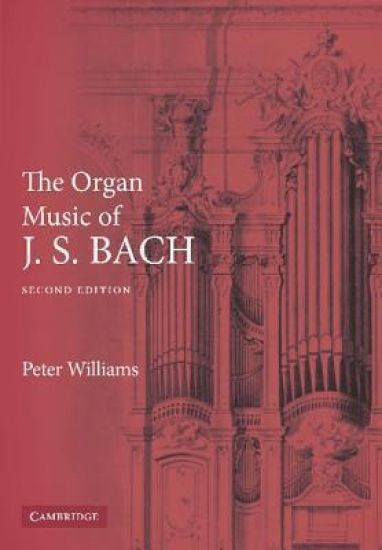
This is a completely revised 2003 edition of volumes I and II of The Organ Music of J. S. Bach (1980), a bestselling title, which has subsequently become a classic text. This edition takes account of Bach scholarship of the 25 years prior to publication. Peter Williams's piece-by-piece commentary puts the musical sources of the organ works in context, describing the form and content of each work and relating them to other music, German and non-German. He summarises the questions about the history, authenticity, chronology, function and performance of each piece, and points out important details of style and musical quality. The study follows the order of the Bach catalogue (BWV), beginning with the sonatas, then the 'free works', followed by chorales and ending with the doubtful works, including the 'newly discovered chorales' of 1985.
Crazy House

Crazy House

Peter Williams

Samuel French, Inc
2011
pokkari
Comedy Peter Williams Characters: 6 male, 6 female Interior Set Mild mannered Mr. Beldinker is running for congress on the Good Government ticket. His wife, Aspasia, is writing an opera and their children aren't ordinary teenagers---one's on a health kick, another paints incomprehensible modern pictures and the third is world brat #1. The plot centers around an encyclopedia salesman who hooks them on buying the set on so called easy payments. Mad fun for all!
Kokoda Trail for Dummies

Kokoda Trail for Dummies

Peter Williams

For Dummies
2012
nidottu
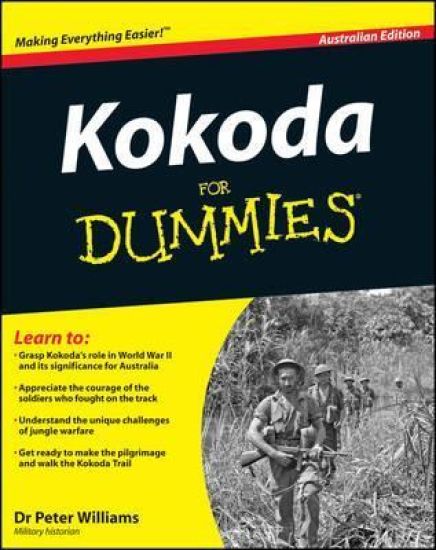
Everything you need to know about the Kokoda Trail and its place in Australian history Interest in the Kokoda Trail is growing rapidly among many Australians, both for its attraction as a hiking destination and for its historical significance. Kokoda For Dummies offers a fast track tool for learning everything you need to know about this unique thoroughfare, in one concise volume. Part history book, part practical guide, Kokoda For Dummies is perfect both for those considering following our Diggers’ footsteps along ‘the track’ or armchair travellers who want to learn about its history. Covering the full history of the Kokoda Trail, from its beginnings as an overland mail route to the fierce battles between the Australians and the Japanese that took place along its length during World War II, the book also includes important information on walking the trail yourself. From the steps you need to take to get ready to what to bring, Kokoda For Dummies is the definitive resource for anyone looking for a comprehensive overview of this significant landmark. Focuses on walking the track as a pilgrimage and a history lesson for history buffs and hiking enthusiasts alikeCovers the health and safety concerns involved with walking the track, including a basic Kokoda itineraryContains eyewitness accounts of the Kokoda battles gleaned from interviews conducted with Australian and Japanese war veterans A comprehensive but accessible history of the Kokoda Trail and its significance to Australia, in one volume.
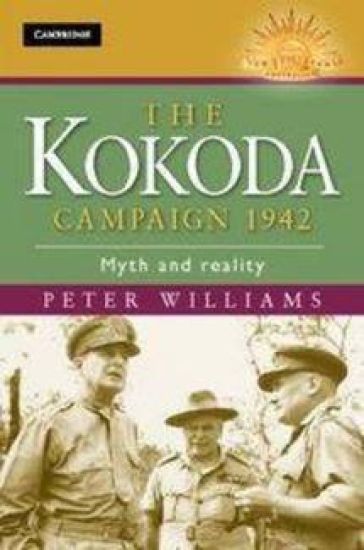
The Kokoda Campaign 1942

The Kokoda Campaign 1942

Peter Williams

Cambridge University Press
2012
sidottu
The fighting on the Kokoda Track in World War II is second only to Gallipoli in the Australian national consciousness. The Kokoda campaign of 1942 has taken on mythical status in Australian military history. According to the legend, Australian soldiers were vastly outnumbered by the Japanese, who suffered great losses in battle and as a result of the harsh conditions of the Kokoda Track. In this important book, Peter Williams seeks to dispel the Kokoda myth. Using extensive research and Japanese sources, he explains what really happened on the Kokoda Track in 1942. Unlike most other books written from an Australian perspective, The Kokoda Campaign 1942: Myth and reality focuses on the strategies, tactics and battle plans of the Japanese and shows that the Australians were in fact rarely outnumbered. For the first time, this book combines narrative with careful analysis to present an undistorted picture of the events of the campaign. It is a must-read for anyone who is interested in the truth of the Kokoda campaign of 1942.
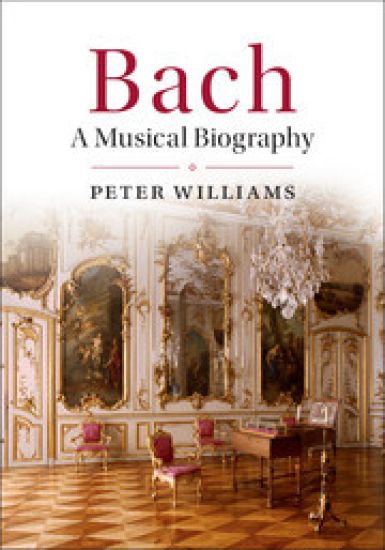
Bach

Bach

Peter Williams

Cambridge University Press
2016
sidottu
J. S. Bach composed some of the best-loved and most moving music in Western culture. Surviving mostly in manuscript collections, his music also exists in special and unique publications that reveal much about his life and thoughts as a composer. In this book, Peter Williams, author of the acclaimed J. S. Bach: A Life in Music, revisits Bach's biography through the lens of his music. Reviewing all of Bach's music chronologically, Williams discusses the music collection by collection to reveal the development of Bach's interests and priorities. While a great deal has been written about the composer's vocal works, Williams gives the keyboard music its proper emphasis, revealing it as crucial to Bach's biography, as a young organist and a mature composer, as a performer in public and teacher in private, and as a profound thinker in the language of music.
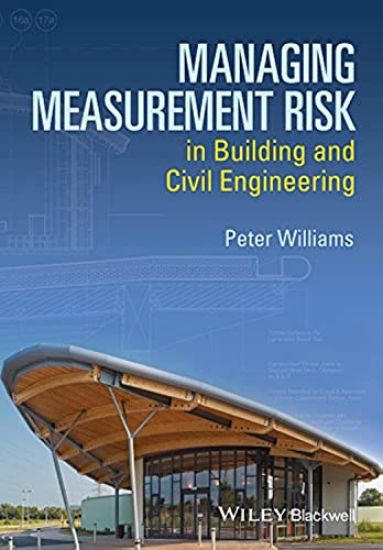
Managing Measurement Risk in Building and Civil Engineering
Measurement in civil engineering and building is a core skill and the means by which an architectural or engineering design may be modelled financially, providing the framework to control and realise designs within defined cost parameters, to the satisfaction of the client. Measurement has a particular skill base, but it is elevated to an ‘art’ because the quantity surveyor is frequently called upon to interpret incomplete designs in order to determine the intentions of the designer so that contractors may be fully informed when compiling their tenders. Managing Measurement Risk in Building and Civil Engineering will help all those who use measurement in their work or deal with the output from the measurement process, to understand not only the ‘ins and outs’ of measuring construction work but also the relationship that measurement has with contracts, procurement, claims and post-contract control in construction. The book is for quantity surveyors, engineers and building surveyors but also for site engineers required to record and measure events on site with a view to establishing entitlement to variations, extras and contractual claims. The book focuses on the various practical uses of measurement in a day-to-day construction context and provides guidance on how to apply quantity surveying conventions in the many different circumstances encountered in practice. A strong emphasis is placed on measurement in a risk management context as opposed to simply ‘taking-off’ quantities. It also explains how to use the various standard methods of measurement in a practical working environment and links methods of measurement with conditions of contract, encompassing the contractual issues connected with a variety of procurement methodologies. At the same time, the many uses and applications of measurement are recognised in both a main contractor and subcontractor context. Measurement has moved into a new and exciting era of on-screen quantification and BIM models but this has changed nothing in terms of the basic principles underlying measurement: thoroughness, attention to detail, good organisation, making work auditable and, above all, understanding the way building and engineering projects are designed and built. This book will help to give you the confidence to both ‘measure’ and understand measurement risk issues by: presenting the subject of measurement in a modern context with a risk management emphasisrecognising the interrelationship of measurement with contractual issues including identification of pre- and post-contract measurement risk issuesemphasising the role of measurement in the entirety of the contracting process particularly considering measurement risk implications of both formal and informal tender documentation and common methods of procurementconveying the basic principles of measurement and putting them in an IT contextincorporating detailed coverage of NRM1 and NRM2, CESMM4, Manual of Contract Documents for Highway Works and POM(I), including a comparison of NRM2 with SMM7 and a detailed analysis of changes from CESMM3 to CESMM4discussing the measurement implications of major main and sub-contract conditions (JCT, NEC3, Infrastructure Conditions and FIDIC)providing detailed worked examples and explanations of computer-based measurement using a variety of industry-standard software packages
The Tourist's Guide Through the County of Caernarvon; Containing a Short Sketch of Its History, Antiquities, Etc.
Title: The Tourist's Guide through the County of Caernarvon; containing a short sketch of its history, antiquities, etc.Publisher: British Library, Historical Print EditionsThe British Library is the national library of the United Kingdom. It is one of the world's largest research libraries holding over 150 million items in all known languages and formats: books, journals, newspapers, sound recordings, patents, maps, stamps, prints and much more. Its collections include around 14 million books, along with substantial additional collections of manuscripts and historical items dating back as far as 300 BC.The GENERAL HISTORICAL collection includes books from the British Library digitised by Microsoft. This varied collection includes material that gives readers a 19th century view of the world. Topics include health, education, economics, agriculture, environment, technology, culture, politics, labour and industry, mining, penal policy, and social order. ++++The below data was compiled from various identification fields in the bibliographic record of this title. This data is provided as an additional tool in helping to insure edition identification: ++++ British Library Williams, Peter; 1821. 8 . 10370.d.5.