Kirjojen hintavertailu. Mukana 11 244 527 kirjaa ja 12 kauppaa.

Kirjahaku

Etsi kirjoja tekijän nimen, kirjan nimen tai ISBN:n perusteella.

16 kirjaa tekijältä Peter Wolfe

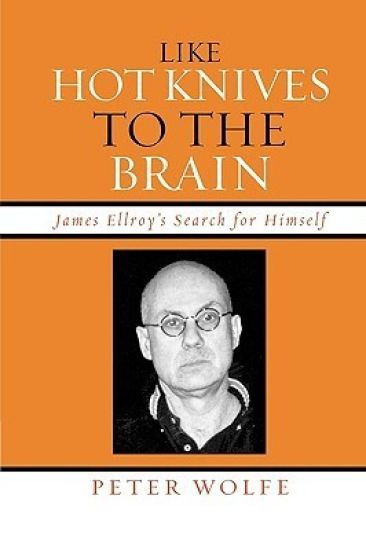
Like Hot Knives to the Brain

Like Hot Knives to the Brain

Peter Wolfe

Lexington Books
2006
nidottu
Often more disturbing than entertaining, James Ellroy is an author who never shies away from the ugly or repellent. Eminent crime fiction scholar Peter Wolfe examines how Ellroy transcends the genres of pulp and neo-noir fiction to write stories that are both psychologically haunting and culturally relevant. Wolfe skillfully combines biography—including the unsolved murder of Ellroy's mother—with literary analysis to provide a fascinating and readable study of this popular author. The first in-depth companion to the work of James Ellroy, Like Hot Knives to the Brain will interest students of popular culture, mystery readers, and crime buffs everywhere.
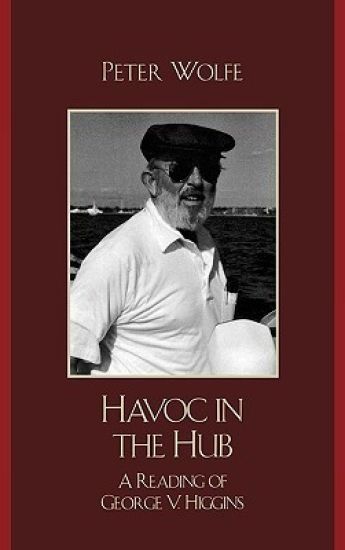
Havoc in the Hub

Havoc in the Hub

Peter Wolfe

Lexington Books
2007
sidottu
Havoc in the Hub brings to light the long-neglected work of George V. Higgins, revealing the wealth of intellectual, social, literary, and religious thought that underlies his 25 novels and numerous other works. Higgins’s writing, fed by equal parts wit and sorrow, touches our senses, emotions, and minds. Peter Wolfe makes a resounding contribution to the study of this writer. Wolfe places Higgins’s work in its geographical context and outlines the many sources from which Higgins drew during his highly productive career. The first in-depth examination of George V. Higgins, Havoc in the Hub will interest scholars, graduate students, and lovers of Higgins’s work alike.
Havoc in the Hub

Havoc in the Hub

Peter Wolfe

Lexington Books
2007
nidottu
Havoc in the Hub brings to light the long-neglected work of George V. Higgins, revealing the wealth of intellectual, social, literary, and religious thought that underlies his 25 novels and numerous other works. HigginsOs writing, fed by equal parts wit and sorrow, touches our senses, emotions, and minds. Peter Wolfe makes a resounding contribution to the study of this writer. Wolfe places HigginsOs work in its geographical context and outlines the many sources from which Higgins drew during his highly productive career. The first in-depth examination of George V. Higgins, Havoc in the Hub will interest scholars, graduate students, and lovers of HigginsOs work alike.
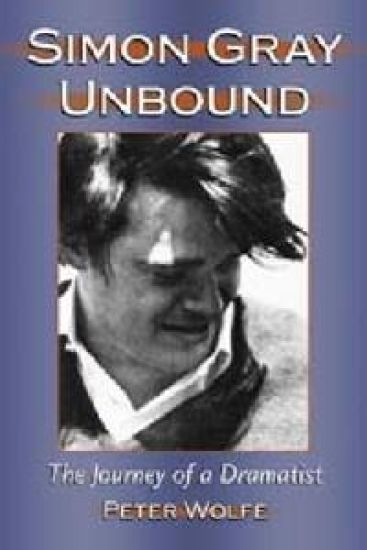
Simon Gray Unbound

Simon Gray Unbound

Peter Wolfe

McFarland Co Inc
2011
pokkari
The work of English playwright Simon Gray (1936-2008) has always resisted ideological and stylistic labels. His artistic independence has also had an unwelcome side effect: It cost him the critical attention garnered by his peers. This book, the first monograph on Gray, examines his oeuvre from the early plays, which hack away at the formalism and humanism of traditional English satire, to the later ones, in which he explores English professionals and their problems connecting with each other. If Gray remains the least known major English dramatist of his day, he's also one of the boldest and best.
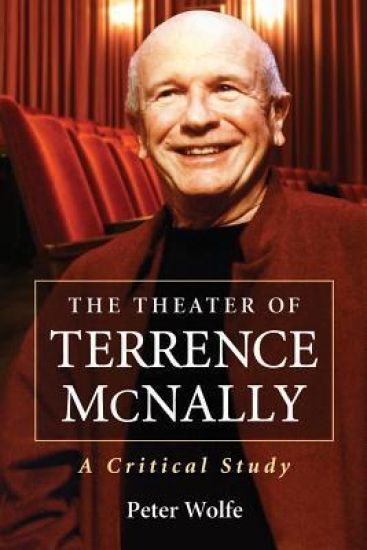
The Theater of Terrence McNally

The Theater of Terrence McNally

Peter Wolfe

McFarland Co Inc
2013
pokkari
This first book-length work on Terrence McNally shows how his decades in the theater have refined his thoughts on subjects like growing up gay in mannish, homophobic Texas, Shakespeare's legacy in contemporary drama, and the life-giving power of forgiveness. McNally believes that the ability to forgive--a challenge to even the most high-minded--confirms our humanity because the wrongs done to us usually don't deserve to be forgiven. The author shows how McNally's impeccable timing, his instinct for a good laugh line, and his preference for physical sensation and character over plot helps him reveal both what's important to his people and why his people are important. These revelations can shake up audiences while providing a great evening at the theater.
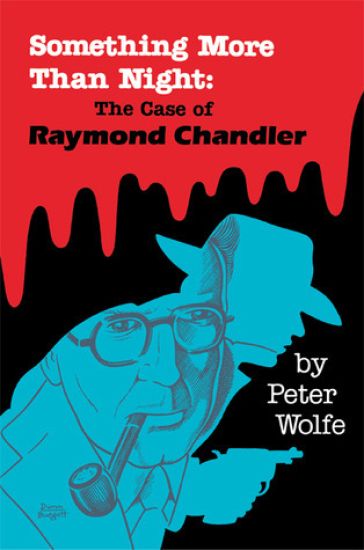
Something More Than Night

Something More Than Night

Peter Wolfe

Bowling Green University Popular Press,US
1985
nidottu
Raymond Chandler's eminence as a mystery writer is unchallenged. Somerset Maugham and George Grella both rate him above Dashiell Hammett; Eric Partridge deems him "a serious artist and a very considerable novelist," while praising him as "one of the finest novelists of his time." Peter Wolfe examines the many sides of Chandler and his work-his apparent will to self-destruct, his obsession with beautiful women, and his apparent brush with homosexuality-and casts much new and needed light on this major American author.
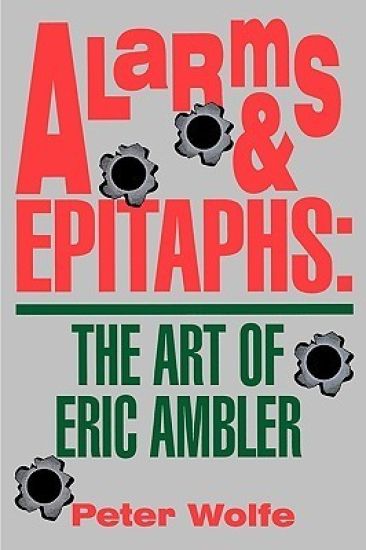
Alarms and Epitaphs

Alarms and Epitaphs

Peter Wolfe

Bowling Green University Popular Press,US
1993
nidottu
Eric Ambler's novelistic career falls into two halves. In the first half belong the works he published between 1935-1940. These include the highly acclaimed Epitaph for a Spy (1938) and The Mask of Dimitrios (1939), both of which were made into successful films in 1944. The intrigue books of this period unfold in interwar Europe, a bitten-up, anxious place reeling between the extremes of fascism and Soviet communism. To reflect changes in the postwar world, Ambler set his later books in third-world countries where first-world financing collides with unstable, often revolutionary, politics-all within the shadow of large multinational corporations. These powerful firms with connections in high places take the same liberties as big governments have always done in works like Dr. Frigo (1974), the only Ambler book set in Latin America, and the best-selling The Care of Time (1981).
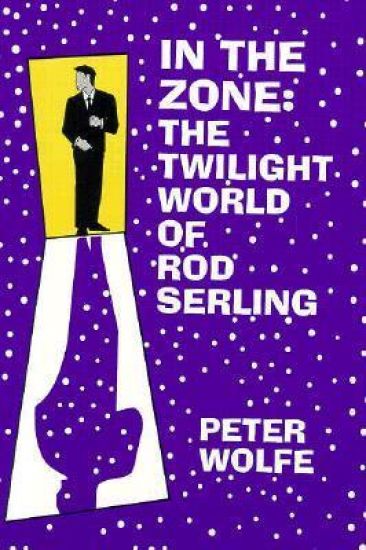
In the Zone

In the Zone

Peter Wolfe

Bowling Green University Popular Press,US
1997
sidottu
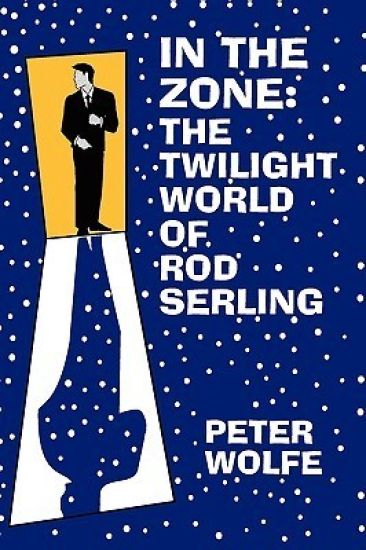
The classic television show 'The twilight Zone' explored the possibilities inhering in the ordinary. A twilight Zone episode moved us by being poignant and intimate, rambunctious or thought provoking.
In the Zone

In the Zone

Peter Wolfe

Bowling Green University Popular Press,US
1997
nidottu
The classic television show The Twilight Zone explored the possibilities inhering in the ordinary. A Twilight Zone episode moved us by being poignant and intimate, rambunctious or thought provoking. But whether it takes place on an asteroid, in a city pool room, or in the backwoods, it will usually convey both a folklorist's eye for detail and the born raconteur's sense of pace. Rod Serling, the show's originator, main scriptwriter, and artistic director, knew how much burden he could place on his rhetorical and dramatic gifts. Deservedly celebrated as a pioneer fiction writer for television, Serling always grounded his work in the human condition: he wrote movingly about history and loyalty, the grip of everyday reality, and the dangers of both forgetting about one's ghosts and giving them the upper hand.
Henry Green

Henry Green

Peter Wolfe

McFarland Co Inc
2017
pokkari
By mid-career, many successful writers have found a groove and their readers come to expect a familiar consistency and fidelity. Not so with Henry Green (1905-1973). He prefers uncertainty over reason and fragmentation over cohesion, and rarely lets the reader settle into a nice cozy read. Evil, he suggests, can be as instructive as good. Through Green's use of paradoxical and ambiguous language, his novels bring texture to the flatness of life, making the world seem bigger and closer. We soon stop worrying about what Hitler's bombs have in store for the Londoners of Caught (1943) and Back (1946) and start thinking about what they have in store for each other. Praised in his lifetime as England's top fiction author, Green is largely overlooked today. This book presents a comprehensive analysis of his work for a new generation of readers.
Terence Rattigan

Terence Rattigan

Peter Wolfe

Lexington Books
2019
sidottu
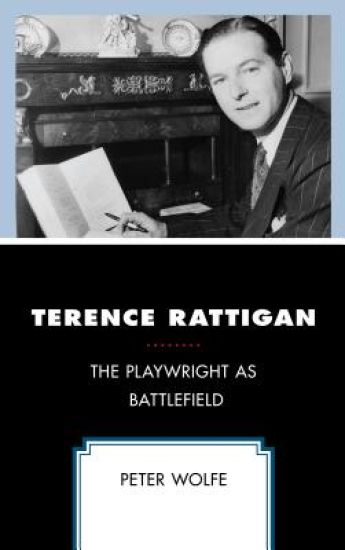
The theatrical world Terence Rattigan built is vital but disturbing and uniquely constructed. His sentences are not impacted or fractured, and his plots usually obey a linear time sequence. Yet his realism isn't all that real. Though sentence by sentence, his dialogue sounds natural, the creative pulse behind it is idiosyncratic and self-lacerating. As a gay man writing at a time when homosexuality was a felony in the UK, Rattigan wrote at a skewed angle to his culture, making his plays at times easy to follow but hard to fathom. Terence Rattigan: The Playwright as Battlefield examines the ways in which Rattigan’s works turn their audiences into participants, encouraging intellectual independence and freeing them to make decisions for themselves as to the deeper meanings of the works. The playwright’s omission of outright explanations deepens the audience’s emotional commitment to the outcomes of the performance, and walks a fine line between restraint and invention. His works convey subtly and deceptively the cold obstinacy that thwarts our everyday actions in a way which that is felt viscerally by the audience. This book engages works from throughout Rattigan’s early and late career to examine the unique methods by which the playwright conveys meaning to various audiences within an ever-changing sociocultural context.
Understanding Alan Bennett

Understanding Alan Bennett

Peter Wolfe

University of South Carolina Press
1999
sidottu
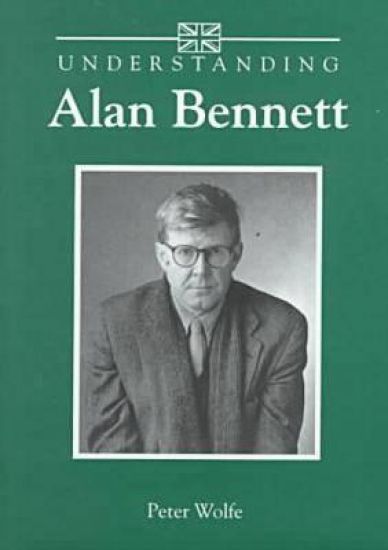
A study of the actor, director, playwright and lyricist, Alan Bennett. Peter Wolfe demonstrates that Alan Bennett's success in many spheres was no fluke, and his theatrical eminence has always been accompanied by awards and professional recognition. His play ""Single Spies"" won the Oliver Award as England's Best Comedy in 1989. The casts of his plays, starting with ""Forty Years On"" in 1968, have included such luminaries as Sir John Gielgud, Sir Alec Guinness, Joan Plowright, Maggie Smith, Alan Bates and Daniel Day Lewis. His screenwriting earned ""The Madness of King George"" a nomination for an Academy Award. This book seeks to illuminate the writer whose instinct for artistic choices has helped him to succeed on his own terms.
Understanding Penelope Fitzgerald

Understanding Penelope Fitzgerald

Peter Wolfe

University of South Carolina Press
2004
sidottu
Peter Wolfe's study of Penelope Fitzgerald's canon illuminates writings he characterizes as possessing unerring dramatic judgment, a friendly and fluid style, and lyrical and precise descriptive passages. In this survey of Fitzgerald's life and career, Wolfe explains how the British novelist brings resources of talent and craft, thought and feeling, courage and vulnerability, to the biographies and novels that have earned her renown. With readings of a broad range of her published works, including her final novel, The Blue Flower, Wolfe describes the unfolding of Fitzgerald's writing as a subtle, ongoing process. He maintains that the novels, though plain and rambling at first glance, grow fuller, stranger, and more stirring the more we invest in them. He details Fitzgerald's skill at sequencing events so as to unsettle readers and her ability to enhance motifs by not leaning too hard on them. Wolfe suggests that Fitzgerald's refusal to overplay effects and emotions, while at first puzzling in its disdain for drama, turns out to be one of her chief virtues, for she enables larger associations to emerge as she keeps big dramatic scenes from interfering with wider patterns. While enumerating Fitzgerald's many talents, Wolfe ultimately attributes much of her success to her style. He concludes that her exceptionally disciplined prose, which gives voice to her candor and compassion, imbues her work with a sense of mood, place, and character.
Laden Choirs

Laden Choirs

Peter Wolfe

The University Press of Kentucky
2014
nidottu
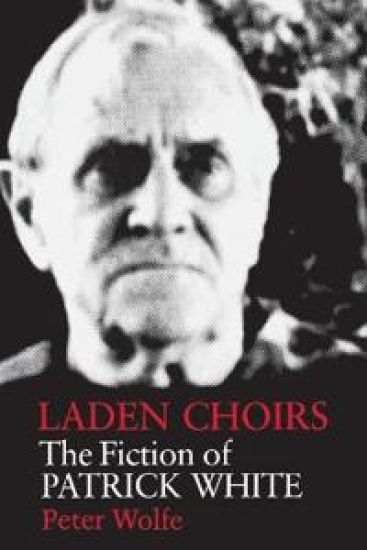
In 1973 the Australian novelist Patrick White won the Nobel Prize for Literature, the year that his great novel of family ties and change, The Eye of the Storm, was published and became a bestseller in America and Europe. Yet White is still not widely known or read, and few writers of today have provoked so many contradictory judgments. Now Peter Wolfe has written the first book-length study of the work of this brilliant and haunting novelist. The study offers a subtle, penetrating examination of White's style, his skill in building narrative tension, and also the depth and complexity reflected in his characterization, which, in his novels, always dominates action. Fittingly, for a writer whose novels bear the indelible stamp of Australia, the study also examines White's psychological use of setting and the intense sense of place found in his work. No other critical study of White covers such a broad range of his writing. Peter Wolfe considers here the entire canon of the novels. The Tree of Man, Voss, The Vivisector, The Eye of the Storm, A Fringe of Leaves, and The Twyborn Affair (White's most recent novel) are all discussed. White's themes and settings range from the power and immensity of the wilderness of the Australian outback to the dislocations wrought in traditional values by postwar industrialization and urban sprawl. Laden Choirs makes accessible to an American audience a writer of the first rank, whose work lies at the heart of modernist concerns. Literary students and scholars who wish to explore the world of Patrick White will find this book an essential key.