Kirjojen hintavertailu. Mukana 12 019 312 kirjaa ja 12 kauppaa.

Kirjahaku

Etsi kirjoja tekijän nimen, kirjan nimen tai ISBN:n perusteella.

5 kirjaa tekijältä Petr Bob

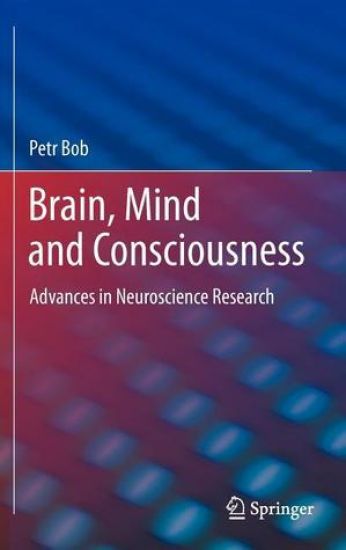
Brain, Mind and Consciousness

Brain, Mind and Consciousness

Petr Bob

Springer-Verlag New York Inc.
2011
sidottu
Neuropsychological research on the neural basis of behavior generally asserts that brain mechanisms ultimately suffice to explain all psychologically described phenomena. This assumption stems from the idea that the brain consists entirely of material particles and fields, and that all causal mechanisms relevant to neuroscience can be formulated solely in terms of properties of these elements. Contemporary basic physical theory differs from classic physics on the important matter of how consciousness of human agents enters into the structure of empirical phenomena. The new principles contradict the older idea that local mechanical processes alone account for the structure of all empirical data. Contemporary physical theory brings directly into the overall causal structure certain psychologically described choices made by human agents about how they will act. This key development in basic physical theory is applicable to neuroscience. This book explores this new framework.
Brain, Mind and Consciousness

Brain, Mind and Consciousness

Petr Bob

Springer-Verlag New York Inc.
2014
nidottu
Neuropsychological research on the neural basis of behavior generally asserts that brain mechanisms ultimately suffice to explain all psychologically described phenomena. This assumption stems from the idea that the brain consists entirely of material particles and fields, and that all causal mechanisms relevant to neuroscience can be formulated solely in terms of properties of these elements. Contemporary basic physical theory differs from classic physics on the important matter of how consciousness of human agents enters into the structure of empirical phenomena. The new principles contradict the older idea that local mechanical processes alone account for the structure of all empirical data. Contemporary physical theory brings directly into the overall causal structure certain psychologically described choices made by human agents about how they will act. This key development in basic physical theory is applicable to neuroscience. This book explores this new framework.
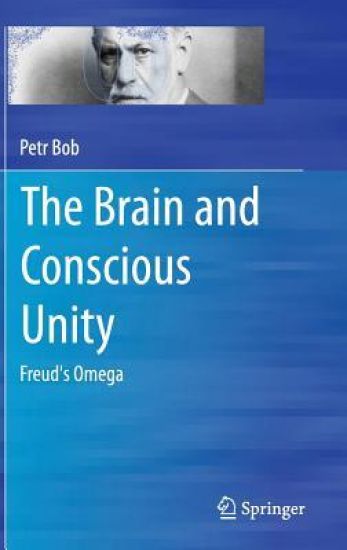
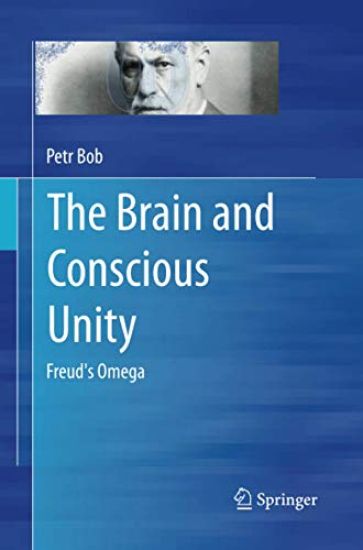
The Brain and Conscious Unity

The Brain and Conscious Unity

Petr Bob

Springer-Verlag New York Inc.
2015
sidottu
In this provocative text, a noted neuroscientist reexamines Freud's posthumously published Project of Scientific Psychology in the light of modern neuroscience. This expanded "thermodynamics of the mind" model includes robust conceptions of the cellular and neural processes that accompany creation of consciousness and memory, their contributions to such conditions as depression, dissociative disorders, and schizophrenia, and implications for practice, from imaging to talk-based therapies to pharmacotherapy. Central to this construct is Freud's proposal of specific "omega" neurons as the most volatile carriers of consciousness between mind and brain, which is applied to current issues regarding complexity and executive functioning. In addition, the book is extensively referenced, allowing readers to investigate these and related phenomena in greater detail.Among the topics covered:Neural reductionism in Freud's "Project" and neuropsychoanalysis.Thermodynamics and brain self-organization.Conflicting information and the dissociated mind.The Cartesian model of the mind and the binding problem.Neuroendocrine and immune response to stress.The concept of omega neurons and modern chaos theory.Rigorous, challenging, and occasionally startling, The Brain and Conscious Unity is a milestone in the neuroscience and mind/brain literature to be read and discussed by psychiatrists, psychologists, and neuropsychologists.
The Brain and Conscious Unity

The Brain and Conscious Unity

Petr Bob

Springer-Verlag New York Inc.
2016
nidottu
In this provocative text, a noted neuroscientist reexamines Freud's posthumously published Project of Scientific Psychology in the light of modern neuroscience. This expanded "thermodynamics of the mind" model includes robust conceptions of the cellular and neural processes that accompany creation of consciousness and memory, their contributions to such conditions as depression, dissociative disorders, and schizophrenia, and implications for practice, from imaging to talk-based therapies to pharmacotherapy. Central to this construct is Freud's proposal of specific "omega" neurons as the most volatile carriers of consciousness between mind and brain, which is applied to current issues regarding complexity and executive functioning. In addition, the book is extensively referenced, allowing readers to investigate these and related phenomena in greater detail.Among the topics covered:Neural reductionism in Freud's "Project" and neuropsychoanalysis.Thermodynamics and brain self-organization.Conflicting information and the dissociated mind.The Cartesian model of the mind and the binding problem.Neuroendocrine and immune response to stress.The concept of omega neurons and modern chaos theory.Rigorous, challenging, and occasionally startling, The Brain and Conscious Unity is a milestone in the neuroscience and mind/brain literature to be read and discussed by psychiatrists, psychologists, and neuropsychologists.
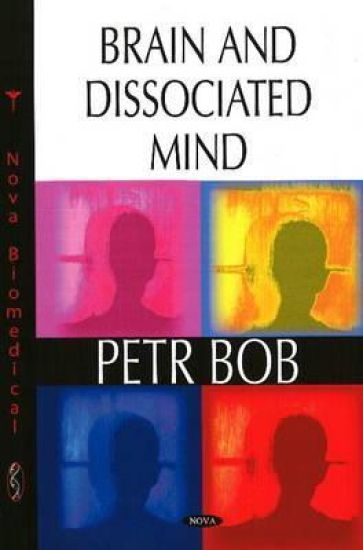
Brain and Dissociated Mind

Brain and Dissociated Mind

Petr Bob

Nova Science Publishers Inc
2008
sidottu
This book presents current knowledge regarding relationship between conscious and unconscious processes in the human mind and dissociation between them, in a close relationship with modern neuroscientific research. Following the framework of traditional psychological and psychiatric terms proposed by Janet and developed also by Freud and Jung, the author shows new connections between modern theoretical neuroscience and psychological concept of dissociated mind. As main argument for this synthesis the author uses modern chaos theory that provides conceptual framework for self-organisation that connect mind and brain. In this context the author also deals with the problem of consciousness and other interesting connections and mysteries of the human mind such as dreaming, hypnosis or pain experience.