
Kirjahaku
Etsi kirjoja tekijän nimen, kirjan nimen tai ISBN:n perusteella.
15 kirjaa tekijältä Phil Brown

Longstreet Highroad Guide to the New York Adirondacks
Phil Brown
Taylor Trade Publishing
1999
pokkari
The indispensable guide to the best the New York Adirondacks have to offer.

A century ago, New Yorkers, hungry for mountain air, good food, and a Jewish environment combined with an American way of leisure, began to develop a resort area unique in the world. By the 1950s, this summer Eden of bungalow colonies, summer camps, and over 900 hotels had attracted over a million people a year. This was the Jewish Catskills of Sullivan and Ulster Counties. Born to a small hotel-owning family who worked for decades in hotels after losing their own, Phil Brown tells a story of the many elements of this magical environment. His own waiter's tales, his mother's culinary exploits as a chef, and his father's jobs as maitre d' and coffee shop operator offer a backdrop to the vital life of Catskills summers. Catskill Culture recounts the life of guests, staff, resort owners,entertainers, and local residents through the author's memories and archival research and the memories of 120 others. The Catskills resorts shaped American Jewish culture, enabling Jews to become more American while at the same time introducing the American public to immigrant Jewish culture. Catskills entertainment provided the nation with a rich supply of comedians, musicians, and singers. Legions of young men and women used the Catskills as a springboard to successful careers and marriages. A decline for the resort area beginning in the 1970s has led to many changes. Today most of the hotels and bungalow colonies are gone or in ruins, while other communities, notably those of the Hasidim, have appeared. The author includes an appendix listing over 900 hotels he has been able to document and invites readers to contact him with additional entries.
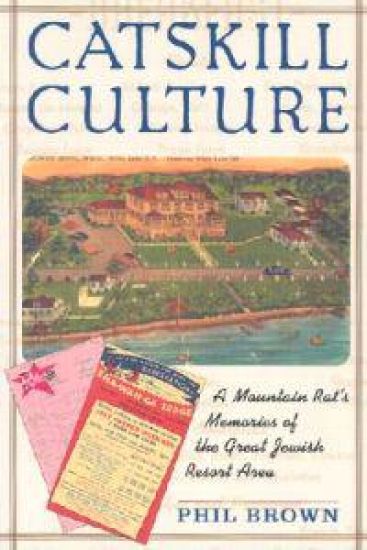
A century ago, New Yorkers, hungry for mountain air, good food, and a Jewish environment combined with an American way of leisure, began to develop a resort area unique in the world. By the 1950s, this summer Eden of bungalow colonies, summer camps, and over 900 hotels had attracted over a million people a year. This was the Jewish Catskills of Sullivan and Ulster Counties. Born to a small hotel-owning family who worked for decades in hotels after losing their own, Phil Brown tells a story of the many elements of this magical environment. His own waiter's tales, his mother's culinary exploits as a chef, and his father's jobs as maitre'd and coffee shop operator offer a backdrop to the vital life of Catskills summers. Catskill Culture recounts the life of guests, staff, resort owners,entertainers, and local residents through the author's memories and archival research and the memories of 120 others. The Catskills resorts shaped American Jewish culture, enabling Jews to become more American while at the same time introducing the American public to immigrant Jewish culture. Catskills entertainment provided the nation with a rich supply of comedians, musicians, and singers. Legions of young men and women used the Catskills as a springboard to successful careers and marriages. A decline for the resort area beginning in the 1970s has led to many changes. Today most of the hotels and bungalow colonies are gone or in ruins, while other communities, notably those of the Hasidim, have appeared. The author includes an appendix listing over 900 hotels he has been able to document and invites readers to contact him with additional entries.

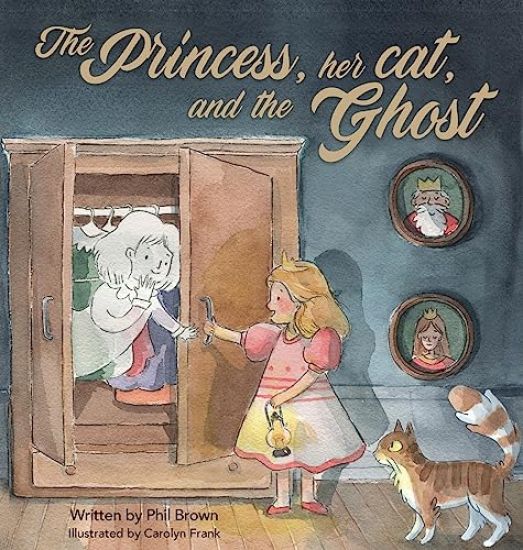
Prince Bella hears boos and hoos coming from the cupboard in her bedroom, what could it be?It is Abigail the timid ghost, but what is making her cry?Join Princess Bella and her courageous cat Max in this heart warming tale of friendship and compassion, as they uncover why Abigail the timid ghost cries, and how they can help her.
The increase in environmentally induced diseases and the loosening of regulation and safety measures have inspired a massive challenge to established ways of looking at health and the environment. Communities with disease clusters, women facing a growing breast cancer incidence rate, and people of color concerned about the asthma epidemic have become critical of biomedical models that emphasize the role of genetic makeup and individual lifestyle practices. Likewise, scientists have lost patience with their colleagues' and government's failure to adequately address environmental health issues and to safeguard research from corporate manipulation. Focusing specifically on breast cancer, asthma, and Gulf War-related health conditions-"contested illnesses" that have generated intense debate in the medical and political communities-Phil Brown shows how these concerns have launched an environmental health movement that has revolutionized scientific thinking and policy. Before the last three decades of widespread activism regarding toxic exposures, people had little opportunity to get information. Few sympathetic professionals were available, the scientific knowledge base was weak, government agencies were largely unprepared, laypeople were not considered bearers of useful knowledge, and ordinary people lacked their own resources for discovery and action. Brown argues that organized social movements are crucial in recognizing and acting to combat environmental diseases. His book draws on environmental and medical sociology, environmental justice, environmental health science, and social movement studies to show how citizen-science alliances have fought to overturn dominant epidemiological paradigms. His probing look at the ways scientific findings are made available to the public and the changing nature of policy offers a new perspective on health and the environment and the relationship among people, knowledge, power, and authority.
No Safe Place
Phil Brown; Edwin J. Mikkelsen; Jonathan Harr
University of California Press
1997
pokkari
Toxic waste, contaminated water, cancer clusters--these phrases suggest deception and irresponsibility. But more significantly, they are watchwords for a growing struggle between communities, corporations, and government. In No Safe Place, sociologists, public policy professionals, and activists will learn how residents of Woburn, Massachusetts discovered a childhood leukemia cluster and eventually sued two corporate giants. Their story gives rise to questions important to any concerned citizen: What kind of government regulatory action can control pollution? Just how effective can the recent upsurge of popular participation in science and technology be? Phil Brown, a medical sociologist, and Edwin Mikkelsen, psychiatric consultant to the plaintiffs, look at the Woburn experience in light of similar cases, such as Love Canal, in order to show that toxic waste contamination reveals fundamental flaws in the corporate, governmental, and scientific spheres. The authors strike a humane, constructive note amidst chilling odds, advocating extensive lay involvement based on the Woburn model of civic action. Finally, they propose a safe policy for toxic wastes and governmental/corporate responsibility. Woburn, the authors predict, will become a code word for environmental struggles.
Childhood adventures are bigger than life. Crick, Honour, Willow and Sage are hunters in the village of Juniper, just off of Arbor Woods. They encounter a dragon who has wandered far from home in pursuit of an evil monster, Magu. The chase is a matter of life and death, not only for the hunters, but also for their village, as Magu exacts a hefty price for satisfaction.
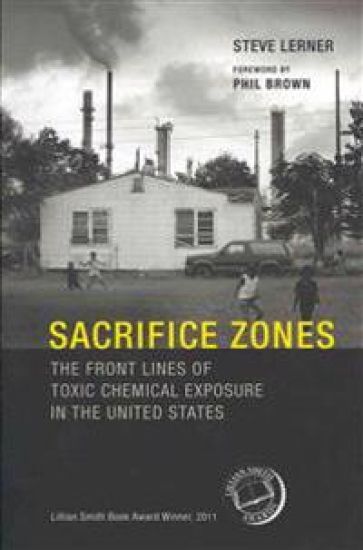
The stories of residents of low-income communities across the country who took action when pollution from heavy industry contaminated their towns.Across the United States, thousands of people, most of them in low-income or minority communities, live next to heavily polluting industrial sites. Many of them reach a point at which they say "Enough is enough." After living for years with poisoned air and water, contaminated soil, and pollution-related health problems, they start to take action-organizing, speaking up, documenting the effects of pollution on their neighborhoods.In Sacrifice Zones, Steve Lerner tells the stories of twelve communities, from Brooklyn to Pensacola, that rose up to fight the industries and military bases causing disproportionately high levels of chemical pollution. He calls these low-income neighborhoods "sacrifice zones." And he argues that residents of these sacrifice zones, tainted with chemical pollutants, need additional regulatory protections.Sacrifice Zones goes beyond the disheartening statistics and gives us the voices of the residents themselves, offering compelling portraits of accidental activists who have become grassroots leaders in the struggle for environmental justice and details the successful tactics they have used on the fenceline with heavy industry.

How to Get the Best Graduate Job
David Williams; Phil Brown; Anthony Hesketh
PEARSON EDUCATION LIMITED
2005
pokkari
Provides a view of how graduate recruitment works, based on the observations of independent observers. This book reveals: how graduate recruitment really works; what you can do to work out where the jobs really are; what criteria employers use to deselect CVs and application forms; how to convince employers to offer an interview; and more.

This volume provides for the first time a collection of writing that investigates the stories and struggles of survivors in the context of the Jewish resort culture of the Catskills, through new and existing works of fiction and memoir by writers who spent their youths there. It explores how vacationers, resort owners, and workers dealt with a horrific contradiction - the pleasure of their summer haven against the mass extermination of Jews throughout Europe. It also examines the character of Holocaust survivors in the Catskills: in what ways did they people find connection, resolution to conflict, and avenues to come together despite the experiences that set them apart? The book will be useful to those studying Jewish, American, or New York history, the Holocaust and Catskills legacy, United States immigration, American literature, and American culture. The focus on themes of nostalgia, humor, loss, and sexuality will draw general readers as well.

This volume provides for the first time a collection of writing that investigates the stories and struggles of survivors in the context of the Jewish resort culture of the Catskills, through new and existing works of fiction and memoir by writers who spent their youths there. It explores how vacationers, resort owners, and workers dealt with a horrific contradiction the pleasure of their summer haven against the mass extermination of Jews throughout Europe. It also examines the character of Holocaust survivors in the Catskills: in what ways did they people find connection, resolution to conflict, and avenues to come together despite the experiences that set them apart? The book will be useful to those studying Jewish, American, or New York history, the Holocaust and Catskills legacy, United States immigration, American literature, and American culture. The focus on themes of nostalgia, humor, loss, and sexuality will draw general readers as well.