Kirjojen hintavertailu. Mukana 11 342 296 kirjaa ja 12 kauppaa.

Kirjahaku

Etsi kirjoja tekijän nimen, kirjan nimen tai ISBN:n perusteella.

30 kirjaa tekijältä Phil Carradice

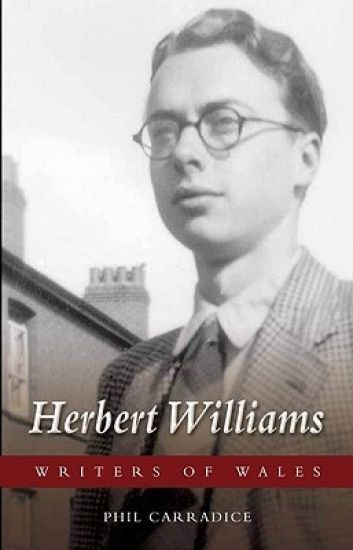
Herbert Williams

Herbert Williams

Phil Carradice

University of Wales Press
2010
nidottu
Herbert Williams is one of Wales' most celebrated and distinguished writers. A man of many talents, he is a poet, novelist, short story writer and historian. This book provides a critical survey of his life and writing.
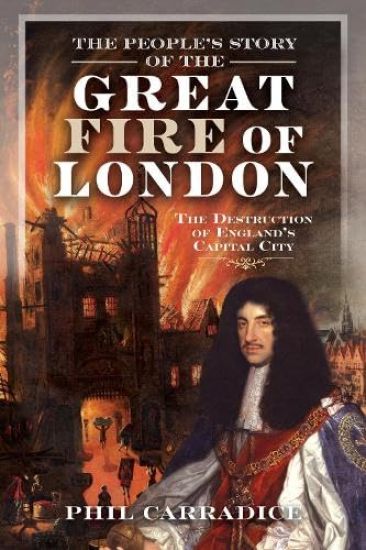
The People's Story of the Great Fire of London

The People's Story of the Great Fire of London

Phil Carradice

PEN SWORD BOOKS LTD
2025
sidottu
The Great Fire of London which destroyed much of England's capital city in the autumn of 1666 was one of those seminal events that stand out in history, enthralling, fascinating and yet repulsive in the damage and destruction it caused. The story of the fire, which began in the early hours of Sunday 4th September, has been told many times. Phil Carradice's new re-telling of the disaster is different in focusing mainly on the people involved. From Thomas Bloodworth, the inept Lord Mayor, to diarists Samuel Pepys and John Evelyn, from the supposed arsonist Robert Hubert to Puritan foretellers of disaster like Humphrey Smith, these people witnessed the Great Fire first-hand. Their views and descriptions make compelling reading. The book does not necessarily give reasons and causes for the fire. Rather it explores how people responded to what was, in reality, the greatest challenge they had faced in their lives. Heroes, cowards and villains are presented in illuminating fashion. King Charles and his brother James, the Duke of York, emerge with nothing but credit, leaving you to wonder how and why James switched from hero of the hour to a position of villain once he became king on the death of his brother. The upsurge of anti-Dutch and French emotion, the panic which seized the population as they tried to flee the stricken city, the breadth and width of the disaster, along with the gradual re-building of London, are all dealt with in Phil Carradice's easy and elegant style. Historical facts and individual characterisation make this book a compelling and accurate read.
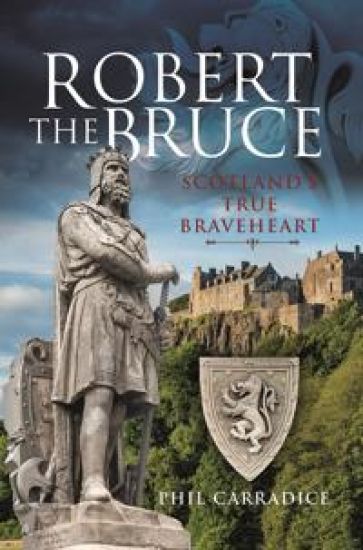
Robert the Bruce

Robert the Bruce

Phil Carradice

PEN SWORD BOOKS LTD
2022
sidottu
Robert the Bruce is a detailed account of the life and times of the Scottish hero and monarch. It covers his life from childhood to death, looking at the political, social and military life of Scotland before, during and after the time of Robert the Bruce. The book looks at the relationship between The Bruce and people like Edward I and Edward II of England, William Wallace and the other contenders for the Scottish crown. The main thrust of the book is a chronological account of how The Bruce clawed his way to power, his struggles and battles and his eventual victory which gave Scotland independence and freedom from an acquisitive and warlike neighbour. It looks in detail at the murder of John Comyn, of which The Bruce stood accused, and the political ramifications of the killing. Robert the Bruce was no saint. He was a ruthless, cunning warrior, a man of his times, dedicated to what he saw as his mission in life. Flawed he may have been but he was also a great King, a worthy warrior and a man who deserves to emerge from the shadow of William Wallace - a position to which he has been relegated ever since the film Braveheart.
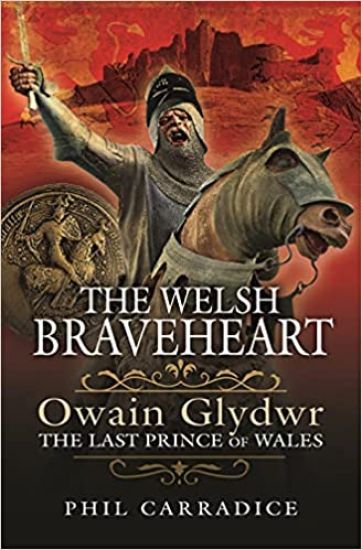
The Welsh Braveheart

The Welsh Braveheart

Phil Carradice

PEN SWORD BOOKS LTD
2022
sidottu
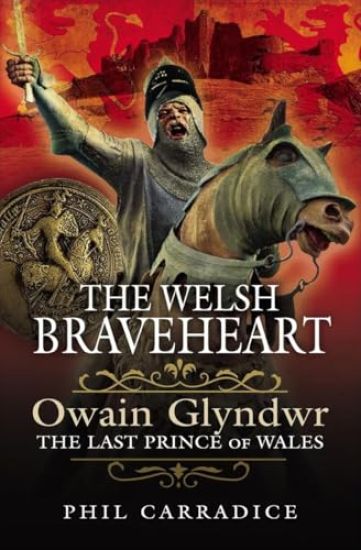
Like William Wallace in Scotland, Owain Glyndwr fought for his country and was only finally defeated by superior numbers and the military genius of Henry V. Yet Glyndwr was not just a freedom fighter. He was the last native-born Prince of Wales, a man who initiated the first Welsh parliament at Machynlleth and proposed an entirely independent Welsh church. Glyndwr also laid plans for two Welsh universities, proposed a return to the far sighted and revolutionary Laws of Hywel Dda and formed a Tripartite Agreement with Henry Percy and Edmund Mortimer. It led to an invasion of England and nearly brought the reign of Henry V to an end. And yet, despite his success and popularity, Glyndwr's rebellion seriously damaged the Welsh economy with towns destroyed and much agricultural land laid to waste. Even so, he was never betrayed by his people, despite a huge reward being offered for his capture. Glyndwr refused at least two offers of pardon from the English crown and remains the supreme champion of the underdog.
The Welsh Braveheart

The Welsh Braveheart

Phil Carradice

PEN SWORD BOOKS LTD
2025
nidottu
Like William Wallace in Scotland, Owain Glyndwr fought for his country and was only finally defeated by superior numbers and the military genius of Henry V. Yet Glyndwr was not just a freedom fighter. He was the last native-born Prince of Wales, a man who initiated the first Welsh parliament at Machynlleth and proposed an entirely independent Welsh church. Glyndwr also laid plans for two Welsh universities, proposed a return to the far sighted and revolutionary Laws of Hywel Dda and formed a Tripartite Agreement with Henry Percy and Edmund Mortimer. It led to an invasion of England and nearly brought the reign of Henry V to an end. And yet, despite his success and popularity, Glyndwr's rebellion seriously damaged the Welsh economy with towns destroyed and much agricultural land laid to waste. Even so, he was never betrayed by his people, despite a huge reward being offered for his capture. Glyndwr refused at least two offers of pardon from the English crown and remains the supreme champion of the underdog.
The Battle of Tsushima

The Battle of Tsushima

Phil Carradice

PEN SWORD BOOKS LTD
2025
nidottu
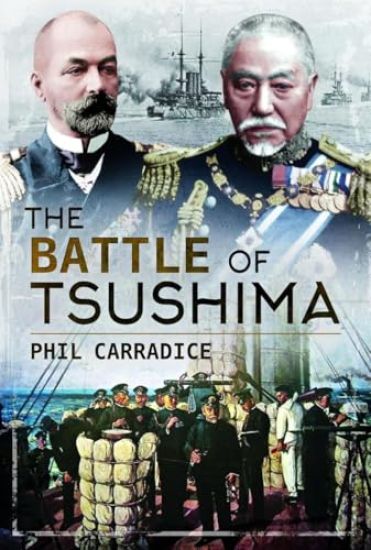
In 1905 Japan and Russia were at war. With the Russian Far East Fleet destroyed, the Czar decided to send his Baltic Fleet half way around the world to exact revenge. This mammoth journey took many months and was, in itself, an amazing feat of seamanship. But, at the end of this epic adventure, the Russians were totally overwhelmed and the vast majority of the fleet went to the bottom. There was no alternative for the Czar but to sue for an ignominious peace. The story of the journey and the final battle remain fascinating, the people involved acting and deporting themselves like characters from a novel. Russian Admiral Rozhestvensky was a gunnery expert but someone who had never held active command in a major sea battle. Japanese Admiral Togo had trained in Britain, enlisting as a cadet on the Training Ship Worcester, even though he was far too old and was forced to lie about his age. Inept generalship on the part of the Russians, combined with brilliant seamanship from the Japanese Admiral Togo, saw the complete destruction of the Russian fleet. The naval battle of Tsushima is one of the forgotten actions of the twentieth century, but it has a significance that is immense in world history.
Women of the Jacobite Rebellions

Women of the Jacobite Rebellions

Phil Carradice

PEN SWORD BOOKS LTD
2024
sidottu
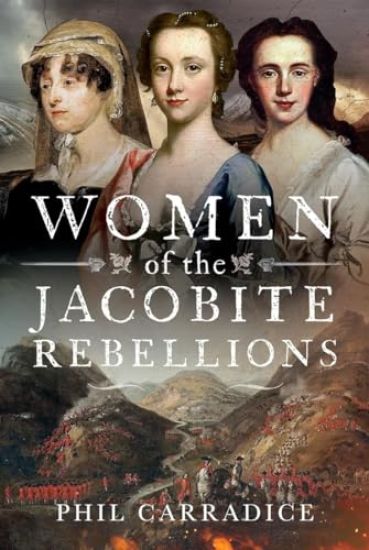
The flight of King James II in November 1688 was a seminal moment in British history. The deposed Catholic King set up house and home in Paris, William and Mary succeeded to the throne of England and over fifty years of trouble, strife, war and execution began to consume England, Scotland and Ireland. The Jacobites - supporters of the dethroned Stuart dynasty - were adamant that James and his heirs should sit once more on the English throne. Invasion followed invasion, battle came after battle, culminating with the defeat of Charles Edward Stuart at Culloden in 1745. The story of those battles and invasions has often been told. However, they have invariably focussed on the male participants, from Scottish clansmen to men like Rob Roy and Bonnie Dundee, from the Old to the Young Pretender Bonnie Prince Charlie, the darling of the late Jacobite movement, they created a legend that still hovers over the period. But very little has ever been written about the women who were involved. Apart from figures of note like Flora MacDonald, the role of women in the rebellions and risings has been largely forgotten. Yet there were hundreds involved in the Jacobite cause. Women tended to wounded soldiers, gave safety and comfort to fleeing Jacobites, and sometimes led the riots and rebellions themselves. Many were imprisoned, many sent away from their homelands, deported to strange and distant lands. Others carried out daring escapes from prisons like The Tower of London and wrote poems and songs that are still read and sung today. Some, women like Jenny Cameron and Grizzel Mhor, became household names for a short while, forgotten now but resurrected here. There are many more, women like Anne Farquharson, Colonel Anne as she was known, who defeated 1500 redcoats with a team of five servants in an engagement called the Rout of Moy. They were - and remain - mostly unknown and forgotten. This book tells their stories. Phil Carradice's well-researched and easy, elegant style of writing brings these forgotten women back to life, giving them the rewards they so richly deserve.
Assassinations that Shaped the Twentieth Century

Assassinations that Shaped the Twentieth Century

Phil Carradice

PEN SWORD BOOKS LTD
2025
sidottu
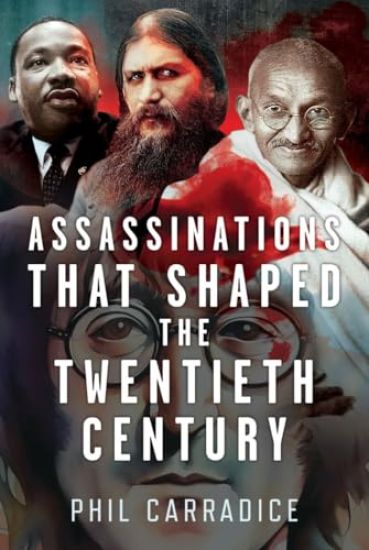
Assassination has been a political and military tool for thousands of years. In the view of many generals and emperors, it was cheaper and more effective than assembling an army and pitching soldiers into combat with the enemy - when the result was never clear cut or easy to achieve. The twentieth century was, perhaps more than any other period, an era of military, political and social assassinations. Their effect was invariably huge, world-changing in some instances. From the killing of Archduke Franz Ferdinand of Austria in 1914 to the murder of Mahatma Gandhi in 1948, from the death of John Lennon to the assassination of men like President Kennedy and Martin Luther King, the assassin's bombs, bullets, and knives cut a swathe across modern society. 'Assassinations that Shaped the Twentieth Century' logs and describes many of the more notable killings. It places the assassinations in context, charting their effect and significance. The book also looks at 'failed' assassination attempts and at killings that were planned but never carried out. Written in Phil Carradice's easy and elegant style, the book is thoroughly researched and presented in a logical manner. It is an essential addition to the bookshelves of anyone with an interest in twentieth-century history.
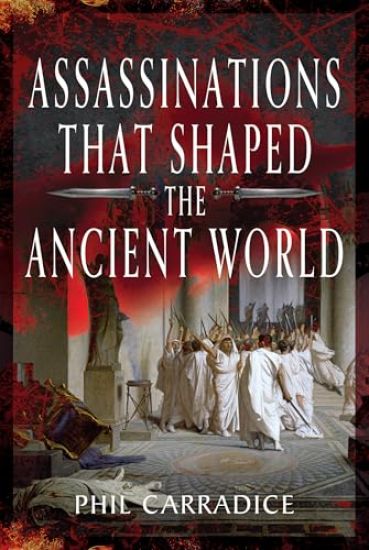
Assassinations That Shaped the Ancient World

Assassinations That Shaped the Ancient World

Phil Carradice

PEN SWORD BOOKS LTD
2025
sidottu
Assassination! Just mentioning the word is enough to send a shiver up the spine. And yet, for many years, the deliberate act of 'taking out' notable public figures has been the mainstay of political factions and individuals when faced with problems and dilemmas that discussion and debate cannot solve. Most monarchs, statesmen and military commanders of the ancient world, whether they were successful or failures, had to deal with threats. At one stage or another in their careers, they would all have been vulnerable to unexpected attacks. They would all have been potential targets for assassin's blades or poison. And they knew it. So common was the assassination of notable individuals that it became almost an occupational hazard in the ancient world. From Pharaoh Teti, the first recorded victim of assassination, to Julius Caesar, despatched on the Ides of March, from Pompey the Great to Commodus, the Gladiator Emperor of Rome, so many rulers perished before their allotted period of time. In this new book, Phil Carradice takes a broad sweep at assassinations in the ancient world. Beginning with the Egyptian Empire, it traces the assassin's art through Greek, Roman, Biblical, Chinese, Byzantine and other periods or empires, up to and including the Kings and Emperors of the Dark Ages. The book does not stop there. It examines individual assassinations, motivation and practice and looks at assassination groups such as the thugee of India and the Sacred Band of Thebes.
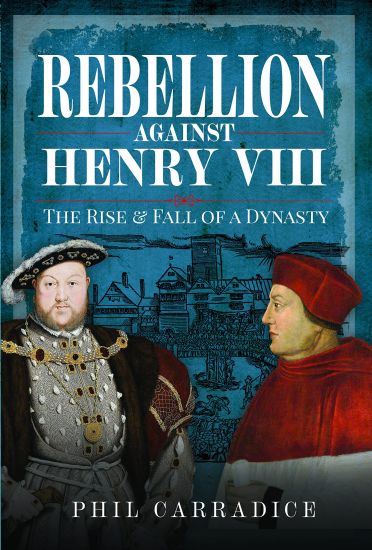
Rebellion Against Henry VIII

Rebellion Against Henry VIII

Phil Carradice

PEN SWORD BOOKS LTD
2023
sidottu
Even the most beloved of sovereigns faced moments of disorder and disruption at some stage during their reign. How they responded to those periods is what made them a great or a weak monarch. More importantly, it is what continues to make their reigns fascinating for historians and story tellers. In this, Henry VIII, arguably England's most famous - or infamous - ruler was no different from the rest. Selfish, opinionated, lustful and driven, Henry VIII created disorder and chaos in his country, laid the foundations of the Anglican Church and began the process of changing a tiny, wind-swept island off the coast of Europe into a mighty Empire, the likes of which the world had never seen before. This fresh new perspective of Henry VIII's reign and legacy takes the readers on a journey through the key moments of unrest and open rebellion. We learn about the cataclysmic events that were catalyst for disorder and disturbance to the general public, and journey through the instances of open rebellions like the Pilgrimage of Grace of 1536, one the most significant uprising of the sixteenth century, not just for Henry himself but for any of the great Tudor monarchs. Last but certainly not least, we look at how war disturbed the peace of Henry's tumultuous reign with the rebellion of Rhys ap Gruffydd in Wales, the Scottish invasion and the Silken Thomas Revolt in Ireland. The reign of Henry VIII began with joyous celebration at the arrival of a shining new king and ended with widespread terror at the rantings of a psychotic overlord. By focussing on the rebellions against Henry VIII, we cast new eyes on his character and gain a fascinating insight into the lives of Tudor men and women during the turbulent thirty-nine years of his reign.
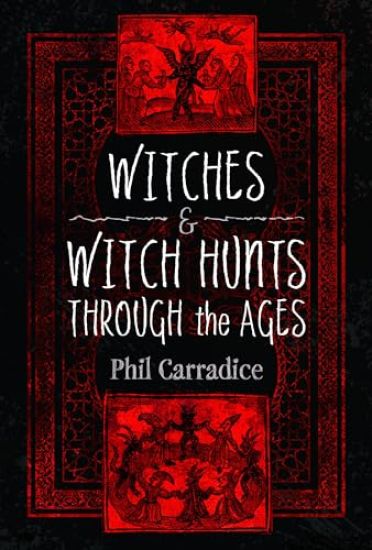
Witches and Witch Hunts Through the Ages

Witches and Witch Hunts Through the Ages

Phil Carradice

PEN SWORD BOOKS LTD
2024
sidottu
Witchcraft! Just the mention of the name is enough to cause fear, even terror, in the minds and hearts of many people. But that is not the full story. Yes, there have always been proponents of the 'dark arts,' witches and warlocks willing to use their powers for evil, but the wise men and women of the ancient and medieval world - men and women eager to use their spells and potions for good - have often been overlooked. This book looks at witchcraft from the early days, tracing its development as a pseudo-religious cult, the good and the bad, from the wild plains of Babylon to the present day. It highlights witch scares and individuals, particularly the witch hunts of the medieval period when 100,000 women were accused of witchcraft and nearly 80,000 executed. It examines the concept of witch hunting, detailing the activities of men like Matthew Hopkins, the famous Witchfinder General. The book does not just focus on medieval and ancient witches, it takes in modern witch hunting - with people like Senator Joe McCarthy during his Communist witch hunts of the 1950s - and the continued modern persecution of women and men accused of witchcraft in African, Indian and Caribbean states. This is a detailed account of witches and witchcraft, in many ways a tribute to the thousands of men and women accused and executed without full evidence or proof of evil doing. It is a broad historical sweep that includes fictional characters like Morgan le Fey and Merlin, the magician of King Arthur's court. Thoroughly researched and elegantly written, it is essential reading for anyone who is interested in the social and political history of the past.
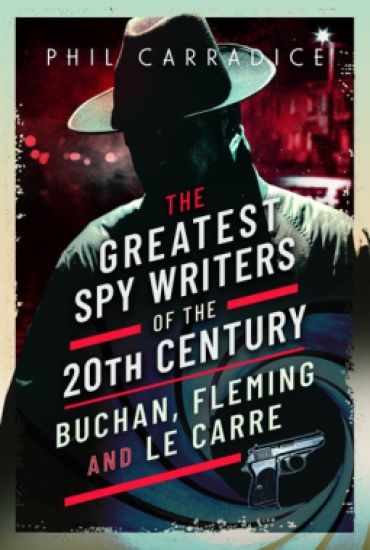
The Greatest Spy Writers of the 20th Century

The Greatest Spy Writers of the 20th Century

Phil Carradice

PEN SWORD BOOKS LTD
2023
sidottu
The spy novel has, over the past hundred years, become one of the most popular literary genres. The best exponents have become household names, as have their characters, heroes and villains alike. From Richard Hannay to James Bond and George Smiley, the spies and spy-hunters of fiction have developed from the printed page to grace the movie and television screens - with huge success. Uncovering the greatest or best spy writers of the Twentieth Century has not been easy. There are so many to choose from. Ultimately, however, the choice has come down to three highly significant and successful exponents of the art, writers who cannot be ignored but, more significantly, who were leaders, movers and shakers in the art of writing spy fiction. John Buchan was at the forefront, arguably the first in a long line of spy writers - and still one of the finest. Classic tales like The Thirty-Nine Steps and Greenmantle set the benchmark for everyone else to follow. Ian Fleming's creation of James Bond in books like Goldfinger and From Russia with Love took the spy novel to new heights of glamour and exotic settings. John le Carre's world of spies, double-dealing, betrayal and seedy backstreet assignations is the very antithesis of Fleming's Bond but its realism and stark reality took the art of spy fiction to a new level. Buchan, Fleming, Le Carre, arguably the greatest spy writers of the Twentieth Century. Do you agree? Read the book and make your own judgement. Whatever you decide, you will not be disappointed by the writing and the judgements.
Life Choices

Life Choices

Phil Carradice

SAGE Publications Inc
2006
nidottu
Includes CD-Rom 'Nothing is so exhausting as indecision, and nothing is so futile..teachers, parents and carers worry that the decisions that children and young people make might be unwise or dangerous' - Bertrand Russell 'You'd be hard pushed to find a better decision-making programme than this excellent set of books... This series will undoubtedly kick-start conversation, prod thinking and stimulate classroom debate' - Times Educational Supplement Magazine Decision making is a skill involving both a cognitive and an affective process. The ability to: - recognize the thoughts and feelings; - consider the consequences; - choose the best outcome; is a highly valued facility leading to resilience, achievement and responsibility. The skill can be taught and in these three volumes the authors provide all the materials needed to teach a course on decision making at each age level. The programme provides a menu of stories related to the real life experiences of the young people. Topics are selected to be age appropriate and the series includes: - Stealing; - Lying; - Social behaviours; - Risks; - Justice; - Loss, Grief and Bereavement; - Prejudice; - First love; - Disability; - Leaving home; - Family relationships. The teacher notes indicate 'stopping points' where reflection and discussion is encouraged. A choice of endings is offered or the young people can develop their own ideas about what might happen next. The course can be introduced at any age or used to develop the skills through school life from early years to the teens. Other books in the series include Margaret Collins's First Choices and Phil Carradice's Good Choices.
First World War in the Air

First World War in the Air

Phil Carradice

Amberley Publishing
2012
nidottu
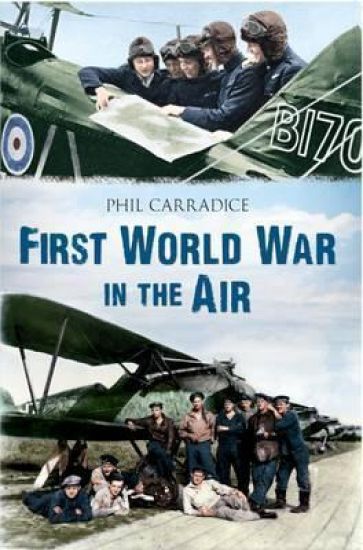
The four years between 1914 and 1918 saw an incredible growth in air power. Beginning with the flimsy early aircraft, seemingly held together just by string and fabric, the author paints a picture of a bygone era when nobody knew quite what could be achieved, or how aircraft could be used. From the early years of the First World War, when men took to the air without guns or parachutes, to the final stage of the conflict when huge, streamlined aeroplane fleets dominated the skies, this is a story of courage and dedication, of sudden death and public adulation for men whose life expectancy was measured in days rather than months. This book is an account of how the development of aerial warfare took place. Drawing on much original material such as diaries and combat reports, it charts the growth of air power during the war years. Original photographs and artwork add to the atmosphere of the time. The air aces, the castor oil and the sudden rattle of machine guns, the Dawn Patrol, Zeppelin raids, dogfights and acts of supreme valour are all here. In wonderful detail, this is the story of how brave young airmen took their lives in their hands and pushed the boundaries of courage and knowledge to the limits.
The Cuban Missile Crisis

The Cuban Missile Crisis

Phil Carradice

Pen Sword Military
2017
nidottu
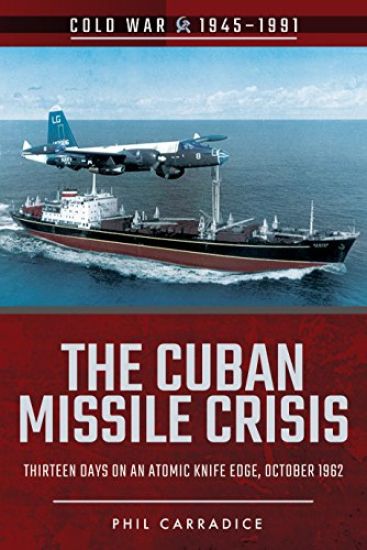
When the world held its breath It is more than 25 years since the end of the Cold War. It began over 75 years ago, in 1944 long before the last shots of the Second World War had echoed across the wastelands of Eastern Europe with the brutal Greek Civil War. The battle lines are no longer drawn, but they linger on, unwittingly or not, in conflict zones such as Syria, Somalia and Ukraine. In an era of mass-produced AK-47s and ICBMs, one such flashpoint was the Cuban Missile Crisis The Cuban Missile Crisis of 1962 was the closest the world has yet come to nuclear war, a time when the hands of the Doomsday Clock really did inch towards the witching hour of midnight. By placing nuclear missiles on the Caribbean island of Cuba where, potentially, they were able to threaten the eastern seaboard of the USA, Nikita Khrushchev and the Soviet Union escalated the Cold War to a level that everyone feared but had never previously thought possible. In a desperate and dangerous game of brinkmanship, for thirteen nerve-wracking days Premier Khrushchev and President Kennedy held the fate of the world in their hands. Kennedy, in particular, wrestled with a range of options allow the missiles to stay, launch an air strike on the sites or invade Cuba. In the end, he did none of these but the solution to one of the deadliest dilemmas of the twentieth century proved to be a brave and dramatic moment in human history.
Bay of Pigs

Bay of Pigs

Phil Carradice

Pen Sword Military
2018
nidottu
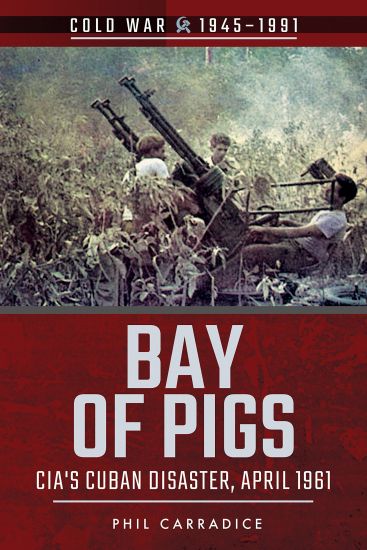
Perhaps not in casualties but as far as prestige and standing in the world were concerned, the Bay of Pigs invasion of 1961 was the worst disaster to befall the USA since the War of 1812 when British forces burned the White House. Badly planned, badly organized, the affair was littered with mistakes from start to finish-not least with an inept performance by John F. Kennedy and his new administration. Supposedly an attempt by Cuban exiles to regain their homeland, the whole operation was funded and equipped by the USA. When things began to go wrong with the landings at Playa Larga and Playa Giron on the southern coast of Cuba President Kennedy and his advisers began overruling military decisions with the result that the invading Brigade 2506-made up of Cuban exiles-was left with little or no air cover, limited ammunition and no easy escape. Fidel Castro made great play of his success and American failure at the Bay of Pigs. He, like Nikita Khrushchev, thought Kennedy was weak: the Cuban Missile Crisis of the following year was almost an inevitable consequence of the disaster.
Bloody Mary

Bloody Mary

Phil Carradice

Pen Sword Military
2018
nidottu
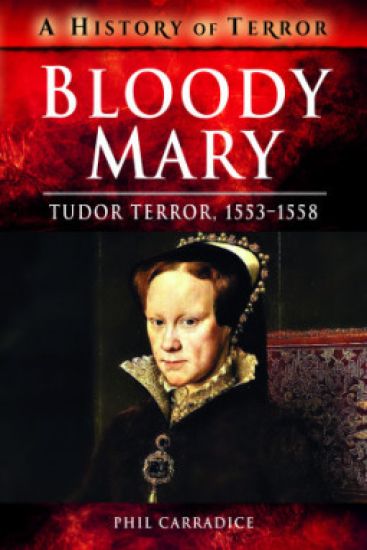
When Mary Tudor, eldest daughter of Henry VIII, succeeded to the throne of England in 1553 it was with wild rejoicing and a degree of popularity rarely seen on the accession of a British monarch. Yet at her death five years later she was almost universally reviled and hated by her people so much so that she was posthumously awarded the sobriquet Bloody Mary. Mary's revenge on the church and on a religion she hated was swift and total. Noblemen like the Duke of Northumberland, would-be queens like Lady Jane Grey, churchmen like Thomas Cranmer and bishops Latimer and Ridley, Mary's fires or the executioner's axe ended the lives of all of them. During her brief reign she restored the Catholic faith to England and had over 280 Protestant martyrs burned at the stake. For a reign that looked so promising Mary's brief period in power brought the greatest officially sanctioned religious bloodletting the country had ever seen. And at the end, the stench of the execution fires and the grey smoke that settled like a pall across the country seemed to epitomize the reactionary forces that had assumed control.
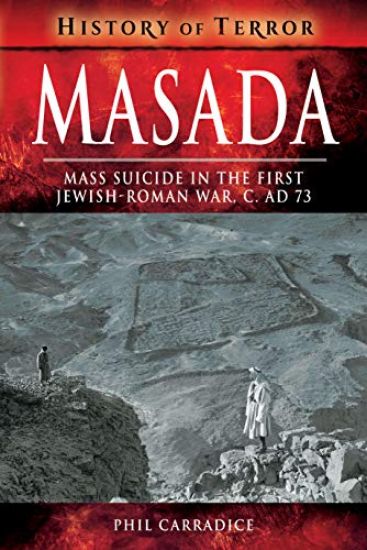
Masada

Masada

Phil Carradice

Pen Sword Military
2019
nidottu
In the spring of 73 AD the rock fortress of Masada on the western shore of the Dead Sea was the site of an event that was breathtaking in its courage and self-sacrifice. Here the last of the Jewish Zealots who, for nearly eight years, had waged war against the Roman occupiers of their country made their last stand. The Zealots on Masada had withstood a two-year siege but with Roman victory finally assured, they were faced by two options: capture or death. They chose the latter and when the Roman legions forced their way into the hill fort the following morning they were met only with utter silence by row upon row of bodies. Rather than fall into enemy hands the 960 men, women and children who had defended the fortress so heroically had committed suicide. The story of the siege and eventual capture of Masada is unique, not just in Israeli legend but in the history of the world. It is a story of bravery that even the Roman legionaries, well used to death and brutality, could see and appreciate. It was a massacre but a massacre with a difference: carried out by the victims themselves. The story of Masada has gone down in Israeli and Jewish folklore. It is little known elsewhere and it is time to redress the balance.
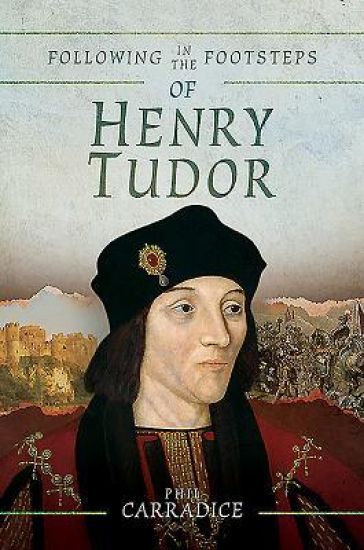
Following in the Footsteps of Henry Tudor

Following in the Footsteps of Henry Tudor

Phil Carradice

Pen Sword History
2019
nidottu
The story of Henry Tudor's march to Bosworth and the throne of England began long before the fatal summer of 1485, with his birth in Pembroke Castle. The gigantic fortress where he spent his childhood years lay some 12 miles inland from the spot where Henry was supposed to have landed in Milford Haven when he came to challenge Richard III in August 1485. Henry's landing and progress to Bosworth Field were a gamble, but by 1485 the last of the Lancastrian princes had little option but to chance his arm'. He had worn out his welcome on the Continent and, despite his unpopularity in some quarters of English society, there was the real risk that Richard's reign might finally begin to create stability and financial success - Yorkist stability and success. A gamble, yes, but one that had to be taken if the House of Lancaster was to survive. In Following in the Footsteps of Henry Tudor, we hear of the many fascinating stories from Henry's march and the places he visited - a journey that took just over two weeks. It was a time of treachery and double dealing but it culminated with the establishment of the Tudor dynasty, the end of the Wars of the Roses and the beginnings of the modern world.
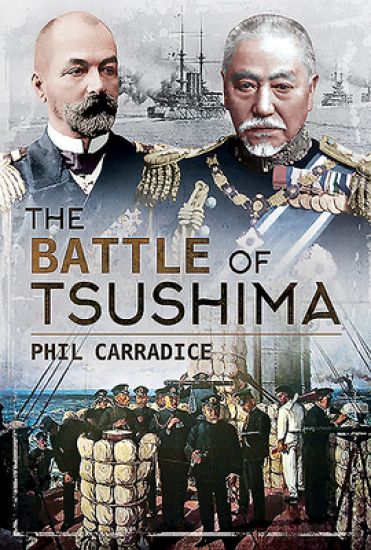
The Battle of Tsushima

The Battle of Tsushima

Phil Carradice

Pen Sword History
2020
sidottu
In 1905 Japan and Russia were at war. With the Russian Far East Fleet destroyed, the Czar decided to send his Baltic Fleet half way around the world to exact revenge. This mammoth journey took many months and was, in itself, an amazing feat of seamanship. But, at the end of this epic adventure, the Russians were totally overwhelmed and the vast majority of the fleet went to the bottom. There was no alternative for the Czar but to sue for an ignominious peace. The story of the journey and the final battle remain fascinating, the people involved acting and deporting themselves like characters from a novel. Russian Admiral Rozhestvensky was a gunnery expert but someone who had never held active command in a major sea battle. Japanese Admiral Togo had trained in Britain, enlisting as a cadet on the Training Ship Worcester, even though he was far too old and was forced to lie about his age. Inept generalship on the part of the Russians, combined with brilliant seamanship from the Japanese Admiral Togo, saw the complete destruction of the Russian fleet. The naval battle of Tsushima is one of the forgotten actions of the twentieth century, but it has a significance that is immense in world history.