Kirjojen hintavertailu. Mukana 11 244 527 kirjaa ja 12 kauppaa.

Kirjahaku

Etsi kirjoja tekijän nimen, kirjan nimen tai ISBN:n perusteella.

12 kirjaa tekijältä Phil Zuckerman

Living The Secular Life

Living The Secular Life

Phil Zuckerman

Penguin USA
2015
nidottu
"A humane and sensible guide to and for the many kinds of Americans leading secular lives in what remains one of the most religious nations in the developed world." --The New York Times Book Review Over the last twenty-five years, "no religion" has become the fastest-growing religious preference in the United States. Around the world, hundreds of millions of people have turned away from the traditional faiths of the past and embraced a moral yet nonreligious--or secular--life, generating societies vastly less religious than at any other time in human history. Revealing the inspiring beliefs that empower secular culture--alongside real stories of nonreligious men and women based on extensive in-depth interviews from across the country--Living the Secular Life will be indispensable for millions of secular Americans. Drawing on innovative sociological research, Living the Secular Life illuminates this demographic shift with the moral convictions that govern secular individuals, offering crucial information for the religious and nonreligious alike. Living the Secular Life reveals that, despite opinions to the contrary, nonreligious Americans possess a unique moral code that allows them to effectively navigate the complexities of modern life. Spiritual self-reliance, clear-eyed pragmatism, and an abiding faith in the Golden Rule to adjudicate moral decisions: these common principles are shared across secular society. Living the Secular Life demonstrates these principles in action and points to their usage throughout daily life. Phil Zuckerman is a sociology professor at Pitzer College, where he studied the lives of the nonreligious for years before founding a Department of Secular Studies, the first academic program in the nation dedicated to exclusively studying secular culture and the sociological consequences of America's fastest-growing "faith." Zuckerman discovered that despite the entrenched negative beliefs about nonreligious people, American secular culture is grounded in deep morality and proactive citizenship--indeed, some of the very best that the country has to offer. Living the Secular Life journeys through some of the most essential components of human existence--child rearing and morality, death and ritual, community and beauty--and offers secular readers inspiration for leading their own lives. Zuckerman shares eye-opening research that reveals the enduring moral strength of children raised without religion, as well as the hardships experienced by secular mothers in the rural South, where church attendance defines the public space. Despite the real sorrows of mortality, Zuckerman conveys the deep psychological health of secular individuals in their attitudes toward illness, death, and dying. Tracking the efforts of nonreligious groups to construct their own communities, Zuckerman shows how Americans are building institutions and cultivating relationships without religious influence. Most of all, Living the Secular Life infuses the sociological data and groundbreaking research with the moral convictions that govern secular individuals and demonstrates how readers can integrate these beliefs into their own lives. A manifesto for a booming social movement--and a revelatory survey of this overlooked community--Living the Secular Life offers essential and long-awaited information for anyone building a life based on his or her own principles.
Faith No More

Faith No More

Phil Zuckerman

Oxford University Press Inc
2015
nidottu
During his 2009 inaugural speech, President Obama described the United States as a nation of "Christians and Muslims, Jews and Hindus--and nonbelievers." It was the first time an American president had acknowledged the existence of this rapidly growing segment of the population in such a public forum. And yet the reasons why more and more people are turning away from religion are still poorly understood. In Faith No More, Phil Zuckerman draws on in-depth interviews with people who have left religion to find out what's really behind the process of losing one's faith. According to a 2008 study, so many Americans claim no religion (15%, up from 8% in 1990) that this category now outranks every other religious group except Catholics and Baptists. Exploring the deeper stories within such survey data, Zuckerman shows that leaving one's faith is a highly personal, complex, and drawn-out process. And he finds that, rather than the cliché of the angry, nihilistic atheist, apostates are life-affirming, courageous, highly intelligent and inquisitive, and deeply moral. Zuckerman predicts that this trend toward nonbelief will likely continue and argues that the sooner we recognize that religion is frequently and freely rejected by all sorts of men and women, the sooner our understanding of the human condition will improve. The first book of its kind, Faith No More will appeal to anyone interested in the "New Atheism" and indeed to anyone wishing to more fully understand our changing relationship to religious faith.
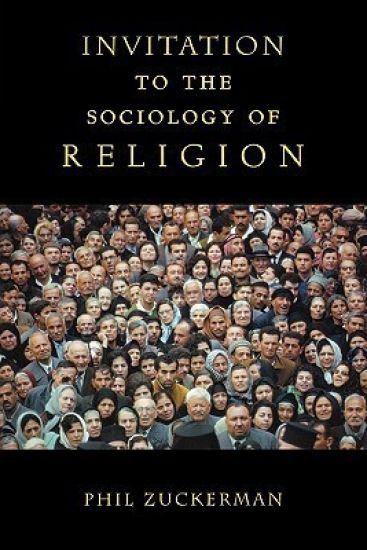
Invitation to the Sociology of Religion
This book intends to serve as a conversational, colorful, engaging, and provocative introduction to the sociology of religion for undergraduates. Written in lively prose, this volume aims to introduce students to the major themes, problems and goals of the sociological study of religion while also summoning the sense of wonder and curiosity for the enterprise itself.
Invitation to the Sociology of Religion
This book intends to serve as a conversational, colorful, engaging, and provocative introduction to the sociology of religion for undergraduates. Written in lively prose, this volume aims to introduce students to the major themes, problems and goals of the sociological study of religion while also summoning the sense of wonder and curiosity for the enterprise itself.
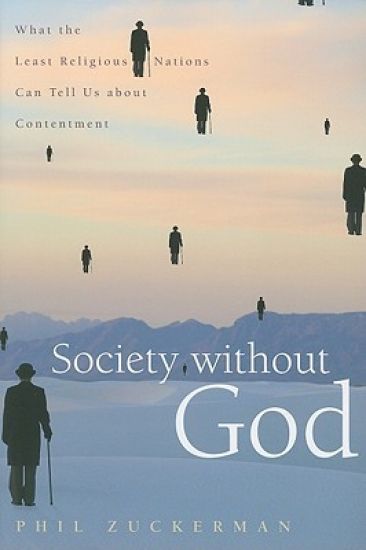
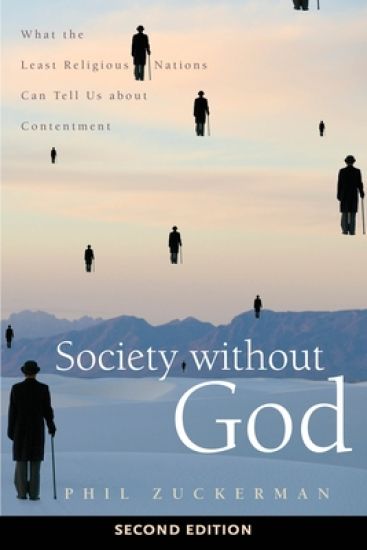
Society Without God

Society Without God

Phil Zuckerman

New York University Press
2008
sidottu
"Silver" Winner of the 2008 Foreword Magazine Book of the Year Award, Religion Category Before he began his recent travels, it seemed to Phil Zuckerman as if humans all over the globe were "getting religion"—praising deities, performing holy rites, and soberly defending the world from sin. But most residents of Denmark and Sweden, he found, don't worship any god at all, don't pray, and don't give much credence to religious dogma of any kind. Instead of being bastions of sin and corruption, however, as the Christian Right has suggested a godless society would be, these countries are filled with residents who score at the very top of the "happiness index" and enjoy their healthy societies, which boast some of the lowest rates of violent crime in the world (along with some of the lowest levels of corruption), excellent educational systems, strong economies, well-supported arts, free health care, egalitarian social policies, outstanding bike paths, and great beer. Zuckerman formally interviewed nearly 150 Danes and Swedes of all ages and educational backgrounds over the course of fourteen months. He was particularly interested in the worldviews of people who live their lives without religious orientation. How do they think about and cope with death? Are they worried about an afterlife? What he found is that nearly all of his interviewees live their lives without much fear of the Grim Reaper or worries about the hereafter. This led him to wonder how and why it is that certain societies are non-religious in a world that seems to be marked by increasing religiosity. Drawing on prominent sociological theories and his own extensive research, Zuckerman ventures some interesting answers. This fascinating approach directly counters the claims of outspoken, conservative American Christians who argue that a society without God would be hell on earth. It is crucial, Zuckerman believes, for Americans to know that "society without God is not only possible, but it can be quite civil and pleasant."
Society Without God

Society Without God

Phil Zuckerman

New York University Press
2010
pokkari
"Silver" Winner of the 2008 Foreword Magazine Book of the Year Award, Religion Category Before he began his recent travels, it seemed to Phil Zuckerman as if humans all over the globe were "getting religion"—praising deities, performing holy rites, and soberly defending the world from sin. But most residents of Denmark and Sweden, he found, don't worship any god at all, don't pray, and don't give much credence to religious dogma of any kind. Instead of being bastions of sin and corruption, however, as the Christian Right has suggested a godless society would be, these countries are filled with residents who score at the very top of the "happiness index" and enjoy their healthy societies, which boast some of the lowest rates of violent crime in the world (along with some of the lowest levels of corruption), excellent educational systems, strong economies, well-supported arts, free health care, egalitarian social policies, outstanding bike paths, and great beer. Zuckerman formally interviewed nearly 150 Danes and Swedes of all ages and educational backgrounds over the course of fourteen months. He was particularly interested in the worldviews of people who live their lives without religious orientation. How do they think about and cope with death? Are they worried about an afterlife? What he found is that nearly all of his interviewees live their lives without much fear of the Grim Reaper or worries about the hereafter. This led him to wonder how and why it is that certain societies are non-religious in a world that seems to be marked by increasing religiosity. Drawing on prominent sociological theories and his own extensive research, Zuckerman ventures some interesting answers. This fascinating approach directly counters the claims of outspoken, conservative American Christians who argue that a society without God would be hell on earth. It is crucial, Zuckerman believes, for Americans to know that "society without God is not only possible, but it can be quite civil and pleasant."
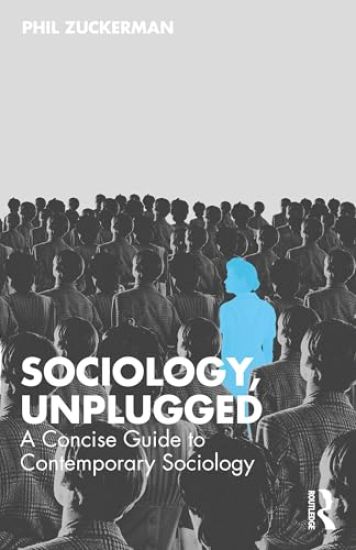
Sociology, Unplugged

Sociology, Unplugged

Phil Zuckerman

TAYLOR FRANCIS LTD
2025
nidottu
This concise, clear, accessible book is meant to truly engage students by using personal stories, solid research, and key theories that illustrate how sociologists look at life, the way we understand social dynamics, what “socially constructed” means, and how a sociological sensibility can, ultimately, be liberating.With engaging stories, provocative historical examples, compelling case studies, and key theoretical insights, this cogent “anti-textbook”, written by leading sociologist Phil Zuckerman, introduces students to the discipline of sociology. Sociology, Unplugged covers foundational concepts – from socialization, dramaturgy, and intersectionality to deviance, social change, and sociological methodology – in a way that avoids the heavy-handedness of typical intro texts. Unique contributions of this volume include: an explicit exploration of social construction; consistent inclusion of race, class, and gender and their intersections; the centralizing of W.E.B. Du Bois as the key founder of American sociology; a sociological exploration of sex and sexuality; attention to transgender identity; an incorporation of insights from Peter Berger; a cogent introduction to sociological methods; all written in a voice that is student friendly.This book is a vital and dynamic essential resource for instructors and students in foundational level sociology, social theory, and culture and society courses. This text is especially designed to be an accessible springboard to undergraduate reading and study of beginning, introductory sociology in a 'one-stop' manner: if you only read one sociology book, you'll want to read this one!
Sociology, Unplugged

Sociology, Unplugged

Phil Zuckerman

TAYLOR FRANCIS LTD
2025
sidottu
This concise, clear, accessible book is meant to truly engage students by using personal stories, solid research, and key theories that illustrate how sociologists look at life, the way we understand social dynamics, what “socially constructed” means, and how a sociological sensibility can, ultimately, be liberating.With engaging stories, provocative historical examples, compelling case studies, and key theoretical insights, this cogent “anti-textbook”, written by leading sociologist Phil Zuckerman, introduces students to the discipline of sociology. Sociology, Unplugged covers foundational concepts – from socialization, dramaturgy, and intersectionality to deviance, social change, and sociological methodology – in a way that avoids the heavy-handedness of typical intro texts. Unique contributions of this volume include: an explicit exploration of social construction; consistent inclusion of race, class, and gender and their intersections; the centralizing of W.E.B. Du Bois as the key founder of American sociology; a sociological exploration of sex and sexuality; attention to transgender identity; an incorporation of insights from Peter Berger; a cogent introduction to sociological methods; all written in a voice that is student friendly.This book is a vital and dynamic essential resource for instructors and students in foundational level sociology, social theory, and culture and society courses. This text is especially designed to be an accessible springboard to undergraduate reading and study of beginning, introductory sociology in a 'one-stop' manner: if you only read one sociology book, you'll want to read this one!
Society Without God

Society Without God

Phil Zuckerman

New York University Press
2020
sidottu
An updated edition showcasing the social health of the least religious nations in the world Religious conservatives around the world often claim that a society without a strong foundation of faith would necessarily be an immoral one, bereft of ethics, values, and meaning. Indeed, the Christian Right in the United States has argued that a society without God would be hell on earth. In Society without God, Second Edition sociologist Phil Zuckerman challenges these claims. Drawing on fieldwork and interviews with more than 150 citizens of Denmark and Sweden, among the least religious countries in the world, he shows that, far from being inhumane, crime-infested, and dysfunctional, highly secular societies are healthier, safer, greener, less violent, and more democratic and egalitarian than highly religious ones. Society without God provides a rich portrait of life in a secular society, exploring how a culture without faith copes with death, grapples with the meaning of life, and remains content through everyday ups and downs. This updated edition incorporates new data from recent studies, updated statistics, and a revised Introduction, as well as framing around the now more highly developed field of secular studies. It addresses the dramatic surge of irreligion in the United States and the rise of the "nones," and adds data on societal health in specific US states, along with fascinating context regarding which are the most religious and which the most secular.
Society Without God, Second Edition

Society Without God, Second Edition

Phil Zuckerman

New York University Press
2020
pokkari
An updated edition showcasing the social health of the least religious nations in the world Religious conservatives around the world often claim that a society without a strong foundation of faith would necessarily be an immoral one, bereft of ethics, values, and meaning. Indeed, the Christian Right in the United States has argued that a society without God would be hell on earth. In Society without God, Second Edition sociologist Phil Zuckerman challenges these claims. Drawing on fieldwork and interviews with more than 150 citizens of Denmark and Sweden, among the least religious countries in the world, he shows that, far from being inhumane, crime-infested, and dysfunctional, highly secular societies are healthier, safer, greener, less violent, and more democratic and egalitarian than highly religious ones. Society without God provides a rich portrait of life in a secular society, exploring how a culture without faith copes with death, grapples with the meaning of life, and remains content through everyday ups and downs. This updated edition incorporates new data from recent studies, updated statistics, and a revised Introduction, as well as framing around the now more highly developed field of secular studies. It addresses the dramatic surge of irreligion in the United States and the rise of the "nones," and adds data on societal health in specific US states, along with fascinating context regarding which are the most religious and which the most secular.
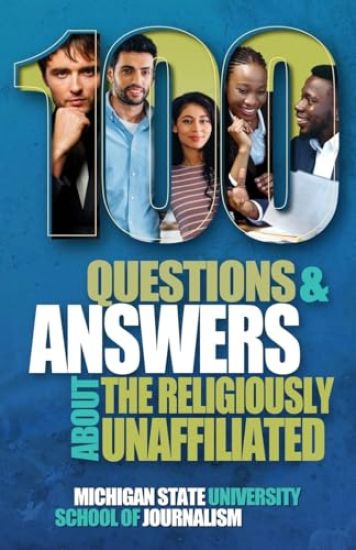
100 Questions and Answers About the Religiously Unaffiliated

100 Questions and Answers About the Religiously Unaffiliated

Phil Zuckerman

Michigan State University School of Journalism
2024
pokkari
Sometimes generally referred to as "the nones," agnostics, atheists, humanists, freethinkers, secularists and skeptics compose one of the fastest growing faith categories in the United States. Because they are treated as "nones," some people face discrimination as nonbelievers, despite their varied and strong beliefs, values and morals. This basic guide, "100 Questions and Answers About the Religiously Unaffiliated," describes the differences, explains why discrimination and laws force some to hide their beliefs and why they would like to shed the label of "nones." Religious freedom and the First Amendment's establishment clause come up frequently.The key issue for many is whether the First Amendment's guarantee of religious freedom also guarantees the right to be free from religion.Legal issues include school prayer, the obligation to support tax-exempt religious properties and requirements that people profess belief in God to be allowed to vote or hold office.Life magazine called Madalyn Murray O'Hair, whose lawsuit ended mandatory prayer in public schools, "the most hated woman in America." The Secular Coalition for America's website directory withheld the name of its communications consultant because "unwarranted prejudices and discriminatory practices ... affect atheists and humanists. Consequently, s/he felt it was best to be incognito for now, since working for an organization that protects the rights of nontheists might result in lost opportunities with other clients."In this guide's forward, Dr. Phil Zuckerman writes, "Understanding secular people is important for many reasons. For one thing, secular movements, leaders, values and ideals play significant roles in the political landscapes of the world. From the first sentence of the First Amendment to the U.S. Constitution, to Article 20 of Japan's Constitution, from France's la cit to Vietnam's atheistic dictatorship, and from the founding of the Mexican Republic to India's current political struggles, in many countries secularism is a central pillar of both stability as well as conflict."Additionally, secular men and women are often unjustly stigmatized as immoral scoundrels or angry curmudgeons - negative stereotypes that don't actually accord with reality yet prove to be both persistent and pernicious. For instance, in some societies, such as Saudi Arabia, Pakistan and Malaysia, hatred and fear of the secular is so strong that those who don't believe in God can be imprisoned, tortured or even executed. Here in the United States, many state constitutions - such as those of Tennessee, Texas and Mississippi - currently outlaw anyone who doesn't believe in God from holding any publicly elected office."Dr. Morgan Shipley's introduction says, "For the more than 85 million Americans who identify as nonreligious, we witness a turn to secularization as both an explanation for the lack of belief and a source for fulfilling the areas of life commonly associated with religion, such as morality, togetherness and agency. For the nonreligious, then, we find more than a rejection of God and faith. Instead, we uncover various ways humans highlight virtue, pursue a sense of belongingness, celebrate progress and rely on rational discourse to construct meaningful and morally driven lives." Questions include: Who are "the nones?"Who is under the umbrella of the nonreligious?What is an atheist?Who are agnostics?What is secularism? Who are humanists?Who are freethinkers?What is irreligion?Are Pagans and Wiccans nonreligious?What does it mean to be spiritual but not religious?What values do nonreligious people hold? How does one respectfully console a nonreligious person?Do nonreligious people pray?