Kirjojen hintavertailu. Mukana 12 016 292 kirjaa ja 12 kauppaa.

Kirjahaku

Etsi kirjoja tekijän nimen, kirjan nimen tai ISBN:n perusteella.

52 kirjaa tekijältä Philip Ball

Universe of Stone

Universe of Stone

Philip Ball

HARPER PERENNIAL
2009
nidottu
"A lively, open-ended study of the building of Chartres Cathedral. . . . Ball puts the fun back in medieval scholasticism." --Los Angeles TimesChartres Cathedral, south of Paris, is revered as one of the most beautiful and profound works of art in the Western canon. But what did it mean to those who constructed it in the twelfth and thirteenth centuries--and why was it built at such immense height and with such glorious play of light, in the soaring manner we now call Gothic?In this eminently fascinating work, author Philip Ball makes sense of the visual and emotional power of Chartres and brilliantly explores how its construction--and the creation of other Gothic cathedrals--represented a profound and dramatic shift in the way medieval thinkers perceived their relationship with their world.Beautifully illustrated and written, filled with astonishing insight, Universe of Stone embeds the magnificent cathedral in the culture of the twelfth century--its schools of philosophy and science, its trades and technologies, its politics and religious debates--enabling us to view this ancient architectural marvel with fresh eyes.
Critical Mass

Critical Mass

Philip Ball

Cornerstone
2005
pokkari
Is there a 'physics of society'? Philip Ball's investigation into human nature ranges from Hobbes and Adam Smith to modern work on traffic flow and market trading, across economics, sociology and psychology. Ball shows how much of human behaviour we can understand when we cease trying to predict and analyse the behaviour of individuals and look to the impact of hundreds, thousands or millions of individual human decisions, in circumstances in which human beings both co-operate and conflict, when their aggregate behaviour is constructive and when it is destructive. By perhaps Britain's leading young science writer, this is a deeply thought-provoking book, causing us to examine our own behaviour, whether in buying the new Harry Potter book, voting for a particular party or responding to the lures of advertisers.
Music Instinct

Music Instinct

Philip Ball

Vintage
2011
pokkari
Why have all human cultures - today and throughout history - made music? Why does music excite such rich emotion? And how do we make sense of musical sound? This title explores how the research in music psychology and brain science is piecing together the puzzle of how our minds understand and respond to music.
Unnatural

Unnatural

Philip Ball

Vintage
2012
pokkari
Can we make a human being? The question has been asked for many centuries, and has produced recipes ranging from the clay golem of Jewish legend to the mass-produced test-tube babies in Brave New World. Unnatural delves beneath the surface of the cultural history of 'anthropoeia' - the artificial creation of people - to explore what it tells us about our views on life, humanity, creativity and technology, and the soul. Philip Ball traces the threads that link the legendary inventor Daedalus, Goethe's tragic Faust, the automata-making magicians of E.T.A. Hoffman and Mary Shelley's Victor Frankenstein. He argues that these old tales and myths are alive and well, subtly manipulating the current debates about assisted conception, embryo research and human cloning, which have at last made the idea of 'making people' into flesh and blood reality.
Curiosity

Curiosity

Philip Ball

Vintage
2013
pokkari
No longer reviled, curiosity is now celebrated. By examining the rise of curiosity from the dawn of modern science to today, we can examine how it functions in science, how it is spun, packaged and sold, and how the changing shape of science influences the kinds of questions it may ask.
Serving the Reich

Serving the Reich

Philip Ball

Vintage
2014
pokkari
Among them were world-renowned physicists Max Planck, Peter Debye and Werner Heisenberg. After the war most scientists in Germany maintained they had been apolitical or even resisted the regime: Debye claimed that he had gone to America in 1940 to escape Nazi interference in his research;
Invisible

Invisible

Philip Ball

Vintage
2015
pokkari
If you could be invisible, what would you do? The chances are that it would have something to do with power, wealth or sex. Perhaps all three. Impulses like these have always been at the heart of our fascination with invisibility. This book offers a history of humanity's turbulent relationship with the invisible.
The Elements

The Elements

Philip Ball

Oxford University Press
2004
nidottu
This Very Short Introduction traces the history and cultural impact of the elements on humankind, and examines why people have long sought to identify the substances around them. Looking beyond the Periodic Table, the author examines our relationship with matter, from the uncomplicated vision of the Greek philosophers, who believed there were four elements - earth, air, fire, and water - to the work of modern-day scientists in creating elements such as hassium and meitnerium. Packed with anecdotes, The Elements is a highly engaging and entertaining exploration of the fundamental question: what is the world made from? ABOUT THE SERIES: The Very Short Introductions series from Oxford University Press contains hundreds of titles in almost every subject area. These pocket-sized books are the perfect way to get ahead in a new subject quickly. Our expert authors combine facts, analysis, perspective, new ideas, and enthusiasm to make interesting and challenging topics highly readable.
Molecules

Molecules

Philip Ball

Oxford University Press
2003
nidottu
The processes in a single living cell are akin to that of a city teeming with molecular inhabitants that move, communicate, cooperate, and compete. In this Very Short Introduction, Philip Ball explores the role of the molecule in and around us - how, for example, a single fertilized egg can grow into a multi-celled Mozart, what makes spider's silk insoluble in the morning dew, and how this molecular dynamism is being captured in the laboratory, promising to reinvent chemistry as the central creative science of the century. ABOUT THE SERIES: The Very Short Introductions series from Oxford University Press contains hundreds of titles in almost every subject area. These pocket-sized books are the perfect way to get ahead in a new subject quickly. Our expert authors combine facts, analysis, perspective, new ideas, and enthusiasm to make interesting and challenging topics highly readable.
Branches

Branches

Philip Ball

Oxford University Press
2011
nidottu
As part of a trilogy of books exploring the science of patterns in nature, acclaimed science writer Philip Ball here looks at the form and growth of branching networks in the natural world, and what we can learn from them. Many patterns in nature show a branching form - trees, river deltas, blood vessels, lightning, the cracks that form in the glazing of pots. These networks share a peculiar geometry, finding a compromise between disorder and determinism, though some, like the hexagonal snowflake or the stones of the Devil's Causeway fall into a rigidly ordered structure. Branching networks are found at every level in biology - from the single cell to the ecosystem. Human-made networks too can come to share the same features, and if they don't, then it might be profitable to make them do so: nature's patterns tend to arise from economical solutions.
The Music Instinct: How Music Works and Why We Can't Do Without It
From Bach fugues to Indonesian gamelan, from nursery rhymes to rock, music has cast its light into every corner of human culture. But why music excites such deep passions, and how we make sense of musical sound at all, are questions that have until recently remained unanswered. Now in The Music Instinct, award-winning writer Philip Ball provides the first comprehensive, accessible survey of what is known--and still unknown--about how music works its magic, and why, as much as eating and sleeping, it seems indispensable to humanity. Deftly weaving together the latest findings in brain science with history, mathematics, and philosophy, The Music Instinct not only deepens our appreciation of the music we love, but shows that we would not be ourselves without it. The Sunday Times hailed it as "a wonderful account of why music matters," with Ball's "passion for music evident on every page."
Curiosity

Curiosity

Philip Ball

University of Chicago Press
2014
nidottu
With the recent landing of the Mars rover Curiosity, it seems safe to assume that the idea of being curious is alive and well in modern science--that it's not merely encouraged but is seen as an essential component of the scientific mission. Yet there was a time when curiosity was condemned. Neither Pandora nor Eve could resist the dangerous allure of unanswered questions, and all knowledge wasn't equal--for millennia it was believed that there were some things we should not try to know. In the late sixteenth century this attitude began to change dramatically, and in Curiosity: How Science Became Interested in Everything, Philip Ball investigates how curiosity first became sanctioned--when it changed from a vice to a virtue and how it became permissible to ask any and every question about the world. Looking closely at the sixteenth through eighteenth centuries, Ball vividly brings to life the age when modern science began, a time that spans the lives of Galileo and Isaac Newton. In this entertaining and illuminating account of the rise of science as we know it, Ball tells of scientists both legendary and lesser known, from Copernicus and Kepler to Robert Boyle, as well as the inventions and technologies that were inspired by curiosity itself, such as the telescope and the microscope. The so-called Scientific Revolution is often told as a story of great geniuses illuminating the world with flashes of inspiration. But Curiosity reveals a more complex story, in which the liberation--and subsequent taming--of curiosity was linked to magic, religion, literature, travel, trade, and empire. Ball also asks what has become of curiosity today: how it functions in science, how it is spun and packaged for consumption, how well it is being sustained, and how the changing shape of science influences the kinds of questions it may continue to ask. Though proverbial wisdom tell us that it was through curiosity that our innocence was lost, that has not deterred us. Instead, it has been completely the contrary: today we spend vast sums trying to reconstruct the first instants of creation in particle accelerators, out of a pure desire to know. Ball refuses to let us take this desire for granted, and this book is a perfect homage to such an inquisitive attitude.
The Water Kingdom: A Secret History of China

The Water Kingdom: A Secret History of China

Philip Ball

University of Chicago Press
2017
sidottu
From the Yangtze to the Yellow River, China is traversed by great waterways, which have defined its politics and ways of life for centuries. Water has been so integral to China's culture, economy, and growth and development that it provides a window on the whole sweep of Chinese history. In The Water Kingdom, renowned writer Philip Ball opens that window to offer an epic and powerful new way of thinking about Chinese civilization. Water, Ball shows, is a key that unlocks much of Chinese culture. In The Water Kingdom, he takes us on a grand journey through China's past and present, showing how the complexity and energy of the country and its history repeatedly come back to the challenges, opportunities, and inspiration provided by the waterways. Drawing on stories from travelers and explorers, poets and painters, bureaucrats and activists, all of whom have been influenced by an environment shaped and permeated by water, Ball explores how the ubiquitous relationship of the Chinese people to water has made it an enduring metaphor for philosophical thought and artistic expression. From the Han emperors to Mao, the ability to manage the waters ― to provide irrigation and defend against floods ― was a barometer of political legitimacy, often resulting in engineering works on a gigantic scale. It is a struggle that continues today, as the strain of economic growth on water resources may be the greatest threat to China's future. The Water Kingdom offers an unusual and fascinating history, uncovering just how much of China's art, politics, and outlook have been defined by the links between humanity and nature.
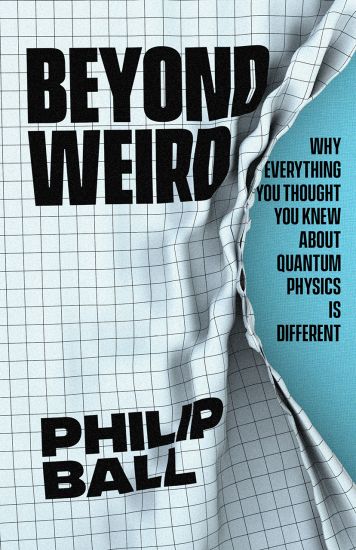
Beyond Weird: Why Everything You Thought You Knew about Quantum Physics Is Different
"Anyone who is not shocked by quantum theory has not understood it." Since Niels Bohr said this many years ago, quantum mechanics has only been getting more shocking. We now realize that it's not really telling us that "weird" things happen out of sight, on the tiniest level, in the atomic world: rather, everything is quantum. But if quantum mechanics is correct, what seems obvious and right in our everyday world is built on foundations that don't seem obvious or right at all--or even possible. An exhilarating tour of the contemporary quantum landscape, Beyond Weird is a book about what quantum physics really means--and what it doesn't. Science writer Philip Ball offers an up-to-date, accessible account of the quest to come to grips with the most fundamental theory of physical reality, and to explain how its counterintuitive principles underpin the world we experience. Over the past decade it has become clear that quantum physics is less a theory about particles and waves, uncertainty and fuzziness, than a theory about information and knowledge--about what can be known, and how we can know it. Discoveries and experiments over the past few decades have called into question the meanings and limits of space and time, cause and effect, and, ultimately, of knowledge itself. The quantum world Ball shows us isn't a different world. It is our world, and if anything deserves to be called "weird," it's us.
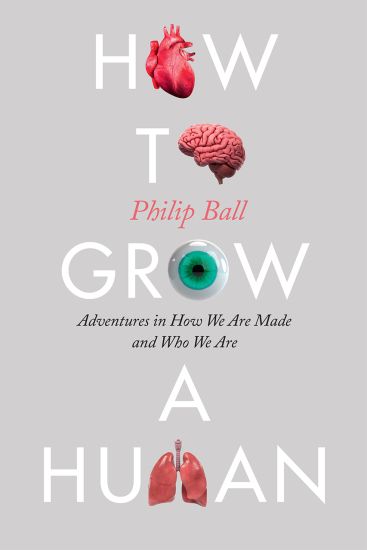
How to Grow a Human: Adventures in How We Are Made and Who We Are
Two summers ago, scientists removed a tiny piece of flesh from Philip Ball's arm and turned it into a rudimentary "mini-brain." The skin cells, removed from his body, did not die but were instead transformed into nerve cells that independently arranged themselves into a dense network and communicated with each other, exchanging the raw signals of thought. This was life--but whose? In his most mind-bending book yet, Ball makes that disconcerting question the focus of a tour through what scientists can now do in cell biology and tissue culture. He shows how these technologies could lead to tailor-made replacement organs for when ours fail, to new medical advances for repairing damage and assisting conception, and to new ways of "growing a human." For example, it might prove possible to turn skin cells not into neurons but into eggs and sperm, or even to turn oneself into the constituent cells of embryos. Such methods would also create new options for gene editing, with all the attendant moral dilemmas. Ball argues that such advances can therefore never be about "just the science," because they come already surrounded by a host of social narratives, preconceptions, and prejudices. But beyond even that, these developments raise questions about identity and self, birth and death, and force us to ask how mutable the human body really is--and what forms it might take in years to come.
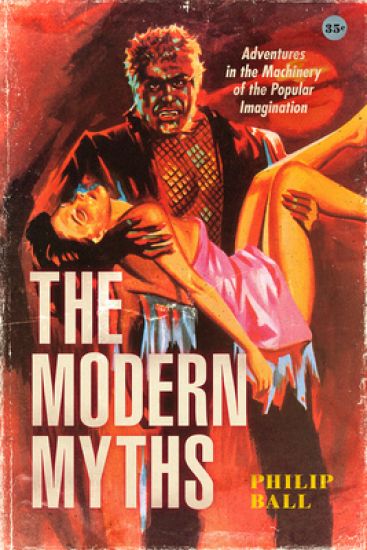
The Modern Myths

The Modern Myths

Philip Ball

University of Chicago Press
2021
sidottu
Myths are usually seen as stories from the depths of time—fun and fantastical, but no longer believed by anyone. Yet, as Philip Ball shows, we are still writing them—and still living them—today. From Robinson Crusoe and Frankenstein to Batman, many stories written in the past few centuries are commonly, perhaps glibly, called “modern myths.” But Ball argues that we should take that idea seriously. Our stories of Dracula, Dr. Jekyll and Mr. Hyde, and Sherlock Holmes are doing the kind of cultural work that the ancient myths once did. Through the medium of narratives that all of us know in their basic outline and which have no clear moral or resolution, these modern myths explore some of our deepest fears, dreams, and anxieties. We keep returning to these tales, reinventing them endlessly for new uses. But what are they really about, and why do we need them? What myths are still taking shape today? And what makes a story become a modern myth? In The Modern Myths, Ball takes us on a wide-ranging tour of our collective imagination, asking what some of its most popular stories reveal about the nature of being human in the modern age.