Kirjojen hintavertailu. Mukana 11 342 296 kirjaa ja 12 kauppaa.

Kirjahaku

Etsi kirjoja tekijän nimen, kirjan nimen tai ISBN:n perusteella.

9 kirjaa tekijältä Philip Barker

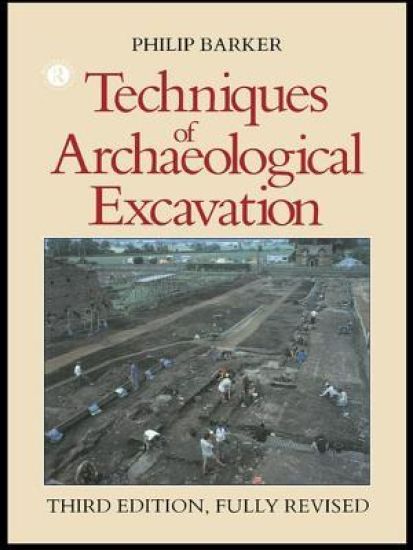
Techniques of Archaeological Excavation
Immediately hailed as the standard work and one of the most widely used archaeological field manuals, this survey of current excavation techniques, now in its third edition, remains an in-dispensible guide for archaeologists. his text has been written by an experienced excavator about the inadequacies of excavation techniques and the possible ways of refining them and should serve as a valuable introduction to the subtleties and spirit of modern archaeology.

Basic Child Psychiatry

Basic Child Psychiatry

Philip Barker

Blackwell Science Ltd
2004
nidottu
The seventh edition of Basic Child Psychiatry has been completely revised and updated to take account of advances in this fascinating and important subject. The opening chapters set the scene with developmental considerations, epidemiology and assessment. Coverage includes causal factors and reflects the progress made in the understanding of the genetics of child psychiatric disorders. The main body of the book guides the reader through the major disorders. The final chapters address child abuse and neglect, treatment approaches and prevention. References are provided to enable readers to locate more information on subjects they wish to pursue further. The book refers to the widely used systems of classifying psychiatric disorders – the World Health Organisation’s ICD-10 Classification of Mental and Behavioural Disorders and the American Psychiatric Association’s Diagnostic and Statistical Manual of Mental Disorders (DSM-IV-TR) - and provides a succinct orientation chapter on these systems.
Michel Foucault

Michel Foucault

Philip Barker

Prentice-Hall
1993
nidottu
This unique and original study analyzes Foucault's interaction with the history of ideas, undertaking a genealogy of the subject that subverts conventional philosophical history to develop a distinctly Foucauldian intellectual history. Through a detailed account of Foucault's work and its relation to the history of ideas, Philip Barker shows how that history can be usefully reconceptualised using Foucault's concepts of genealogy and archaeology. Locating the emergence of self-reflexive consciousness in twelfth century philosophy, and elaborating upon autobiography as a philosophical persona, Barker argues that this extremely productive approach can be used to analyze the relationship between the history of philosophy, psychoanalysis and the transparent subject.
Michel Foucault

Michel Foucault

Philip Barker

Edinburgh University Press
1998
nidottu
The ideal guide to Foucault's work for the non-specialist reader. Organised into easy-to-follow thematic sections, it allows the student to explore Foucault's work with no previous knowledge of contemporary theory. It takes the student through the major strands of Foucault's thought on power and knowledge, discipline and punishment, history and the subject, in a clear and engaging style, providing an easy entry into the complexities of Foucault's thinking.
Techniques of Archaeological Excavation
Immediately hailed as the standard work and one of the most widely used archaeological field manuals, this survey of current excavation techniques, now in its third edition, remains an in-dispensible guide for archaeologists. his text has been written by an experienced excavator about the inadequacies of excavation techniques and the possible ways of refining them and should serve as a valuable introduction to the subtleties and spirit of modern archaeology.
Java Methods for Financial Engineering

Java Methods for Financial Engineering

Philip Barker

Springer London Ltd
2010
nidottu
In order to build a successful, Java-based application it is important to have a clear understanding of the principles underlying the various financial models. Those models guide the application designer in choosing the most appropriate Java data structures and implementation strategy. This book describes the principles of model building in financial engineering and explains those models as designs and working implementations for Java-based applications. Throughout the book a series of packaged classes are developed to address a wide range of financial applications. Java methods are designed and implemented based on the most widely used models in financial engineering and investment practice. The classes and methods are explained and designed in a way which allows the financial engineer complete flexibility. The classes can be used as off-the-shelf working solutions or the innovative developer can re-arrange and modify methods to create new products
Java Methods for Financial Engineering

Java Methods for Financial Engineering

Philip Barker

Springer London Ltd
2007
sidottu
In order to build a successful, Java-based application it is important to have a clear understanding of the principles underlying the various financial models. Those models guide the application designer in choosing the most appropriate Java data structures and implementation strategy. This book describes the principles of model building in financial engineering and explains those models as designs and working implementations for Java-based applications. Throughout the book a series of packaged classes are developed to address a wide range of financial applications. Java methods are designed and implemented based on the most widely used models in financial engineering and investment practice. The classes and methods are explained and designed in a way which allows the financial engineer complete flexibility. The classes can be used as off-the-shelf working solutions or the innovative developer can re-arrange and modify methods to create new products