
Kirjahaku
Etsi kirjoja tekijän nimen, kirjan nimen tai ISBN:n perusteella.
13 kirjaa tekijältä Philip D. Beidler
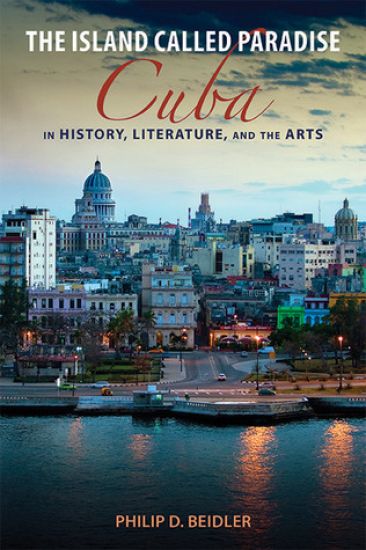
A personal and cultural mediation, Philip D. Beidler’s The Island Called Paradise explores the fascinating ways Cuban history and culture have permeated North American consciousness, and vice versa.In The Island Called Paradise, Philip D. Beidler shares his personal discovery of the vast, rich, and astonishing history of the island of Cuba and the interrelatedness of Cuba and the US.Cuba first entered Beidler’s consciousness in the early 1960s when he watched with mesmerised anxiety the televised reports of the Cuban missile crisis, a conflict that reduced a multifaceted, centuries-old history between North America and Cuba to the stark duotones of Cold War politics. Fifty years later, when Beidler traveled to the US’s island neighbour, he found a Cuba unlike the nation portrayed in truculent political rhetoric or in the easy preconceptions of US popular culture. Instead he found an entrancing people and landscape with deep historical connections to the US and a dazzling culture that overwhelmed his creative spirit.In twelve original essays, Beidler reintroduces to English-speaking readers many of the central figures, both real and literary, of Cuban and Cuban-American history. Meet Cecilia Valdés, the young mixed- race heroine of a 1839 novel that takes readers to the poor streets and sumptuous salons of Spanish colonial Cuba, and Narciso López, a real-life Venezuelan adventurer and filibustero who attempted to foment a Cuban uprising against Spain. Both would have been familiar figures to nineteenth-century Americans. Beidler also visits the twentieth-century lives of “the two Ernestos” (Ernest Hemingway and Che Guevara), and the pop-culture Cuban icon Ricky Ricardo.A country not with one history but multiple layers of history, Cuba becomes a fertile island for Beidler’s exploration. Art, he argues, perpetually crosses walls erected by politics, history, and nationality. At its core, The Island Called Paradise renews and refreshes our knowledge of an older Atlantic world even as we begin to envision a future in which the old bonds between our nations may be restored.
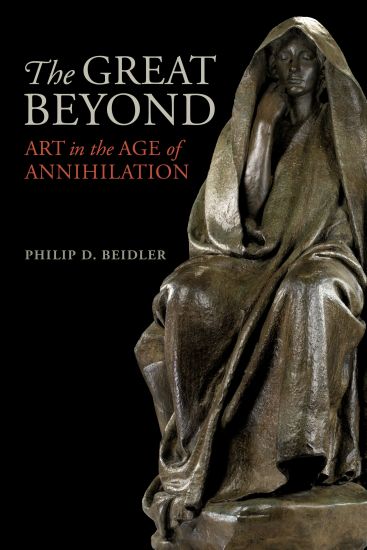
Essays from a master critic on how artistic giants from modernism onward confronted mortality—forging unexpected links between Twain, Woolf, Mahler, Wittgenstein, Beckett, Toni Morrison, and more.
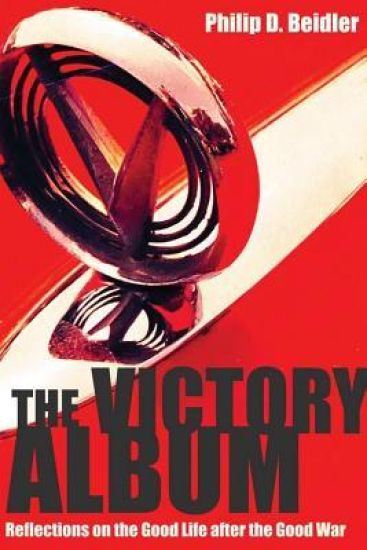
In these essays, a combination of personal remembrance and broad-stroke cultural history, Philip Beidler addresses the culture and politics of post?WWII America: the national blindness toward the Holocaust and a rising China, the canker of McCarthyism, ascendant cultures of hard smoking and heavy drinking, the worship of cars and film idols, and the chronic fear of an always-possible nuclear apocalypse. In lively, driving prose, he recalls veiled episodes in the history of the Korean War, the civil rights movement, and the struggle for women’s liberation. On these subjects and many others, Beidler draws from his own experience and a penetrating grasp of American social history, offering deep, pointed, and comprehensive perspectives on iconic moments in American history.
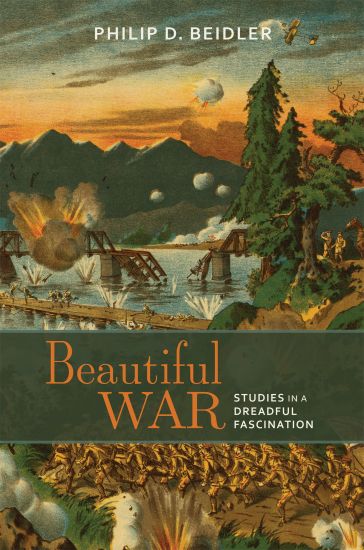
A probing and holistic meditation on the key question: Why do we continue to make art, and thus beauty, out of war? Beautiful War: Studies in a Dreadful Fascination is a wide-ranging exploration of armed conflict as depicted in art that illustrates the constant presence of war in our everyday lives. Philip D. Beidler investigates the unending assimilation and pervasive presence of the idea of war in popular culture, the impulses behind the making of art out of war, and the unending and debatably aimless trajectories of war itself. Beidler's critical scope spans from Shakespeare's plays, through the Victorian battle paintings of Lady Butler, into the post–World War I writings of F. Scott Fitzgerald and Virginia Woolf, and up to twenty-first-century films such as The Hurt Locker and Extremely Loud and Incredibly Close. As these works of art have become ubiquitous in contemporary culture, the many faces of war clearly spill over into our art and media, and Beidler argues that these portrayals in turn shift the perception of war from a savage truth to a concept. Beautiful War argues that the representation of war in the arts has always been, and continues to be, an incredibly powerful force. Incorporating painting, music, photography, literature, and film, Beidler traces a disturbing but fundamental truth: that war has always provided an aesthetic inspiration while serving ends as various and complex as ideological or geopolitical history, public memory, and mass entertainment.Beautiful War is a bold and vivid account of the role of war and military conflict as a subject of art that offers much of value to literary and cultural critics, historians, veterans, students of art history and communication studies, and those interested in expanding their understanding of art and media's influence on contemporary values and memories of the past.
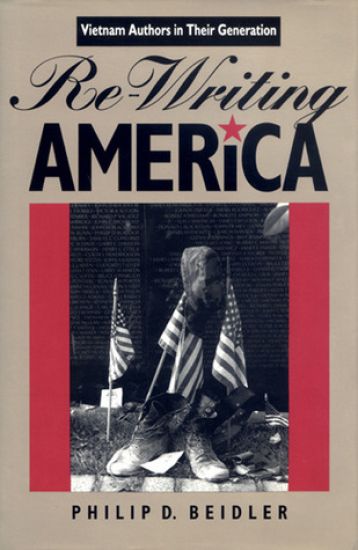
With his first book, American Literature and the Experience of Vietnam, Philip Beidler offered a pioneering study of the novels, plays, poetry, and "literature of witness" that sprang from the United States involvement in the Vietnam War. Reviewing the book, the journal American Literature declared, "[It is] more than just an introductory act. It also sets forth what are sure to be lasting types of American literary response to Vietnam, and of the scholarly response to the emerging literature of the war."In Re-Writing America, Beidler charts the ongoing achievements of the men and women who first gained public notice as Vietnam authors and who are now recognized as major literary interpreters of our national life and culture at large. These writers—among them Tim O'Brien, Philip Caputo, Winston Groom, David Rabe, John Balaban, Robert Stone, Michael Herr, Gloria Emerson, and Frances Fitzgerald—have applied in their later efforts, says Beidler, "many of the hard-won lessons of literary sense-making learned in initial works attempting to come explicitly to terms with Vietnam."Beidler argues that the Vietnam authors have done much to reenergize American creative writing and to lead it out of the poststructuralist impasse of texts as endless critiques of language, representation, and authority. With their direct experience of a divisive and frustrating war—"a war not of their own making but of the making of politicians and experts, a war of ancient animosities that cost nearly everything for those involved and settled virtually nothing"—these writers in many ways resemble the celebrated generation of poets and novelists who emerged from World War I. Like their forebears of 1914-18, those of the Vietnam generation have undertaken a common project of cultural revision: to "re-write America," to create an art that, even as it continues to acknowledge the war's painful memory, projects that memory into new dimensions of mythic consciousness for other—and better—times.Beidler fills his book with detailed, illuminating analyses of the writers' works, which, as he notes, have moved across an almost infinite range of subject, genre, and mode. From David Rabe, for example, have come innovative plays in which overt statements on the traumas of Vietnam (The Basic Training of Pavlo Hummel, Streamers) have made way for broader commentaries on sex, power, and violence in American life (In the Boom Boom Room, HurlyBurly). Winstom Groom has moved from Better Times Than These, a rather traditional (even anachronistic) war novel, to further reaches of rambunctious humor in Forrest Gump. And journalist Michael Herr, whose Dispatches memorably defined a Vietnam landscape at once real and hallucinatory, carried his vision into collaborations on the films Apocalypse Now and Full Metal Jacket.As Beidler notes, the immense price that Vietnam exacted from the American soul continues to draw a plethora of interpretations and depictions. Vietnam authors remind us, in Tim O'Brien's words, of "the things they carried." But as Beidler makes clear, they now command us not only to remember but to imagine new possibilities as well.
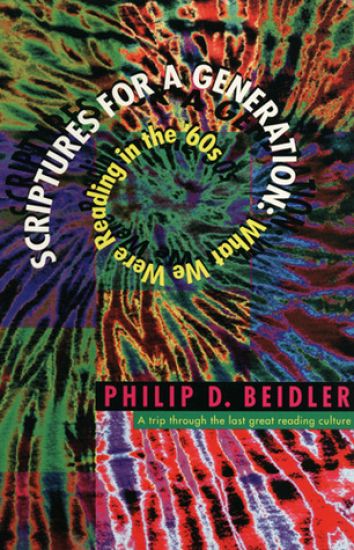
More than fifty writers, from Timothy Leary and Malcolm X to Helen Gurley Brown and Rachel Carson, are individually profiled in this lively survey of the literature of the 1960s. A look at the books behind the decade's youth movements, Scriptures for a Generation recalls the era as one of unprecedented literacy and belief in the power of books to change society. In showing that the generation that came of age in the '60s marked both the height and the end of "the last great reading culture," Philip D. Beidler also implies much about the state of literacy in our country today.Featured are bona fide 1960s classics ranging from Kahlil Gibran's The Prophet and Kurt Vonnegut's Slaughterhouse Five to Carlos Casteneda's The Teachings of Don Juan and the Boston Women's Health Book Collective's Our Bodies, Ourselves. Represented as well are such works of revered elders as Hermann Hesse's Steppenwolf and Henry David Thoreau's Walden. Beidler's coverage also extends to works of the early 1970s that are textual and spiritual extensions of the 1960s: the Portola Institute's Last Whole Earth Catalog, Annie Dillard's Pilgrim at Tinker Creek, Robert Pirsig's Zen and the Art of Motorcycle Maintenance, and others.
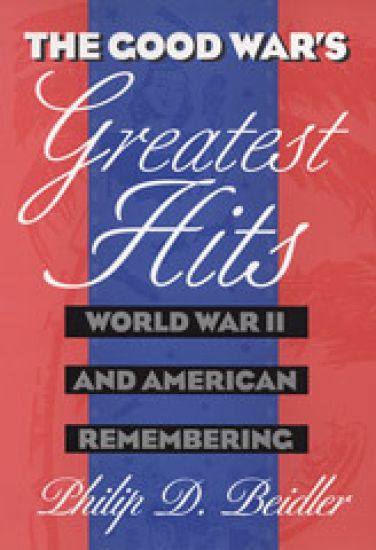
The glow of 1945 persists as a kind of beacon for American society, symbolic of an era when good and evil were easily defined. This image is at the center of Philip D. Beidler's entertaining look at the way World War II reshaped American popular culture.The legend of the "Good War" was fostered by wartime propaganda and reinforced in the aftermath of victory through books, the news media, movies, songs, and television. Beidler captures the aura of the times as he chronicles the production histories of more than a dozen projects with wartime themes, examining how books and plays evolved into films, how stars were considered and selected, technical problems and personality conflicts during production, and the public's reactions.From the upbeat tempo of the musical South Pacific to the weary disillusionment of The Best Years of Our Lives, from the patriotic nostalgia of Life's Picture History of World War II to the moral ambiguity of From Here to Eternity, a powerful mythology of the war developed. As a consequence, the line between fact and fiction has blurred for the war generation and its inheritors, and Hollywood's version of the Good War has become enshrined as historical fact in the nation's collective memory.

As a writer, Philip D. Beidler has often drawn on his combat experience in Vietnam and his deep engagement with American popular culture. His essays tap these sources in powerful, truth-telling ways. In American Wars, American Peace, another voice emerges, distinct yet also tied to Beidler’s wartime memories and his love of literature, film, and music. It is the voice of one of the “baby-boom progeny of the ‘Greatest Generation’ who at home and abroad became the foot soldiers” not just in Vietnam but in the Peace Corps, the civil rights movement, the women’s movement, and beyond.Beidler has experienced enough of history to question “the kinds of peace that one empire after another has tried to impose on the world at whatever immense costs.” As he reflects on terrorism, patriotism, geopolitics, sacrifice, propaganda, and more, Beidler revisits his generation’s “inherited vision of national purpose”—and he asks what happened. These essays are a sobering wake-up call for even the most informed and conscientious citizen.
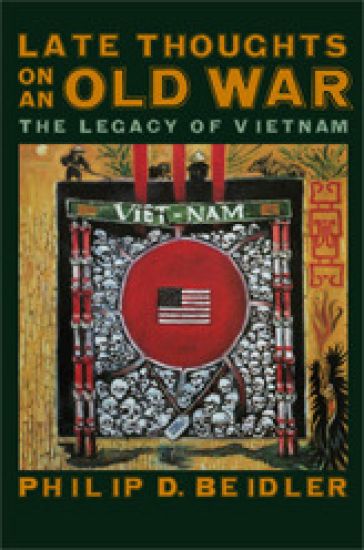
Philip D. Beidler, who served as an armored cavalry platoon leader in Vietnam, sees less and less of the hard-won perspective of the common soldier in what America has made of that war. Each passing year, he says, dulls our sense of immediacy about Vietnam’s costs, opening wider the temptation to make it something more necessary, neatly contained, and justifiable than it should ever become. Here Beidler draws on deeply personal memories to reflect on the war’s lingering aftereffects and the shallow, evasive ways we deal with them.Beidler brings back the war he knew in chapters on its vocabulary, music, literature, and film. His catalog of soldier slang reveals how finely a tour of Vietnam could hone one’s sense of absurdity. His survey of the war’s pop hits looks for meaning in the soundtrack many veterans still hear in their heads. Beidler also explains how “Viet Pulp” literature about snipers, tunnel rats, and other hard-core types has pushed aside masterpieces like Duong Thu Huong’s Novel without a Name. Likewise we learn why the movie The Deer Hunter doesn’t “get it” about Vietnam but why Platoon and We Were Soldiers sometimes nearly do.As Beidler takes measure of his own wartime politics and morals, he ponders the divergent careers of such figures as William Calley, the army lieutenant whose name is synonymous with the civilian massacre at My Lai, and an old friend, poet John Balaban, a conscientious objector who performed alternative duty in Vietnam as a schoolteacher and hospital worker.Beidler also looks at Vietnam alongside other conflicts—including the war on international terrorism. He once hoped, he says, that Vietnam had fractured our sense of providential destiny and geopolitical invincibility but now realizes, with dismay, that those myths are still with us. “Americans have always wanted their apocalypses,” writes Beidler, “and they have always wanted them now.”
American Literature and the Experience of Vietnam
Philip D. Beidler
University of Georgia Press
2007
pokkari
American Literature and the Experience of Vietnam is a perceptive and evocative book that is both a comprehensive discussion of the literature of the war and a study of literature and literary consciousness considered in relation to the larger process of cultural myth-making.In his exploration of the ways in which writers have tried to make sense of the Vietnam experience, Philip Beidler brings to light a whole literature that in its moments of fullest achievement quite literally “creates” a Vietnam more real than reality. In his discussion of the literature of the war he turns his attention to a wide variety of literary texts: novels, plays, poems, memoirs, oral histories, and works of documentary and reportage.Beidler begins with an analysis of the peculiar difficulties involved in writing about an experience like Vietnam. He moves from the early attempts to deal with the experience (including Norman Mailer’s Why Are We in Vietnam? and Arthur Kopit’s Indians) to more recent works as diverse as Robert Stone’s Dog Soldiers, Tim O’Brien’s Going after Cacciato, Phillip Caputo’s A Rumor of War, Michael Herr’s Dispatches, the plays of David Rabe, the poems of John Balaban and Bruce Weigl, and recently published experiments in oral history such as Al Santoli’s Everything We Had and Mark Baker’s Nam.
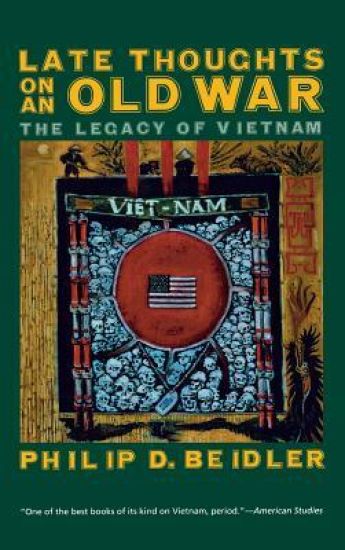
Philip D. Beidler, who served as an armored cavalry platoon leader in Vietnam, sees less and less of the hard-won perspective of the common soldier in what America has made of that war. Each passing year, he says, dulls our sense of immediacy about Vietnam’s costs, opening wider the temptation to make it something more necessary, neatly contained, and justifiable than it should ever become. Here Beidler draws on deeply personal memories to reflect on the war’s lingering aftereffects and the shallow, evasive ways we deal with them.Beidler brings back the war he knew in chapters on its vocabulary, music, literature, and film. His catalog of soldier slang reveals how finely a tour of Vietnam could hone one’s sense of absurdity. His survey of the war’s pop hits looks for meaning in the soundtrack many veterans still hear in their heads. Beidler also explains how “Viet Pulp” literature about snipers, tunnel rats, and other hard-core types has pushed aside masterpieces like Duong Thu Huong’s Novel without a Name. Likewise we learn why the movie The Deer Hunter doesn’t “get it” about Vietnam but why Platoon and We Were Soldiers sometimes nearly do.As Beidler takes measure of his own wartime politics and morals, he ponders the divergent careers of such figures as William Calley, the army lieutenant whose name is synonymous with the civilian massacre at My Lai, and an old friend, poet John Balaban, a conscientious objector who performed alternative duty in Vietnam as a schoolteacher and hospital worker.Beidler also looks at Vietnam alongside other conflicts—including the war on international terrorism. He once hoped, he says, that Vietnam had fractured our sense of providential destiny and geopolitical invincibility but now realizes, with dismay, that those myths are still with us. “Americans have always wanted their apocalypses,” writes Beidler, “and they have always wanted them now.”
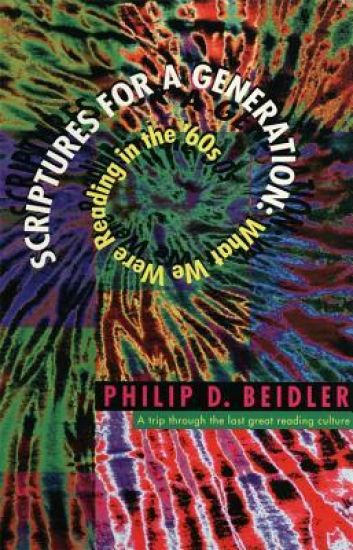
More than fifty writers, from Timothy Leary and Malcolm X to Helen Gurley Brown and Rachel Carson, are individually profiled in this lively survey of the literature of the 1960s. A look at the books behind the decade's youth movements, Scriptures for a Generation recalls the era as one of unprecedented literacy and belief in the power of books to change society. In showing that the generation that came of age in the '60s marked both the height and the end of "the last great reading culture," Philip D. Beidler also implies much about the state of literacy in our country today.Featured are bona fide 1960s classics ranging from Kahlil Gibran's The Prophet and Kurt Vonnegut's Slaughterhouse Five to Carlos Casteneda's The Teachings of Don Juan and the Boston Women's Health Book Collective's Our Bodies, Ourselves. Represented as well are such works of revered elders as Hermann Hesse's Steppenwolf and Henry David Thoreau's Walden. Beidler's coverage also extends to works of the early 1970s that are textual and spiritual extensions of the 1960s: the Portola Institute's Last Whole Earth Catalog, Annie Dillard's Pilgrim at Tinker Creek, Robert Pirsig's Zen and the Art of Motorcycle Maintenance, and others.