Kirjojen hintavertailu. Mukana 12 390 323 kirjaa ja 12 kauppaa.

Kirjahaku

Etsi kirjoja tekijän nimen, kirjan nimen tai ISBN:n perusteella.

4 kirjaa tekijältä Philip E. Graves

Environmental Economics

Environmental Economics

Philip E. Graves

CRC Press
2019
nidottu
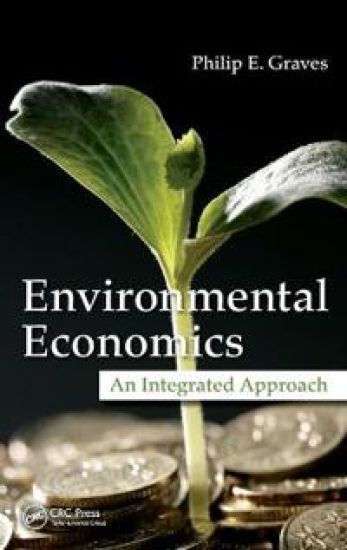
Rigorous, yet written in a way that facilitates understanding of complex material, Environmental Economics: An Integrated Approach provides practical and working knowledge of how environmental policy analysis is developed. This is a true textbook, detailing the tools required to conduct that analysis and also discusses weaknesses in the existing methods, underlining areas for future improvement. This approach allows readers to get a sense of what is known and what is not known about environmental economics. The book discusses why we have environmental problems and how we would optimally react if we had perfect information about environmental benefits and costs. It then describes methods in use—and their flaws—to acquire the information necessary to enact environmental policy. The book starts with a categorization of goods types, concluding that environmental problems stem from non-excludable goods that are either rivalrous or non-rivalrous. The author introduces the Coase Theorem in the first chapter, then details how households and firms would behave when facing a zero price on pollution versus a price on pollution set equal to presumed known marginal damages. He connects the economic system with the environmental system by aggregating up from individual decisions to the aggregate market system and the aggregate environmental quality. But, of course, the information available is rarely perfect. Clarifying the information difficulties faced by households, firms, and policy makers, the author recognizes that there is both a knowledge gap and a communication gap. He then covers the methods policy makers employ in an attempt to gain sufficient insight into marginal benefits and marginal costs to properly set a marginal damage tax, properly limit emission rights, or properly provide public goods.
Environmental Economics

Environmental Economics

Philip E. Graves

Rowman Littlefield Publishers
2007
sidottu
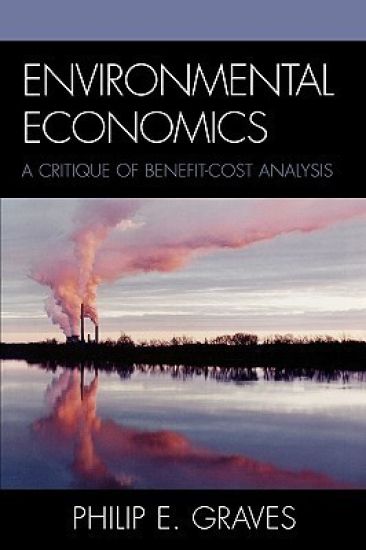
For the past 25 years, governmental decision-makers have employed the economic approach of benefit-cost analysis for resource allocation decisions. Environmental Economics describes, in a non-technical, readily understandable way, why the actual practice of benefit-cost analysis in environmental settings is heavily biased against the environment. The book provides environmentalists with the tools necessary to show policy-makers that pursuing many policies with apparent costs greater than benefits are, in fact, welfare enhancing.
Environmental Economics

Environmental Economics

Philip E. Graves

Rowman Littlefield Publishers
2007
nidottu
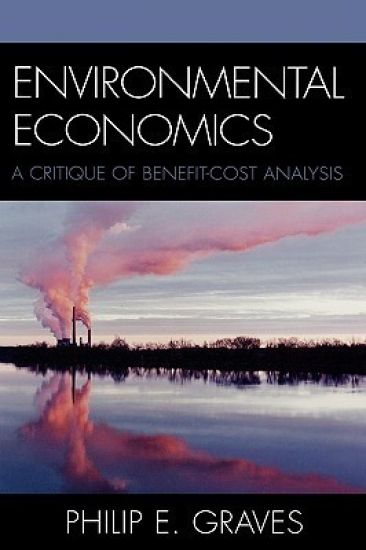
For the past 25 years, governmental decision-makers have employed the economic approach of benefit-cost analysis for resource allocation decisions. Environmental Economics describes, in a non-technical, readily understandable way, why the actual practice of benefit-cost analysis in environmental settings is heavily biased against the environment. The book provides environmentalists with the tools necessary to show policy-makers that pursuing many policies with apparent costs greater than benefits are, in fact, welfare enhancing.
Environmental Economics

Environmental Economics

Philip E. Graves

CRC Press Inc
2013
sidottu
Rigorous, yet written in a way that facilitates understanding of complex material, Environmental Economics: An Integrated Approach provides practical and working knowledge of how environmental policy analysis is developed. This is a true textbook, detailing the tools required to conduct that analysis and also discusses weaknesses in the existing methods, underlining areas for future improvement. This approach allows readers to get a sense of what is known and what is not known about environmental economics. The book discusses why we have environmental problems and how we would optimally react if we had perfect information about environmental benefits and costs. It then describes methods in use—and their flaws—to acquire the information necessary to enact environmental policy. The book starts with a categorization of goods types, concluding that environmental problems stem from non-excludable goods that are either rivalrous or non-rivalrous. The author introduces the Coase Theorem in the first chapter, then details how households and firms would behave when facing a zero price on pollution versus a price on pollution set equal to presumed known marginal damages. He connects the economic system with the environmental system by aggregating up from individual decisions to the aggregate market system and the aggregate environmental quality. But, of course, the information available is rarely perfect. Clarifying the information difficulties faced by households, firms, and policy makers, the author recognizes that there is both a knowledge gap and a communication gap. He then covers the methods policy makers employ in an attempt to gain sufficient insight into marginal benefits and marginal costs to properly set a marginal damage tax, properly limit emission rights, or properly provide public goods.