

Kirjahaku
Etsi kirjoja tekijän nimen, kirjan nimen tai ISBN:n perusteella.
8 kirjaa tekijältä Philip G. Ziegler

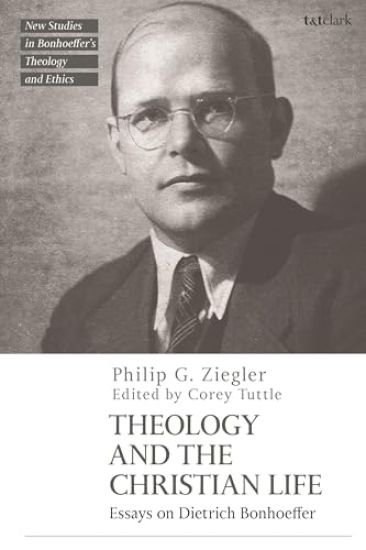
Offering a series of studies on key aspects of the Bonhoeffer’s theology, this book emphasizes the biblical texture and dogmatic depth of his work and its continuing legacy. The first part of the volume explores Bonhoeffer’s work in Christology, Theology proper, and related doctrines. Ziegler argues that Bonhoeffer’s fundamental orientation in theology and ethics is best captured and expressed when he is understood as theology of the Word of God. He offers an exposition of the commonly neglected Part II of Nachfolge, in its treatment of Pauline New Testament texts, as well as Bonhoeffer’s promeity compared with the work of Kierkegaard. Ziegler examines Bonhoeffer’s extended essay and biblical study on the theme of temptation, and concentrates on the role of eschatological concepts and themes in the Letters and Papers from Prison. In its second part, the book explores elements of Bonhoeffer’s ethical and political thinking, emphasizing throughout the deeply dogmatic substance and orientation of his work in these fields. This part offers explicit discussion of Bonhoeffer’s ethics and his interpretation of soteriology, his reading and understanding of the Decalogue for Christian life and ethics, his views of the political service of the church and of Christians; and sustained reading and reflection on one of Bonhoeffer’s final prison poems, Voices in the Night.

Dietrich Bonhoeffer's theology emerged from the intersection of several contesting streams of the Protestant tradition: high theological liberalism, and the 'Luther renaissance' and 'dialectical theology' movements of the early decades of the 20th century. It is marked by consistent and intense engagement with the Bible read as Christian Scripture and so centred upon Jesus Christ. To appreciate Bonhoeffer's theology requires that we grasp his commitment to Christ as the self-communicative presence of the living God whose identity and agency determines not only Christian life and thought, but all of reality itself. Bonhoeffer's theology continues to influence the direction of contemporary Christian life as well as provoke serious theological reflection wherever it is engaged. Examining Bonhoeffer's theology as a whole, this book points readers to the essential concerns of Bonhoeffer's theology with an eye to the varied careers this theology has had since his death. Following an introductory discussion of his life and literary legacy, Part One considers Bonhoeffer's christology, arguing for its decisive significance to his vision of the nature and tasks of Christian theology. Part Two traverses Bonhoeffer's thought, treating in turn his ecclesiology, anthropology and ethics, and Christian politics. Exploration of each of these themes is deepened by examining the reception and impact Bonhoeffer's theology upon the intense church struggles of the last half of the 20th century, particularly those within the former East Germany, North America, and South Africa under apartheid
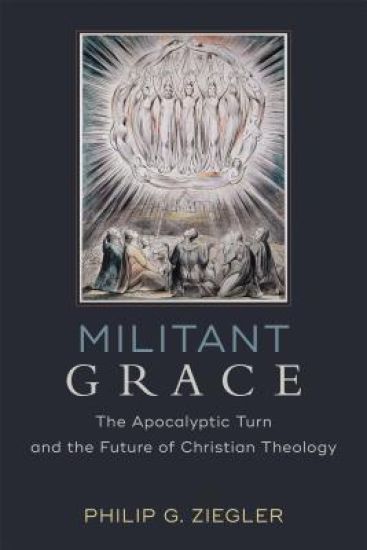
This clear and comprehensive introduction to apocalyptic theology demonstrates the significance of apocalyptic readings of the New Testament for systematic theology and highlights the ethical implications of the apocalyptic turn in biblical and theological studies. Written by a leading theologian and proponent of apocalyptic theology, this primer explores the impact of important recent Pauline scholarship on contemporary theology and argues for a renewed understanding of key Christian doctrines, including sin, grace, revelation, redemption, and the Christian life.

Wolf Kr tke is widely acknowledged to be the most important theologian to emerge from the struggle of the churches in the former East Germany. Working creatively in the tradition of Karl Barth and Dietrich Bonhoeffer, he reconsiders the contours of Christian faith in face of the challenges posed by the regnant atheism and cultural disestablishment that continue to shape the cultural landscape of Eastern Germany. This book explores in detail Kr tke's contributions to contemporary reflection upon the identity of God, humanity, and the Christian church and, in so doing, sheds light upon questions of theological method important in any context.
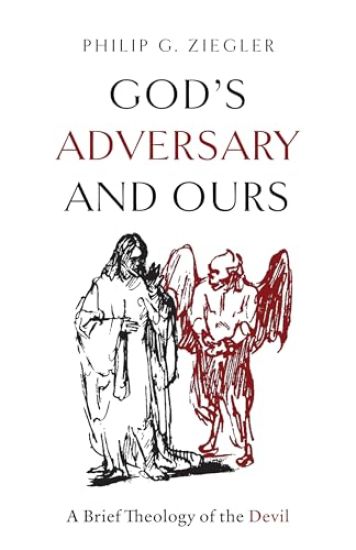
The devil—styled by Calvin as "God's adversary and ours"—is ubiquitous in the witness of the New Testament. Yet contemporary Christian doctrine generally remains dumbfounded about what to do with him. At the same time, our present is marked by a resurgence in the language of the "demonic"—that is, invocation of pervasive, radical, and perhaps personified evil. In light of this perplexity, Philip G. Ziegler asks pointedly: Can the gospel actually be heard and understood without meaningful reference to this inimical entity? Ziegler presents certain motivations we might have for revisiting the concept of the diabolical as a first step toward a Reformed doctrine of the infernal. Starting with an exhumation of the origins of our religious and cultural reticence about the devil, this study ventures a new diabology grounded in the witness of the Gospels. The identity and activities of the devil are discerned concretely in their manifold contradiction of Christ as the "Way, the Truth and the Life." The ensuing portrait of the devil yields revisionary consequences for both theology and our conception of faithful living. Through a historical sketch of received approaches to the devil in Western Christian tradition, God's Adversary and Ours uncoils the default dogmatic architecture of diabology and reflects upon the surrounding doctrines that position, shape, and constrain its treatment. Ziegler leads us on a cautious but determined biblical-theological exploration of the identity, ontology, and agency of "that old serpent," the Enemy, whose image becomes most discernible and salient in direct contact with the person and work of the Savior. Fixing attention upon the figure of the devil in a soteriological context confronts us with what the devil does; what the devil might be trails behind. Treating diabolical temptation, demonic possession, and devilish falsehood in turn, Ziegler demonstrates what resistance to—and faithful disbelief of—these three aspects of the devil's business might mean for the shape of a Christian life.
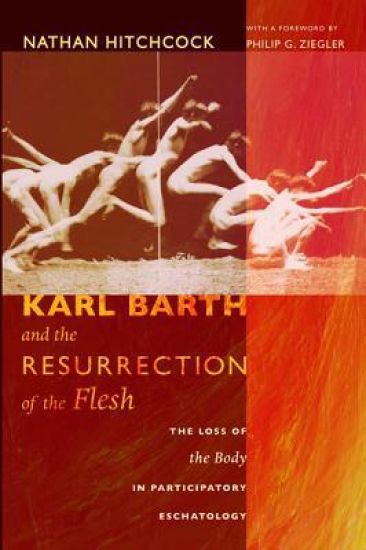
Karl Barth and the Resurrection of the Flesh
Nathan Hitchcock; Philip G. Ziegler
Wipf Stock Publishers
2013
pokkari