
Kirjahaku
Etsi kirjoja tekijän nimen, kirjan nimen tai ISBN:n perusteella.
6 kirjaa tekijältä Philip Hoy



A fascinating forensic study and a scholarly tour de force.-- Julian BarnesM. DEGAS STEPS OUT is a triumph of patience and perseverance, observation and speculation, research and imagination, in an ekphrastic genre that as far as I know Philip Hoy has invented. His profound meditation involves exegeses of stills from a ninesecond silent, blackandwhite film of an aging Edgar Degas taking the air on a Parisian Boulevard. Hoy's animation of these stills conjures another dimension altogether from that of the 'movie.' It makes one think now of Sebald, now of Proust.--Stephen Yenser, Distinguished Research Professor of English, University of California, Los AngelesPhilip Hoy's protracted examination of a mere nine seconds of film of the aged Edgar Degas walking towards us down a Paris street has the effect of waking us up to the utter strangeness of human life and of the mysterious power of photography and film. Haunting. -- Gabriel Josipovici, Emeritus Professor of English, University of SussexA truly remarkable piece of work, this beautifully written essay proves to be as affecting as it is enthralling. Hoy is best known as a publisher and editor, but in these pages he steps out as an equally brilliant author. M. DEGAS STEPS OUT deserves to find a wide readership.--Jonathan Post, Distinguished Research Professor of English, University of California, Los AngelesAn engrossing treat: Philip Hoy's M. DEGAS STEPS OUT examines a short illicit film of Degas in his old age and turns it into an absorbing quest.--Miranda SeymourWhat a superb essay--a thrilling page turner and a powerfully moving memento mori. I love Hoy's patient attention to detail, the way he looks, then looks again, and in describing what he sees dramatizes as vitally as possible the pastness of the past, its vanishing immediacy. A fabulous and riveting piece.--Alan Shapiro, William R. Kenan, Jr. Distinguished Professor of English and Creative Writing, University of North Carolina at Chapel HillLiterary Nonfiction. Film. Art.
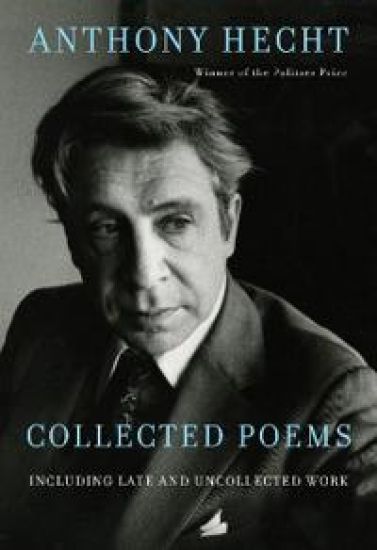
In his centenary year, a collection of the Pulitzer Prize winner's poems celebrates the indispensable artistry of a writer who faced the history of his era with a "clear-eyed mercy toward human weakness" (NYTBR) and "absolute raw simplicity and directness" (Ted Hughes, Poet Laureate of England, 1984-1998). Anthony Hecht, whose output spanned eight volumes, beginning in 1954 with A Summoning of Stones, served as an infantryman in World War II and participated in the liberation of the death camps in Germany. His aesthetic--bound up with a need to see the best and worst of humankind with unsparing clarity--was shaped by the cadences of the King James Bible, Shakespeare, and the canon of poetry in English. From the seven deadly sins to a Manhattan scene of Third Avenue in sunlight, or his poems reflecting the many faces of Death ("Death the Oxford Don," "Death the Whore," "Death the Film Director"), Hecht's subject matter called him to a formal elegance inextricably woven with the dramatic force, thematic ambition, and powerful emotions in each poem. This volume brings together all the published work and includes the beautiful poems he wrote before he died, never before collected. As the late J. D. McClatchy wrote, the rules of Anthony Hecht's art were "moral principles meant finally to reveal the structure of human dilemmas and sympathies." His profound influence on several successive generations of poets is testament to the enduring power of his life's work, traditional in its cadence but stunningly contemporary in its vision of who we are.