Kirjojen hintavertailu. Mukana 11 244 527 kirjaa ja 12 kauppaa.

Kirjahaku

Etsi kirjoja tekijän nimen, kirjan nimen tai ISBN:n perusteella.

7 kirjaa tekijältä Philip J. Ivanhoe

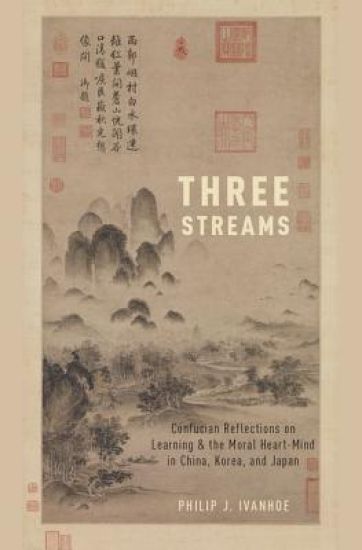
Three Streams

Three Streams

Philip J. Ivanhoe

Oxford University Press Inc
2016
sidottu
Recent interest in Confucianism has a tendency to suffer from essentialism and idealism, manifested in a variety of ways. One example is to think of Confucianism in terms of the views attributed to one representative of the tradition, such as Kongzi (Confucius) (551-479 BCE) or Mengzi (Mencius) (372 - 289 BCE) or one school or strand of the tradition, most often the strand or tradition associated with Mengzi or, in the later tradition, that formed around the commentaries and interpretation of Zhu Xi (1130-1200). Another such tendency is to think of Confucianism in terms of its manifestations in only one country; this is almost always China for the obvious reasons that China is one of the most powerful and influential states in the world today. A third tendency is to present Confucianism in terms of only one period or moment in the tradition; for example, among ethical and political philosophers, pre-Qin Confucianism-usually taken to be the writings attributed to Kongzi, Mengzi, and, if we are lucky, Xunzi (479-221 BCE)-often is taken as "Confucianism." These and other forms of essentialism and idealism have led to a widespread and deeply entrenched impression that Confucianism is thoroughly homogenous and monolithic (these often are "facts" mustered to support the purportedly oppressive, authoritarian, and constricted nature of the tradition); such impressions can be found throughout East Asia and dominate in the West. This is quite deplorable for it gives us no genuine sense of the creatively rich, philosophically powerful, highly variegated, and still very much open-ended nature of the Confucian tradition. This volume addresses this misconstrual and misrepresentation of Confucianism by presenting a philosophically critical account of different Confucian thinkers and schools, across place (China, Korea, and Japan) and time (the 10th to 19th centuries).
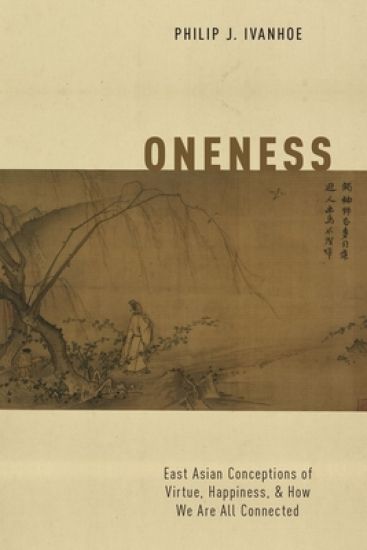
Oneness

Oneness

Philip J. Ivanhoe

Oxford University Press Inc
2018
sidottu
At the center of a constellation of key ideas in East Asian philosophical traditions, there lies a conception of oneness among human beings. Human beings are intricately and inextricably intertwined and share a common destiny with other people, creatures, and things. The ramifications of this idea are wide-reaching, and resonate with important debates and concerns in contemporary Western philosophy, but many at the forefront of their fields in the West are unaware of the fundamental shift in perspective that might be available to them. One of Ivanhoe's aims in this work is to challenge the dominant paradigm of hyper-individualism, which still enjoys a commanding position in a great deal of contemporary theory and practice in the humanities and social sciences, and to describe and advocate for an alternative conception and sense of self, world, and the relationship between them. In particular, Ivanhoe, who has an extensive background in and has published influential work on virtue ethics and Asian philosophy, investigates the implications of oneness for conceptions of the self, virtue, and human happiness. Through the lens of oneness, he explores topics such as conceptions of the self, selfishness and self-centeredness, virtues, spontaneity, and happiness, drawing support from wide-ranging, interdisciplinary sources. Rather than starting from the standpoint of Western philosophy and then reaching out to Asian philosophy from a distance, Ivanhoe advances a thesis drawn from East Asian sources and explicitly challenges the theoretical asymmetry that is characteristic of most comparative study, which often simply applies Western theories to non-Western material.
On Ethics and History

On Ethics and History

Philip J. Ivanhoe

Stanford University Press
2009
sidottu
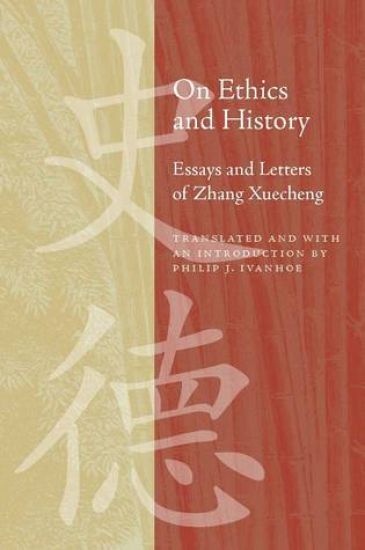
Zhang Xuecheng (1738–1801) has primarily been read as a philosopher of history. This volume presents him as an ethical philosopher with a distinctive understanding of the aims and methods of Confucian self-cultivation. Offered in English translation for the first time, this collection of Zhang's essays and letters should challenge our current understanding of this Qing dynasty philosopher. On Ethics and History also contains translations of three important essays written by Tang-dynasty Confucian Han Yu and shows how Zhang responded to Han's earlier works. Those with an interest in ethical philosophy, religion, and Chinese thought and culture will find still relevant much of what Zhang argued for in his own day.
Confucian Moral Self Cultivation

Confucian Moral Self Cultivation

Philip J. Ivanhoe

Hackett Publishing Co, Inc
2000
pokkari
A concise and accessible introduction to the evolution of the concept of moral self-cultivation in the Chinese Confucian tradition, this volume begins with an explanation of the pre-philosophical development of ideas central to this concept, followed by an examination of the specific treatment of self cultivation in the philosophy of Kongzi ("Confucius"), Mengzi ("Mencius"), Xunzi, Zhu Xi, Wang Yangming, Yan Yuan and Dai Zhen. In addition to providing a survey of the views of some of the most influential Confucian thinkers on an issue of fundamental importance to the tradition, Ivanhoe also relates their concern with moral self-cultivation to a number of topics in the Western ethical tradition. Bibliography and index are included.
Confucian Moral Self Cultivation

Confucian Moral Self Cultivation

Philip J. Ivanhoe

Hackett Publishing Co, Inc
2000
sidottu
A concise and accessible introduction to the evolution of the concept of moral self-cultivation in the Chinese Confucian tradition, this volume begins with an explanation of the pre-philosophical development of ideas central to this concept, followed by an examination of the specific treatment of self cultivation in the philosophy of Kongzi ("Confucius"), Mengzi ("Mencius"), Xunzi, Zhu Xi, Wang Yangming, Yan Yuan and Dai Zhen. In addition to providing a survey of the views of some of the most influential Confucian thinkers on an issue of fundamental importance to the tradition, Ivanhoe also relates their concern with moral self-cultivation to a number of topics in the Western ethical tradition. Bibliography and index are included.
Ethics in the Confucian Tradition

Ethics in the Confucian Tradition

Philip J. Ivanhoe

Hackett Publishing Co, Inc
2002
pokkari
This volume serves both as an introduction to the thought of Mengzi (Mencius) and Wang Yangming and as a comparison of their views. By examining issues held in common by both thinkers, Ivanhoe illustrates how the Confucian tradition was both continued and transformed by Wang Yangming, and shows the extent to which he was influenced by Buddhism. Topics explored are: the nature of morality; human nature; the nature and origin of wickedness; self cultivation; and sagehood. In addition to revised versions of each of these original chapters, Ivanhoe includes a new chapter on Kongzi's (Confucius') view of the Way.
Ethics in the Confucian Tradition

Ethics in the Confucian Tradition

Philip J. Ivanhoe

Hackett Publishing Co, Inc
2002
sidottu
This volume serves both as an introduction to the thought of Mengzi (Mencius) and Wang Yangming and as a comparison of their views. By examining issues held in common by both thinkers, Ivanhoe illustrates how the Confucian tradition was both continued and transformed by Wang Yangming, and shows the extent to which he was influenced by Buddhism. Topics explored are: the nature of morality; human nature; the nature and origin of wickedness; self cultivation; and sagehood. In addition to revised versions of each of these original chapters, Ivanhoe includes a new chapter on Kongzi's (Confucius') view of the Way.