Kirjojen hintavertailu. Mukana 12 016 292 kirjaa ja 12 kauppaa.

Kirjahaku

Etsi kirjoja tekijän nimen, kirjan nimen tai ISBN:n perusteella.

20 kirjaa tekijältä Philip Kitcher

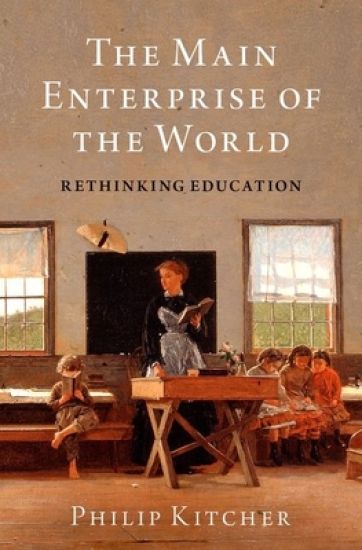
The Main Enterprise of the World

The Main Enterprise of the World

Philip Kitcher

Oxford University Press Inc
2022
sidottu
Philip Kitcher's The Main Enterprise of the World offers a sweeping vision of the goals of education. Kitcher considers the ways in which schools and universities should advance their goals, explores the social changes required to make high-quality education available to all, and argues that these reforms are economically sustainable. Kitcher build his arguments from three broad goals of education as an institution: career development and professionalization, civic participation, and human fulfilment. He shows that shifts in the workplace provide opportunities to focus on the latter two goals, and to liberate education from supposed economic constraints. By tying education to the strengthening of both individual lives and the foundations of democracy, he offers a humanistic rethinking of what education should try to achieve. Drawing on figures like Dewey, Mill, Atkinson, and others who have written deeply on education, both in theory and in practice, Kitcher offers an extensive reconsideration of how we might change our educational institutions to respond not just to the twenty-first century economy, but to the deeper need for lifelong human flourishing. The Main Enterprise of the World renews classical Pragmatism: with one eye on the ideal, and the other on the world, it presents a picture of education appropriate for our century.
The Nature of Mathematical Knowledge

The Nature of Mathematical Knowledge

Philip Kitcher

Oxford University Press Inc
1985
nidottu
This book argues against the view that mathematical knowledge is a priori, contending that mathematics is an empirical science and develops historically, just as natural sciences do. Kitcher presents a complete, systematic, and richly detailed account of the nature of mathematical knowledge and its historical development, focusing on such neglected issues as how and why mathematical language changes, why certain questions assume overriding importance, and how standards of proof are modified.
The Advancement of Science

The Advancement of Science

Philip Kitcher

Oxford University Press Inc
1995
nidottu
Philip Kitcher resurrects notions of objectivity and progress in science by identifying both the limitations of idealized treatments of the growth of knowledge and overreactions to philosophical idealizations.
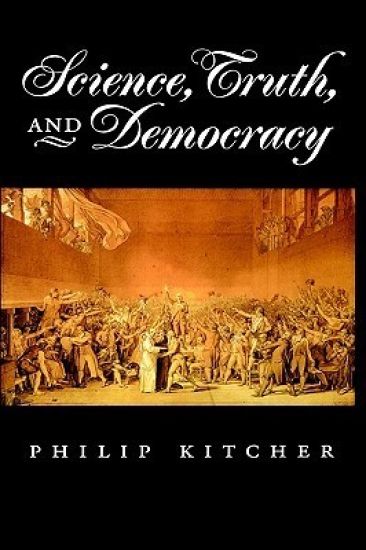
Science, Truth, and Democracy

Science, Truth, and Democracy

Philip Kitcher

OXFORD UNIVERSITY PRESS INC
2001
sidottu
Striving to boldly redirect the philosophy of science, this book by renowned philosopher Philip Kitcher examines the heated debate surrounding the role of science in shaping our lives. Kitcher explores the sharp divide between those who believe that the pursuit of scientific knowledge is always valuable and necessary-the purists-and those who believe that it invariably serves the interests of people in positions of power. In a daring turn, he rejects both perspectives, working out a more realistic image of the sciences-one that allows for the possibility of scientific truth, but nonetheless permits social consensus to determine which avenues to investigate. He then proposes a democratic and deliberative framework for responsible scientists to follow. Controversial, powerful, yet engaging, this volume will appeal to a wide range of readers. Kitcher's nuanced analysis and authoritative conclusion will interest countless scientists as well as all readers of science-scholars and laypersons alike.
Joyce's Kaleidoscope

Joyce's Kaleidoscope

Philip Kitcher

Oxford University Press Inc
2007
sidottu
James Joyce's Ulysses, once regarded as obscure and obscene, is now viewed as one of the masterpieces of world literature. Yet Joyce's final novel, Finnegans Wake, to which he devoted seventeen years, remains virtually unread, except by scholarly specialists. Its linguistic novelties, apparently based on an immense learning that few can share, make it appear impenetrable. Joyce's Kaleidoscope attempts to dissolve the darkness and to invite lovers of literature to engage with Finnegans Wake. Philip Kitcher proposes that the Wake has at its core an age-old philosophical question, "What makes a life worth living?", and that Joyce explores that question from the perspective of someone who feels that a long life is now ending. So the complex dream language is a way of investigating issues that are hard to face directly; the reader is invited to struggle with the novel's aging dreamer who seeks reassurance about the worth of what he has done and been. Joyce finds his way to reassurance. The sweeping music and the high comedy of Finnegans Wake celebrate the ordinary doings of ordinary people. With great humanity and a distinctive brand of humanism, Joyce points us to the things that matter in our lives. His final novel is a festival of life itself. From this perspective, the supposedly opaque, or nonsensical, language opens up as a rich source for the reader's reflections: though readers won't all approach it the same way, or with the same set of references, there is meaning in it for everyone. Kitcher's detailed study of the entire text brings out its musical resonances and its musical structures. It analyzes the novel overall while bringing deep insight to the reading of key individual passages. This engaging guide will aid readers not just to make sense of the novel, but to relish the remarkable accomplishment of Joyce's least appreciated work.
Joyce's Kaleidoscope

Joyce's Kaleidoscope

Philip Kitcher

Oxford University Press Inc
2010
nidottu
James Joyce's Ulysses, once regarded as obscure and obscene, is now viewed as one of the masterpieces of world literature. Yet Joyce's final novel, Finnegans Wake, to which he devoted seventeen years, remains virtually unread, except by scholarly specialists. Its linguistic novelties, apparently based on an immense learning that few can share, make it appear impenetrable. Joyce's Kaleidoscope attempts to dissolve the darkness and to invite lovers of literature to engage with Finnegans Wake. Philip Kitcher proposes that the Wake has at its core an age-old philosophical question, "What makes a life worth living?", and that Joyce explores that question from the perspective of someone who feels that a long life is now ending. So the complex dream language is a way of investigating issues that are hard to face directly; the reader is invited to struggle with the novel's aging dreamer who seeks reassurance about the worth of what he has done and been. Joyce finds his way to reassurance. The sweeping music and the high comedy of Finnegans Wake celebrate the ordinary doings of ordinary people. With great humanity and a distinctive brand of humanism, Joyce points us to the things that matter in our lives. His final novel is a festival of life itself. From this perspective, the supposedly opaque, or nonsensical, language opens up as a rich source for the reader's reflections: though readers won't all approach it the same way, or with the same set of references, there is meaning in it for everyone. Kitcher's detailed study of the entire text brings out its musical resonances and its musical structures. It analyzes the novel overall while bringing deep insight to the reading of key individual passages. This engaging guide will aid readers not just to make sense of the novel, but to relish the remarkable accomplishment of Joyce's least appreciated work.
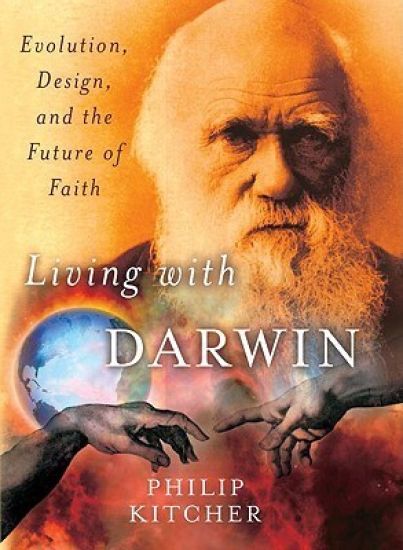
Living with Darwin

Living with Darwin

Philip Kitcher

Oxford University Press Inc
2009
nidottu
Charles Darwin has been at the center of white-hot public debate for more than a century. In Living With Darwin, Philip Kitcher stokes the flames swirling around Darwin's theory, sifting through the scientific evidence for evolution, Creation Science, and Intelligent Design, and revealing why evolution has been the object of such vehement attack. Kitcher first provides valuable perspective on the present controversy, describing the many puzzles that blocked evolution's acceptance in the early years, and explaining how scientific research eventually found the answers to these conundrums. Interestingly, Kitcher shows that many of these early questions have been resurrected in recent years by proponents of Intelligent Design. In fact, Darwin himself considered the issue of intelligent design, and amassed a mountain of evidence that effectively refuted the idea. Kitcher argues that the problem with Intelligent Design isn't that it's "not science," as many critics say, but that it's "dead science," raising questions long resolved by scientists. But Kitcher points out that it is also important to recognize the cost of Darwin's success--the price of "life with Darwin." Darwinism has a profound effect on our understanding of our place in the universe, on our religious beliefs and aspirations. It is in truth the focal point of a larger clash between religious faith and modern science. Unless we can resolve this larger issue, the war over evolution will go on.
Moral Progress

Moral Progress

Philip Kitcher

Oxford University Press Inc
2021
sidottu
This inaugural volume in the Munich Lectures in Ethics series presents lectures by noted philosopher Philip Kitcher. In these lectures, Kitcher develops further the pragmatist approach to moral philosophy, begun in his book The Ethical Project. He uses three historical examples of moral progress--the abolition of chattel slavery, the expansion of opportunities for women, and the increasing acceptance of same-sex love--to propose methods for moral inquiry. In his recommended methodology, Kitcher sees moral progress, for individuals and for societies, through collective discussions that become more inclusive, better informed, and involve participants more inclined to engage with the perspectives of others and aim at actions tolerable by all. The volume is introduced by Jan-Christoph Heilinger and contains commentaries from distinguished scholars Amia Srinivasan, Susan Neiman, and Rahel Jaeggi, and Kitcher's response to their commentaries.
What's the Use of Philosophy?

What's the Use of Philosophy?

Philip Kitcher

OXFORD UNIVERSITY PRESS INC
2023
sidottu
What's the use of philosophy? Philip Kitcher here grapples with an essential philosophical question: what the point of philosophy is, and what it should and can be. Kitcher's portrait of the discipline is not a familiar defense of the importance of philosophy or the humanities writ large. Rather, he is deeply critical of philosophy as it is practiced today, a practice focused on narrow technical questions that are far removed from the concerns of human life. He provides a penetrating diagnosis of why exactly contemporary philosophy has come to suffer this crisis, showing how it suffers from various syndromes that continue to push it further into irrelevance. Then, taking up ideas from William James and John Dewey, Kitcher provides a positive roadmap for the future of philosophy: first, as a discipline that can provide clarity to other kinds of human inquiry, such as religion or science; and second, bringing order to people's notions of the world, dispelling confusion in favor of clarity, and helping us think through our biggest human questions and dilemmas. Kitcher concludes with a letter to young philosophers who wonder how they can align their aspirations with the hyper-professionalism expected of them.
The Main Enterprise of the World

The Main Enterprise of the World

Philip Kitcher

OXFORD UNIVERSITY PRESS INC
2025
nidottu
Philip Kitcher's The Main Enterprise of the World offers a sweeping vision of the goals of education. Kitcher considers the ways in which schools and universities should advance their goals, explores the social changes required to make high-quality education available to all, and argues that these reforms are economically sustainable. Kitcher build his arguments from three broad goals of education as an institution: career development and professionalization, civic participation, and human fulfilment. He shows that shifts in the workplace provide opportunities to focus on the latter two goals, and to liberate education from supposed economic constraints. By tying education to the strengthening of both individual lives and the foundations of democracy, he offers a humanistic rethinking of what education should try to achieve. Drawing on figures like Dewey, Mill, Atkinson, and others who have written deeply on education, both in theory and in practice, Kitcher offers an extensive reconsideration of how we might change our educational institutions to respond not just to the twenty-first century economy, but to the deeper need for lifelong human flourishing. The Main Enterprise of the World renews classical Pragmatism: with one eye on the ideal, and the other on the world, it presents a picture of education appropriate for our century.
Preludes to Pragmatism

Preludes to Pragmatism

Philip Kitcher

Oxford University Press Inc
2012
sidottu
Over the last two decades the distinguished philosopher Philip Kitcher has started to make a serious case for pragmatism as the source of a new life in contemporary philosophy. There are some, like Kitcher, who view today's analytic philosophy as mired in narrowly focused, technical disputes of little interest to the wider world. What is the future of philosophy, and what would it look like? While Classical Pragmatism -- the American philosophy developed by John Dewey, Charles Peirce, and William James in the 19th century-- has a mixed reputation today, Kitcher admires the way its core ideas provide a way to prioritize avenues of inquiry. As he points out, both James and Dewey shared a wish to eliminate 'insignificant questions' from philosophy, and both harbored suspicion of 'timeless' philosophical problems handed down generation after generation. Rather, they saw philosophy as inherently embedded in its time, grappling with pressing issues in religion, social life, art, politics, and education. Kitcher has become increasingly moved by this reformist approach to philosophy, and the published essays included here, alongside a detailed introduction setting out Kitcher's views, provide motivation for his view of the "reconstruction of philosophy." These essays try to install the pragmatic spirit into contemporary philosophy, renewing James and Dewey for our own times.
Deaths in Venice

Deaths in Venice

Philip Kitcher

Columbia University Press
2013
sidottu
Published in 1913, Thomas Mann's Death in Venice is one of the most widely read novellas in any language. In the 1970s, Benjamin Britten adapted it into an opera, and Luchino Visconti turned it into a successful film. Reading these works from a philosophical perspective, Philip Kitcher connects the predicament of the novella's central character to Western thought's most compelling questions. In Mann's story, the author Gustav von Aschenbach becomes captivated by an adolescent boy, first seen on the lido in Venice, the eventual site of Aschenbach's own death. Mann works through central concerns about how to live, explored with equal intensity by his German predecessors, Schopenhauer and Nietzsche. Kitcher considers how Mann's, Britten's, and Visconti's treatments illuminate the tension between social and ethical values and an artist's sensitivity to beauty. Each work asks whether a life devoted to self-sacrifice in the pursuit of lasting achievements can be sustained and whether the breakdown of discipline undercuts its worth. Haunted by the prospect of his death, Aschenbach also helps us reflect on whether it is possible to achieve anything in full awareness of our finitude and in knowing our successes are always incomplete.
Deaths in Venice

Deaths in Venice

Philip Kitcher

Columbia University Press
2016
pokkari
Published in 1913, Thomas Mann's Death in Venice is one of the most widely read novellas in any language. In the 1970s, Benjamin Britten adapted it into an opera, and Luchino Visconti turned it into a successful film. Reading these works from a philosophical perspective, Philip Kitcher connects the predicament of the novella's central character to Western thought's most compelling questions. In Mann's story, the author Gustav von Aschenbach becomes captivated by an adolescent boy, first seen on the lido in Venice, the eventual site of Aschenbach's own death. Mann works through central concerns about how to live, explored with equal intensity by his German predecessors, Schopenhauer and Nietzsche. Kitcher considers how Mann's, Britten's, and Visconti's treatments illuminate the tension between social and ethical values and an artist's sensitivity to beauty. Each work asks whether a life devoted to self-sacrifice in the pursuit of lasting achievements can be sustained and whether the breakdown of discipline undercuts its worth. Haunted by the prospect of his death, Aschenbach also helps us reflect on whether it is possible to achieve anything in full awareness of our finitude and in knowing our successes are always incomplete.
On John Stuart Mill

On John Stuart Mill

Philip Kitcher

Columbia University Press
2023
sidottu
John Stuart Mill expressed many of the central tenets of liberalism with unsurpassed clarity and enduring influence. Yet Mill’s apparent victory in the marketplace of ideas has numbed us to the power of his arguments. To many readers today, his views can seem utterly familiar, even banal.Sharing insights from teaching Mill for many years, the eminent philosopher Philip Kitcher makes a cogent case for why we should read this nineteenth-century thinker now. He portrays Mill as a conflicted humanist who wrestled with problems that are equally urgent in our own time. Kitcher reflects on Mill’s ideas in the context of contemporary ethical, social, and political issues such as COVID mandates, gun control, income inequality, gay rights, and climate change. More broadly, he shows, Mill’s writings help us cultivate our own capacities for critical thought and ethical decision making.Inviting readers into a conversation with Mill, this book shows that he supplies tools for thinking that are as valuable today as they were in the nineteenth century.
On John Stuart Mill

On John Stuart Mill

Philip Kitcher

Columbia University Press
2023
pokkari
John Stuart Mill expressed many of the central tenets of liberalism with unsurpassed clarity and enduring influence. Yet Mill’s apparent victory in the marketplace of ideas has numbed us to the power of his arguments. To many readers today, his views can seem utterly familiar, even banal.Sharing insights from teaching Mill for many years, the eminent philosopher Philip Kitcher makes a cogent case for why we should read this nineteenth-century thinker now. He portrays Mill as a conflicted humanist who wrestled with problems that are equally urgent in our own time. Kitcher reflects on Mill’s ideas in the context of contemporary ethical, social, and political issues such as COVID mandates, gun control, income inequality, gay rights, and climate change. More broadly, he shows, Mill’s writings help us cultivate our own capacities for critical thought and ethical decision making.Inviting readers into a conversation with Mill, this book shows that he supplies tools for thinking that are as valuable today as they were in the nineteenth century.
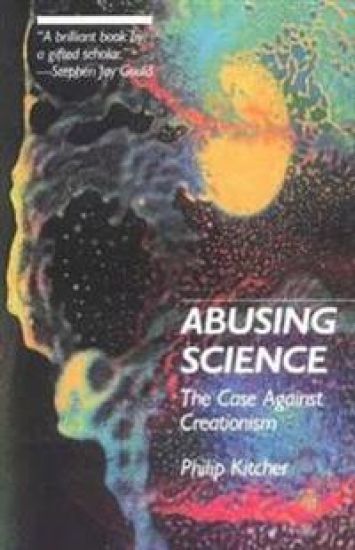
Abusing Science

Abusing Science

Philip Kitcher

MIT Press
1983
pokkari
Abusing Science is a manual for intellectual self-defense, the most complete available for presenting the case against Creationist pseudo-science. It is also a lucid exposition of the nature and methods of genuine science. The book begins with a concise introduction to evolutionary theory for non-scientists and closes with a rebuttal of the charge that this theory undermines religious and moral values. It will astonish many readers that this case must still be made in the 1980s, but since it must, Philip Kitcher makes it irresistibly and forcefully.Not long ago, a federal court struck down an Arkansas law requiring that "scientific" Creationism be taught in high school science classes. Contemporary Creationists may have lost one legal battle, but their cause continues to thrive. Their efforts are directed not only at state legislatures but at local school boards and textbook publishers. As Kitcher argues in this rigorous but highly readable book, the integrity of science is under attack. The methods of inquiry used in evolutionary biology are those which are used throughout the sciences. Moreover, modern biology is intertwined with other fields of science-physics, chemistry, astronomy, and geology. Creationists hope to persuade the public that education in science should be torn apart to make room for a literal reading of Genesis.Abusing Science refutes the popular complaint that the scientific establishment is dogmatic and intolerant, denying "academic freedom" to the unorthodox. It examines Creationist claims seriously and systematically, one by one, showing clearly just why they are at best misguided, at worst ludicrous.
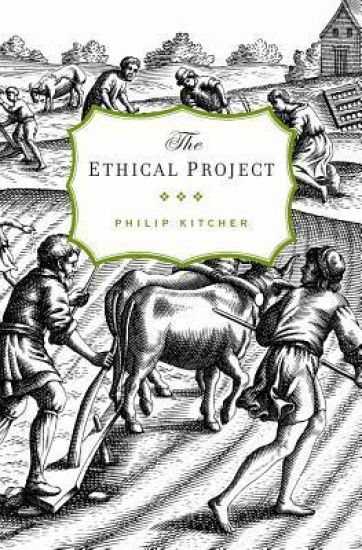
The Ethical Project

The Ethical Project

Philip Kitcher

Harvard University Press
2014
nidottu
Principles of right and wrong guide the lives of almost all human beings, but we often see them as external to ourselves, outside our own control. In a revolutionary approach to the problems of moral philosophy, Philip Kitcher makes a provocative proposal: Instead of conceiving ethical commands as divine revelations or as the discoveries of brilliant thinkers, we should see our ethical practices as evolving over tens of thousands of years, as members of our species have worked out how to live together and prosper. Elaborating this radical new vision, Kitcher shows how the limited altruistic tendencies of our ancestors enabled a fragile social life, how our forebears learned to regulate their interactions with one another, and how human societies eventually grew into forms of previously unimaginable complexity. The most successful of the many millennia-old experiments in how to live, he contends, survive in our values today.Drawing on natural science, social science, and philosophy to develop an approach he calls "pragmatic naturalism," Kitcher reveals the power of an evolving ethics built around a few core principles-including justice and cooperation-but leaving room for a diversity of communities and modes of self-expression. Ethics emerges as a beautifully human phenomenon-permanently unfinished, collectively refined and distorted generation by generation. Our human values, Kitcher shows, can be understood not as a final system but as a project-the ethical project-in which our species has engaged for most of its history, and which has been central to who we are.
The Rich and the Poor

The Rich and the Poor

Philip Kitcher

JOHN WILEY AND SONS LTD
2025
sidottu
The Rich and the Poor is part chronicle, part analysis of a disturbing sea-change: the abandonment of ethics in public policy. Seventy years ago, it was possible for serious thinkers, including some in the governments of affluent nations, to consider policies for raising living standards worldwide. Today, by contrast, the principal policy questions revolve around how to stay on top in a dog-eat-dog world. Philip Kitcher, one of the world’s most eminent philosophers, offers a new account of how ethics and politics should mix. The world needs to explore and reprioritize ethical questions, through inclusive deliberation that is both factually informed and mutually engaged with other perspectives. Achieving that end is hard, but without aspiring to it, we are likely to condemn our successors to lives of great hardship. Climate change demands global cooperation of a kind that can only be obtained by returning to ethical inquiry. The divorce between ethics and economics threatens disaster for all.
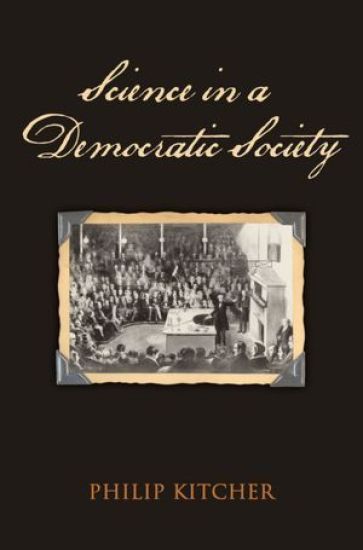
Science in a Democratic Society

Science in a Democratic Society

Philip Kitcher

Prometheus Books
2011
sidottu
In this successor to his pioneering Science, Truth, and Democracy, the author revisits the topic explored in his previous work-namely, the challenges of integrating science, the most successful knowledge-generating system of all time, with the problems of democracy. But in this new work, the author goes far beyond that earlier book in studying places at which the practice of science fails to answer social needs. He considers a variety of examples of pressing concern, ranging from climate change to religiously inspired constraints on biomedical research to the neglect of diseases that kill millions of children annually, analyzing the sources of trouble. He shows the fallacies of thinking that democracy always requires public debate of issues most people cannot comprehend, and argues that properly constituted expertise is essential to genuine democracy. No previous book has treated the place of science in democratic society so comprehensively and systematically, with attention to different aspects of science and to pressing problems of our times.