Kirjojen hintavertailu. Mukana 11 244 527 kirjaa ja 12 kauppaa.

Kirjahaku

Etsi kirjoja tekijän nimen, kirjan nimen tai ISBN:n perusteella.

7 kirjaa tekijältä Philip Nelson

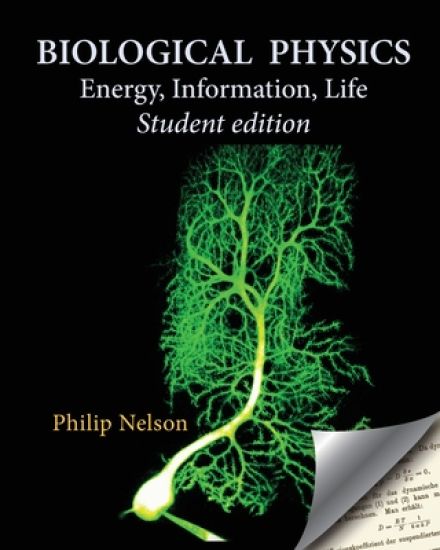
Biological Physics Student Edition

Biological Physics Student Edition

Philip Nelson

Chiliagon Science
2020
pokkari
Award-winning professor brings you from first-year physics and chemistry to the frontier of single-molecule biophysics.Biological Physics is a university textbook that focuses on results in molecular motors, self-assembly, and single-molecule manipulation that have revolutionized the field in recent years, and integrates these topics with classic results in statistical physics, biophysical chemistry, and neuroscience. The text also provides foundational material for the emerging fields of nanotechnology and mechanobiology, and has significant overlap with the revised MCAT exam. This inexpensive new edition updates the classic book, particularly the chapter on motors, and incorporates many clarifications and enhancements throughout. Exercises are given at all levels of difficulty. Instead of offering a huge pile of facts, the discovery-style exposition frequently asks the reader to reflect on "How could anything like that happen at all?" and then shows how science, and scientists, have proceeded incrementally to peel back the layers of mystery surrounding these beautiful mechanisms. Working through this book will give you an appreciation for how science has advanced in the past, and the skills and frameworks needed to push forward in the future. Additional topics include the statistical physics of diffusion; bacterial motility; self-assembly; entropic forces; enzyme kinetics; ion channels and pumps; the chemiosmotic mechanism and its role in ATP maintenance; and the discovery of the mechanism of neural signaling.
From Photon to Neuron

From Photon to Neuron

Philip Nelson

Princeton University Press
2017
pokkari
A richly illustrated undergraduate textbook on the physics and biology of light Students in the physical and life sciences, and in engineering, need to know about the physics and biology of light. Recently, it has become increasingly clear that an understanding of the quantum nature of light is essential, both for the latest imaging technologies and to advance our knowledge of fundamental life processes, such as photosynthesis and human vision. From Photon to Neuron provides undergraduates with an accessible introduction to the physics of light and offers a unified view of a broad range of optical and biological phenomena. Along the way, this richly illustrated textbook builds the necessary background in neuroscience, photochemistry, and other disciplines, with applications to optogenetics, superresolution microscopy, the single-photon response of individual photoreceptor cells, and more. With its integrated approach, From Photon to Neuron can be used as the basis for interdisciplinary courses in physics, biophysics, sensory neuroscience, biophotonics, bioengineering, or nanotechnology. The goal is always for students to gain the fluency needed to derive every result for themselves, so the book includes a wealth of exercises, including many that guide students to create computer-based solutions. Supplementary online materials include real experimental data to use with the exercises. * Assumes familiarity with first-year undergraduate physics and the corresponding math * Overlaps the goals of the MCAT, which now includes data-based and statistical reasoning * Advanced chapters and sections also make the book suitable for graduate courses * An Instructor's Guide and illustration package is available to professors
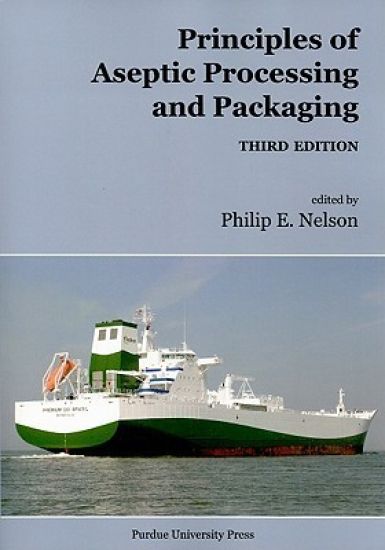
Principles of Asceptic Processing and Packaging

Principles of Asceptic Processing and Packaging

Philip Nelson

Purdue University Press
2010
nidottu
In aseptic processing, food is stored at ambient temperatures in sterilized containers free of spoilage organisms and pathogens. The results of this food technology come in all shapes and sizes, from the consumer packages of milk on the shelves of the supermarket to the huge containers full of orange juice transported around the world by cargo ships. Over the last couple of decades, aseptic bulk storage and distribution has revolutionized the global food trade. For example, more than 90 percent of the approximately 24 million tons of fresh tomatoes harvested globally each year are aseptically processed and packaged for year-round remanufacture into various food products. The technology has also been applied to bring potable water and emergency food aid to survivors of the 2004 Tsunami in Southeast Asia and the victims of Hurricane Katrina in 2005, as well as to other crisis situations worldwide. The construction of new aseptic facilities continues around the world, and an up-to-date understanding of the technology is essential for a new generation of food scientists and engineers alike. The contributors to this important textbook discuss all aspects of aseptic processing and packaging, focusing on the areas that most influence the success or failure of the process. Fully updated, this new edition covers all areas of chemistry, microbiology, engineering, packaging, and regulations as they relate to aseptic processing.
Physical Models of Living Systems

Physical Models of Living Systems

Philip Nelson

Chiliagon Science
2021
pokkari
Award-winning prof brings you from first-year classes to the frontiers of systems and synthetic biology, epidemic modeling, and imaging. Physical Models of Living Systems is a university textbook that integrates those cutting-edge topics with classic results in statistical inference, control theory, biophysical chemistry and mechanobiology, immunology, and neuroscience, as well as guiding you to create your own stochastic simulations. Instead of offering a huge pile of facts, the discovery-style exposition frequently asks you to reflect on "How could anything like that happen at all?" and then shows how scientists have incrementally peeled back the layers of mystery surrounding these beautiful mechanisms. Working through this book will give you an appreciation for how science has advanced in the past, and the skills and frameworks needed to push forward in the future.Intended for intermediate-level undergraduates in any science or engineering major, the only prerequisite for this course is first-year physics. Supplementary sections make the book also suitable as the basis of a graduate-level course. This low-cost second edition expands the first one with four new chapters as well as adding add many clarifications and updates. Dozens of exercises are included at all levels of complexity, many involving computer work. Throughout, the goal is for you to gain the fluency needed to derive every result for yourself. Along the way, you will acquire several research skills that are often not addressed in traditional courses: Basic modeling skills, including dimensional analysis, identification of variables, and ODE formulation;Probabilistic modeling skills, including stochastic simulation;Data analysis methods, including maximum likelihood and Bayesian methods;Computer programming using a general-purpose platform like MATLAB or Python, with short codes written from scratch;Dynamical systems, particularly feedback control, with phase portrait methods.All of these basic skills, which are relevant to nearly any field of science or engineering, are presented in the context of case studies from living systems, including: Virus dynamics;Bacterial genetics and evolution of drug resistance;Statistical inference;Superresolution microscopy and cryo-electron microscopy;Stochastic simulation, for example of gene expression;Synthetic biology;Epidemic modeling;Naturally evolved cellular control circuits, including homeostasis, genetic switches, and the mitotic clock;Excitable media.
Ancient painted glass in England 1170-1500
This book has been considered by academicians and scholars of great significance and value to literature. This forms a part of the knowledge base for future generations. So that the book is never forgotten we have represented this book in a print format as the same form as it was originally first published. Hence any marks or annotations seen are left intentionally to preserve its true nature.