Kirjojen hintavertailu. Mukana 12 390 323 kirjaa ja 12 kauppaa.

Kirjahaku

Etsi kirjoja tekijän nimen, kirjan nimen tai ISBN:n perusteella.

8 kirjaa tekijältä Philip Payton

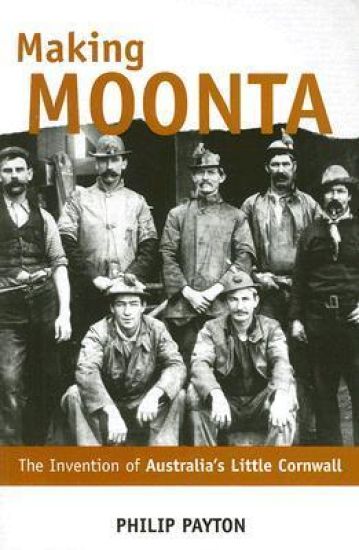
Making Moonta

Making Moonta

Philip Payton

University of Exeter Press
2007
nidottu
Winner of the 2008 Holyer An Gof Award for non-fiction. An investigation of the popular tradition of 'Australia's Little Cornwall': how one town in South Australia gained and perpetuated this identity into the twenty-first century. This book is about Moonta and its special place in the Cornish transnational identity. Today Moonta is a small town on South Australia's northern Yorke Peninsula; along with the neighbouring townships of of Wallaroo and Kadina, it is an agricultural and heritage tourism centre. In the second half of the nineteenth century, however, Moonta was the focus of a major copper mining industry.This book is about Moonta and its special place in the Cornish transnational identity. Today Moonta is a small town on South Australia's northern Yorke Peninsula; along with the neighbouring townships of of Wallaroo and Kadina, it is an agricultural and heritage tourism centre. In the second half of the nineteenth century, however, Moonta was the focus of a major copper mining industry.From the beginning, Moonta cast itself as unique among Cornish immigrant communities, becoming 'the hub of the universe' according to its inhabitants, forging the myth of 'Australia's Little Cornwall': a myth perpetuated by Oswald Pryor and others that survived the collapse of the copper mines in 1923-and remains vibrant and intact today.
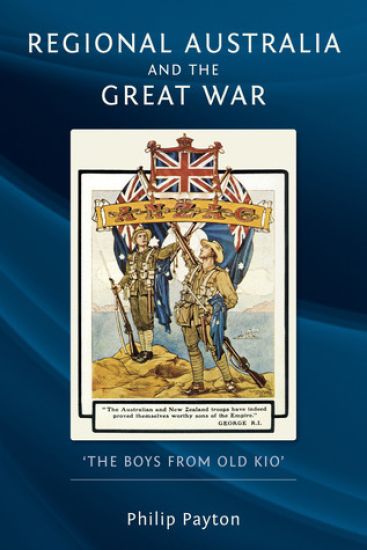
Regional Australia and the Great War

Regional Australia and the Great War

Philip Payton

University of Exeter Press
2012
nidottu
In this book, Philip Payton provides a vivid insight into the experiences of regional Australia during the Great War of 1914-18. Alighting upon 'old Kio', the copper-mining communities of South Australia's northern Yorke Peninsula, he describes the relationship between the 'homefront' and the 'battlefront' half-a-world away. He draws an intimate portrait of Australia at war, from the lives (and deaths) of local soldiers—all volunteers—in the trenches far from home to the myriad reactions and activities of those in a community struggling to grasp the enormity of the situation in which it found itself. The book shows how community cohesion was fractured by increasing tensions and divisions, not least over the Conscription debate, as the war dragged on. And it shows how those volunteer soldiers fared in each of the great battles in which the Australians participated—from Gallipoli to the Western Front and the heady days of 1918.
D.H. Lawrence and Cornwall

D.H. Lawrence and Cornwall

Philip Payton

UNIVERSITY OF EXETER PRESS
2024
sidottu
This book examines D.H. Lawrence’s attempt to create a utopian community of likeminded idealists in Cornwall, a quest that was given greater urgency by the outbreak of the First World War, an event Lawrence viewed with horror. He saw Cornwall as a ‘Celtic other’, beyond England’s reach. But he was ultimately disillusioned by the gradual intrusion of England’s ‘war spirit’ and was expelled from Cornwall by the authorities, ending up in Australia where he wrote about his Cornish sojourn in the semi-autobiographical novel Kangaroo. The Cornish adventure was a key event in Lawrence’s life and this book alights upon several significant features that have not been fully described or understood before, notably the impact of ‘Celtic revivalism’ upon his imagining of Cornwall and the changing nature of the maritime war in and around Cornwall—not least its effect on Lawrence himself. Discussing the genesis and development of his ill-fated (invitation-only) community, the text follows Lawrence as he moves to Cornwall, first to Porthcothan, then to Zennor, and considers his evolving (and often contradictory) estimation of the Cornish people. Increasingly under suspicion as a possible German spy responsible for the upsurge in U-boat activity along the Cornish coast, he nonetheless formed close relationships with the local community at Zennor. Considering D.H. Lawrence through a new prism, or rather a series of new prisms, this volume offers a fresh perspective on his life, writing and thinking. It also furnishes new insights into Cornwall’s ambiguous place in the English imagination and the complexity of Cornish identity, including its international dimension. As well as scholars and students, this book will be of great interest to both Cornish and D.H. Lawrence enthusiasts, along with the general reading public.
The Cornish Overseas

The Cornish Overseas

Philip Payton

UNIVERSITY OF EXETER PRESS
2025
nidottu
In this fully revised and updated third edition of The Cornish Overseas (2020), Philip Payton draws upon almost two decades of additional research undertaken by historians the world over since the first paperback version of this book was published in 2005. Now published by University of Exeter Press, this edition of Philip Payton’s classic history of Cornwall’s ‘great emigration’ takes account of numerous new sources to present a comprehensive, definitive picture of the Cornish diaspora. The Cornish Overseas begins by identifying some of the classic themes of Cornish emigration history, including Cornwall’s ‘emigration culture’ and ‘emigration trade’, and goes on to sketch early Cornish settlement in North America and Australia. The book then examines in detail the upsurge in Cornish emigration after 1815, showing how Cornwall became swiftly one of the great emigration regions of Europe. Discoveries of silver, copper and gold drew Cornish miners to Latin America, while Cornish agriculturalists were attracted to the United States and Canada. The discoveries of copper in South Australia and in Michigan during the 1840s offered new destinations for the emigrant Cornish, as did the Californian gold rush in 1849 and the Victorian gold rush in Australia in 1851. The crash of copper-mining in Cornwall in 1866 sped further waves of emigrants to countries as disparate as New Zealand and South Africa. In each of these places the Cornish remained distinctive as ‘Cousin Jacks’ and ‘Cousin Jennys’, establishing their own communities and making important contributions to the social, political and economic development of the new worlds. By 1914, however, Cornwall was no longer the international centre of mining expertise, the mantle having passed to America, Australia and South Africa, and Cornish emigration had dwindled as a result. Nonetheless, the Cornish at home and abroad remained aware of their global transnational identity, an identity that has been revitalised in the late twentieth and early twenty-first centuries.
History of Sussex

History of Sussex

Philip Payton

Carnegie Publishing Ltd
2017
pokkari
Combining sound academic research with a genuine talent for writing, this superb new book tells the story of Sussex from ancient times to the present day, exploring interesting themes along the way.
The Cornish Overseas

The Cornish Overseas

Philip Payton

University of Exeter Press
2020
sidottu
In this fully revised and updated third edition of The Cornish Overseas (2020), Philip Payton draws upon almost two decades of additional research undertaken by historians the world over since the first paperback version of this book was published in 2005. Now published by University of Exeter Press, this edition of Philip Payton’s classic history of Cornwall’s ‘great emigration’ takes account of numerous new sources to present a comprehensive, definitive picture of the Cornish diaspora. The Cornish Overseas begins by identifying some of the classic themes of Cornish emigration history, including Cornwall’s ‘emigration culture’ and ‘emigration trade’, and goes on to sketch early Cornish settlement in North America and Australia. The book then examines in detail the upsurge in Cornish emigration after 1815, showing how Cornwall became swiftly one of the great emigration regions of Europe. Discoveries of silver, copper and gold drew Cornish miners to Latin America, while Cornish agriculturalists were attracted to the United States and Canada. The discoveries of copper in South Australia and in Michigan during the 1840s offered new destinations for the emigrant Cornish, as did the Californian gold rush in 1849 and the Victorian gold rush in Australia in 1851. The crash of copper-mining in Cornwall in 1866 sped further waves of emigrants to countries as disparate as New Zealand and South Africa. In each of these places the Cornish remained distinctive as ‘Cousin Jacks’ and ‘Cousin Jennys’, establishing their own communities and making important contributions to the social, political and economic development of the new worlds. By 1914, however, Cornwall was no longer the international centre of mining expertise, the mantle having passed to America, Australia and South Africa, and Cornish emigration had dwindled as a result. Nonetheless, the Cornish at home and abroad remained aware of their global transnational identity, an identity that has been revitalised in the late twentieth and early twenty-first centuries.