

Kirjahaku
Etsi kirjoja tekijän nimen, kirjan nimen tai ISBN:n perusteella.
56 kirjaa tekijältä Philip Smith
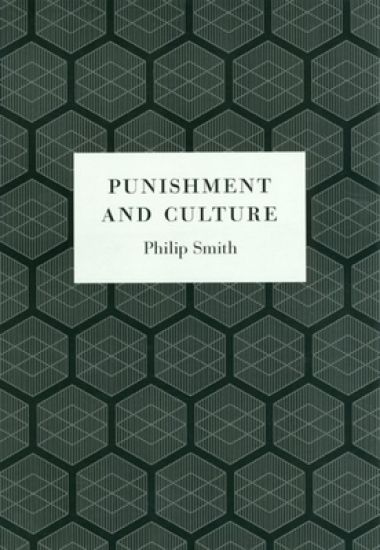
From the chain gang to the electric chair, the problem of how to deal with criminals has long been debated. What explains this concern with getting punishment right? And why do attitudes toward particular punishments change radically over time? In addressing these questions, Philip Smith attacks the comfortable myth that punishment is about justice, reason, and law. Instead he argues that punishment is an essentially irrational act founded in ritual as a means to control evil without creating more of it in the process."Punishment and Culture" traces three centuries of the history of punishment, looking in detail at issues ranging from public executions and the development of the prison to Jeremy Bentham's notorious panopticon and the invention of the guillotine. Smith contends that each of these attempts to achieve sterile bureaucratic control was thwarted as uncontrollable cultural forces generated alternative visions of heroic villains, darkly gothic technologies, and sacred awe. Moving from Andy Warhol to eighteenth-century highwaymen to Orwell's 1984, Smith puts forward a dazzling account of the cultural landscape of punishment. His findings will fascinate students of sociology, history, criminology, law, and cultural studies.

From the chain gang to the electric chair, the problem of how to deal with criminals has long been debated. What explains this concern with getting punishment right? And why do attitudes toward particular punishments change radically over time? In addressing these questions, Philip Smith attacks the comfortable myth that punishment is about justice, reason, and law. Instead he argues that punishment is an essentially irrational act founded in ritual as a means to control evil without creating more of it in the process."Punishment and Culture" traces three centuries of the history of punishment, looking in detail at issues ranging from public executions and the development of the prison to Jeremy Bentham's notorious panopticon and the invention of the guillotine. Smith contends that each of these attempts to achieve sterile bureaucratic control was thwarted as uncontrollable cultural forces generated alternative visions of heroic villains, darkly gothic technologies, and sacred awe. Moving from Andy Warhol to eighteenth-century highwaymen to Orwell's 1984, Smith puts forward a dazzling account of the cultural landscape of punishment. His findings will fascinate students of sociology, history, criminology, law, and cultural studies.

Why did America invade Iraq? Why do nations choose to fight certain wars and not others? How do we bring ourselves to believe that the sacrifice of our troops is acceptable? For most, the answers to these questions are tied to struggles for power or resources and the machinations of particular interest groups. Philip Smith argues that this realist answer to the age - old ''why war'' question is insufficient. Instead, Smith suggests that every war has its roots in the ways we tell and interpret stories. Comprised of case studies of the War in Iraq, the Gulf War, and the Suez Crisis, Why War? decodes the cultural logic of the narratives that justify military action. Each nation, Smith argues, makes use of binary codes - good and evil, sacred and profane, rational and irrational, to name a few. These codes, in the hands of political leaders, activists, and the media, are deployed within four different types of narratives - mundane, tragic, romantic, or apocalyptic. With this cultural system, Smith is able to radically recast our ''war stories'' and show how nations can have vastly different understandings of crises as each identifies the relevant protagonists and antagonists, objects of struggle, and threats and dangers. The large - scale sacrifice of human lives necessary in modern war, according to Smith, requires an apocalyptic vision of world events.

Six exotic adventures featuring a multitude of magicians, monsters, lovely princesses, and steadfast suitors: "Aladdin and the Wonderful Lamp," "Ali Baba and the Forty Thieves," "Abou Hassan, or the Sleeper Awakened," "The Seven Voyages of Sindbad the Sailor," "The Enchanted Horse," and "Camaralzaman and Badoura."
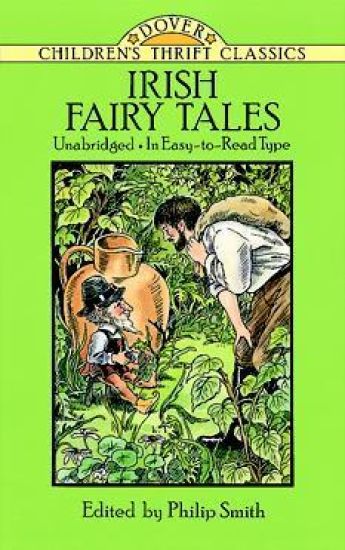
Eight charming tales full of the whimsy and wordplay of Irish folklore. Newly reset in large, easy-to-read type are: "Hudden and Dudden and Donald O’Neary," "Conal and Donal and Taig," "The Old Hag’s Long Leather Bag," "The Field of Boliauns," "The Sprightly Tailor," and more. 6 new illustrations enhance the text.
Popular, well-known poetry: "The Passionate Shepherd to His Love," "Shall I compare thee to a summer's day?" "Death, be not proud," "The Raven," "The Road Not Taken," plus works by Blake, Wordsworth, Byron, Coleridge, Shelley, Emerson, Browning, Keats, Kipling, Sandburg, Pound, Auden, Thomas, and many others.

Large print anthology contains some of the most popular poems in the English language, including Shakespeare's "Shall I compare thee to a summer's day?," Marvell's "To His Coy Mistress," Frost's "The Road Not Taken," as well as works by Blake, Wordsworth, Byron, Shelley, Keats, Browning, Whitman, Dickinson, Yeats, Pound, and many others.
American Cultural Sociology presents a serious challenge to British Cultural Studies and European grand theory alike. This exciting volume brings together sixteen seminal papers by leading figures in what is emerging as an important intellectual tradition. It places them in the context of related work in Sociology and other disciplines, exploring the connections between cultural sociology and different approaches, such as comparative and historical research, postmodernism, and symbolic interactionism. The book is divided into three sections: Culture as Text and Code, The Production and Reception of Culture, and Culture in Action. Each section contains edited contributions, both theoretical and empirical, addressing the key debates in cultural sociology, including the autonomy of culture, power and culture, structure and agency and how to conceptualise meaning.
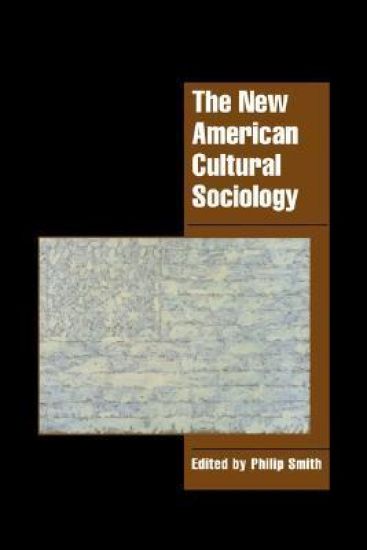
American Cultural Sociology presents a serious challenge to British Cultural Studies and European grand theory alike. This exciting new volume brings together sixteen seminal papers by leading figures in what is emerging as a new and important intellectual tradition. It places them in the context of related work in sociology and other disciplines, exploring the connections between cultural sociology and different approaches, such as comparative and historical research, postmodernism, and symbolic interactionism. The book is divided into three sections: Culture as Text and Code, The Production and Reception of Culture, and Culture in Action. Each section contains edited contributions, both theoretical and empirical, addressing the key debates in cultural sociology, including the autonomy of culture, power and culture, structure and agency, and how to conceptualise meaning.

Cultural Theory: An Introduction is a concise, accessible introduction to a complex field. Philip Smith provides a balanced, wide-ranging overview of contemporary cultural theory, covering the major thinkers and key concepts that have appeared and developed over the last century. The book has an abundance of special features for students, with summaries, biographical notes, suggestions for further reading, and cross-referencing. This book is an ideal guide for any student or researcher with an interest in the theoretical study of culture and society.
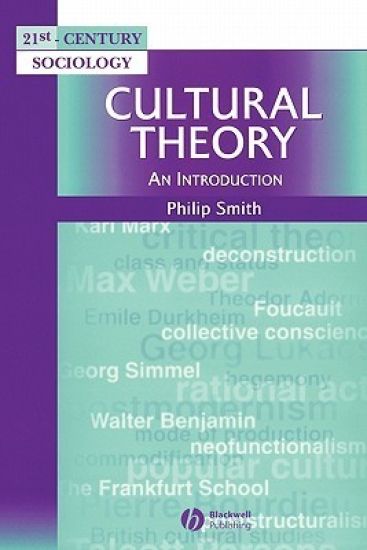
Cultural Theory: An Introduction is a concise, accessible introduction to a complex field. Philip Smith provides a balanced, wide-ranging overview of contemporary cultural theory, covering the major thinkers and key concepts that have appeared and developed over the last century. The book has an abundance of special features for students, with summaries, biographical notes, suggestions for further reading, and cross-referencing. This book is an ideal guide for any student or researcher with an interest in the theoretical study of culture and society.

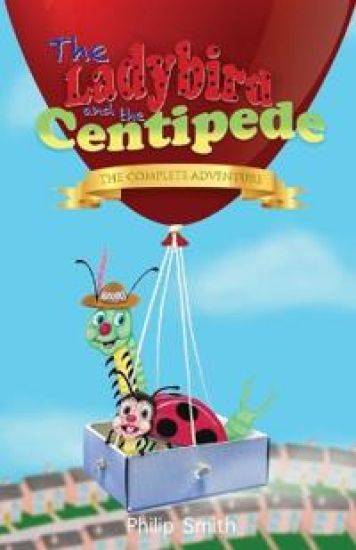
In the vegetable patch at the bottom of Simon's garden lived Ladybird and Centipede. Their dull, day-to-day lives were one day interrupted when they were thrown together into a matchbox tied to a big red balloon.Within seconds, the makeshift hot air balloon Simon had made was soaring high above the rooftops, carrying them far, far away.Join Ladybird and Centipede as they embark on the greatest adventure of their lives, traveling the world, visiting far off magical lands and even outer space, making many new friends long the way.A perfect first novel for beginner readers or as a bed time story for younger listeners.

The horror of the Holocaust lies not only in its brutality but in its scale and logistics; it depended upon the machinery and logic of a rational, industrialised, and empirically organised modern society. The central thesis of this book is that Art Spiegelman’s comics all identify deeply-rooted madness in post-Enlightenment society. Spiegelman maintains, in other words, that the Holocaust was not an aberration, but an inevitable consequence of modernisation. In service of this argument, Smith offers a reading of Spiegelman’s comics, with a particular focus on his three main collections: Breakdowns (1977 and 2008), Maus (1980 and 1991), and In the Shadow of No Towers (2004). He draws upon a taxonomy of terms from comic book scholarship, attempts to theorize madness (including literary portrayals of trauma), and critical works on Holocaust literature.

The History of the Christian Church During the First ten Centuries
Philip Smith
Hutson Street Press
2025
sidottu

The History of the Christian Church During the First ten Centuries
Philip Smith
Hutson Street Press
2025
pokkari
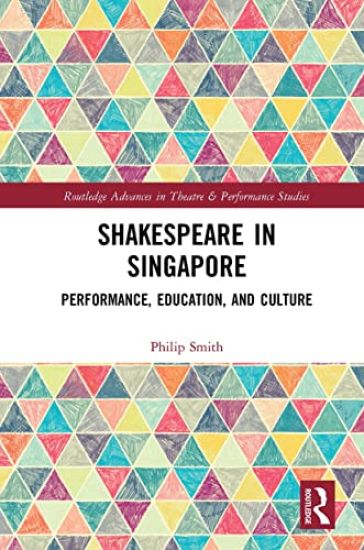
Shakespeare in Singapore provides the first detailed and sustained study of the role of Shakespeare in Singaporean theatre, education, and culture.This book tracks the role and development of Shakespeare in education from the founding of modern Singapore to the present day, drawing on sources such as government and school records, the entire span of Singapore's newspaper archives, playbills, interviews with educators and theatre professionals, and existing academic sources. By uniting the critical interest in Singaporean theatre with the substantial body of scholarship that concerns global Shakespeare, the author overs a broad, yet in-depth, exploration of the ways in which Singaporean approaches to Shakespeare have been shaped by, and respond to, cultural work going on elsewhere in Asia.A vital read for all students and scholars of Shakespeare, Shakespeare in Singapore offers a unique examination of the cultural impact of Shakespeare, beyond its usual footing in the Western world.