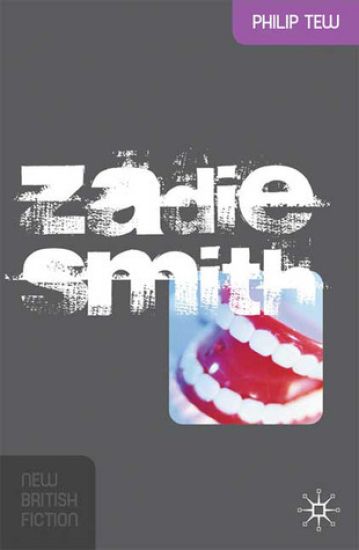
An introduction to the work of Zadie Smith, placing her fiction in a clear historical and theoretical context, and exploring her work in relation to contemporaneity and postcolonialism. Including a timeline of key dates, this guide offers an accessible reading of Smith's work and an overview of its critical reception.
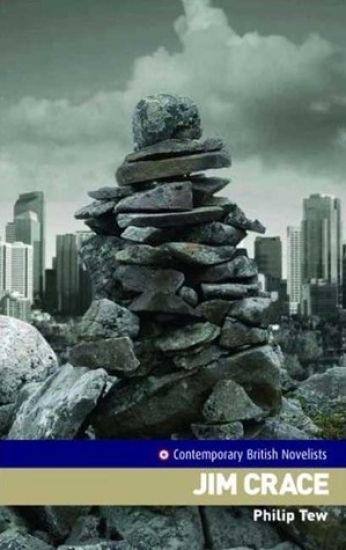
Jim Crace is one of the most imaginative of contemporary novelists. The author of nine novels, he has received great public and intellectual acclaim across the UK, Europe, Australia and the United States. He was awarded the National Book Critics’ Circle Fiction prize (USA) for Being Dead in 2000.Philip Tew's study is the first extended critical examination of Crace's oeuvre and is based on extensive interviews with the novelist, including discussions of his work from his first worldwide bestseller Continent (1986) up to The Pesthouse (2007).Designed especially both for undergraduates of contemporary fiction, and for those who simply enjoy reading the author, Jim Crace is an excellent addition to the Contemporary British Novelists series. Tew's treatment of themes, contexts and narrative strategies illuminates the literary and critical contexts within which Crace operates, situating him as one of the most adventurous and challenging of Britain’s twenty-first century authors.
Jim Crace is one of the most imaginative of contemporary novelists. The author of nine novels, he has received great public and intellectual acclaim across the UK, Europe, Australia and the United States. He was awarded the National Book Critics’ Circle Fiction prize (USA) for Being Dead in 2000.Philip Tew's study is the first extended critical examination of Crace's oeuvre and is based on extensive interviews with the novelist, including discussions of his work from his first worldwide bestseller Continent (1986) up to The Pesthouse (2007).Designed especially both for undergraduates of contemporary fiction, and for those who simply enjoy reading the author, Jim Crace is an excellent addition to the Contemporary British Novelists series. Tew's treatment of themes, contexts and narrative strategies illuminates the literary and critical contexts within which Crace operates, situating him as one of the most adventurous and challenging of Britain’s twenty-first century authors.
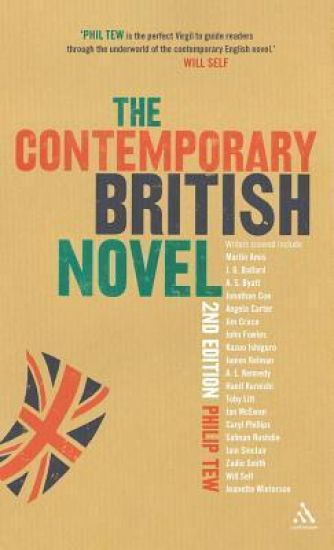
The Contemporary British Novel is a lively, wide-ranging, lucid guide to the key issues in writing in Britain since the mis-1970's, including social change, urban identity, and history and its relationship with the present. Philip Tew provides close readings of key works by a wide range of interesting writers, including both canonical figures and writers neglected in traditional surveys. He argues that contemporary writing should be studied in its own right rather than simply as a continuation of post-war trends and provides a fresh analysis of recent fiction and its historical and cultural contexts in contemporary Britain. Philip Tew is Reader in English and Aesthetics, University of Central England, Birmingham. He is founding Director of the UK Network for Modern Fiction Studies. His publications include B.S. Johnson: A Critical Reading (2001) and Contemporary British Fiction (edited with Rod Mengham and Richard Lane, 2003).
"The Contemporary British Novel" is a lively, wide-ranging guide to the key issues in writing in Britain since the mid-1970s, including social change, gender, sexuality, class, history and ethnicity. Designed to address problems faced by students in the exciting but challenging field of contemporary fiction, the text is organised to focus on major topics including: the changing nature of British identity; the representation of urban identity and urban spaces; class issues including the rise and fall of the middle class; and multiracial identity and hybridity. The second edition includes a new introduction and a new chapter on fiction since the millennium. Every chapter has been revised and now includes an initial overview and recommended reading to offer guidance on further study. It includes readings of novels by: Martin Amis, Pat Barker, A. S. Byatt, Jonathan Coe, Hanif Kureishi, Salman Rushdie, Will Self, Zadie Smith, Jeanette Winterson among others.