Kirjojen hintavertailu. Mukana 11 342 296 kirjaa ja 12 kauppaa.

Kirjahaku

Etsi kirjoja tekijän nimen, kirjan nimen tai ISBN:n perusteella.

9 kirjaa tekijältä Philip Weinstein

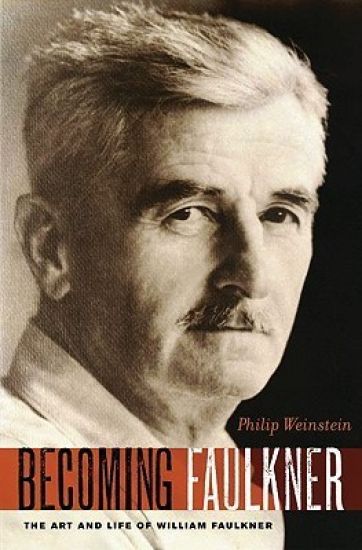
Becoming Faulkner

Becoming Faulkner

Philip Weinstein

Oxford University Press Inc
2010
sidottu
William Faulkner was the greatest American novelist of the twentieth century, yet he lived a life marked by a pervasive sense of failure. Throughout his career, he remained haunted by his inability to master a series of personal and professional challenges: his less-than-heroic military career; the loss of his brother in an airplane crash; a disappointing stint as a Hollywood screenwriter; and a destructive bout with alcoholism. In this imaginative biography, Philip Weinstein--a leading authority on the great novelist--targets Faulkner's embattled sense of self as central to both his life and his work. Weinstein shows how Faulkner's troubled interactions with time, place, and history--with antebellum practices and racial division--take on their fullest meanings in his fiction. Exploring the resonance of his own unpreparedness, Faulkner invented a singular language that captured human consciousness under stress as never before. Becoming Faulkner joins Faulkner's life and art in a bold new way, giving readers a full vantage from which to better understand this twentieth-century literary genius. Weinstein shows how Faulkner's troubled interactions with time, place, and history--with antebellum practices and southern heritage--form a pattern that played out over the course of his entire life. At the same time, these incidents take on their fullest meanings in his fiction. It was in meditating on his failures, his own unreadiness, Weinstein argues, that Faulkner came up with his singular language, one that captured human consciousness under stress as never before. His fruitless striving catapulted American literature to a new level of sophistication. Narrating the events that comprised Faulkner's life, biographers have long struggled to depict his personal complexity, the paradoxes that shaped his decisions and dogged his relationships. But without a consideration of the writing as well, the troubles in the life fail to reveal their deeper resonance. By skillfully analyzing the work while tracing the events, Weinstein achieves a full portrait, revealing struggles that animate his life and shadows that complicate his work. Becoming Faulkner thus conjoins Faulkner's life and art in a bold new way, giving readers a full vantage from which to better understand this twentieth-century literary genius.
Becoming Faulkner

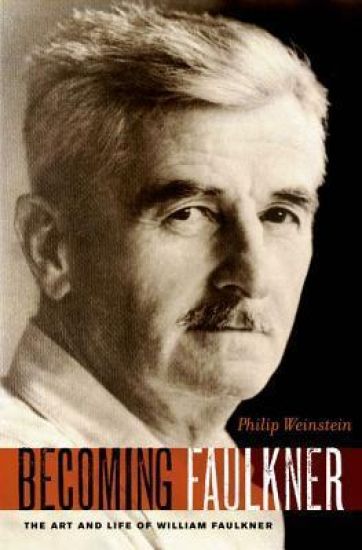
Becoming Faulkner

Philip Weinstein

Oxford University Press Inc
2012
nidottu
William Faulkner was the greatest American novelist of the twentieth century, yet he lived a life marked by a pervasive sense of failure. Throughout his career, he remained haunted by his inability to master a series of personal and professional challenges: his less-than-heroic military career; the loss of his brother in an airplane crash; a disappointing stint as a Hollywood screenwriter; and a destructive bout with alcoholism. In this imaginative biography, Philip Weinstein--a leading authority on the great novelist--targets Faulkner's embattled sense of self as central to both his life and his work. Weinstein shows how Faulkner's troubled interactions with time, place, and history--with antebellum practices and racial division--take on their fullest meanings in his fiction. Exploring the resonance of his own unpreparedness, Faulkner invented a singular language that captured human consciousness under stress as never before. Becoming Faulkner joins Faulkner's life and art in a bold new way, giving readers a full vantage from which to better understand this twentieth-century literary genius. Weinstein shows how Faulkner's troubled interactions with time, place, and history--with antebellum practices and southern heritage--form a pattern that played out over the course of his entire life. At the same time, these incidents take on their fullest meanings in his fiction. It was in meditating on his failures, his own unreadiness, Weinstein argues, that Faulkner came up with his singular language, one that captured human consciousness under stress as never before. His fruitless striving catapulted American literature to a new level of sophistication. Narrating the events that comprised Faulkner's life, biographers have long struggled to depict his personal complexity, the paradoxes that shaped his decisions and dogged his relationships. But without a consideration of the writing as well, the troubles in the life fail to reveal their deeper resonance. By skillfully analyzing the work while tracing the events, Weinstein achieves a full portrait, revealing struggles that animate his life and shadows that complicate his work. Becoming Faulkner thus conjoins Faulkner's life and art in a bold new way, giving readers a full vantage from which to better understand this twentieth-century literary genius.
What Else but Love?

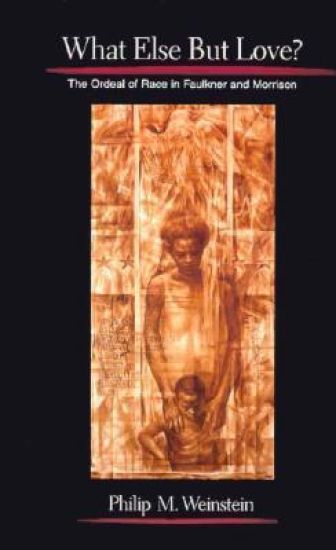
What Else but Love?

Philip Weinstein

Columbia University Press
1996
pokkari
Weinstein investigates the stories blacks and whites, men and women, tell about each other through the work of two quintessential American novelists: William Faulkner and and Toni Morrison. Exploring deep-rooted understandings of race and gender and describing how differently their "Americanness" resonates in both writers' works, What Else But Love? considers the legacy of slavery in a variety of ways, from the meaning of mammies and mothers to the question of black manhood.
What Else but Love?

What Else but Love?

Philip Weinstein

Columbia University Press
1996
sidottu
Weinstein investigates the stories blacks and whites, men and women, tell about each other through the work of two quintessential American novelists: William Faulkner and and Toni Morrison. Exploring deep-rooted understandings of race and gender and describing how differently their "Americanness" resonates in both writers' works, What Else But Love? considers the legacy of slavery in a variety of ways, from the meaning of mammies and mothers to the question of black manhood.
Unknowing

Unknowing

Philip Weinstein

Cornell University Press
2005
pokkari
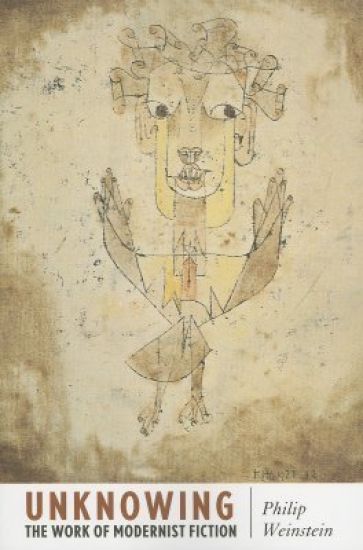
Philip Weinstein explores the modernist commitment to "unknowing" by addressing the work of three supreme experimental writers: Franz Kafka, Marcel Proust, and William Faulkner. In their novels, the narrative props that support the drama of coming to know are refused. When space turns uncanny rather than lawful, when time ceases to be linear and progressive, objects and others become unfamiliar. So does the subject seeking to know them. Weinstein argues that modernist texts work, by way of surprise and arrest, to subvert the familiarity and narrative progression intrinsic to realist fiction. Rather than staging the drama of coming to know, they stage the drama of coming to unknow. The signature move of modernism is shock, just as resolution is the trademark of realism.Kafka, Proust, and Faulkner wrought their most compelling experimental effects by undermining an earlier Enlightenment project of knowing. Weinstein draws on major Enlightenment thinkers to identify constituent components of the narrative of "coming to know"—the progressive narrative underwriting two centuries of Western realist fiction. The book proceeds by framing modernist unknowing between prior practices of realist knowing, on the one hand, and, on the other, certain later practices—postmodern and postcolonial—that move beyond knowing altogether. In so doing, Weinstein proposes a metahistory of the Western novel, from Daniel Defoe to Toni Morrison.
Jonathan Franzen

Jonathan Franzen

Philip Weinstein

Bloomsbury Academic USA
2015
sidottu
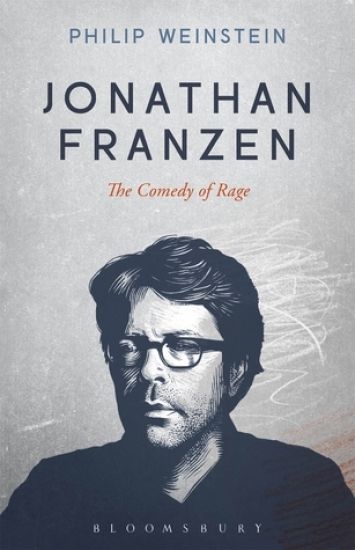
Jonathan Franzen: The Comedy of Rage is the first critical biography of one of today’s most important novelists. Drawing on unpublished emails and both published and private interviews, Philip Weinstein conveys the feel and heft of Franzen’s voice as he ponders the purposes and problems of his life and art, from his earliest fiction to his most recent novel, Purity.Franzen’s work raises major questions about the possibilities of contemporary fiction: how does one appeal to a wide audience of mainstream readers, on the one hand, while persuading connoisseurs, on the other, that one’s fiction has staying power, is high art? More acutely, how did Franzen move from the rage that animates his first two novels to the more generous comic stance of the later novels on which his reputation rests?Wrestling with these questions, Jonathan Franzen: The Comedy of Rage unpacks the becoming of Franzen as a person and a writer—from his ultra-sensitive Midwestern childhood, through his heady years at Swarthmore College, his marriage, and the alienating decade of the 1990s, up to his spectacular ascent and assimilation into pop culture as one of the literary figures of his generation. Weinstein joins biography and criticism in ways that fully respect their differences, but that also grant that the work comes, however unpredictably, out of the life.
Jonathan Franzen

Jonathan Franzen

Philip Weinstein

Bloomsbury Academic USA
2016
nidottu
Jonathan Franzen: The Comedy of Rage is the first critical biography of one of today’s most important novelists. Drawing on unpublished emails and both published and private interviews, Philip Weinstein conveys the feel and heft of Franzen’s voice as he ponders the purposes and problems of his life and art, from his earliest fiction to his most recent novel, Purity.Franzen’s work raises major questions about the possibilities of contemporary fiction: how does one appeal to a wide audience of mainstream readers, on the one hand, while persuading connoisseurs, on the other, that one’s fiction has staying power, is high art? More acutely, how did Franzen move from the rage that animates his first two novels to the more generous comic stance of the later novels on which his reputation rests?Wrestling with these questions, Jonathan Franzen: The Comedy of Rage unpacks the becoming of Franzen as a person and a writer—from his ultra-sensitive Midwestern childhood, through his heady years at Swarthmore College, his marriage, and the alienating decade of the 1990s, up to his spectacular ascent and assimilation into pop culture as one of the literary figures of his generation. Weinstein joins biography and criticism in ways that fully respect their differences, but that also grant that the work comes, however unpredictably, out of the life.
Time's Bounty

Time's Bounty

Philip Weinstein

DAVID R. GODINE PUBLISHER INC
2025
sidottu
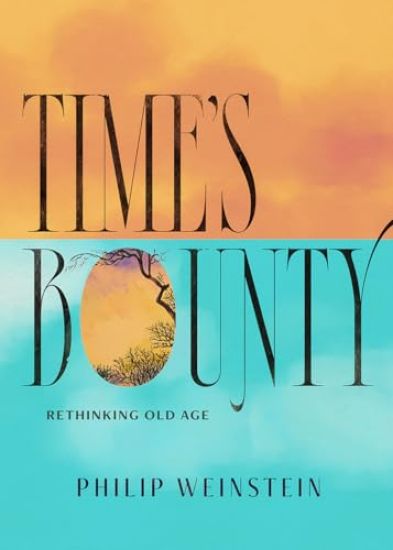
Change your perspective about aging. Here is a bracing view of the surprises that lie ahead, as age enkindles in us new expressions of life. Our culture isn’t kind towards age. The dominant drive is to celebrate youth, and striving for more and more of everything, while age, we’re told, brings only depletion and loss. Even as Americans live longer, most consider old age with dread. It’s time to challenge these assumptions. As author Philip Weinstein writes, “Old-age situations, assumed to announce the end-of-the-road, actually generate fresh life-moves. As we age, we tend to become ‘lighter’ in more senses than one....Indeed, we may find ourselves catapulted into late-stage ‘adventures’ the young never dream of.” Time’s Bounty offers a view of age that differs greatly from our preconceptions—surprising, emancipating, sometimes even joyful. In five brief chapters, the author takes us from the generative discoveries that age occasions to the freedom that comes in life’s late chapters, when no company or institution or cause any longer owns us. At last, we are our own, in ways we could not imagine when younger. Weinstein, a retired professor of English, draws not only on his own insights but on the insights found in writers he taught for decades: Shakespeare, Yeats, Proust, Faulkner, Eliot, Beckett, and others. Brief forays into their imaginative works add further illumination to the author’s own discoveries regarding the dramas—both the trials and the gifts—of old age. Whatever your own life’s season, whether you’re still in the Spring or deep into life’s Winter, Time’s Bounty will change the way you think about age.