Kirjojen hintavertailu. Mukana 11 627 467 kirjaa ja 12 kauppaa.

Kirjahaku

Etsi kirjoja tekijän nimen, kirjan nimen tai ISBN:n perusteella.

6 kirjaa tekijältä Philip Williamson

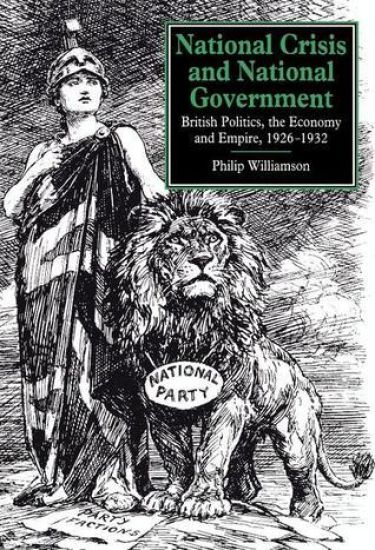
National Crisis and National Government

National Crisis and National Government

Philip Williamson

Cambridge University Press
1992
sidottu
From 1926 Britain fell into a condition of deep national crisis, which seemed to threaten its domestic stability and international power. By 1932 the effort to contain these problems had transformed British politics and policy. Strains produced by three-party politics, economic recession and imperial difficulties resulted during 1931 in such a severe financial and political crisis that the Labour government collapsed and Conservative, Liberal and some Labour leaders joined together in a National government. Despite large public expenditure cuts and tax increases, and despite devaluation of sterling and a new crisis in the Indian Empire, this government obtained the greatest British election victory of modern times. This book is the first to examine all aspects of the crisis together and in depth, using an extensive range of official, institutional and personal papers.
Stanley Baldwin

Stanley Baldwin

Philip Williamson

Cambridge University Press
1999
sidottu
Stanley Baldwin (1867–1947) is one of the most significant modern British politicians, but also one of the most controversial and puzzling. As Conservative leader and three times prime minister, Baldwin presided over the beginning of his party's long twentieth-century dominance. He did so in new and difficult conditions: the onset of modern democratic politics, the rise of Labour, chronic economic depression, the General Strike, persistent newspaper attacks, imperial discontent, the Abdication, and the threats from Mussolini and Hitler. This book provides an understanding of Baldwin's career, including a serious analysis of the moral and intellectual influences of his early life. Its main concerns are the investigation of a Conservative mind, and its communication with the various audiences that constituted the political nation. This is not a conventional biography, but rather an examination of the nature of political leadership, Conservative politics and 'national values'.
Stanley Baldwin

Stanley Baldwin

Philip Williamson

Cambridge University Press
2007
pokkari
Stanley Baldwin (1867–1947) is one of the most significant modern British politicians, but also one of the most controversial and puzzling. As Conservative leader and three times prime minister, Baldwin presided over the beginning of his party's long twentieth-century dominance. He did so in new and difficult conditions: the onset of modern democratic politics, the rise of Labour, chronic economic depression, the General Strike, persistent newspaper attacks, imperial discontent, the Abdication, and the threats from Mussolini and Hitler. This book provides an understanding of Baldwin's career, including a serious analysis of the moral and intellectual influences of his early life. Its main concerns are the investigation of a Conservative mind, and its communication with the various audiences that constituted the political nation. This is not a conventional biography, but rather an examination of the nature of political leadership, Conservative politics and 'national values'.
National Crisis and National Government

National Crisis and National Government

Philip Williamson

Cambridge University Press
2003
pokkari
From 1926 Britain fell into a condition of deep national crisis, which seemed to threaten its domestic stability and international power. By 1932 the effort to contain these problems had transformed British politics and policy. Strains produced by three-party politics, economic recession and imperial difficulties resulted during 1931 in such a severe financial and political crisis that the Labour government collapsed and Conservative, Liberal and some Labour leaders joined together in a National government. Despite large public expenditure cuts and tax increases, and despite devaluation of sterling and a new crisis in the Indian Empire, this government obtained the greatest British election victory of modern times. This book is the first to examine all aspects of the crisis together and in depth, using an extensive range of official, institutional and personal papers.
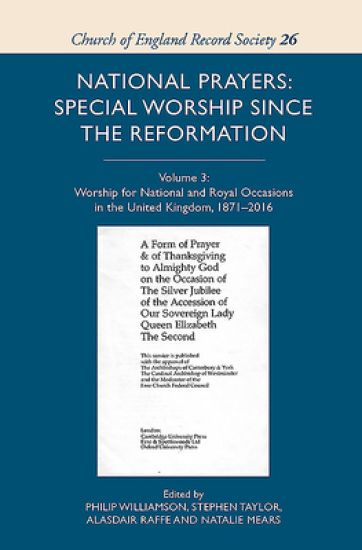
National Prayers: Special Worship since the Reformation
The third of four volumes, containing the edited texts, commentaries and source notes for each of the nearly nine hundred occasions of special worship including the development of national days of prayer during the two world wars,and a proliferation of nation-wide services for royal occasions. Since the sixteenth century, the governments and established churches of the British Isles have summoned the nation to special acts of public worship during periods of anxiety and crisis, at times of celebration, or for annual commemoration and remembrance. These special prayers, special days of worship and anniversary commemorations were national events, reaching into every parish in England and Wales, in Scotland, and in Ireland. They had considerable religious, ecclesiastical, political, ideological, moral and social significance, and they produced important texts: proclamations, council orders, addresses and - in England and Wales, and in Ireland - prayers or complete liturgies which for specified periods supplemented or replaced the services in the Book of Common Prayer. Many of these acts of special worship and most of the texts have escaped historical notice. National Prayers: Special Worship since the Reformation, in four volumes, provides the edited texts, commentaries and source notes for each of the nearly nine hundred occasions of special worship, and for each of the annual commemorations. The third volume, Worship for National and Royal Occasions in the United Kingdom 1871-2016, reveals the considerable changes in special worship during modern times. These include new subjects for special prayers, many services for royal events, wartime national days of prayer, and developing co-operation among leaders of the main British churches, together with transformations in the styles of worship in both the Church of England and the Church of Scotland
National Prayers: Special Worship since the Reformation
The first of four volumes, containing the edited texts, commentaries and source notes for each of the nearly nine hundred occasions of special worship and for each of the annual commemorations in Engand and Wales, Scotland, and Ireland. Since the sixteenth century, the governments and established churches of the British Isles have summoned the nation to special acts of public worship during periods of anxiety and crisis, at times of celebration or for annual commemoration and remembrance. These special prayers, special days of worship and anniversary commemorations were national events, reaching into every parish in England and Wales, in Scotland and in Ireland. They had considerable religious, ecclesiastical, political, ideological, moral and social significance, and they produced important texts: proclamations, council orders, addresses and - in England, Wales and Ireland - prayers or complete liturgies which for specified periods supplemented or replaced the services in the Book of Common Prayer. Many of these acts of special worship and most of the texts have escaped historical notice. National Prayers. Special Worship since the Reformation, in four volumes, provides the edited texts, commentaries and source notes for each of the nearly nine hundred occasions of special worship and for each of the annual commemorations. The first volume, SpecialPrayers, Fasts and Thanksgivings in the British Isles 1533-1688, has an extended Introduction to the four volumes and a consolidated list of all the occasions of special worship. It contains texts and commentaries which revealthe origins of special occasions of national worship during the Reformation in both England and Scotland, the development of fast days and wartime prayers later in the sixteenth century, and what we know about the origins of special national worship in Ireland. It also shows how special worship became a recurrent focus and expression of religion and political contention during the seventeenth century. Edited by Natalie Mears, Alasdair Raffe, Stephen Taylor and Philip Williamson (with Lucy Bates).