Kirjahaku
Etsi kirjoja tekijän nimen, kirjan nimen tai ISBN:n perusteella.
31 kirjaa tekijältä Philipp Blom

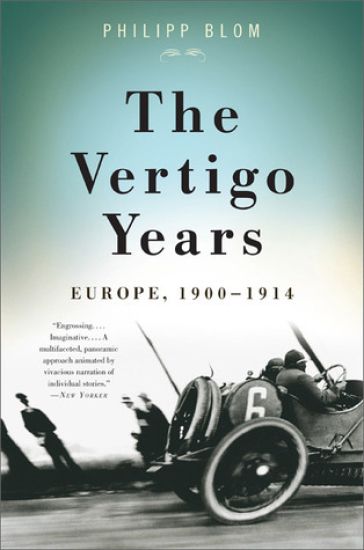
Europe, 1900-1914: a world adrift, a pulsating era of creativity and contradictions. The major topics of the day: terrorism, globalization, immigration, consumerism, the collapse of moral values, and the rivalry of superpowers. The twentieth century was not born in the trenches of the Somme or Passchendaele,but rather in the fifteen vertiginous years preceding World War I. In this short span of time, a new world order was emerging in ultimately tragic contradiction to the old. These were the years in which the political and personal repercussions of the Industrial Revolution were felt worldwide: Cities grew like never before as people fled the countryside and their traditional identities science created new possibilities as well as nightmares education changed the outlook of millions of people mass-produced items transformed daily life industrial labourers demanded a share of political power and women sought to change their place in society,as well as the very fabric of sexual relations. From the tremendous hope for a new century embodied in the 1900 World's Fair in Paris to the shattering assassination of a Habsburg archduke in Sarajevo in 1914, historian Philipp Blom chronicles this extraordinary epoch year by year. Prime Ministers and peasants, anarchists and actresses, scientists and psychopaths intermingle on the stage of a new century in this portrait of an opulent, unstable age on the brink of disaster. Beautifully written and replete with deftly told anecdotes, The Vertigo Years brings the wonders, horrors, and fears of the early twentieth century vividly to life.
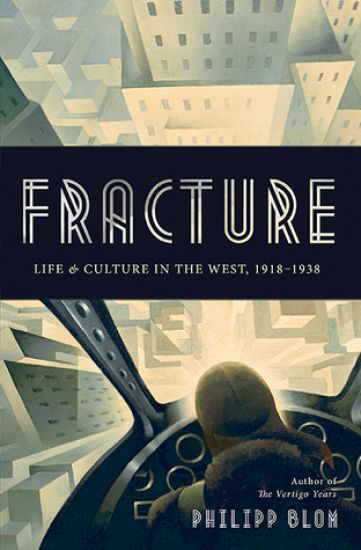
When the Great War ended in 1918, the West was broken. Religious faith, patriotism, and the belief in human progress had all been called into question by the mass carnage experienced by both sides. Shell shocked and traumatized, the West faced a world it no longer recognized: the old order had collapsed, replaced by an age of machines. The world hurtled forward on gears and crankshafts, and terrifying new ideologies arose from the wreckage of past belief.In Fracture , critically acclaimed historian Philipp Blom argues that in the aftermath of World War I, citizens of the West directed their energies inwards, launching into hedonistic, aesthetic, and intellectual adventures of self-discovery. It was a period of both bitter disillusionment and visionary progress. From Surrealism to Oswald Spengler's The Decline of the West from Fritz Lang's Metropolis to theoretical physics, and from Art Deco to Jazz and the Charleston dance, artists, scientists, and philosophers grappled with the question of how to live and what to believe in a broken age. Morbid symptoms emerged simultaneously from the decay of World War I: progress and innovation were everywhere met with increasing racism and xenophobia. America closed its borders to European refugees and turned away from the desperate poverty caused by the Great Depression. On both sides of the Atlantic, disenchanted voters flocked to Communism and fascism, forming political parties based on violence and revenge that presaged the horror of a new World War.Vividly recreating this era of unparalleled ambition, artistry, and innovation, Blom captures the seismic shifts that defined the interwar period and continue to shape our world today.
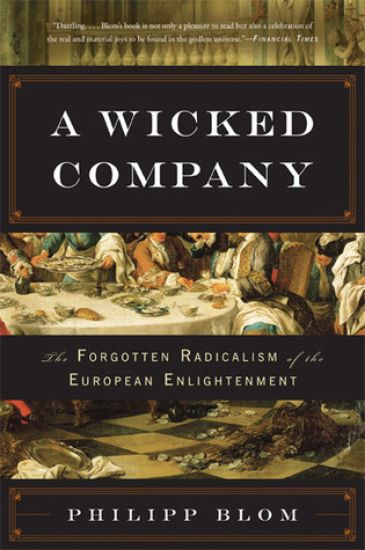
A Wicked Company tells the remarkable story of Baron Thierry Holbach's Parisian salon, an epicentre of freethinking that brought together the greatest minds of the 18th century. Over wine-soaked dinner parties, the finest intellectuals of the Western world,figures such as Denis Diderot, Jean-Jacques Rousseau, David Hume, Adam Smith, Horace Walpole, and Benjamin Franklin,matched wits and scandalized one another with their own ever-more-provocative ideas. Writers of genius all, full of wit and courage (but also personal contradictions, doubts, conflicts of conscience, and their fair share of open arguments and love affairs), this group of friends embodied an astonishing radicalism in European thought, so uncompromising and bold that its bracing, liberating, humanist vision has still not been fully realized. As acclaimed historian Philipp Blom shows, these thinkers' analysis of our culture remains as valid as it was then, and has lost little of its potential to shock,or to force us to confront with new eyes debates about our society and its future.
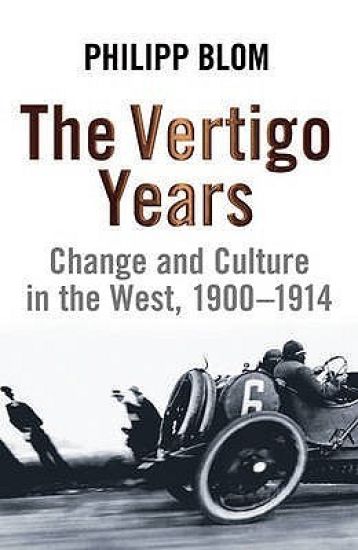
A panorama of Europe, 1900-1914, describing the cultural, economic and political life before the First World War.
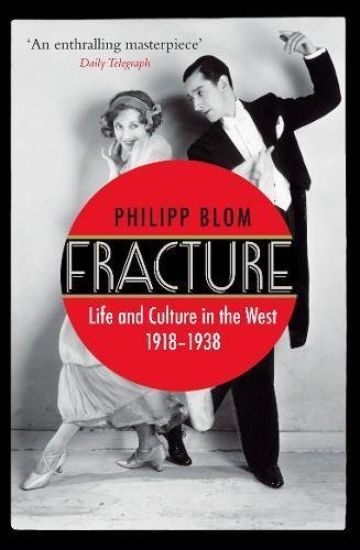
When the Great War ended in 1918, the West was broken. Religious faith, patriotism and the belief in human progress had all been called into question by the mass carnage experienced by both sides. Shell shocked and traumatized, the West faced a world it no longer recognized: the old order had collapsed, replaced by an age of machines. The world hurtled forward on gears and crankshafts, and terrifying new ideologies arose from the wreckage of past belief. In Fracture, critically acclaimed historian Philipp Blom argues that in the aftermath of the First World War, citizens of the West directed their energies inwards, launching into hedonistic, aesthetic and intellectual adventures of self-discovery. It was a period of both bitter disillusionment and visionary progress. From Surrealism to Oswald Spengler's The Decline of the West; from Fritz Lang's Metropolis to theoretical physics, and from Art Deco to Jazz and the Charleston dance, artists, scientists and philosophers grappled with the question of how to live and what to believe in a broken age. Morbid symptoms emerged simultaneously from the decay of the First World War: progress and innovation were everywhere met with increasing racism and xenophobia. America closed its borders to European refugees and turned away from the desperate poverty caused by the Great Depression. On both sides of the Atlantic, disenchanted voters flocked to Communism and fascism, forming political parties based on violence and revenge that presaged the horror of a new World War. Vividly recreating this era of unparalleled ambition, artistry and innovation, Blom captures the seismic shifts that defined the interwar period and continue to shape our world today.
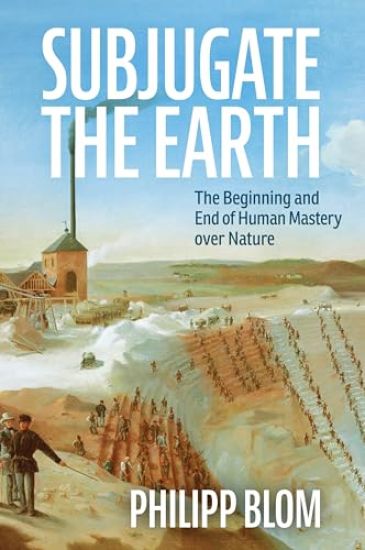
Subjugate the Earth traces the biography of a strange idea: the idea that human beings can subdue nature and rule over it. Born in Mesopotamia at the dawn of civilization, the idea of subjugating the Earth was included in the Bible, reached Europe through Christianity, and spread to the entire world through colonialism. The Enlightenment gave a scientific appearance to the ambition of controlling nature but did not change the ambition itself. Yet every birth presages a death. Only with the climate crisis has it become apparent that the subjugation of nature must be a self-defeating ambition, because it alters and deregulates natural systems which humans depend on for their survival, precisely because they are part of nature and not separate from it. Subjugating the Earth is an idea that is dying around us. The polycrisis threatening to engulf humanity is inextricably linked to how humans see themselves and their relationship with nature. Based on developments in the natural sciences, a new understanding of this relationship looks not at individual phenomena but at systems, connections and entanglements between humans and other manifestations of nature. Is it possible to build a new understanding of humanity in nature by turning the traditional vision of free, rational individuals on its head and seeing humans as fascinating, irrational and system-dependent beings within the vast system of nature? Interlacing historical episodes, individual life stories, works of art and scientific discoveries, Subjugate the Earth tells the story of the rise and fall of an idea that has shaped our world, and weaves a rich tapestry that is as surprising as it is enriching.
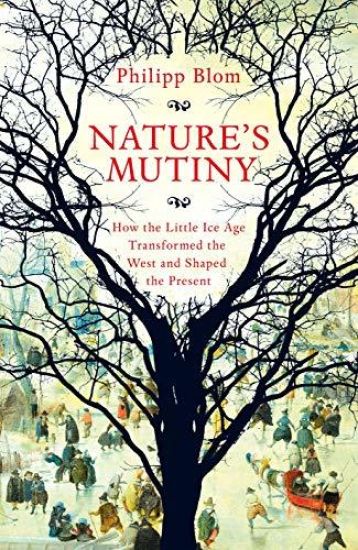
Blom’s hypothesis is forceful, and has the potential to be both frightening and, if you hold it up to the light at just the right angle, a little optimistic. The idea can be put like this: climate change changes everything' John Lanchester, New Yorker In this innovative and compelling work of environmental history, Philipp Blom chronicles the great climate crisis of the 1600s, a crisis that would transform the entire social and political fabric of Europe. While hints of a crisis appeared as early as the 1570s, by the end of the sixteenth century the temperature plummeted so drastically that Mediterranean harbours were covered with ice, birds literally dropped out of the sky, and ‘frost fairs’ were erected on a frozen Thames – with kiosks, taverns, and even brothels that become a semi-permanent part of the city. Recounting the deep legacy and sweeping consequences of this ‘Little Ice Age’, acclaimed historian Philipp Blom reveals how the European landscape had ineradicably changed by the mid-seventeenth century. While apocalyptic weather patterns destroyed entire harvests and incited mass migrations, Blom brilliantly shows how they also gave rise to the growth of European cities, the appearance of early capitalism, and the vigorous stirrings of the Enlightenment. A sweeping examination of how a society responds to profound and unexpected change, Nature’s Mutiny will transform the way we think about climate change in the twenty-first century and beyond.
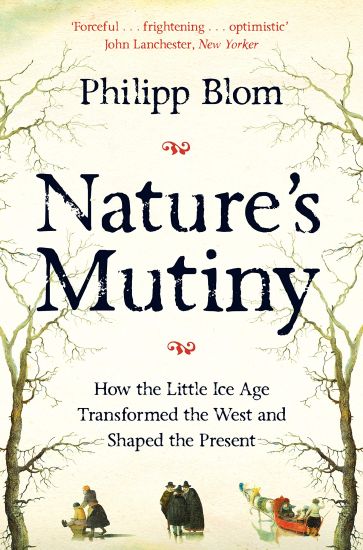
Europe where the sun dares scarce appear For freezing meteors and congealed cold.' - Christopher Marlowe In this innovative and compelling work of environmental history, Philipp Blom chronicles the great climate crisis of the 1600s, a crisis that would transform the entire social and political fabric of Europe. While hints of a crisis appeared as early as the 1570s, by the end of the sixteenth century the temperature plummeted so drastically that Mediterranean harbours were covered with ice, birds literally dropped out of the sky, and ‘frost fairs’ were erected on a frozen Thames – with kiosks, taverns, and even brothels that become a semi-permanent part of the city. Recounting the deep legacy and sweeping consequences of this ‘Little Ice Age’, acclaimed historian Philipp Blom reveals how the European landscape had ineradicably changed by the mid-seventeenth century. While apocalyptic weather patterns destroyed entire harvests and incited mass migrations, Blom brilliantly shows how they also gave rise to the growth of European cities, the appearance of early capitalism, and the vigorous stirrings of the Enlightenment. A sweeping examination of how a society responds to profound and unexpected change, Nature’s Mutiny will transform the way we think about climate change in the twenty-first century and beyond.
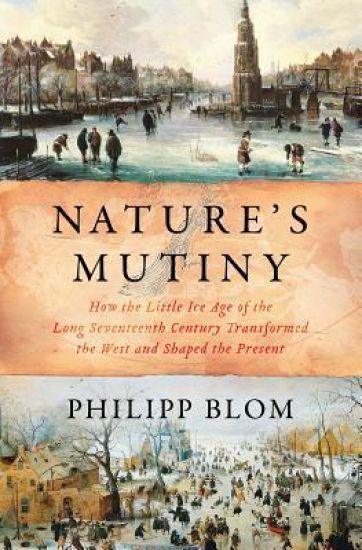
Although hints of a crisis appeared as early as the 1570s, the temperature by the end of the sixteenth century plummeted so drastically that Mediterranean harbors were covered with ice, birds literally dropped out of the sky, and "frost fairs" were erected on a frozen Thames-with kiosks, taverns, and even brothels that become a semi-permanent part of the city. Recounting the deep legacy and far-ranging consequences of this "Little Ice Age," acclaimed historian Philipp Blom reveals how the European landscape had suddenly, but ineradicably, changed by the mid-seventeenth century. While apocalyptic weather patterns destroyed entire harvests and incited mass migrations, they gave rise to the growth of European cities, the emergence of early capitalism, and the vigorous stirrings of the Enlightenment. A timely examination of how a society responds to profound and unexpected change, Nature's Mutiny will transform the way we think about climate change in the twenty-first century and beyond.
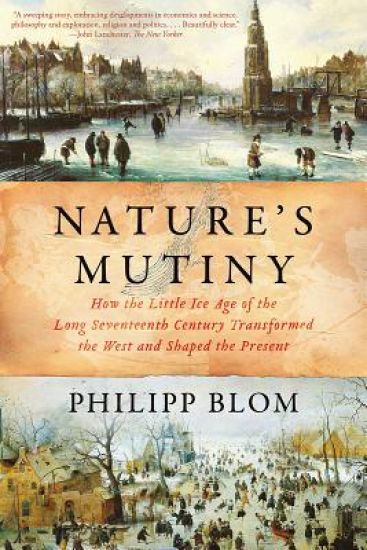
Nature's Mutiny: How the Little Ice Age of the Long Seventeenth Century Transformed the West and Shaped the Present
Philipp Blom
Liveright Publishing Corporation
2020
nidottu
Hailed as an "arresting" (Lawrence Klepp, New Criterion) account, Nature's Mutiny chronicles the great climate crisis of the seventeenth century that totally transformed Europe's social and political fabric. Best-selling historian Philipp Blom reveals how a new, radically altered Europe emerged out of the "Little Ice Age" that diminished crop yields across the continent, forcing thousands to flee starvation in the countryside to burgeoning urban centers, and even froze London's Thames, upon which British citizens erected semipermanent frost fairs with bustling kiosks, taverns, and brothels. Highlighting how politics and culture also changed drastically, Blom evokes the era's most influential artists and thinkers who imagined groundbreaking worldviews to cope with environmental cataclysm.As we face a climate crisis of our own, "Blom's prodigious synthesis delivers a sharply-focused lesson for the twenty-first century: the profound effects of just a few degrees of climate change can alter the course of civilization, forever" (Laurence A. Marschall, Natural History).
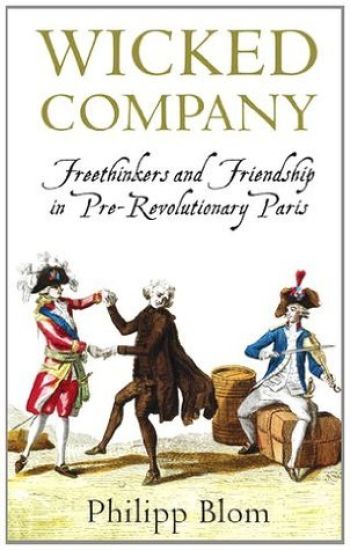
Dazzling recreation of the world of radical free-thinkers in 18th-century France.