
Kirjahaku
Etsi kirjoja tekijän nimen, kirjan nimen tai ISBN:n perusteella.
5 kirjaa tekijältä Philippe Dagen
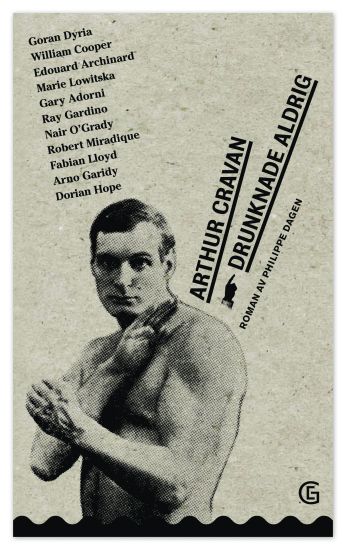
Arthur Cravan drunknade aldrig är den självbiografi som Fabian Avenarius Lloyd, alias Arthur Cravan, född 1887 i Lausanne, legendarisk poet, boxare, äventyrare och nevö till Oscar Wilde, på gamla dar kunde ha skrivit om han inte, vilket ryktet hävdar, redan 1918 hade drunknat utanför Salina Cruz på Mexikos västkust. Översättning: Stina & Olle Orrje.Philippe Dagen, född 1959, räknas som en av Frankrikes främsta konstkritiker, bl.a. på Le Monde. Han har skrivit en rad essäer och romaner. Med Arthur Cravan drunknade aldrig (2006) introduceras Philippe Dagen på svenska.

Art critic and scholar Philippe Dagen approaches Picasso as a subject through a series of questions. What does it mean to be an artist in the twentieth century? What does it mean to be an artist in the time of newspapers and museums, in a time when the art market has expanded to reach the entire western world? Is modern civilization so different that it gives an artist a new attitude and causes him to redefine his role for the public, the market, and, therefore, to invent entirely new artistic practices? Picasso is considered here in view of this last, and most probable, hypothesis. He is a product of his situation and time, in the broadest sense of the term. Refusing to confine himself to his studio or the small artistic community in Paris, Picasso responded forcefully to world affairs, giving pictoral and sculptural form to the passions and events he witnessed around him. This is a thoroughly modern Picasso, constantly and consciously confronting the modernity of the world. Dagen's original exploration of his techniques, materials, and images shows how the artist both allowed modernity to in?ltrate his work and at the same time to react against it. Picasso moved between acceptance and rejection, a perpetual confrontation that is, perhaps, the most satisfying explanation of his will to create change that drove him to leave the most varied and diverse body of work in the entire history of art.
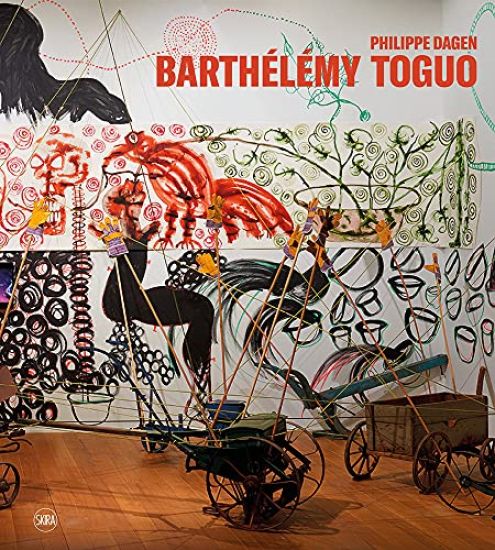
The exhibition aims to show the relationships that exist today and since the end of the 20th century between contemporary and ancient African arts. The notion of primitivism as it was enunciated in 1984 in the exhibition Primitivism at MoMA, which locked the arts of Africa into a subjection to the idea of modern Western art and into the past is definitively over: ideas and forms specific to these arts are now more alive than ever. The catalogue will present the Work of the 20 artists exhibited, together with sketches and photographies to help understand the scope of their work and to go further. It will contain individual interviews which each artist.The exhibition aims to show the relationships that exist today and since the end of the 20th century between contemporary and ancient African arts. The notion of primitivism as it was enunciated in 1984 in the exhibition Primitivism at MoMA, which locked the arts of Africa into a subjection to the idea of modern Western art and into the past is definitively over: ideas and forms specific to these arts are now more alive than ever. The catalog will present the Work of the 20 artists exhibited, together with sketches and photographies to help understand the scope of their work and to go further. It will contain individual interviews which each artist.
Ayman Baalbaki
Paul Ardenne; Philippe Dagen; Jean-Louis Pradel; Thierry Savatier; Nayla Tamraz
Editions Norma
2022
nidottu
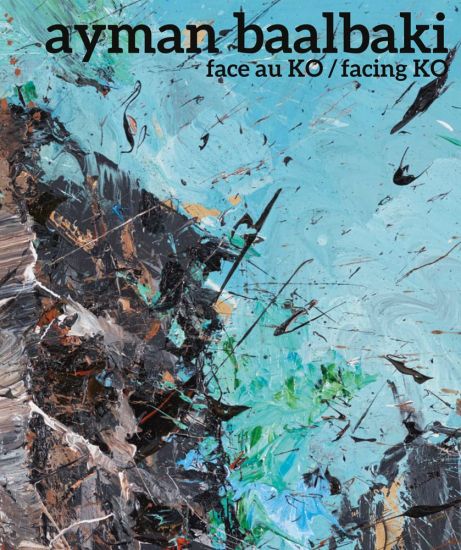
Chosen for the 59th Venice Biennale, to represent contemporary creation at the Lebanese pavilion Ayman Baalbaki is a Lebanese artist born in Beirut in 1975. He first trained at the Institute of Fine Arts of the university Lebanese school in Beirut, then at the National School of Decorative Arts in Paris. Five years after his arrival in France, he received the silver medal in painting at the Francophone Games and then participated in several exhibitions worldwide. Lebanon, France, Great Britain, Argentina, Egypt and Niger are all countries that welcome the works of the artist. His productions of the last 10 years have been compiled through this unpublished work, published in French, English and Arabic. The authors endeavour to decipher his paintings and installations, crossed by societal issues specific to Lebanon: war, abortive revolt, political and financial bankruptcy, the tragedy of the port of Beirut or even pandemic. The artist paints anonymous portraits of his contemporaries, which have today become symbols of the Middle East. It represents the city, its buildings, erected, but also in ruins. His art is vibrant, dynamic and textured. Text in English, French and Arabic.