Kirjojen hintavertailu. Mukana 11 342 296 kirjaa ja 12 kauppaa.

Kirjahaku

Etsi kirjoja tekijän nimen, kirjan nimen tai ISBN:n perusteella.

10 kirjaa tekijältä Philippe Rochat

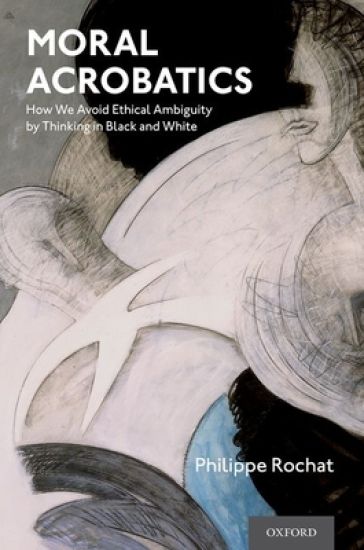
Moral Acrobatics

Moral Acrobatics

Philippe Rochat

Oxford University Press Inc
2021
sidottu
Although it is difficult for us to fathom, pure monsters do not exist. Terrorists and other serial killers massacre innocent people, yet are perfectly capable of loving their own parents, neighbors, and children. Hitler, sending millions to their death, was contemptuous of meat eaters and a strong advocate of animal welfare. How do we reconcile such moral ambiguities? Do they capture something deep about how we build values? As a developmental scientist, Philippe Rochat explores this possibility, proposing that as members of a uniquely symbolic and self-conscious species aware of its own mortality, we develop uncanny abilities toward lying and self-deception. We are deeply categorical and compartmentalized in our views of the world. We imagine essence where there is none. We juggle double standards and manage contradictory values, clustering our existence depending on context and situations, whether we deal in relation to close kin, colleagues, strangers, lovers, or enemies. We live within multiple, interchangeable moral spheres. This social-contextual determination of the moral domain is the source of moral ambiguities and blatant contradictions we all need to own up to.
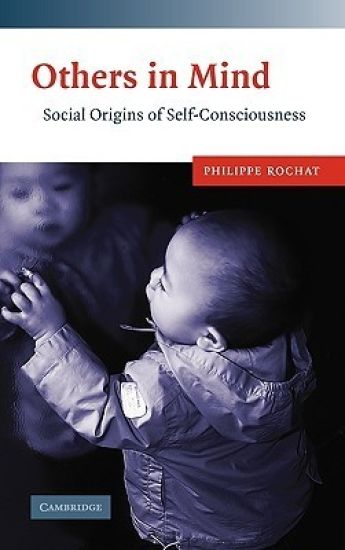
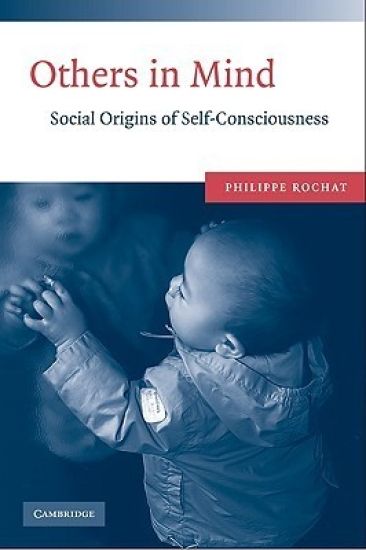
Others in Mind

Others in Mind

Philippe Rochat

Cambridge University Press
2009
sidottu
In this book, Philippe Rochat explores self-consciousness, how it originates and how it shapes our lives, arguably the most important and revealing of all psychological problems. Why are we so prone to guilt and embarrassment? Why do we care so much about how others see us, about our reputation? What are the origins of such afflictions? Rochat argues that it is because we are members of a species that evolved the unique propensity to reflect upon themselves as an object of thoughts; an object of thoughts that is potentially evaluated by others. Based on empirical observations, this is a book of ideas, tapping into both developmental and anthropological phenomena and guided by strong existential intuitions regarding the human condition. At the core of these intuitions, there is the idea that human psychic life is predominantly determined by what we imagine others perceive of us.
Others in Mind

Others in Mind

Philippe Rochat

Cambridge University Press
2009
pokkari
In this book, Philippe Rochat explores self-consciousness, how it originates and how it shapes our lives, arguably the most important and revealing of all psychological problems. Why are we so prone to guilt and embarrassment? Why do we care so much about how others see us, about our reputation? What are the origins of such afflictions? Rochat argues that it is because we are members of a species that evolved the unique propensity to reflect upon themselves as an object of thoughts; an object of thoughts that is potentially evaluated by others. Based on empirical observations, this is a book of ideas, tapping into both developmental and anthropological phenomena and guided by strong existential intuitions regarding the human condition. At the core of these intuitions, there is the idea that human psychic life is predominantly determined by what we imagine others perceive of us.
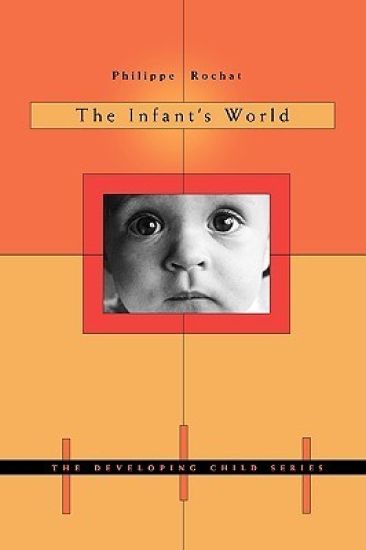
The Infant’s World

The Infant’s World

Philippe Rochat

Harvard University Press
2004
nidottu
What do infants know? What do they feel, and how do they come to understand what’s happening around them? How do they begin to construe others as persons with feelings and intentions? These questions inspire this remarkable new look at the infant’s world. The short answer? Infants are much more sophisticated perceivers, feelers, and thinkers of their world than we may think.In this lively book, Philippe Rochat makes a case for an ecological approach to human development. Looking at the ecological niche infants occupy, he describes how infants develop capabilities and conceptual understanding in relation to three interconnected domains: the self, objects, and other people. Drawing on the great body of contemporary “competent infant” research, Rochat offers a thoughtful overview of many current, controversial topics, from neonatal imitation to early numeracy, to the development of self-awareness. In a provocative conclusion, he describes infancy as a series of key transitions—so dramatic that they are sometimes called “revolutions”—and maps out the processes that impel development.Offering a unifying theoretical vision of the vast research of recent years, The Infant’s World is an inspiring introduction to the liveliest area of modern psychology.
FINITUDE: The Psychology of Self and Time

FINITUDE: The Psychology of Self and Time

Philippe Rochat

TAYLOR FRANCIS LTD
2022
nidottu
Philippe Rochat’s FINITUDE is a rumination on time and self-consciousness. It is built around the premise that finitude and separation form the human self-conscious reality of time. It argues that we need to reclaim time from current theories in physics that tend to debunk time as an illusion, or state that time simply does not exist.This thought-provoking book considers how, from a human psychological and existential standpoint, time is very real. It examines how we make sense of such reality in human development and in comparison to other living creatures. The book explores how we represent time and live with it. It tries to capture the essence of time in our self-conscious mind. If we opt to live for as long as possible and knowing that it is going to end, how should we exist? FINITUDE contemplates this most serious psychological question. It considers the developmental origins of human subjectivity, the foundations of our sense of being alive and the explicit awareness of existing in finite time. It deals with how we live and represent our finite time, how we construe and archive in memory the events of our life, how we project ourselves into the future, and how we are all constrained to knowingly exist in finite timeOffering an overarching understanding of concepts, above and beyond the methodological details, this book will be an essential reading for all advanced students and researchers interested in the psychology of time, and the development of self.
FINITUDE: The Psychology of Self and Time

FINITUDE: The Psychology of Self and Time

Philippe Rochat

TAYLOR FRANCIS LTD
2022
sidottu
Philippe Rochat’s FINITUDE is a rumination on time and self-consciousness. It is built around the premise that finitude and separation form the human self-conscious reality of time. It argues that we need to reclaim time from current theories in physics that tend to debunk time as an illusion, or state that time simply does not exist.This thought-provoking book considers how, from a human psychological and existential standpoint, time is very real. It examines how we make sense of such reality in human development and in comparison to other living creatures. The book explores how we represent time and live with it. It tries to capture the essence of time in our self-conscious mind. If we opt to live for as long as possible and knowing that it is going to end, how should we exist? FINITUDE contemplates this most serious psychological question. It considers the developmental origins of human subjectivity, the foundations of our sense of being alive and the explicit awareness of existing in finite time. It deals with how we live and represent our finite time, how we construe and archive in memory the events of our life, how we project ourselves into the future, and how we are all constrained to knowingly exist in finite timeOffering an overarching understanding of concepts, above and beyond the methodological details, this book will be an essential reading for all advanced students and researchers interested in the psychology of time, and the development of self.
Origins of Possession

Origins of Possession

Philippe Rochat

Cambridge University Press
2014
sidottu
Human possession psychology originates from deeply rooted experiential capacities shared with other animals. However, unlike other animals, we are a uniquely self-conscious species concerned with reputation, and possessions affect our perception of how we exist in the eyes of others. This book discusses the psychology surrounding the ways in which humans experience possession, claim ownership, and share from both a developmental and cross-cultural perspective. Philippe Rochat explores the origins of human possession and its symbolic development across cultures. He proposes that human possession psychology is particularly revealing of human nature, and also the source of our elusive moral sense.
Origins of Possession

Origins of Possession

Philippe Rochat

Cambridge University Press
2015
pokkari
Human possession psychology originates from deeply rooted experiential capacities shared with other animals. However, unlike other animals, we are a uniquely self-conscious species concerned with reputation, and possessions affect our perception of how we exist in the eyes of others. This book discusses the psychology surrounding the ways in which humans experience possession, claim ownership, and share from both a developmental and cross-cultural perspective. Philippe Rochat explores the origins of human possession and its symbolic development across cultures. He proposes that human possession psychology is particularly revealing of human nature, and also the source of our elusive moral sense.
Vision Et Toucher Chez l'Enfant

Vision Et Toucher Chez l'Enfant

Philippe Rochat

Herbert Cie Lang AG, Buchhandlung Antiquariat
1984
nidottu
L'objet est-il connu de facon analogue lorsqu'il est explore par l'intermediaire de l'oeil ou de la main? Quelle est l'evolution de la connaissance visuelle et tactile de l'objet chez l'enfant et comment s'organisent ces differentes modalites perceptives dans le developpement? En traitant ces questions, cet ouvrage s'inscrit dans la tradition du probleme de l'unite des sens dans la perception. Quatre recherches experimentales montrent que la construction de l'espace d'un meme objet doit etre referee au contexte specifique de la modalite de prise d'information. Dans la perspective du developpement, les faits rapportes indiquent que l'enfant organise progressivement ses outils visuel et tactile afin de les faire collaborer a la construction d'un objet unique mais polysensoriel."