Kirjojen hintavertailu. Mukana 12 390 323 kirjaa ja 12 kauppaa.

Kirjahaku

Etsi kirjoja tekijän nimen, kirjan nimen tai ISBN:n perusteella.

6 kirjaa tekijältä Phillip E. Wegner

Periodizing Jameson

Periodizing Jameson

Phillip E. Wegner

Northwestern University Press
2014
nidottu
For a half century, the American intellectual Fredric Jameson has been a driving force in literary and cultural theory. In Periodizing Jameson, Phillip E. Wegner builds upon Jameson’s unique dialectical method to demonstrate the value of Jameson’s tools—periodization, the fourfold hermeneutic, and the Greimasian semiotic square, among others—and to develop virtuoso readings of Jameson’s own work and the history of the contemporary American university in which it unfolds.Wegner shows how Jameson’s work intervenes in particular social, cultural, and political situations, using his scholarship both to develop original explorations of nineteenth-century fiction, popular films, and other prominent theorists, and to examine the changing fortunes of theory itself. In this way, Periodizing Jameson casts new light on the potential of and challenges to humanist intellectual work in the present.

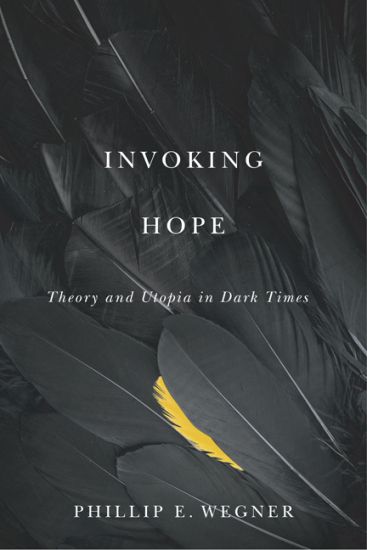
Invoking Hope

Invoking Hope

Phillip E. Wegner

University of Minnesota Press
2020
sidottu
An appeal for the importance of theory, utopia, and close consideration of our contemporary dark times What does any particular theory allow us to do? What is the value of doing so? And who benefits? In Invoking Hope, Phillip E. Wegner argues for the undiminished importance of the practices of theory, utopia, and a deep and critical reading of our current situation of what Bertolt Brecht refers to as finsteren Zeiten, or dark times.Invoking Hope was written in response to three events that occurred in 2016: the five hundredth anniversary of the publication of Thomas More’s Utopia; the one hundredth anniversary of the founding text in theory, Ferdinand de Saussure’s Course in General Linguistics; and the rise of the right-wing populism that culminated in the election of Donald Trump. Wegner offers original readings of major interventions in theory alongside dazzling utopian imaginaries developed from classical Greece to our global present-from Theodor Adorno, Ernst Bloch, Alain Badiou, Jacques Derrida, Fredric Jameson, Sarah Ahmed, Susan Buck-Morss, and Jacques Lacan to such works as Plato’s Republic, W. E. B. Du Bois’s John Brown, Isak Dinesen’s “Babette’s Feast,” Kim Stanley Robinson’s 2312, and more. Wegner comments on an expansive array of modernist and contemporary literature, film, theory, and popular culture.With Invoking Hope, Wegner provides an innovative lens for considering the rise of right-wing populism and the current crisis in democracy. He discusses challenges in the humanities and higher education and develops strategies of creative critical reading and hope against the grain of current trends in scholarship.
Invoking Hope

Invoking Hope

Phillip E. Wegner

University of Minnesota Press
2020
pokkari
An appeal for the importance of theory, utopia, and close consideration of our contemporary dark times What does any particular theory allow us to do? What is the value of doing so? And who benefits? In Invoking Hope, Phillip E. Wegner argues for the undiminished importance of the practices of theory, utopia, and a deep and critical reading of our current situation of what Bertolt Brecht refers to as finsteren Zeiten, or dark times.Invoking Hope was written in response to three events that occurred in 2016: the five hundredth anniversary of the publication of Thomas More’s Utopia; the one hundredth anniversary of the founding text in theory, Ferdinand de Saussure’s Course in General Linguistics; and the rise of the right-wing populism that culminated in the election of Donald Trump. Wegner offers original readings of major interventions in theory alongside dazzling utopian imaginaries developed from classical Greece to our global present-from Theodor Adorno, Ernst Bloch, Alain Badiou, Jacques Derrida, Fredric Jameson, Sarah Ahmed, Susan Buck-Morss, and Jacques Lacan to such works as Plato’s Republic, W. E. B. Du Bois’s John Brown, Isak Dinesen’s “Babette’s Feast,” Kim Stanley Robinson’s 2312, and more. Wegner comments on an expansive array of modernist and contemporary literature, film, theory, and popular culture.With Invoking Hope, Wegner provides an innovative lens for considering the rise of right-wing populism and the current crisis in democracy. He discusses challenges in the humanities and higher education and develops strategies of creative critical reading and hope against the grain of current trends in scholarship.
Shockwaves of Possibility

Shockwaves of Possibility

Phillip E. Wegner

Peter Lang AG, Internationaler Verlag der Wissenschaften
2014
nidottu
Shockwaves of Possibility explores the deep utopianism of one of the most significant modern cultural practices: science fiction. The author contends that utopianism is not simply a motif in SF, but rather is fundamental to its narrative dynamics. Drawing upon a rich array of theory and criticism in SF and utopian studies, the book opens with a global periodizing history that shows the inseparability of SF from developments in other cultural fields. It goes on to examine literature, film, television, comics, and animation in order to demonstrate SF’s unique effectiveness for grappling with the upheavals brought about by globalization. Shockwaves of Possibility proves SF’s vitality in the brave new world of the twenty-first century, as it illuminates the contours of the present and educates our desire for a radically other future.
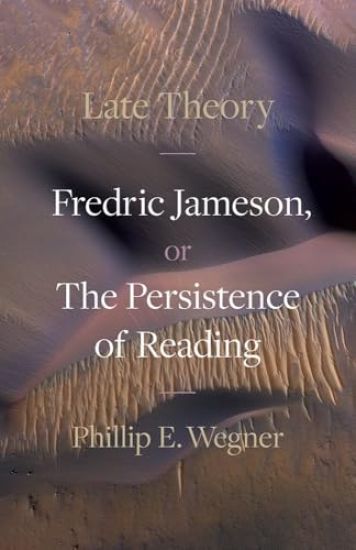
Late Theory

Late Theory

Phillip E. Wegner

UNIVERSITY OF MINNESOTA PRESS
2026
sidottu
A bold, dialectic engagement with Fredric Jameson's thought Fredric Jameson (1934–2024) is widely regarded as the most influential literary and cultural theorist of the past fifty years. The culmination of more than three decades of sustained engagement with Jameson's work, Late Theory offers a critical response to his late writings, namely the final volumes of his "Poetics of Social Forms," to develop an original and dialectical reading practice in conversation with his evolving thought. Jameson's final works bring renewed clarity to three foundational concerns that structure his intellectual legacy. These are the problem of periodization and the challenge of grasping the present as a historical category, the dangers posed by the rise of moralizing modes of critique in literary and cultural studies, and the radical interpretive potential unlocked by allegory and the semiotic method. Phillip E. Wegner shows how these late interventions mark not a conclusion but an extension of Jameson's long-standing project: envisioning the dialectic as a living, collective form of reasoning - a "thought mode of the future" capable of transforming our lives. At its core, Late Theory is a passionate argument for cultural and aesthetic education as a practice of solidarity and imagination. Foregrounding Jameson's enduring effort to build heterogeneous communities of readers committed to shared inquiry, Wegner affirms the urgency of reading, teaching, and thinking together in a moment of crisis for the university and global culture. Retail e-book files for this title are screen-reader friendly with images accompanied by short alt text and/or extended descriptions.
Late Theory

Late Theory

Phillip E. Wegner

UNIVERSITY OF MINNESOTA PRESS
2026
nidottu
A bold, dialectic engagement with Fredric Jameson's thought Fredric Jameson (1934–2024) is widely regarded as the most influential literary and cultural theorist of the past fifty years. The culmination of more than three decades of sustained engagement with Jameson's work, Late Theory offers a critical response to his late writings, namely the final volumes of his "Poetics of Social Forms," to develop an original and dialectical reading practice in conversation with his evolving thought. Jameson's final works bring renewed clarity to three foundational concerns that structure his intellectual legacy. These are the problem of periodization and the challenge of grasping the present as a historical category, the dangers posed by the rise of moralizing modes of critique in literary and cultural studies, and the radical interpretive potential unlocked by allegory and the semiotic method. Phillip E. Wegner shows how these late interventions mark not a conclusion but an extension of Jameson's long-standing project: envisioning the dialectic as a living, collective form of reasoning - a "thought mode of the future" capable of transforming our lives. At its core, Late Theory is a passionate argument for cultural and aesthetic education as a practice of solidarity and imagination. Foregrounding Jameson's enduring effort to build heterogeneous communities of readers committed to shared inquiry, Wegner affirms the urgency of reading, teaching, and thinking together in a moment of crisis for the university and global culture. Retail e-book files for this title are screen-reader friendly with images accompanied by short alt text and/or extended descriptions.