Kirjojen hintavertailu. Mukana 11 699 587 kirjaa ja 12 kauppaa.

Kirjahaku

Etsi kirjoja tekijän nimen, kirjan nimen tai ISBN:n perusteella.

19 kirjaa tekijältä Phillip Lopate

My Affair with Art House Cinema

My Affair with Art House Cinema

Phillip Lopate

Columbia University Press
2024
pokkari
Finalist, 2025 PEN / Diamonstein-Spielvogel Award for the Art of the Essay, PEN AmericaPhillip Lopate fell hard for the movies as an adolescent. As he matured into an acclaimed critic and essayist, his infatuation deepened into a lifelong passion. My Affair with Art House Cinema presents Lopate’s selected essays and reviews from the last quarter century, inviting readers to experience films he found exhilarating, tantalizing, and beguiling—and sometimes disappointing or frustrating—through his keen eyes.In an essayist’s sinuous prose style, Lopate captures the formal mastery, artistic imagination, and emotional intensity of art house essentials like Yasujiro Ozu’s Late Spring, David Lynch’s Mulholland Drive, and Andrei Tarkovsky’s Solaris, as well as works by contemporary filmmakers such as Maren Ade, Hong Sang-soo, Hou Hsiao-hsien, Christian Petzold, Paolo Sorrentino, and Jafar Panahi. Essays explore Chantal Akerman’s rigorous honesty, Ingmar Bergman’s intimacy, Abbas Kiarostami’s playfulness, Kenji Mizoguchi’s visual style, and Frederick Wiseman’s vision of the human condition. Lopate also reflects on the work of fellow critics, including Roger Ebert, Pauline Kael, and Jonathan Rosenbaum. His considered, at times contrarian critiques and celebrations will inspire readers to watch or rewatch these films. Above all, this book showcases Lopate’s passionate advocacy for not only particular films and directors but also the joys and value of a filmgoing culture.
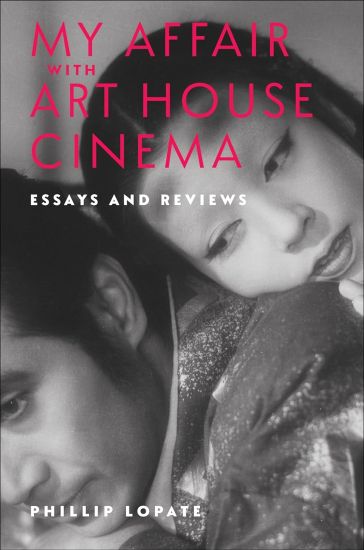
My Affair with Art House Cinema

My Affair with Art House Cinema

Phillip Lopate

Columbia University Press
2024
sidottu
Finalist, 2025 PEN / Diamonstein-Spielvogel Award for the Art of the Essay, PEN AmericaPhillip Lopate fell hard for the movies as an adolescent. As he matured into an acclaimed critic and essayist, his infatuation deepened into a lifelong passion. My Affair with Art House Cinema presents Lopate’s selected essays and reviews from the last quarter century, inviting readers to experience films he found exhilarating, tantalizing, and beguiling—and sometimes disappointing or frustrating—through his keen eyes.In an essayist’s sinuous prose style, Lopate captures the formal mastery, artistic imagination, and emotional intensity of art house essentials like Yasujiro Ozu’s Late Spring, David Lynch’s Mulholland Drive, and Andrei Tarkovsky’s Solaris, as well as works by contemporary filmmakers such as Maren Ade, Hong Sang-soo, Hou Hsiao-hsien, Christian Petzold, Paolo Sorrentino, and Jafar Panahi. Essays explore Chantal Akerman’s rigorous honesty, Ingmar Bergman’s intimacy, Abbas Kiarostami’s playfulness, Kenji Mizoguchi’s visual style, and Frederick Wiseman’s vision of the human condition. Lopate also reflects on the work of fellow critics, including Roger Ebert, Pauline Kael, and Jonathan Rosenbaum. His considered, at times contrarian critiques and celebrations will inspire readers to watch or rewatch these films. Above all, this book showcases Lopate’s passionate advocacy for not only particular films and directors but also the joys and value of a filmgoing culture.
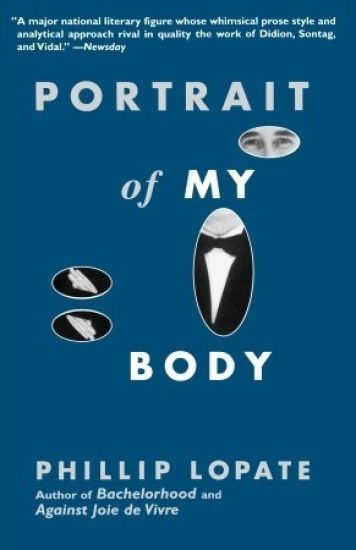
Portrait of My Body: A Memoir in Essays

Portrait of My Body: A Memoir in Essays

Phillip Lopate

ANCHOR BOOKS
1997
nidottu
Phillip Lopate's richest and most ambitious book yet--the final volume of a trilogy that began with Bachelorhood and Against Joie de Vivre--Portrait of My Body is a powerful memoir in the form of interconnected personal essays. One of America's foremost essayists, who helped focus attention on the form in his acclaimed anthology The Art of the Personal Essay, Lopate demonstrates here just how far a writer can go in the direction of honesty and risk taking. In thirteen essays, Lopate explores the resources and limits of the self, its many disguises, excuses, and unmaskings, with his characteristic wry humor and insight. From the title essay, a hilarious physical self-exam, to the haunting portrait of his ex-colleague Donald Barthelme, to the bittersweet account of his long-delayed surrender to marriage, "On Leaving Bachelorhood," Lopate wrestles with finding the proper balance between detachment and empathy, doubt and conviction. In other essays, he celebrates his love of film and city life, and reflects on his religious identity as a Jew. A wrenchingly vivid, unforgettable portrait of the author's eccentric, solipsistic, aged father, a self-proclaimed failure, is the centerpiece of a suite of essays about father-figures and resisted mentors. The book ends with the author's own introduction to fatherhood, as witness to the birth of his daughter. A book that will engage readers with its conversational eloquence, skeptical intelligence, candor, and mischief, Portrait of My Body is a captivating work of literary nonfiction.
The Anchor Essay Annual

The Anchor Essay Annual

Phillip Lopate

ANCHOR BOOKS
1997
nidottu
Anchor Books proudly launches an annual essay series. Acclaimed essayist Phillip Lopate has selected the most surprising, important, and exquisite pieces published during the last twelve months. Bringing together materials from both periodicals and books, The Anchor Essay Annual 1997 also includes essays never before published, as well as translations from abroad. The result is as rich and unique as it is cosmopolitan. In her brilliantly frank "Revelation", Mary Gaitskill recounts the religious epiphany that changed her life. Hilton Als explores the "Negressity" of his soul in "My Pin-Up". In his dazzling "The Laying Off of Desire", Jean Baudrillard sets forth a flamboyant dissection of human sexuality. Hubert Butler ruminates on the stunted life of his handicapped grandchild in "Little K." We relive the glories and disappointments of the Borscht Belt in Vivian Gornick's evocative group portrait, "The Catskills Remembered". And we ride a rollercoaster of cultural insight in Daniel Harris's "A Psychosexual History of the Homosexual Body". A a whole, this superb collection is a heady cocktail indeed. All of this exciting new work is placed in context with an illuminating introduction from Phillip Lopate, "the house authority on the genre and its greatest practitioner" (Washington Times). With generous selections from over twenty-five writers from around the world, The Anchor Essay Annual 1997 is the first in what is sure to become a series widely anticipated and highly acclaimed, every October, for years to come.
The Art of the Essay, 1999

The Art of the Essay, 1999

Phillip Lopate

ANCHOR BOOKS
1999
nidottu
Now in its third year, this annual collection presents the most notable, influential, and surprising essays published in the last twelve months in either books or periodicals throughout the English-speaking world. Selected with consummate taste and a catholic openness to style and subject matter by famed essayist, critic, and editor, Phillip Lopate, the 1999 edition demonstrates that the form continues its renaissance as an unrivaled vehicle of intelligence and sensibility. For this edition, Lopate has paired his tewnty-eight selections by topic, which offers suprising parallels and divergences in points of view. Andre Dubus and Tom Beller on apprentice work as a form of true experience; Richard Rorty and George Packer on the quixotic and often self-defeating character of the American left; Siri Hustvedt and Wayne Koestenbaum on the verities of erotic experience; Bliss Broyard and M. G. Stephens on their fathers; Marcus Laffey and Charles Bowden on violence, crime, and police work; Susan Sontag and Martha Nussbaum on the necessity and consolation of art--these are just some of the peerless practitioners of the essay featured in this superb collection. All of this exciting new work is placed in context by an equally superb introductory essay by Lopate. A special feature of this 1999 edition is an appendix in which literary and intellectual notables nominate their selections of the best and most influential essays and essayists of the century. This prestigious Anchor annual is more than ever an unequaled showcase for an indispensable and ever-changing literary form.
Totally, Tenderly, Tragically: Essays and Criticism from a Lifelong Love Affair with the Movies
Phillip Lopate has been obsessed with movies from the start. As an undergraduate at Columbia, he organized the school's first film society. Later, he even tried his own hand at filmmaking. But it was not until his ascent as a major essayist that Lopate found his truest and most lasting contribution to the medium. And, over the past twenty-five years, tackling subjects ranging from Visconti to Jerry Lewis, from the first New York Film Festival to the thirty-second, Phillip Lopate has made film his most cherished subject. Here, in one place, are the very best of these essays, a joy for anyone who loves movies.
Waterfront: A Walk Around Manhattan

Waterfront: A Walk Around Manhattan

Phillip Lopate

ANCHOR BOOKS
2005
nidottu
East Side, West Side, from the Little Red Lighthouse to Battery Park City, the wonders of Manhattan's waterfront are both celebrated and secret-hidden in plain sight. In his brilliant exploration of this defining yet neglected shoreline, personal essayist Philip Lopate also recovers a part of the city's soul. A native New Yorker, Lopate has embraced Manhattan by walking every inch of its perimeter, telling stories on the way of pirates (Captain Kidd) and power brokers (Robert Moses), the lowly shipworm and Typhoid Mary, public housing in Harlem and the building of the Brooklyn Bridge. He evokes the magic of the once bustling old port from Melville's and Whitman's day to the era of the longshoremen in On the Waterfront, while appraising today's developers and environmental activists, and probing new plans for parks and pleasure domes with river views. Whether escorting us into unfamiliar, hazardous crannies or along a Beaux Arts esplanade, Waterfront is a grand literary ramble and defense of urban life by one of our most perceptive observers.
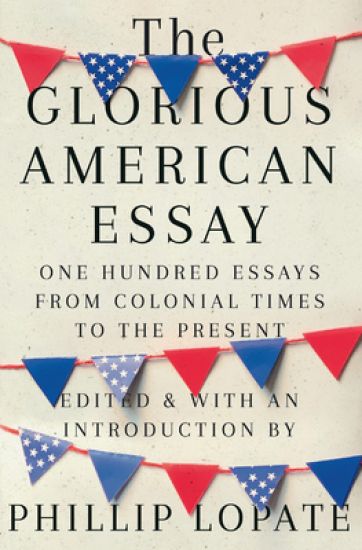
The Glorious American Essay

The Glorious American Essay

Phillip Lopate

Anchor Books
2021
nidottu
A monumental, canon-defining anthology of three centuries of American essays, from Cotton Mather and Benjamin Franklin to David Foster Wallace and Zadie Smith. The essay form is an especially democratic one, and many of the essays Phillip Lopate has gathered here address themselves--sometimes critically--to American values. We see the Puritans, the Founding Fathers and Mothers, and the stars of the American Renaissance struggle to establish a national culture. A grand tradition of nature writing runs from Audubon, Thoreau, and John Muir to Rachel Carson and Annie Dillard. Marginalized groups use the essay to assert or to complicate notions of identity. Lopate has cast his net wide, embracing critical, personal, political, philosophical, literary, polemical, autobiographical, and humorous essays. Americans by birth as well as immigrants appear here, famous essayists alongside writers more celebrated for fiction or poetry. The result is a dazzling overview of the riches of the American essay. Not only an education but a joy. This is a book for the ages. --Rivka Galchen
The Contemporary American Essay

The Contemporary American Essay

Phillip Lopate

Anchor Books
2021
nidottu
A dazzling anthology of essays by some of America's best writers, drawn from the past quarter century. AN ANCHOR ORIGINAL. The past two decades in America have seen a blossoming of creative nonfiction, and no one is better suited to curate that exciting resurgence than Phillip Lopate. In this remarkable collection, he mingles new and younger voices--like Samantha Irby, Meghan O'Gieblyn, Leslie Jamison, Rivka Galchen, Karen Russell, and Teju Cole--with such long-established eminences as John McPhee, Barry Lopez, Louise Gluck, Geoff Dyer, and Joyce Carol Oates. He brings together a wide variety of perspectives and styles, in the work of Anne Carson, Nicholson Baker, Hilton Als, Alexander Chee, Margo Jefferson, Laura Kipnis, Wesley Yang, Eileen Myles, Meghan Daum, David Sedaris, and many more. The result is a treat for anyone who loves fantastic writing.
The Golden Age of the American Essay

The Golden Age of the American Essay

Phillip Lopate

Anchor Books
2021
nidottu
A one-of-a-kind anthology of American essays on a wide range of subjects by a dazzling array of mid-century writers at the top of their form. AN ANCHOR ORIGINAL. The three decades that followed World War II were an exceptionally fertile period for American essays. The explosion of journals and magazines, the rise of public intellectuals, and breakthroughs in the arts inspired a flowering of literary culture. At the same time, the many problems that confronted mid-century America--racism, sexism, nuclear threat, war, poverty, and environmental degradation among them--proved fruitful topics for America's best minds. In The Golden Age of the American Essay, Phillip Lopate assembles a dazzling array of famous writers, critics, sociologists, theologians, historians, activists, theorists, humorists, poets, and novelists. Here are writers like James Agee, E. B. White, A. J. Liebling, and Mary McCarthy, adroitly pivoting from the comic indignities of daily life to world peace, boxing, and restaurants in Paris. Here is Norman Mailer on Jackie Kennedy and Vladimir Nabokov on Lolita. Here is Martin Luther King, Jr.'s Letter from Birmingham Jail, alongside Richard Hofstadter's The Paranoid Style in American Politics and Flannery O'Connor's Some Aspects of the Grotesque in Southern Fiction. Here are Gore Vidal, Rachel Carson, James Baldwin, Susan Sontag, John Updike, Joan Didion, and many more, in a treasury of brilliant writing that has stood the test of time.
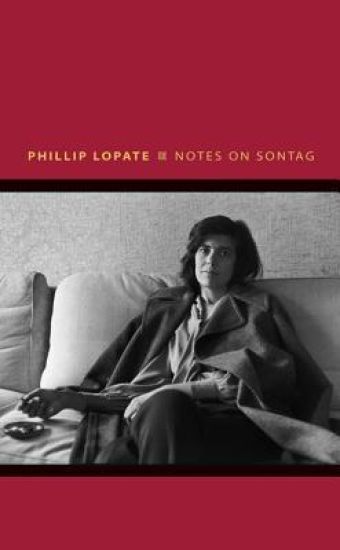
Notes on Sontag

Notes on Sontag

Phillip Lopate

PRINCETON UNIVERSITY PRESS
2009
sidottu
Notes on Sontag is a frank, witty, and entertaining reflection on the work, influence, and personality of one of the "foremost interpreters of ...our recent contemporary moment." Adopting Sontag's favorite form, a set of brief essays or notes that circle around a topic from different perspectives, renowned essayist Phillip Lopate considers the achievements and limitations of his tantalizing, daunting subject through what is fundamentally a conversation between two writers. Reactions to Sontag tend to be polarized, but Lopate's account of Sontag's significance to him and to the culture over which she loomed is neither hagiography nor hatchet job. Despite admiring and being inspired by her essays, he admits a persistent ambivalence about Sontag. Lopate also describes the figure she cut in person through a series of wry personal anecdotes of his encounters with her over the years. Setting out from middle-class California to invent herself as a European-style intellectual, Sontag raised the bar of critical discourse and offered up a model of a freethinking, imaginative, and sensual woman. But while crediting her successes, Lopate also looks at how her taste for aphorism and the radical high ground led her into exaggerations that could do violence to her own common sense, and how her ambition to be seen primarily as a novelist made her undervalue her brilliant essays. Honest yet sympathetic, Lopate's engaging evaluation reveals a Sontag who was both an original and very much a person of her time.
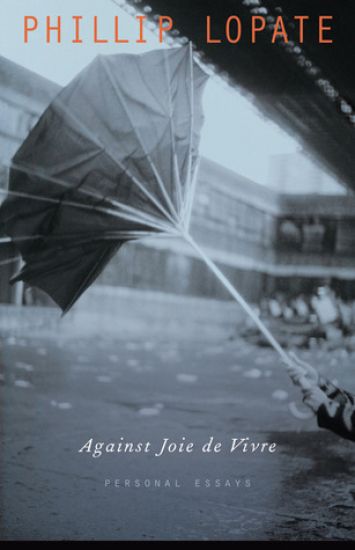
Against Joie De Vivre

Against Joie De Vivre

Phillip Lopate

Bison Books
2008
pokkari
"Over the years I have developed a distaste for the spectacle of joie de vivre, the knack of knowing how to live," begins the title essay by Phillip Lopate. This rejoinder to the cult of hedonism and forced conviviality moves from a critique of the false sentimentalization of children and the elderly to a sardonic look at the social rite of the dinner party, on to a moving personal testament to the "hungry soul." Lopate's special gift is his ability to give us not only sophisticated cultural commentary in a dazzling collection of essays but also to bring to his subjects an engaging honesty and openness that invite us to experience the world along with him. Also included here are Lopate's inspiring account of his production of Chekhov's Uncle Vanya with a group of preadolescents, a look at the tradition of the personal essay, and a soul-searching piece on the suicide of a schoolteacher and its effect on his students and fellow teachers. By turns humorous, learned, celebratory, and elegiac, Lopate displays a keen intelligence and a flair for language that turn bits of common, everyday life into resonant narrative. This collection maintains a conversational charm while taking the contemporary personal essay to a new level of complexity and candor.
A Mother's Tale

A Mother's Tale

Phillip Lopate

Ohio State University Press
2017
sidottu
In 1984, Phillip Lopate sat down with his mother, Frances, to listen to her life story. A strong, resilient, indomitable woman who lived through the major events of the twentieth century, she was orphaned in childhood, ran away and married young, and then reinvented herself as a mother, war factory worker, candy store owner, community organizer, clerk, actress, and singer. But paired with exciting anecdotes are the criticisms of the husband who couldn't satisfy her, the details of numerous affairs and sexual encounters, and, though she succeeded at many of her roles, accounts of how she always felt mistreated, taken advantage of. After the interviews, at a loss for what to do with the tapes, Lopate put them away. But thirty years later, after his mother had passed away, Lopate found himself drawn back to the recordings of this conversation. Thus begins a three-way conversation between a mother, his younger self, and the person he is today. Trying to break open the family myths, rationalizations, and self-deceptions, A Mother's Tale is about family members who love each other but who can't seem to overcome their mutual mistrust. Though Phillip is sympathizing to a point, he cannot join her in her operatic displays of self-pity and how she blames his father for everything that went wrong. His detached, ironic character has been formed partly in response to her melodramatic one. The climax is an argument in which he tries to persuade her-using logic, of all things-that he really does love her, but is only partially successful, of course. A Mother's Tale is about something primal and universal: the relationship between a mother and her child, the parent disappointed with the payback, the child, now fully grown, judgmental. The humor is in the details.
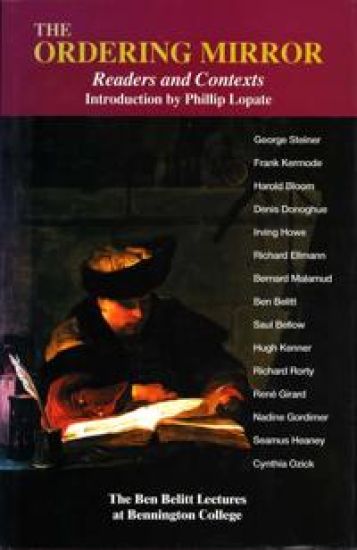
The Ordering Mirror

The Ordering Mirror

Phillip Lopate

Fordham University Press
1993
sidottu
In 1977, Bennington College alumna Edith Barbour Andrews established the Ben Belitt Lectureships in gratitude to her teacher Ben Belitt and dedicated the publication of the lectures (in the form of chapbooks) to the memory of William Troy, another of her beloved teachers. The collection, published here in one volume, comprises lectures by some of the most inspiring writers and keenest critics of our time. In his introduciton to The Ordering Mirror, Phillip Lopate contrasts the anticipations and the audience/lecturer dynamic inherent in attending yearly lecture, with the experience of reading them, and the opportunity for reflection and comparison. Lopate summarizes that, "It is enough to appreciate that we are watching masters of the game of essay-writing, who, even as they comment on the masterpieces of other writers, practice their own wizardry." The volume includes: George Steiner, "The Uncommon Reader" (1978) Frank Kermode, "Divination" (1979) Harold Bloom, "To the Tally of My Soul: Whitman's Image of Voice" (1980) Denis Donoghue, "The Politics of Modern Criticism" (1981) Irving Howe, "The Making of a Critic" (1982) Richard Ellman, "The Uses of Decadence: Wilde, Yeats, Joyce" (1983) Bernard Malamud, "Long Work, Short Life" (1984) Ben Belitt, "Literature and Belief: Three 'Spiritual Exercises'" (1985) Saul Bellow, "Summations" (1987) Hugh Kenner, "Magics and Spells (about curses, charms, and riddles)" (1987) Richard Rorty, "The Barber of Kasbeam: Nabokov on Cruelty" (1988) Rene Girard, "Collective Violence and Sacrifice in Shakespeare's Julius Caesar" (1989) Nadine Gordimer, "Three in a Bed: Fiction, Morals and Politics" (1990) Seamus Heaney, "Dylan the Durable?: On Dylan Thomas" (1992) Cynthia Ozick, "What Henry James Knew" (1992)
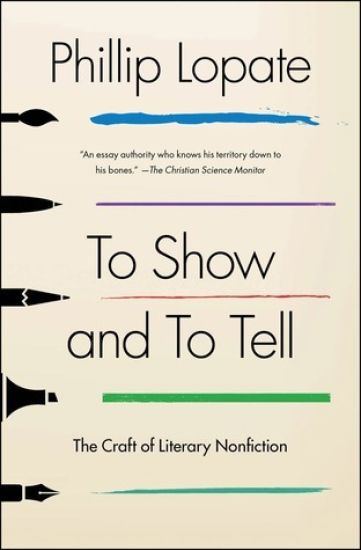
To Show and to Tell: The Craft of Literary Nonfiction
A long-awaited and illuminating book on personal writing from Phillip Lopate--celebrated essayist, professor of writing at Columbia University, and editor of The Art of the Personal Essay. Distinguished author Phillip Lopate, editor of the celebrated anthology The Art of the Personal Essay, is universally acclaimed as "one of our best personal essayists" (Dallas Morning News). Here, combining more than forty years of lessons from his storied career as a writer and professor, he brings us this highly anticipated nuts-and-bolts guide to writing literary nonfiction. A phenomenal master class shaped by Lopate's informative, accessible tone and immense gift for storytelling, To Show and To Tell reads like a long walk with a favorite professor--refreshing, insightful, and encouraging in often unexpected ways.
Writers and Their Notebooks

Writers and Their Notebooks

Phillip Lopate

University of South Carolina Press
2010
nidottu
This title peeks inside the writerly testing grounds of Sue Grafton, Kim Stafford, Maureen Stanton, and others. This collection of essays by well-established professional writers explores how their notebooks serve as their studios and workshops - places to collect, to play, and to make new discoveries with language, passions, and curiosities. For these diverse writers, the journal also serves as an ideal forum to develop their writing voice, whether crafting fiction, nonfiction, or poetry. Some entries include sample journal entries that have since developed into published pieces. Through their individual approaches to keeping a notebook, the contributors offer valuable advice, personal recollections, and a hardy endorsement of the value of using notebooks to document, develop, and nurture a writer's creative spark. Designed for writers of all genres and all levels of experience, ""Writers and Their Notebooks"" celebrates the notebook as a vital tool in a writer's personal and literary life.
A Year and a Day

A Year and a Day

Phillip Lopate

New York Review Books
2023
nidottu
A compelling celebration of the power of the essay, this collection of 47 writings offers a glimpse into the mind of a modern-day Montaigne as he reflects on the miscellany of daily life--movies and art, friends and family--over the course of a single year. The essay is the most pluckily pedestrian and blithely transgressive of literary genres, the one that is most at large and in need, picking through the accumulated disjecta of daily life and personal and social history to take what it needs and remake it as it sees fit. It is, at its lively best, quite indifferent to the claims of style, fashion, theory, and respectability, provoking and inspiring through the pleasure of surprise. In 2016, Philip Lopate, who has been writing essays and thinking about the essay for decades now, turned his attention to one of the essay's offshoots, the blog, a form by that time already thick, as he knew, with virtual dust. Lopate committed to writing a weekly blog about, really, whatever over the course of a year, a quicker pace of delivery than he'd ever undertaken and one that carried the risk of all too regularly falling short. What emerged was A Year and a Day, a collection of forty-seven essays best characterized as a single essay a year in the making, a virtuosic (if never showy) demonstration of the essay's range and reach, meandering, looping back, pressing reset, forging on. Lopate's topics along the way include family, James Baldwin, a trip to China, Agnes Martin, Abbas Kiarostami, the resistible rise of Donald Trump, death, desire, and the tribulations, small and large, of daily life. What results is at once a self-portrait, a picture of the times, and a splendid new elaboration of what the essay can be.
A Washington Irving Sketchbook

A Washington Irving Sketchbook

Phillip Lopate

PRINCETON UNIVERSITY PRESS
2026
sidottu
A richly textured portrait of an American man of letters who came to exemplify the writer’s life with all its setbacks and triumphs Washington Irving (1783–1859) is often considered America’s first professional writer, supporting himself and his family amid the ups and downs of literary fortune. He burst on the scene with his uproarious History of New York, followed by his Sketchbook, a collection of personal essays and short stories that includes “Rip Van Winkle” and “The Legend of Sleepy Hollow.” As an essayist and teacher, Phillip Lopate identifies with Irving, inspired by his humane and elegant prose style, and by Irving’s courage and persistence in the face of setbacks and his own limitations as a writer. In this illuminating book, Lopate reflects on Irving and his extensive body of work through a series of warmly sympathetic sketches of his own. Irving was the first American writer to attain international renown, attracting such devoted fans as Charles Dickens and Lord Byron, and while he may have been overrated in his day, he has since become undeservedly neglected. A lifelong bachelor, he was urbane, popular, and socially adept, mixing with royals as well as paupers, yet underneath it all he was a loner and a melancholic. Lopate describes how Irving constantly reinvented himself, first as a satirist, then a belletrist, at times a hack writer, and finally as a serious biographer of figures like George Washington and the Prophet Mohammed. Along the way, he explains why minor writers like Irving have their enduring fascinations. Delving into all that is likable and perplexing about the man once considered America’s most famous writer, A Washington Irving Sketchbook brings Irving closer to today’s readers, capturing the charm of his work and the vicissitudes of literary fashion.