Kirjojen hintavertailu. Mukana 11 786 664 kirjaa ja 12 kauppaa.

Kirjahaku

Etsi kirjoja tekijän nimen, kirjan nimen tai ISBN:n perusteella.

12 kirjaa tekijältä Phillip Prodger

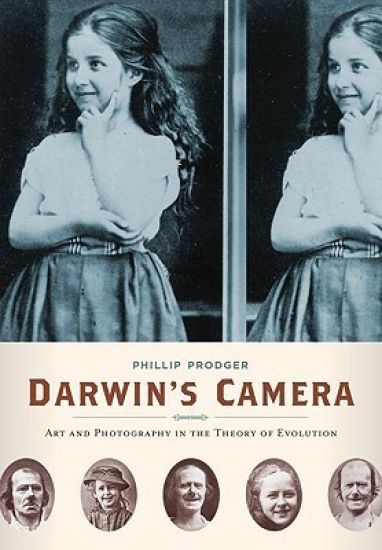
Darwin's Camera

Darwin's Camera

Phillip Prodger

Oxford University Press Inc
2009
sidottu
Darwin's Camera tells the extraordinary story of how Charles Darwin changed the way pictures are seen and made. In his illustrated masterpiece, Expression of the Emotions in Man and Animals (1871), Darwin introduced the idea of using photographs to illustrate a scientific theory--his was the first photographically illustrated science book ever published. Using photographs to depict fleeting expressions of emotion--laughter, crying, anger, and so on--as they flit across a person's face, he managed to produce dramatic images at a time when photography was famously slow and awkward. The book describes how Darwin struggled to get the pictures he needed, scouring the galleries, bookshops, and photographic studios of London, looking for pictures to satisfy his demand for expressive imagery. He finally settled on one the giants of photographic history, the eccentric art photographer Oscar Rejlander, to make his pictures. It was a peculiar choice. Darwin was known for his meticulous science, while Rejlander was notorious for altering and manipulating photographs. Their remarkable collaboration is one of the astonishing revelations in Darwin's Camera. Darwin never studied art formally, but he was always interested in art and often drew on art knowledge as his work unfolded. He mingled with the artists on the voyage of HMS Beagle, he visited art museums to examine figures and animals in paintings, associated with artists, and read art history books. He befriended the celebrated animal painters Joseph Wolf and Briton Riviere, and accepted the Pre-Raphaelite sculptor Thomas Woolner as a trusted guide. He corresponded with legendary photographers Lewis Carroll, Julia Margaret Cameron, and G.-B. Duchenne de Boulogne, as well as many lesser lights. Darwin's Camera provides the first examination ever of these relationships and their effect on Darwin's work, and how Darwin, in turn, shaped the history of art.
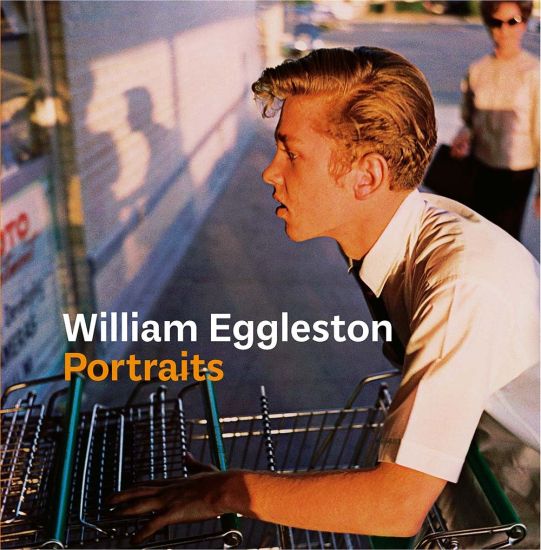
William Eggleston Portraits

William Eggleston Portraits

Phillip Prodger

YALE UNIVERSITY PRESS
2016
sidottu
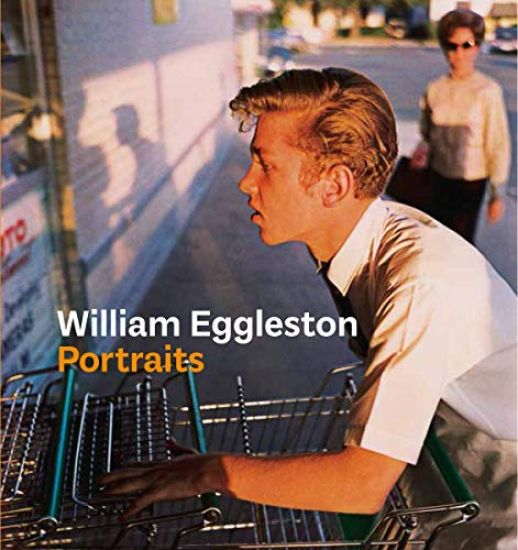
"So many people take those simple snapshots of life, but there's something about Eggleston that no one can match." --Sofia Coppola The eminent American photographer William Eggleston (b. 1939) was a pioneer in exploring the artistic potential of color photography. Eggleston made a name for himself with his eccentric, unexpected compositions of everyday life that were nonetheless rife with implied narrative, elevating the commonplace to art. This sumptuously illustrated book features Eggleston's masterful portraits, including the artist's first color photograph--a study of a young clerk pushing shopping carts at a supermarket--from his Los Alamos series. There are many other familiar and beloved images as well as some previously unseen photographs from his long and productive career. Many of Eggleston's poetic photographs portray life in his home state of Tennessee, and the people he encountered there. Eggleston frequented the 1970s Memphis club scene, where he met, befriended, and photographed musicians such as fellow Southerners Alex Chilton and Ike Turner. He also photographed celebrities including Dennis Hopper, Walter Hopps, and Eudora Welty, and became a fixture of Andy Warhol's Factory scene, dating the Warhol prot g Viva. Over the past half century, he has created a powerful and enduring body of work featuring friends and family, musicians, artists, and strangers. In addition to the lavish reproductions of Eggleston's portraits, this volume includes an essay and chronology, plus an interview with Eggleston and his close family members that gives new insights into his images and artistic process. Published in association with the National Portrait Gallery, London Exhibition Schedule: National Portrait Gallery, London (07/21/16-10/23/16)NGV International, Melbourne (03/17/17-06/18/17)
E. O. Hoppé's Amerika

E. O. Hoppé's Amerika

Phillip Prodger

WW Norton Co
2007
sidottu
Emil Otto Hoppé was born in Munich in 1878 but lived in London from 1900 until his death in 1972. He was an early and important modernist whose seminal views of the United States in the 1920s rival those of his peers: Paul Strand, Edward Steichen, Alfred Stieglitz, and Walker Evans. His work shows us an America as only an outsider could: brave, new, and grand in scale but with a hint of trouble brewing in the gaps between its multicultural and economic diversities. Much of Hoppé's work was locked away in English and German archives for the second half of the twentieth century, resulting in an eclipse of his reputation. Only recently has his work been reassembled, and now we can see his intimate and intelligent view of the world at defining moments in its history.
Face Time

Face Time

Phillip Prodger

Thames Hudson Ltd
2022
sidottu
‘Comprehensive and groundbreaking’ Amateur Photographer From the daguerreotype to the digital age, Face Time is an accessible introduction to one of photography’s most popular subjects: ourselves. With over 250 illustrations, it presents rarely seen treasures alongside works by the greatest names in photography, including nineteenth-century pioneers Hippolyte Bayard and Julia Margaret Cameron, twentieth-century masters Edward Weston, Lee Miller and Richard Avedon, and contemporary groundbreakers Newsha Tavakolian, Rineke Dijkstra and Zanele Muholi. It also immortalizes some of photography’s most iconic subjects, such as Queen Elizabeth II, Barack Obama, Marilyn Monroe, Frida Kahlo and many others. Transcending time and space, the book adopts a fresh, thematic approach to the history of photographic portraiture in eight chapters, tracing a wide range of applications and influences across the spheres of art, advertising, anthropology, fashion, narrative, documentary and vernacular photography. Informative and insightful introductions to each theme are followed by unexpected and thought-provoking curations of photographs, as well as detailed commentaries on key images. The result is an ambitiously curated and visually entertaining introduction to the history and themes of photographic portraiture, and an inspiring journey through the ever-elusive question of human identity.
Only Human: Photographs by Martin Parr (NPG edition)
Only Human is a major new book on prolific British photographer Martin Parr, published on the occasion of his important solo exhibition at the National Portrait Gallery in London during the Spring of 2019. It explores one of the most engaging aspects of Parr’s work – people – and features brand new work from the last decade.
Only Human

Only Human

Phillip Prodger

Phaidon Press Ltd
2019
sidottu
A major new book on Martin Parr explores the photographer's most enduring subject – people – as never before By turns witty, surprising, and ingenious, Martin Parr's photographs reveal the eccentricities of modern life with affection and insight. This book – published to coincide both with Parr's 2019 exhibition at London's National Portrait Gallery and also the date the UK will leave the EU – examines what it means to be human at a time of both change and retrospection. Bringing together new work from the last decade, Only Human explores the concepts of Britishness and national identity through the rituals and habits of everyday life.
William Eggleston Portraits

William Eggleston Portraits

Phillip Prodger

National Portrait Gallery Publications
2016
sidottu
‘I want to make a picture that could stand on its own, regardless of what it was a picture of. I’ve never been a bit interested in the fact that this was a picture of a blues musician or a street corner or something.’ – William Eggleston William Eggleston’s photographs are special for their eccentric, unexpected compositions, playfulness, implied narrative and, above all, his portrayals of people. Over the past half-­-century he has created a powerful and enduring body of work featuring friends and family, musicians, artists and others. Eggleston frequented the 1970s Memphis club scene, developing friendships and getting to know musicians, including Ike Turner, Alex Chilton and others. His fascination with the nightclub culture resulted in the experimental video Stranded in Canton (2005), which chronicles visits to bars in Memphis, Mississippi, and New Orleans. At the same time he encountered and photographed the likes of Dennis Hopper, Eudora Welty and Walter Hopps – and for a brief moment Eggleston even entered the Warhol Factory scene, dating the Warhol protégé, Viva. William Eggleston: Portraits accompanies the first exhibition to explore Eggleston’s pictures of people. Works included span his career from the 1950s through to his well-­-known portraits of the 1970s to the present day. The catalogue includes an essay, chronology and beautifully reproduced exhibition plates, as well as a series of revealing interviews with Eggleston and his close family members, conducted in Memphis by exhibition curator Phillip Prodger.
An Alternative History of Photography
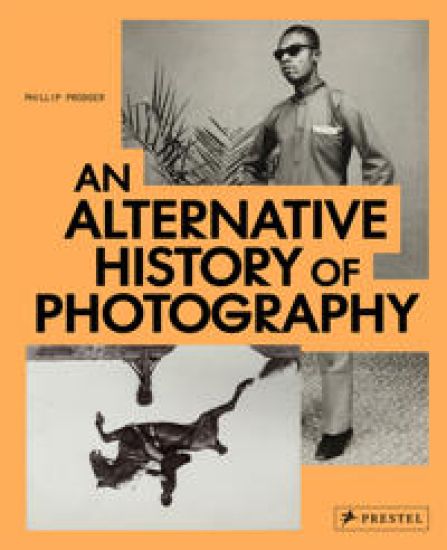
The real history of photography is a vast collection of inter- connected stories stretching from East Asia to West Africa, from New Zealand to Uzbekistan. It parallels acknowledged greats with forgotten masters, and lesser-known works with regional champions. It is a complex interplay of fine art, scientific, anthropological, documentary, and amateur traditions forged by women and men alike. Drawn from the extraordinary Solander Collection, this pioneering, alternative history of photography is based on principles of diversity and democracy, allowing famous works to be seen with fresh eyes, and giving more obscure works the platform they deserve. Images by Robert Frank, Diane Arbus, Man Ray, Ansel Adams, and Edward Weston are seen alongside those of Helen Stuart and John Lindt, early, self- trained practitioners Lady Augusta Mostyn and Major Francis Greeley, and African studio photographers Sanlé Sory, Michel Kameni, and Malick Sidibé. It contains many rarities and “firsts” and spans photography’s early decades with linchpin works by Sir John Herschel, William Henry Fox Talbot, Hippolyte Bayard, and Julia Margaret Cameron. Contemporary in outlook, visually captivating, and with contributions from leading curators and photo historians, this book will prove essential reading for those looking for an introduction to the field, as well as informed readers looking for more complete knowledge.
Mark Cohen

Mark Cohen

Phillip Prodger

Prestel
2025
sidottu
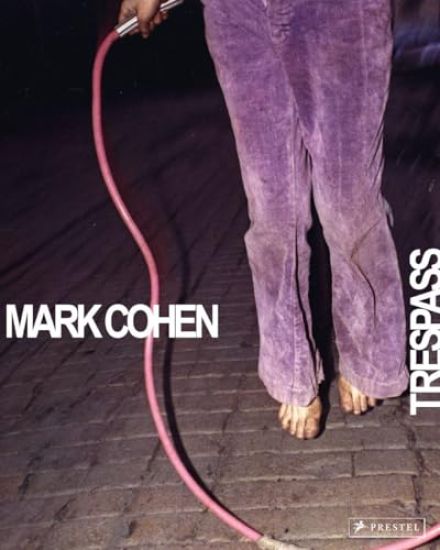
This bold and vibrant volume celebrates the analog color work of one of America’s greatest street photographers. Gritty and unflinching, the photographs of Mark Cohen depict raw, fragmented details of urban life in vivid color. One of the best photographers of his generation, Cohen started out in Wilkes-Barre, Pennsylvania in the mid-1960s. His work often focuses on details or isolated body parts rather than conventional portraits. This volume—brilliantly edited and captioned by photographic historian Phillip Prodger— showcases fifty years of Cohen’s work. Luminous full-page images, printed in gorgeous color, allow readers to appreciate how Cohen used powerful contrasts and rich hues to capture raw emotions and fleeting moments with striking clarity. With the renewed interest in early analog color photography, Mark Cohen’s work stands out for its intrepid chromaticity, unconventional compositions, and gift for conveying the essence of his subjects and environments with intimacy and authenticity.
E.O. Hoppé: The German Work

E.O. Hoppé: The German Work

Phillip Prodger

Steidl Verlag
2015
sidottu
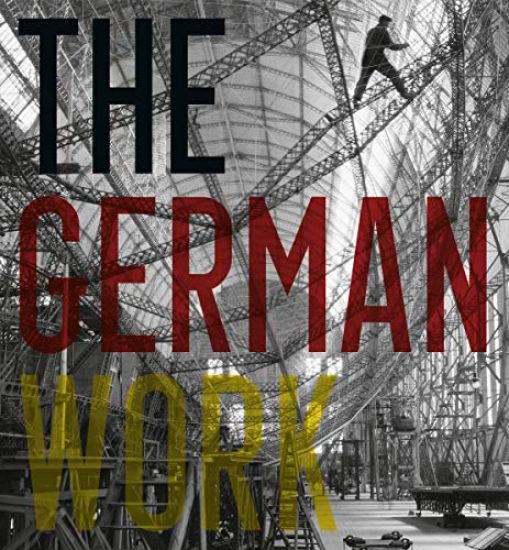
Between 1925 and 1938, photographer E.O. Hoppé traveled the length and breadth of Germany, recording people and places at one of the most tumultuous times in the country’s history. He photographed movie stars and captains of industry, workers and peasants, and captured the birth of the Autobahn and UFA film studios in its heyday. He saw the rise of fascism, the creation of vast new suburbs, and the displacement of people from their traditional ways of life. With unprecedented access to the country’s world-famous factories and industrial installations, he witnessed Germany as few others could—barreling headlong into the unknown. Moving, insightful, and deeply revealing, the full significance of Hoppé’s German work has been unknown until now. This volume combines photographs published in Hoppé’s legendary book of 1930, Deutsche Arbeit, with many new pictures never previously seen. From factory floor to the commuters of Berlin and Munich, Hoppé’s photographs reveal the profound social and economic tensions that preceded the Second World War. This publication uncovers Hoppé as a pivotal figure in the history of twentieth-century photography, who introduced for the first time elements of typology, seriality and sequence, which have become key elements of contemporary photographic practice. Hoppé used his experience in Germany to develop a new modern style of photography—showing not just how things looked, but how it felt to be there.
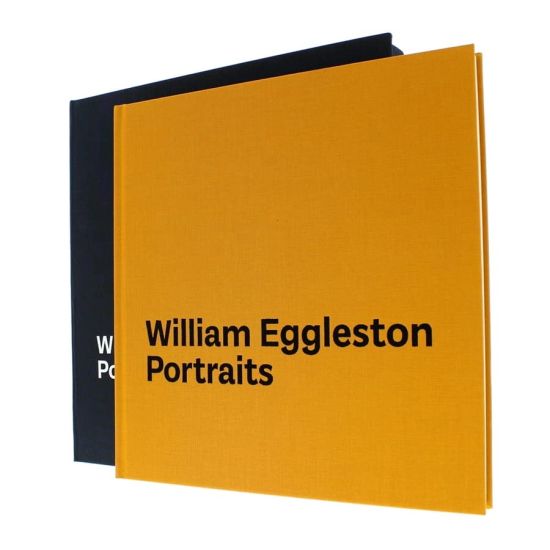
William Eggleston Portraits: Limited Edition

William Eggleston Portraits: Limited Edition

Phillip Prodger

NATIONAL PORTRAIT GALLERY PUBLICATIONS
2022
sidottu
Vivid, poetic, even mysterious, the works of the pioneering American photographer William Eggleston portray life in his home town of Memphis, Tennessee, and the people he encountered, from the 1950s to the present day. This book includes both well-known and unseen portraits from Eggleston’s long career, to provide a fresh perspective on one of photography’s most influential practitioners. William Eggleston’s photographs are special for their eccentric, unexpected compositions, playfulness, implied narrative and, above all, his portrayals of people. Over the past half-century he has created a powerful and enduring body of work featuring friends and family, musicians, artists and others. Eggleston frequented the 1970s Memphis club scene, developing friendships and getting to know musicians, including Ike Turner, Alex Chilton and others. His fascination with the nightclub culture resulted in the experimental video Stranded in Canton (2005), which chronicles visits to bars in Memphis, Mississippi, and New Orleans. At the same time he encountered and photographed the likes of Dennis Hopper, Eudora Welty and Walter Hopps – and for a brief moment Eggleston even entered the Warhol Factory scene, dating the Warhol protégé, Viva. Works included span Eggleston’s career from the 1950s through to his well-known portraits of the 1970s to the present day. The catalogue includes an essay, chronology and beautifully reproduced plates, as well as a revealing interview with Eggleston and his close family members, conducted in Memphis by author Phillip Prodger.