Professionals working with children—whether in education, social work, or other child-focused fields—are increasingly recognizing the importance of developing child observation skills. At the time, systematic approaches to studying children were still undergoing significant development and refinement. First published in 1987, Child Observation Skills offers an engaging exploration of the history, philosophy, and methodology of directly observing children. It examines research designs employed in observational studies, provides practical exercises, and outlines methods for recording behaviour. Importantly, the book consistently connects these research practices to philosophical considerations, emphasizing the interplay between the prevailing philosophy of science and the ways observations are conducted and data are recorded. This resource is invaluable for students and researchers in child psychology and human development.
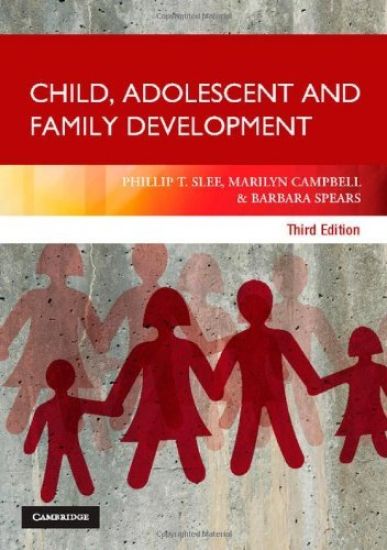
The third edition of Child, Adolescent and Family Development provides a comprehensive, readable study of human development from conception to adulthood. It explores the foundations of modern developmental thought, incorporating the latest in international research set within a cultural and historical context. Richly illustrated and enhanced by a range of practical teaching resources, this clear and engaging text is intended to reach students across a range of teaching, psychology, social science and health science disciplines. By employing a thematic approach within the chronologically ordered chapters, this text offers a systematic and intuitive structure for both learning and teaching. This new edition features a set of fully updated case studies that consider current trends and issues in developmental theory and practice, as well as end-of-chapter sections that address important stages in the family life cycle.
This book focuses on well-being at school in association with positive peer relationships and bullying. Taking an integrative and community-based approach, the book outlines the significance of student-school relationships for well-being and emphasizes the importance of school and classroom climate for promoting well-being. Embedded in research and theory, the book reflects the belief that all of our dealings with children and young people in whatever role, whether as parent or teacher or in some other capacity, are bounded by theory, either implicit or explicit. The book highlights the role of partnerships and linkages in addressing school-based well-being and anti-bullying programs. It pays special attention to the barriers and facilitators that schools must address in engaging with external agencies to deliver strong evidence-based initiatives. The international concern with school bullying is given particular consideration in relation to its impact on the well-being of all involved. A feature of the text is the focus given to the implementation of programs into the busy and complex world of schools and classrooms recognizing that the effectiveness and impact of any school-based program is strongly related to the quality of its implementation. The text reflects a commitment of the authors to a broad-based systemic view of development, taking into account family, school, community and culture as influential factors. The text incorporates a number of pedagogical features e.g. classroom based activities and discussion starters, reflections on points raised in the text, and case studies. This book is of special interest to teachers, school counselors, educational psychologists and mental health professionals working in school settings.
This book focuses on well-being at school in association with positive peer relationships and bullying. Taking an integrative and community-based approach, the book outlines the significance of student-school relationships for well-being and emphasizes the importance of school and classroom climate for promoting well-being. Embedded in research and theory, the book reflects the belief that all of our dealings with children and young people in whatever role, whether as parent or teacher or in some other capacity, are bounded by theory, either implicit or explicit. The book highlights the role of partnerships and linkages in addressing school-based well-being and anti-bullying programs. It pays special attention to the barriers and facilitators that schools must address in engaging with external agencies to deliver strong evidence-based initiatives. The international concern with school bullying is given particular consideration in relation to its impact on the well-being of all involved. A feature of the text is the focus given to the implementation of programs into the busy and complex world of schools and classrooms recognizing that the effectiveness and impact of any school-based program is strongly related to the quality of its implementation. The text reflects a commitment of the authors to a broad-based systemic view of development, taking into account family, school, community and culture as influential factors. The text incorporates a number of pedagogical features e.g. classroom based activities and discussion starters, reflections on points raised in the text, and case studies. This book is of special interest to teachers, school counselors, educational psychologists and mental health professionals working in school settings.
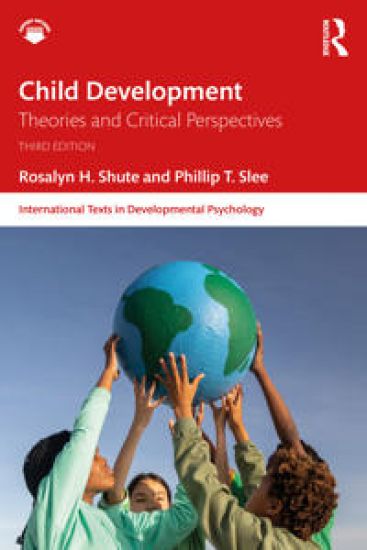
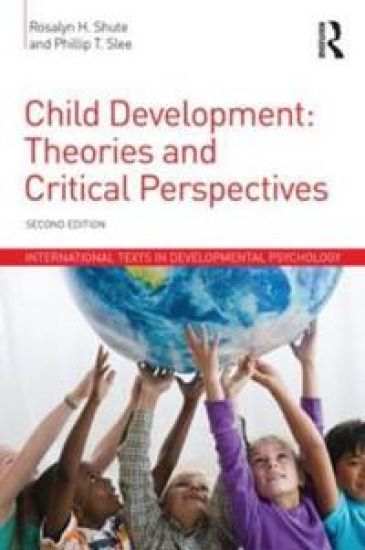
Child Development: Theories and Critical Perspectives provides a perceptive and engaging overview of theories in child and adolescent psychology, uniquely combining traditional scientific perspectives with critical (postmodern) approaches. This new edition has been extensively revised to incorporate recent advances in the field, featuring a new chapter, 'Theorizing about children’s digital worlds', that explores contemporary issues including social media, artificial intelligence, internet addiction and the banning of mobile phones in schools. The authors skilfully place developmental theories within philosophical and cultural contexts, tracing historical developments across different schools of thought while exploring their interconnections and practical implications. Early chapters cover mainstream theorists such as Piaget, Skinner, Freud and Vygotsky. Other influential theorists include Maccoby and Thelen, and contemporary thinkers such as Overton and Stetsenko. Significant figures less well-known today, like Dewey and Rubinstein, are also introduced. The text also addresses broader frameworks including lifespan perspectives, systems theory, evolutionary theory, epigenetics, feminist approaches, children's voices, and Indigenous theories. Current controversies such as ‘decolonizing’ developmental psychology and the role of universities in knowledge production are also discussed. Written with students in mind, the book includes valuable pedagogical features such as recommended readings, discussion questions, activities and relevant websites. Essential reading for postgraduate students in developmental psychology, education, social work and social policy, its lucid style makes complex theoretical concepts accessible to readers at all levels, including those with limited background in psychology.
Child Development: Theories and Critical Perspectives provides a perceptive and engaging overview of theories in child and adolescent psychology, uniquely combining traditional scientific perspectives with critical (postmodern) approaches. This new edition has been extensively revised to incorporate recent advances in the field, featuring a new chapter, 'Theorizing about children’s digital worlds', that explores contemporary issues including social media, artificial intelligence, internet addiction and the banning of mobile phones in schools. The authors skilfully place developmental theories within philosophical and cultural contexts, tracing historical developments across different schools of thought while exploring their interconnections and practical implications. Early chapters cover mainstream theorists such as Piaget, Skinner, Freud and Vygotsky. Other influential theorists include Maccoby and Thelen, and contemporary thinkers such as Overton and Stetsenko. Significant figures less well-known today, like Dewey and Rubinstein, are also introduced. The text also addresses broader frameworks including lifespan perspectives, systems theory, evolutionary theory, epigenetics, feminist approaches, children's voices, and Indigenous theories. Current controversies such as ‘decolonizing’ developmental psychology and the role of universities in knowledge production are also discussed. Written with students in mind, the book includes valuable pedagogical features such as recommended readings, discussion questions, activities and relevant websites. Essential reading for postgraduate students in developmental psychology, education, social work and social policy, its lucid style makes complex theoretical concepts accessible to readers at all levels, including those with limited background in psychology.
Child Development: Theories and Critical Perspectives provides an engaging and perceptive overview of both well-established and recent theories in child and adolescent psychology. This unique summary of traditional scientific perspectives alongside critical post-modern thinking will provide readers with a sense of the historical development of different schools of thought. The authors also place theories of child development in philosophical and cultural contexts, explore links between them, and consider the implications of theory for practice in the light of the latest thinking and developments in implementation and translational science.Early chapters cover mainstream theories such as those of Piaget, Skinner, Freud, Maccoby and Vygotsky, whilst later chapters present interesting lesser-known theorists such as Sergei Rubinstein, and more recent influential theorists such as Esther Thelen. The book also addresses lifespan perspectives and systems theory, and describes the latest thinking in areas ranging from evolutionary theory and epigenetics, to feminism, the voice of the child and Indigenous theories.The new edition of Child Development has been extensively revised to include considerable recent advances in the field. As with the previous edition, the book has been written with the student in mind, and includes a number of useful pedagogical features including further reading, discussion questions, activities, and websites of interest.Child Development: Theories and Critical Perspectives will be essential reading for students on advanced courses in developmental psychology, education, social work and social policy, and the lucid style will also make it accessible to readers with little or no background in psychology.
Child Development: Theories and Critical Perspectives provides an engaging and perceptive overview of both well-established and recent theories in child and adolescent psychology. This unique summary of traditional scientific perspectives alongside critical post-modern thinking will provide readers with a sense of the historical development of different schools of thought. The authors also place theories of child development in philosophical and cultural contexts, explore links between them, and consider the implications of theory for practice in the light of the latest thinking and developments in implementation and translational science.Early chapters cover mainstream theories such as those of Piaget, Skinner, Freud, Maccoby and Vygotsky, whilst later chapters present interesting lesser-known theorists such as Sergei Rubinstein, and more recent influential theorists such as Esther Thelen. The book also addresses lifespan perspectives and systems theory, and describes the latest thinking in areas ranging from evolutionary theory and epigenetics, to feminism, the voice of the child and Indigenous theories.The new edition of Child Development has been extensively revised to include considerable recent advances in the field. As with the previous edition, the book has been written with the student in mind, and includes a number of useful pedagogical features including further reading, discussion questions, activities, and websites of interest.Child Development: Theories and Critical Perspectives will be essential reading for students on advanced courses in developmental psychology, education, social work and social policy, and the lucid style will also make it accessible to readers with little or no background in psychology.
This book addresses, and seeks to harmonise, different paradigms for understanding school bullying. It sets out to examine two paradigms for conceptualising bullying, and the worldviews that underpin them. It uses a complex systems perspective to bring the two paradigms together in a holistic fashion. By doing so, it creates an integrated framework for conceptualising the many individual, relational and societal factors that are in dynamic interaction and play a part in promoting or reducing school bullying. This book draws upon a number of disciplines by way of background, including evolutionary, child development and social psychological theories of group behaviour and identity. It proposes that the human need for belonging is central to understanding bullying, and situates the topic within an understanding of gender and children’s human rights, bringing philosophical and moral perspectives to bear. It discusses practical ways forward, presents a systemic approach to bullying and application of complex adaptive systems methods to bullying research and evaluation. It serves as an introduction to such methods and suggests further creative ideas for policy, intervention practice, and teacher education about bullying.
This book addresses, and seeks to harmonise, different paradigms for understanding school bullying. It sets out to examine two paradigms for conceptualising bullying, and the worldviews that underpin them. It uses a complex systems perspective to bring the two paradigms together in a holistic fashion. By doing so, it creates an integrated framework for conceptualising the many individual, relational and societal factors that are in dynamic interaction and play a part in promoting or reducing school bullying. This book draws upon a number of disciplines by way of background, including evolutionary, child development and social psychological theories of group behaviour and identity. It proposes that the human need for belonging is central to understanding bullying, and situates the topic within an understanding of gender and children’s human rights, bringing philosophical and moral perspectives to bear. It discusses practical ways forward, presents a systemic approach to bullying and application of complex adaptive systems methods to bullying research and evaluation. It serves as an introduction to such methods and suggests further creative ideas for policy, intervention practice, and teacher education about bullying.