Kirjojen hintavertailu. Mukana 12 420 295 kirjaa ja 12 kauppaa.

Kirjahaku

Etsi kirjoja tekijän nimen, kirjan nimen tai ISBN:n perusteella.

4 kirjaa tekijältä Phillipa Kafka

(Un)Doing the Missionary Position

(Un)Doing the Missionary Position

Phillipa Kafka

Praeger Publishers Inc
1997
sidottu
While the writing of other ethnic women has already been receiving considerable attention, the writing of Asian American women has not. (Un)Doing is the first feminist theoretical work to look at writing by such contemporary Asian American writers as Amy Tan, Fae Myenne Ng, R. A. Sasaki, Gish Jen, and Cynthia Kadohata. Viewing them as feminist and postfeminist writers, Kafka argues that gender asymmetry in all its varied forms and guises is the major issue that they confront. Satirizing this world-wide oppression as the missionary position, Kafka urges ethnic and women of color feminist critics to focus more on commonalities rather than view differences as impenetrable barriers.

Saddling La Gringa

Saddling La Gringa

Phillipa Kafka

Praeger Publishers Inc
2000
sidottu
Because of their ethnic identity, Latinas sometimes face discrimination in the United States. Latinas are additionally oppressed because of their gender—because they are women, they hold a subordinate position in patriarchal Latino culture. The oppression of Latinas is maintained through various cultural mechanisms, which sustain power relations based on gender. This book gives special attention to the role of female cultural gatekeepers in novels by contemporary Latina writers. These gatekeepers enforce and perpetuate patriarchal cultural constraints onto future generations of Latinas. They construct and police female identity, including their own, through the use of idiomatic expressions, epithets, jokes, morality tales, and myths. The volume begins by examining Judith Ortiz Cofer's Silent Dancing, a work that clearly illustrates the role of gatekeepers in perpetuating gendered power relations. It then turns to the writings of Christina García, Julia Alvarez, Rosario Ferre, and Magali Garcia Ramis. Through their highly critical yet loving characterizations of female gatekeepers, these Latina writers suggest a different way of life for Latinas, a feminist way.
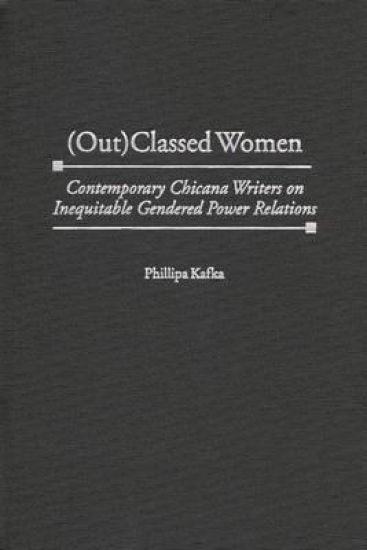
(Out)Classed Women

(Out)Classed Women

Phillipa Kafka

Praeger Publishers Inc
2000
sidottu
Like so many other ethnic groups, Chicanos and Chicanas have suffered from political, social, and economic oppression in the United States. In addition to the problems they endure as a consequence of their ethnicity, Chicanas are further subordinated because of their gender. As women, they are treated inequitably by a culture in which authority is invested primarily in men, to the point that they are relegated to a separate social class. The experiences of Chicanas are presented in the works of contemporary Chicana writers who explore the inequitable power relations that adversely affect these women because of their gender. This book analyzes the representation of these outclassed Chicanas in the works of contemporary Chicana authors.The first part of the volume treats the major concerns and themes of Chicana writers in terms of the problems caused by inequitable gendered power relations. Some of the writers discussed include Sandra Cisneros, Roberta Fernández, Kathleen Alcala, Gloria Anzaldúa, and Ana Castillo. The second part looks at some of the solutions proposed by Chicana writers in response to inequitable gender roles. The final portion of the volume explores the relationship between Chicanas and other women writers and critics of color, Jewish feminists, and the mainstream feminist movement.
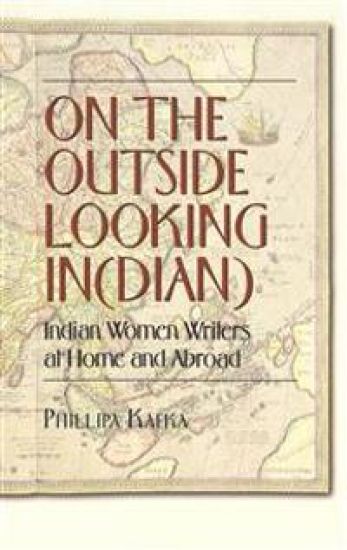
On the Outside Looking In(dian)

On the Outside Looking In(dian)

Phillipa Kafka

Peter Lang Publishing Inc
2003
nidottu
"On the Outside Looking In(dian)" analyzes works over the past century translated into or written in English by feminist Indian women writers such as Krupabai Satthianadhan, Rokeya Sakhewat Hossein, Maitreyi Devi, Kamala Das, Anita Desai, Bharati Mukherjee, and others. These writers condemn patriarchal customs and laws for depriving Indian women - of all castes and classes, as well as women of other cultures - of their basic human rights by sanctioning child marriage, "sati," purdah, and the wearing of the "burqa," while prohibiting widow remarriage, the expression of sexuality, and the pursuit of an education to promote self-sufficiency, and equal economic, political, and social status with men.