Kirjojen hintavertailu. Mukana 11 342 296 kirjaa ja 12 kauppaa.

Kirjahaku

Etsi kirjoja tekijän nimen, kirjan nimen tai ISBN:n perusteella.

5 kirjaa tekijältä Phyllis Birnbaum

Modern Girls, Shining Stars, the Skies of Tokyo

Modern Girls, Shining Stars, the Skies of Tokyo

Phyllis Birnbaum

Columbia University Press
1998
sidottu
The stunning biographical portraits in Modern Girls, Shining Stars, the Skies of Tokyo, some adapted from essays that first appeared in The New Yorker, explore the lives of five women who did their best to stand up and cause more trouble than was considered proper in Japanese society. Their lives stretch across a century and a half of explosive cultural and political transformations in Japan. These five artists-two actresses, two writers, and a painter-were noted for their talents, their beauty, and their love affairs rather than for any association with politics. But through the fearlessness of their art and their private lives, they influenced the attitudes of their times and challenged the status quo. Phyllis Birnbaum presents her subjects from various perspectives, allowing them to shine forth in all of their contradictory brilliance: generous and petulant, daring and timid, prudent and foolish. There is Matsui Sumako, the actress who introduced Ibsen's Nora and Wilde's Salome to Japanese audiences but is best remembered for her ambition, obstreperous temperament and turbulent love life. We also meet Takamura Chieko, a promising but ultimately disappointed modernist painter whose descent into mental illness was immortalized in poetry by a husband who may well have been the source of her troubles. In a startling act of rebellion, the sensitive, aristocratic poet Yanagiwara Byakuren left her crude and powerful husband, eloped with her revolutionary lover, and published her request for a divorce in the newspapers. Uno Chiyo was a popular novelist who preferred to be remembered for the romantic wars she fought. Willful, shrewd, and ambitious, Uno struggled for sexual liberation and literary merit. Birnbaum concludes by exploring the life and career of Takamine Hideko, a Japanese film star who portrayed wholesome working-class heroines in hundreds of films, working with such directors as Naruse, Kinoshita, Ozu, and Kurosawa. Angry about a childhood spent working to provide for greedy relatives, Takamine nevertheless made peace with her troubled past and was rewarded for years of hard work with a brilliant career. Drawing on fictional accounts, interviews, memoirs, newspaper reports, and the creative works of her subjects, Birnbaum has created vivid, seamless narrative portraits of these five remarkable women.
Modern Girls, Shining Stars, the Skies of Tokyo

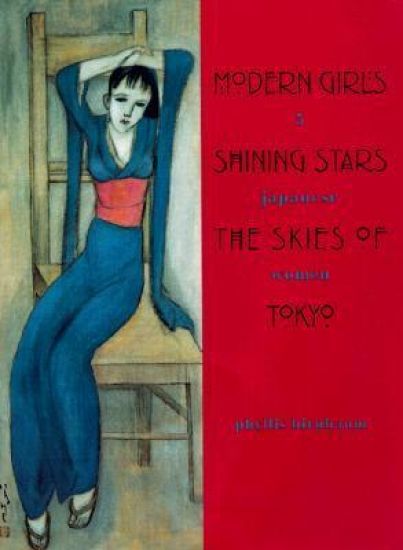
Modern Girls, Shining Stars, the Skies of Tokyo

Phyllis Birnbaum

Columbia University Press
2000
pokkari
The stunning biographical portraits in Modern Girls, Shining Stars, the Skies of Tokyo, some adapted from essays that first appeared in The New Yorker, explore the lives of five women who did their best to stand up and cause more trouble than was considered proper in Japanese society. Their lives stretch across a century and a half of explosive cultural and political transformations in Japan. These five artists-two actresses, two writers, and a painter-were noted for their talents, their beauty, and their love affairs rather than for any association with politics. But through the fearlessness of their art and their private lives, they influenced the attitudes of their times and challenged the status quo. Phyllis Birnbaum presents her subjects from various perspectives, allowing them to shine forth in all of their contradictory brilliance: generous and petulant, daring and timid, prudent and foolish. There is Matsui Sumako, the actress who introduced Ibsen's Nora and Wilde's Salome to Japanese audiences but is best remembered for her ambition, obstreperous temperament and turbulent love life. We also meet Takamura Chieko, a promising but ultimately disappointed modernist painter whose descent into mental illness was immortalized in poetry by a husband who may well have been the source of her troubles. In a startling act of rebellion, the sensitive, aristocratic poet Yanagiwara Byakuren left her crude and powerful husband, eloped with her revolutionary lover, and published her request for a divorce in the newspapers. Uno Chiyo was a popular novelist who preferred to be remembered for the romantic wars she fought. Willful, shrewd, and ambitious, Uno struggled for sexual liberation and literary merit. Birnbaum concludes by exploring the life and career of Takamine Hideko, a Japanese film star who portrayed wholesome working-class heroines in hundreds of films, working with such directors as Naruse, Kinoshita, Ozu, and Kurosawa. Angry about a childhood spent working to provide for greedy relatives, Takamine nevertheless made peace with her troubled past and was rewarded for years of hard work with a brilliant career. Drawing on fictional accounts, interviews, memoirs, newspaper reports, and the creative works of her subjects, Birnbaum has created vivid, seamless narrative portraits of these five remarkable women.
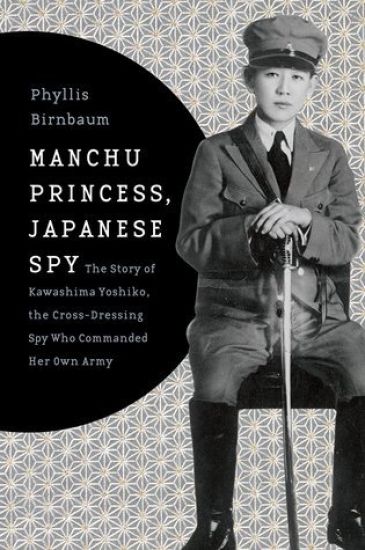
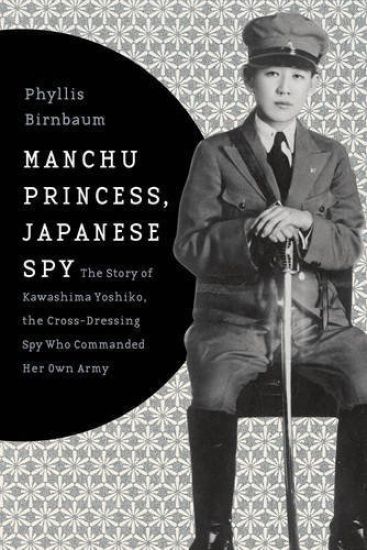
Manchu Princess, Japanese Spy: The Story of Kawashima Yoshiko, the Cross-Dressing Spy Who Commanded Her Own Army
Aisin Gioro Xianyu (1907-1948) was the fourteenth daughter of a Manchu prince and a legendary figure in China's bloody struggle with Japan. After the fall of the Manchu dynasty in 1912, Xianyu's father gave his daughter to a Japanese friend who was sympathetic to his efforts to reclaim power. This man raised Xianyu, now known as Kawashima Yoshiko, to restore the Manchus to their former glory. Her fearsome dedication to this cause ultimately got her killed. Yoshiko had a fiery personality and loved the limelight. She shocked Japanese society by dressing in men's clothes and rose to prominence as Commander Jin, touted in Japan's media as a new Joan of Arc. Boasting a short, handsome haircut and a genuine military uniform, Commander Jin was credited with many daring exploits, among them riding horseback as leader of her own army during the Japanese occupation of China. While trying to promote the Manchus, Yoshiko supported the puppet Manchu state established by the Japanese in 1932--one reason she was executed for treason after Japan's 1945 defeat. The truth of Yoshiko's life is still a source of contention between China and Japan: some believe she was exploited by powerful men, others claim she relished her role as political provocateur. China holds her responsible for unspeakable crimes, while Japan has forgiven her transgressions. This biography presents the richest and most accurate portrait to date of the controversial princess spy, recognizing her truly novel role in conflicts that transformed East Asia.
Manchu Princess, Japanese Spy

Manchu Princess, Japanese Spy

Phyllis Birnbaum

Columbia University Press
2017
nidottu
Aisin Gioro Xianyu (1907-1948) was the fourteenth daughter of a Manchu prince and a legendary figure in China's bloody struggle with Japan. After the fall of the Manchu dynasty in 1912, Xianyu's father gave his daughter to a Japanese friend who was sympathetic to his efforts to reclaim power. This man raised Xianyu, now known as Kawashima Yoshiko, to restore the Manchus to their former glory. Her fearsome dedication to this cause ultimately got her killed. Yoshiko had a fiery personality and loved the limelight. She shocked Japanese society by dressing in men's clothes and rose to prominence as Commander Jin, touted in Japan's media as a new Joan of Arc. Boasting a short, handsome haircut and a genuine military uniform, Commander Jin was credited with many daring exploits, among them riding horseback as leader of her own army during the Japanese occupation of China. While trying to promote the Manchus, Yoshiko supported the puppet Manchu state established by the Japanese in 1932-one reason she was executed for treason after Japan's 1945 defeat.The truth of Yoshiko's life is still a source of contention between China and Japan: some believe she was exploited by powerful men, others claim she relished her role as political provocateur. China holds her responsible for unspeakable crimes, while Japan has forgiven her transgressions. This biography presents the richest and most accurate portrait to date of the controversial princess spy, recognizing her truly novel role in conflicts that transformed East Asia.
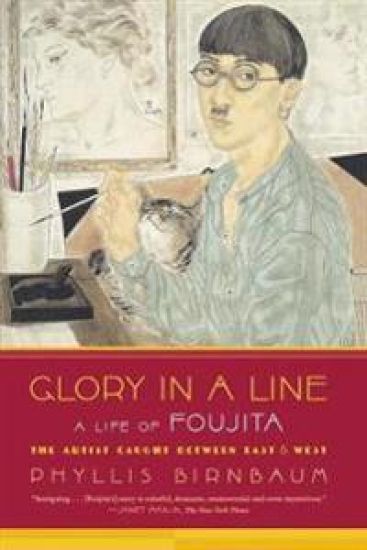
Glory in a Line

Glory in a Line

Phyllis Birnbaum

North Point Press
2007
pokkari
The first biography in English of the Japanese artist who was a central figure in the dazzling artistic milieu of 1920s ParisWhen we think of expatriates in Paris during the early decades of the twentieth century, certain names come to mind: Hemingway, Picasso, Modigliani--and Foujita, the Japanese artist whose distinctive works, bringing elements of Japanese art to Western oil painting, made him a major cultural figure in 1920s Montparnasse. Foujita was the only Japanese artist to be considered part of the "School of Paris," which also counted among its members such prominent artists as Picasso and Modigliani. Noteworthy, too, was Foujita's personal style, flamboyant even for those flamboyant times. He was best known for his drawings of female nudes and cats, and for his special white color upon which he could draw a masterful line--one that seemed to outline a woman's whole body in a single unbroken stroke. With the advent of the Second World War, Foujita returned to Japan, where he allied himself with the ruling Japanese mili-tarists and painted canvases in support of the war effort. After Japan's defeat, he was scorned for his devotion to the military cause and returned to France, where he remained until his death in 1968. Acclaimed writer and translator Phyllis Birnbaum not only explores Foujita's fascinating, tumultuous life but also assesses the appeal of his paintings, which, in their mixture of Eastern and Western traditions, are memorable for their vibrancy of form and purity of line.