Kirjojen hintavertailu. Mukana 11 717 486 kirjaa ja 12 kauppaa.

Kirjahaku

Etsi kirjoja tekijän nimen, kirjan nimen tai ISBN:n perusteella.

3 kirjaa tekijältä Phyllis Hostmeyer

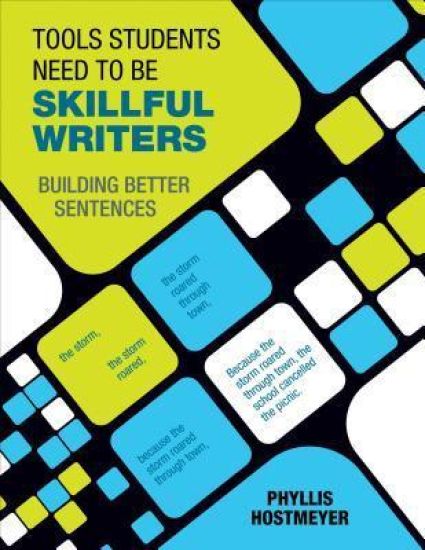
Tools Students Need to Be Skillful Writers

Tools Students Need to Be Skillful Writers

Phyllis Hostmeyer

SAGE Publications Inc
2012
nidottu
Develop fluent writers without the drudgery of diagramming sentences! Here you'll find a variety of sentence patterns, plus activities and sample sentences to build student mastery.Imagine leaving behind the drudgery of diagramming sentences. Imagine, instead, joyful writers who are capable of revising their work and writing effectively. By taking writing down to its basic building block-a solid sentence-and advancing from there, students will develop confidence, enjoy creating sentences, and ultimately empower each other as writers. Lessons for Grades 3-12 include:A variety of sentence patterns presented in a logical sequenceAn explanation of each pattern's structure and conventionsReinforcement activities and sample sentences for each patternActivities to develop the necessary instructional vocabularyAs students become engaged in the process, they will work toward:Meeting the Common Core State Standards for Language ArtsUnderstanding and using basic sentence structures Recognizing what makes a sentence effective Learning to put sentences together to write effective paragraphsThis indispensable handbook serves as a blueprint for instruction and unit development by emphasizing the end goal: preparing students to be effective writers. Along the way, all students, including English language learners, will gain the fluency and automaticity needed for effective daily writing and for success on high-stakes tests.
Small Group Dialogue Study Guide: 12 Old Testament Stories

Small Group Dialogue Study Guide: 12 Old Testament Stories

Phyllis Hostmeyer

Independently Published
2018
nidottu
You are about to embark on an exciting new Bible Study. Every week you will participate in a different activity designed to encourage dialogue; designed to encourage everyone to contribute; designed to help you learn Bible stories. Here are some tips to help you get the most from this study. Be an active participant; your ideas help others grow. Each week someone will tell the Bible story before the dialogue. Telling a Bible story might be new to you, but the tellings breathe new life into the stories. No need to memorize the story; simply tell the story as if you are having a conversation with friends. Spend some time before class preparing for each lesson. Step-by-step instructions on how to prepare for the next lesson have been included in the Closing section of the Study Guide. Before coming to class, listen to the next story and watch the story insights at btstories.com. The related Bible text has also been cited so that you can spend time in God's word prior to class. Questions and Considerations have also been provided.Bring your Bible along to each class. A version of each story has been included in your Study Guide, but having your Bible open during the small group dialogue will help you to review God's words as you dig deeper and come to new insights and understandings. At the close of each lesson you will have an opportunity to complete an Overview Activity which can be found at the back of the Study Guide. Each week you will write a brief summary or create the second verse of a simple poem about the story. Completing one of these activities weekly will give you an overview of the Old Testament at the end of the study. Each lesson has a Share the Word section which helps you to disciple others. During the week, find three opportunities to tell the story that you have studied. Perhaps you might share with family, someone at work, a neighbor, or even a stranger. People love to hear stories. Telling the story several times will help you to remember it and help you to build relationships with others. You will also find simple activities related to the story that you can do with family or friends which will help them to learn and love the stories also. Enjoy this study. Listen, share, learn, set goals, and be involved as you build relationships and learn God's word through the stories of the Bible.
Small Group Dialogue Instructor's Manual: 12 Old Testament Stories
One goal of this Bible Study is to spur dialogue that will build relationships. Dialogue is collaborative and cooperative encouraging multiple sides to work toward a shared understanding. People participate in order to gain understanding and find the meaning of Scripture. This enlarges and possibly changes a participant's point of view.When people participate in the activities of the class, they become more alert. This helps them share their best thinking while the thoughts of others enhance their views of the passage. Spiritual dialogue enables people to tackle tough issues. Everyone becomes open to reaching deeper insights than they originally understood. It gives everyone a realization that the more we learn; the more we still need to learn. Together they search for basic agreement as to the will of God. It is always fun to see fellow believers come to appreciate what they learn from one another.An equally important goal of this study is to pull truths from Scripture. Participants will work in teams to search the Word of God and determine key lessons and applications for each story. Each lesson seeks to move beyond providing knowledge of the people and places in the Bible. The lessons seek to plant the Word of God in the heart.Finally, participants will be encouraged to learn and share the stories, an excellent method of discipleship. Because our brains are wired for stories, it is easier to remember information presented in a narrative structure. We are motivated and moved by stories.