Kirjojen hintavertailu. Mukana 11 244 527 kirjaa ja 12 kauppaa.

Kirjahaku

Etsi kirjoja tekijän nimen, kirjan nimen tai ISBN:n perusteella.

7 kirjaa tekijältä Pierre Birnbaum

The Anti-Semitic Moment

The Anti-Semitic Moment

Pierre Birnbaum

University of Chicago Press
2011
nidottu
In 1898, the Dreyfus Affair plunged French society into a yearlong frenzy. In Paris and provincial villages throughout the country, angry crowds paraded through the streets, attacking Jews and destroying Jewish-owned businesses. Anger about the imagined power of Jewish capital, as well as fears of treason and racial degeneration, made anti-Semitism a convenient banner behind which social and political factions could fall in line. The anti-Semitic feelings that had been simmering in France for decades came boiling to the surface. Here Pierre Birnbaum guides readers on a tour of France during this tumultuous crisis. He shows that in the midst of prolonged violence, Jewish citizens bravely and effectively defended themselves and were aided by a police force determined to maintain order. In "The Anti-Semitic Moment" Birnbaum paints a vivid portrait of French Jewish culture at the time and explains why the French state remained strong in this time of widespread unrest. .
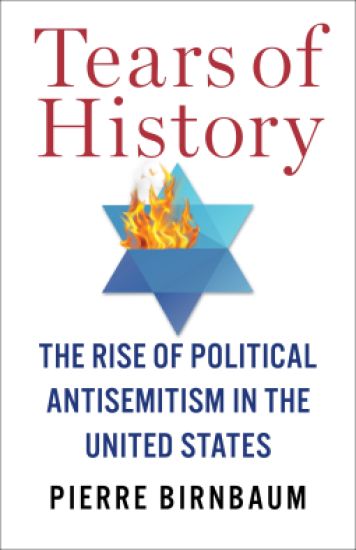
Tears of History

Tears of History

Pierre Birnbaum

Columbia University Press
2023
sidottu
For many Jews, for more than a century, the United States has seemed to be a safe haven. There has been antisemitic prejudice, but nothing on the scale of the discrimination, persecution, pogroms, and genocide witnessed in Europe. White American ethnic violence has assailed many targets, but Jews have rarely been among them. Observing what he took to be an American exception, the influential historian Salo Baron challenged the “lachrymose conception” of Jewish history as an unending flow of oppressions, and many have followed him in seeing American Jews as sheltered from violence. But in recent years a spate of antisemitic attacks has cast doubt on this rosy view.The eminent French scholar Pierre Birnbaum offers a timely reconsideration of the tear-stained pages of Jewish history and the persistence of antisemitism. He explores the promise of American tolerance as well as the darkest moments of American intolerance, such as the 1913 lynching of Leo Frank. Birnbaum engages deeply with Baron’s views about Jewish history and tracks the echoes of European antisemitic violence in American culture. He argues that a new and insidious form of antisemitic ideology has arisen, one that sees the state as an instrument of Jewish control—and threatens further bloodshed. Thoughtful and eloquent, Tears of History is an important reflection on the roots of antisemitic violence and hatred.
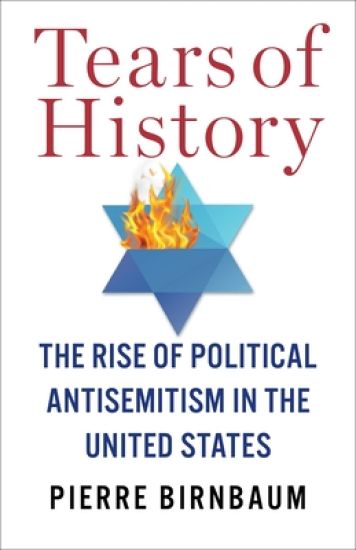
Tears of History

Tears of History

Pierre Birnbaum

Columbia University Press
2023
pokkari
For many Jews, for more than a century, the United States has seemed to be a safe haven. There has been antisemitic prejudice, but nothing on the scale of the discrimination, persecution, pogroms, and genocide witnessed in Europe. White American ethnic violence has assailed many targets, but Jews have rarely been among them. Observing what he took to be an American exception, the influential historian Salo Baron challenged the “lachrymose conception” of Jewish history as an unending flow of oppressions, and many have followed him in seeing American Jews as sheltered from violence. But in recent years a spate of antisemitic attacks has cast doubt on this rosy view.The eminent French scholar Pierre Birnbaum offers a timely reconsideration of the tear-stained pages of Jewish history and the persistence of antisemitism. He explores the promise of American tolerance as well as the darkest moments of American intolerance, such as the 1913 lynching of Leo Frank. Birnbaum engages deeply with Baron’s views about Jewish history and tracks the echoes of European antisemitic violence in American culture. He argues that a new and insidious form of antisemitic ideology has arisen, one that sees the state as an instrument of Jewish control—and threatens further bloodshed. Thoughtful and eloquent, Tears of History is an important reflection on the roots of antisemitic violence and hatred.
Léon Blum

Léon Blum

Pierre Birnbaum

Yale University Press
2015
sidottu
From the prizewinning Jewish Lives series, a new appreciation of the extraordinary life and legacy of Léon Blum, the first Jewish prime minister of France"A valuable introduction and guide to one of the most important, if overlooked, figures in the history of modern France and, indeed, modern Europe."—James McAuley and Patrice Higonnet, New Republic Léon Blum (1872–1950), France’s prime minister three times, socialist activist, and courageous opponent of the pro-Nazi Vichy regime, profoundly altered French society. It is Blum who is responsible for France’s forty-hour week and its paid holidays, which were among the many reforms he championed as a deputy and as prime minister, while acting as a proudly visible Jew, a Zionist, and eventually a survivor of Buchenwald. This biography fully integrates Blum’s Jewish commitments into the larger story of his life. Unlike previous biographies that downplay the significance of Blum’s Jewish heritage on his progressive politics, Pierre Birnbaum’s portrait depicts an extraordinary man whose political convictions were shaped and driven by his cultural background. The author powerfully demonstrates how Blum’s Jewishness was central to his outlook and mission, from his earliest entry into the political arena in reaction to the Dreyfus Affair, and how it sustained and motivated him throughout the remainder of his life. Birnbaum’s Léon Blum is a critical chapter in the larger history of Jews in France.About Jewish Lives: Jewish Lives is a prizewinning series of interpretative biography designed to explore the many facets of Jewish identity. Individual volumes illuminate the imprint of Jewish figures upon literature, religion, philosophy, politics, cultural and economic life, and the arts and sciences. Subjects are paired with authors to elicit lively, deeply informed books that explore the range and depth of the Jewish experience from antiquity to the present. In 2014, the Jewish Book Council named Jewish Lives the winner of its Jewish Book of the Year Award, the first series ever to receive this award.More praise for Jewish Lives: "Excellent" –New York Times "Exemplary" –Wall Street Journal "Distinguished" –New Yorker "Superb" –The Guardian
States and Collective Action

States and Collective Action

Pierre Birnbaum

Cambridge University Press
1988
sidottu
It has become something of an orthodoxy of contemporary sociology that modern democratic industrial societies are essentially alike, and that they are confronted by uniform challenges, whether industrial (strikes and demonstrations), social (the 'crisis of the welfare state'), or political. In this important collection of studies Professor Birnbaum asserts, however, that the very existence of differentiation, challenge such a hypothesis. Linking historical and sociological investigation, Birnbaum argues that it is only through divergent state-formation that regional and national state variations in, for example, industrial conflict, policing or ideological configuration can be explained. His analysis of the influence of each type of state upon the development of various collective action and mobilisation processes establishes the crucial importance of the state as a quasi-independent variable.
Geography of Hope

Geography of Hope

Pierre Birnbaum

Stanford University Press
2008
sidottu
Intellectuals of Jewish origin have long been well represented in the social sciences, although very few of the most prominent among them have devoted any of their work to the fact of being Jewish itself. At the same time, the founding role of Jewish theoreticians has been thought to derive from their dual position as both outsiders faced with the possibility of anti-Semitism and insiders assimilated into behaving according to the norms of a dominant "code of civility." In Geography of Hope, Pierre Birnbaum studies the trajectories of eight celebrated Jewish thinkers of the past two centuries (Marx, Durkheim, Simmel, Aron, Arendt, Berlin, Walzer, and Yerushalmi) who emerged from milieus acculturated to greatly varying degrees. The result is a renewed historiography of the Diaspora traversed by the tensions between adherence to Enlightenment universalism and a return to individual origins. Birnbaum's analysis of writings often neglected by previous scholarship, such as private correspondence, testifies to the multiplicity of possible responses to this challenge of double allegiance—from the more republican turn of the French to those Americans touched by the culture of identity. This vast and encompassing work is a stimulating, provocative, and hopeful contribution to the study of Judaism and democracy.
A Tale of Ritual Murder in the Age of Louis XIV

A Tale of Ritual Murder in the Age of Louis XIV

Pierre Birnbaum

Stanford University Press
2012
sidottu
In the late seventeenth century, France prided itself for its rationality and scientific achievements. Yet it was then that Raphaël Lévy, a French Jew, was convicted, tortured, and executed for an act he did not commit, a fiction deriving from medieval anti-Jewish myth: the ritual murder of a Christian boy to obtain blood for satanic rituals. When Lévy was accused of the ritual murder, it was the first accusation of blood libel for a century. Lévy's trial, however, became a forum for anti-Jewish accusations, and although the Holy Roman Emperor and a representative of King Louis XIV both tried to intervene, they were ignored by the parliament of Metz. Pierre Birnbaum explores the cultural, political, and personal elements that led to the accusation and shows that the importance of this story goes beyond local history: at a critical moment in the construction of the nation-state, France was unable to impose its conception of law and order on local officials. Birnbaum reveals the echoes of Lévy's trial in the Dreyfus Affair and suggests that, amid the contemporary retreat of the state and the accompanying explosion of prejudice and violence, it is time to remember the tragic fate of Raphaël Lévy.