Kirjojen hintavertailu. Mukana 11 342 296 kirjaa ja 12 kauppaa.

Kirjahaku

Etsi kirjoja tekijän nimen, kirjan nimen tai ISBN:n perusteella.

7 kirjaa tekijältä Pierre Cachia

Popular Narrative Ballads of Modern Egypt

Popular Narrative Ballads of Modern Egypt

Pierre Cachia

Clarendon Press
1989
sidottu
Arabic folk literature is a territory long neglected, and therefore still largely unexplored. This book represents the first full-length study in any language (including Arabic) of a genre hardly known in the West, and yet rich in surprises. The author, an academic Arabist who has resided in Egypt for a quarter of a century, has the intimate knowledge of colloquial Arabic needed to deal with material which not only contains linguistic elements unrecorded in any reference work, but also abounds in elaborate puns. In providing not so much an interpretation as an accurate and economical record of facts and direct observations, the book will be of use to more than just linguists and literary historians; folklorists will encounter here a living, many-faceted, and fast changing art, and social scientists will acquire insights into a society whose practices and priorities are seldom reflected in the literature of the élite. In fact, the greater part of the book consists of integral texts, meticulously transcribed and translated, ranging from erotic tales to accounts of contemporary deeds of violence. One of its significant aspects lies in showing how few of the modernistic values of the educated Egyptian élite have percolated to the masses, and how questionable it is to take the literature of this élite as the main indicator of cultural change.
A History of Islamic Spain

A History of Islamic Spain

Pierre Cachia

AldineTransaction
2007
nidottu
The period of Muslim occupation in Spain represents the only significant contact Islam and Europe was ever to have on European soil. In this important as well as fascinating study, Watt traces Islam's influence upon Spain and European civilization - from the collapse of the Visigoths in the eighth century to the fall of Granada in the fifteenth, and considers Spain's importance as a part of the Islamic empire. Particular attention is given to the golden period of economic and political stability achieved under the Umayyads. Without losing themselves in detail and without sacrificing complexity, the authors discuss the political, social, and economic continuity in Islamic Spain, or al-Andalus, in light of its cultural and intellectual effects upon the rest of Europe. Medieval Christianity, Watt points out, found models of scholarship in the Islamic philosophers and adapted the idea of holy war to its own purposes while the final reunification of Spain under the aegis of the Reconquista played a significant role in bringing Europe out of the Middle Ages. A survey essential to anyone seeking a more complete knowledge of European or Islamic history, the volume also includes sections on literature and philology by Pierre Cachia. This series of "Islamic surveys" is designed to give the educated reader something more than can be found in the usual popular books. Each work undertakes to survey a special part of the field, and to show the present stage of scholarship here. Where there is a clear picture this will be given; but where there are gaps, obscurities and differences of opinion, these will also be indicated. Full and annotated bibliographies will afford guidance to those who want to pursue their studies further. There will also be some account of the nature and extent of the source material. The series is addressed in the first place to the educated reader, with little or no previous knowledge of the subject; its character is such that it should be of value also to university students and others whose interest is of a more professional kind.
Arabic Literature

Arabic Literature

Pierre Cachia

Routledge
2010
nidottu
Assuming no previous knowledge of the subject, Arabic Literature - An Overview gives a rounded and balanced view of Arab literary creativity. 'High' literature is examined alongside popular folk literature, and the classical and modern periods, usually treated separately, are presented together. Cachia's observations are not subordinated to any pre-formed literary theory, but describe and illustrate the directions taken, in order to present an overall picture of the field of relevance to the student of literature as well as to Arabists working in related fields.
Arabic Literature

Arabic Literature

Pierre Cachia

RoutledgeCurzon
2002
sidottu
Assuming no previous knowledge of the subject, Arabic Literature - An Overview gives a rounded and balanced view of Arab literary creativity. 'High' literature is examined alongside popular folk literature, and the classical and modern periods, usually treated separately, are presented together. Cachia's observations are not subordinated to any pre-formed literary theory, but describe and illustrate the directions taken, in order to present an overall picture of the field of relevance to the student of literature as well as to Arabists working in related fields.
Exploring Arab Folk Literature

Exploring Arab Folk Literature

Pierre Cachia

Edinburgh University Press
2011
sidottu
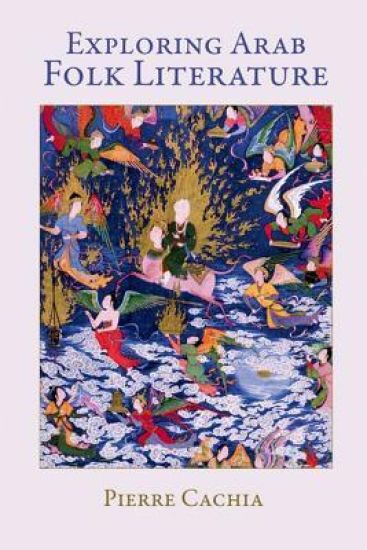
The character and range of Arab folk literature are investigated by Pierre Cachia in this collection of his essays in the field he has pioneered. These are arranged into three sections. The first traces the changing relationship between Arab folk and elite literatures, the gradual elaboration of certain genres, and the career of a folk poet. The author then devotes a substantial section to the consideration of single or related texts. Finally he comments on social and cultural implications and on differences of attitudes of folk and elite towards sensitive issues. This book represents an insightful contribution to our understanding of Arab folk literature and will be of relevance to anyone with an interest in Arab literary creativity. Key Features Collects in one volume Pierre Cachia's observations on material acquired after his seminal 'Popular Narrative Ballads of Modern Egypt' (1989) Includes two previously unpublished essays Examines the history, texts, and social and cultural implications of the tradition Presents a revised and updated transcription system based on pronunciation of the language - far more suited to oral forms of literature
A History of Islamic Spain

A History of Islamic Spain

Pierre Cachia

Routledge
2017
sidottu
The period of Muslim occupation in Spain represents the only significant contact Islam and Europe was ever to have on European soil. In this important as well as fascinating study, Watt traces Islam's influence upon Spain and European civilization - from the collapse of the Visigoths in the eighth century to the fall of Granada in the fifteenth, and considers Spain's importance as a part of the Islamic empire. Particular attention is given to the golden period of economic and political stability achieved under the Umayyads. Without losing themselves in detail and without sacrificing complexity, the authors discuss the political, social, and economic continuity in Islamic Spain, or al-Andalus, in light of its cultural and intellectual effects upon the rest of Europe. Medieval Christianity, Watt points out, found models of scholarship in the Islamic philosophers and adapted the idea of holy war to its own purposes while the final reunification of Spain under the aegis of the Reconquista played a significant role in bringing Europe out of the Middle Ages. A survey essential to anyone seeking a more complete knowledge of European or Islamic history, the volume also includes sections on literature and philology by Pierre Cachia. This series of "Islamic surveys" is designed to give the educated reader something more than can be found in the usual popular books. Each work undertakes to survey a special part of the field, and to show the present stage of scholarship here. Where there is a clear picture this will be given; but where there are gaps, obscurities and differences of opinion, these will also be indicated. Full and annotated bibliographies will afford guidance to those who want to pursue their studies further. There will also be some account of the nature and extent of the source material. The series is addressed in the first place to the educated reader, with little or no previous knowledge of the subject; its character is such that it should be of value also to university students and others whose interest is of a more professional kind.