Kirjojen hintavertailu. Mukana 11 244 527 kirjaa ja 12 kauppaa.

Kirjahaku

Etsi kirjoja tekijän nimen, kirjan nimen tai ISBN:n perusteella.

214 kirjaa tekijältä Plato

Plato's Theaetetus

Plato's Theaetetus

Plato

University of Chicago Press
1986
nidottu
Theaetetus, the Sophist, and the Statesman are a trilogy of Platonic dialogues that show Socrates formulating his conception of philosophy as he prepares the defense for his trial. Originally published together as The Being of the Beautiful, these translations can be read separately or as a trilogy. Each includes an introduction, extensive notes, and comprehensive commentary that examines the trilogy's motifs and relationships."Seth Benardete is one of the very few contemporary classicists who combine the highest philological competence with a subtlety and taste that approximate that of the ancients. At the same time, he as set himself the entirely modern hermeneutical task of uncovering what the ancients preferred to keep veiled, of making explicit what they indicated, and hence...of showing the naked ugliness of artificial beauty."—Stanley Rose, Graduate Faculty Philosophy JournalSeth Benardete (1930-2001) was professor of classics at New York University. He was the author or translator of many books, most recently The Argument of the Action, Plato's "Laws," and Plato's "Symposium," all published by the University of Chicago Press.
Plato's Sophist

Plato's Sophist

Plato

University of Chicago Press
1986
nidottu
Theaetetus, the Sophist, and the Statesman are a trilogy of Platonic dialogues that show Socrates formulating his conception of philosophy as he prepares the defense for his trial. Originally published together as The Being of the Beautiful, these translations can be read separately or as a trilogy. Each includes an introduction, extensive notes, and comprehensive commentary that examines the trilogy's motifs and relationships."Seth Benardete is one of the very few contemporary classicists who combine the highest philological competence with a subtlety and taste that approximate that of the ancients. At the same time, he as set himself the entirely modern hermeneutical task of uncovering what the ancients preferred to keep veiled, of making explicit what they indicated, and hence...of showing the naked ugliness of artificial beauty."—Stanley Rose, Graduate Faculty Philosophy JournalSeth Benardete (1930-2001) was professor of classics at New York University. He was the author or translator of many books, most recently The Argument of the Action, Plato's "Laws," and Plato's "Symposium," all published by the University of Chicago Press.
Plato's Statesman

Plato's Statesman

Plato

University of Chicago Press
1986
nidottu
Theaetetus, the Sophist, and the Statesman are a trilogy of Platonic dialogues that show Socrates formulating his conception of philosophy as he prepares the defense for his trial. Originally published together as The Being of the Beautiful, these translations can be read separately or as a trilogy. Each includes an introduction, extensive notes, and comprehensive commentary that examines the trilogy's motifs and relationships."Seth Benardete is one of the very few contemporary classicists who combine the highest philological competence with a subtlety and taste that approximate that of the ancients. At the same time, he as set himself the entirely modern hermeneutical task of uncovering what the ancients preferred to keep veiled, of making explicit what they indicated, and hence...of showing the naked ugliness of artificial beauty."—Stanley Rose, Graduate Faculty Philosophy JournalSeth Benardete (1930-2001) was professor of classics at New York University. He was the author or translator of many books, most recently The Argument of the Action, Plato's "Laws," and Plato's "Symposium," all published by the University of Chicago Press.
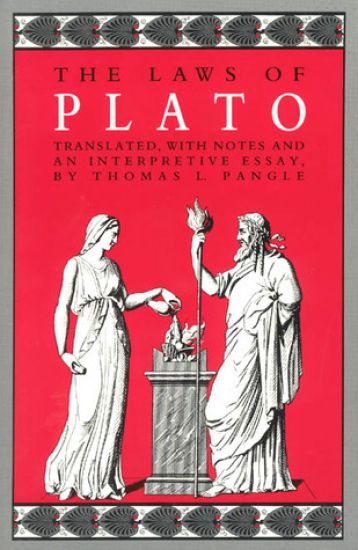
The Laws of Plato

The Laws of Plato

Plato

University of Chicago Press
1988
nidottu
The Laws, Plato's longest dialogue, has for centuries been recognized as the most comprehensive exposition of the practical consequences of his philosophy, a necessary corrective to the more visionary and utopian Republic. In this animated encounter between a foreign philosopher and a powerful statesman, not only do we see reflected, in Plato's own thought, eternal questions of the relation between political theory and practice, but we also witness the working out of a detailed plan for a new political order that embodies the results of Plato's mature reflection on the family, the status of women, property rights, criminal law, and the role of religion and the fine arts in a healthy republic."Because it succeeds in being both literal and comprehensive, it is by far superior to any translation available. By reproducing dramatic detail often omitted, such as oaths, hesitations, repetitions, and forms of address, Pangle allows the reader to follow the dialogue's interplay between argument and dramatic context. . . . Pangle's translation captures the excitement and the drama of Plato's text."—Mary P. Nichols, Ancient Philosophy"Pangle's achievement is remarkable. . . . The accompanying interpretive essay is an excellent distillation of a dialogue three times its size. The commentary is thoughtful, even profound; and it amply demonstrates the importance of reading Plato carefully and from a translation that is true to his language."—Patrick Coby, American Political Science Review
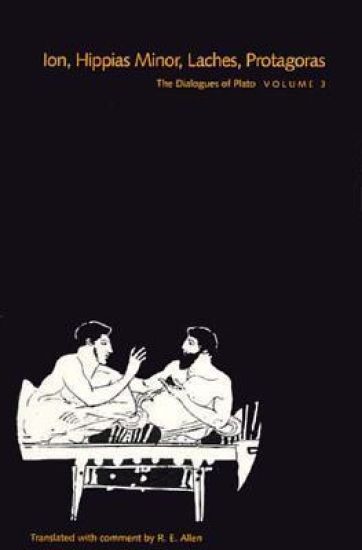
The Dialogues of Plato, Volume 3

The Dialogues of Plato, Volume 3

Plato

Yale University Press
1998
pokkari
R.E. Allen's superb new translations of four Socratic dialogues—Ion, Hippias Minor, Laches, and Protagoras—bring these classic texts to life for modern readers. Allen introduces and comments on the dialogues in an accessible way, inviting the reader to reexamine the issues continually raised in Plato's works.In his detailed commentary, Allen closely examines the major themes and central arguments of each dialogue, with particular emphasis on Protagoras. He clarifies each of Plato's arguments and its refutation; places the themes in historical perspective; ties each theme to interpretations of rival translations; and links the philosopher's thought to trends in late modern philosophy. Topics discussed include: whether virtue is an art, whether wisdom and courage are logically equivalent, whether virtue is knowledge, and whether to know the good is to do it. Allen connects his discussion of these issues to the Benthamite tradition of hedonism and utilitarianism and to the ethical theories of Mill, Sidgwick, Moore, and Freud.
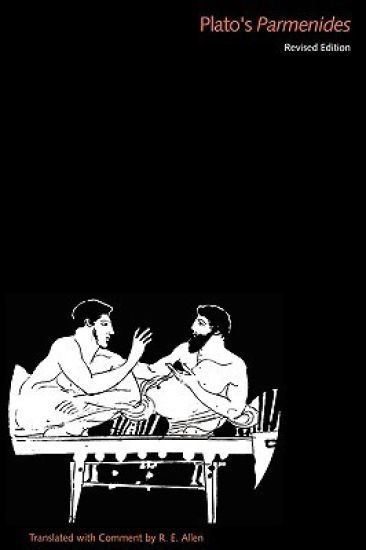
The Dialogues of Plato, Volume 4

The Dialogues of Plato, Volume 4

Plato

Yale University Press
1998
pokkari
Among Plato's later dialogues, the Parmenides is one of the most significant. Not only a document of profound philosophical importance in its own right, it also contributes to the understanding of Platonic dialogues that followed it, and it exhibits the foundations of the physics and ontology that Aristotle offered in his Physics and Metaphysics VII.In this book, R.E. Allen provides a superb translation of the Parmenides along with a structural analysis that procedes on the assumption that formal elements, logical and dramatic, are important to its interpretation and that the argument of the Parmenides is aporetic, a statement of metaphysical perplexities. Allen's original translation of and commentary on the Parmenides were published in 1983 to great acclaim and have now been revised by the author.
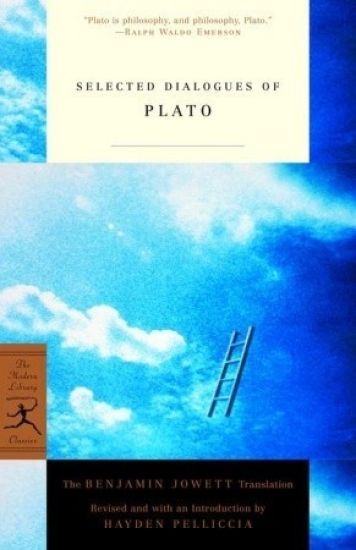
Selected Dialogues of Plato

Selected Dialogues of Plato

Plato

Modern Library Inc
2001
pokkari
Benjamin Jowett's translations of Plato have long been classics in their own right. In this volume, Professor Hayden Pelliccia has revised Jowett's renderings of five key dialogues, giving us a modern Plato faithful to both Jowett's best features and Plato's own masterly style.Gathered here are many of Plato's liveliest and richest texts. Ion takes up the question of poetry and introduces the Socratic method. Protagoras discusses poetic interpretation and shows why cross-examination is the best way to get at the truth. Phaedrus takes on the nature of rhetoric, psychology, and love, as does the famous Symposium. Finally, Apology gives us Socrates' art of persuasion put to the ultimate test--defending his own life.Pelliccia's new Introduction to this volume clarifies its contents and addresses the challenges of translating Plato freshly and accurately. In its combination of accessibility and depth, Selected Dialogues of Plato is the ideal introduction to one of the key thinkers of all time.
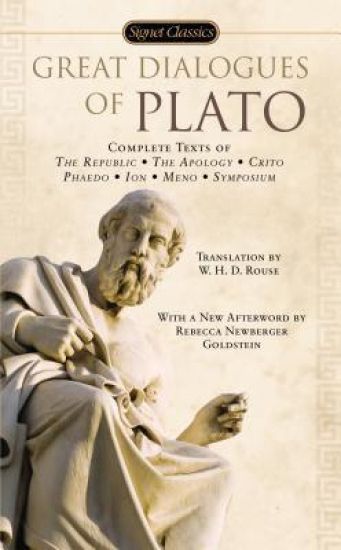
Great Dialogues Of Plato

Great Dialogues Of Plato

Plato

Signet Classics
2015
nidottu
-Plato is philosophy, and philosophy, Plato.---Emerson The Republic and other great dialogues by the immortal Greek philosopher Plato are masterpieces that form part of the most important single body of writing in the history of philosophy. Beauty, love, immortality, knowledge, and justice are discussed in these dialogues, which magnificently express the glowing spirit of Platonic philosophy. Translated by W. H. D. Rouse, one of the world's most outstanding classical scholars and translator of Homer's The Odyssey and The Iliad, this volume features the complete texts of seven of Plato's most revered works. -In Rouse's pages Socrates' strength of mind, his dedication to philosophical truth, are borne in on the modern reader with something of the power that impressed and disturbed the ancient Greeks.---Time
Plato: Clitophon

Plato: Clitophon

Plato

Cambridge University Press
2006
pokkari
The Clitophon, a dialogue generally ascribed to Plato, is significant for focusing on Socrates' role as an exhorter of other people to engage in philosophy. It was almost certainly intended to bear closely on Plato's Republic and is a fascinating specimen of the philosophical protreptic, an important genre very fashionable at the time. This 1999 volume is a critical edition of this dialogue, in which Professor Slings provides a text based on an examination of all relevant manuscripts and accompanies it with a translation. His extensive introduction studies philosophical exhortation in the classical era, and tries to account for Plato's dialogues in general as a special type of exhortation. The Clitophon is seen as a defence of the Platonic dialogue. The commentary elucidates the Greek and discusses many passages where the meaning is not entirely clear.
Plato: Phaedrus

Plato: Phaedrus

Plato

Cambridge University Press
1972
pokkari
The dialogue begins with a playful discussion of erotic passion, then extends the theme to consider the nature of inspiration, love and knowledge. The centerpiece is the myth of the charioteer - the famous and moving account of the vision, fall and incarnation of the soul. Professor Hackforth here translates the dialogue for the student and general reader. There is a running commentary on the course of the argument and the meaning of the key Greek terms, and a full intoduction to explain the philosophical background and the place of this work among Plato’s writings.
Plato's Philebus

Plato's Philebus

Plato

Cambridge University Press
1972
pokkari
This translation with introduction and commentary of Plato's Philebus was originally issued under the title Plato's Examination of Pleasure and first reprinted as Plato's Philebus. This dialogue, generally agreed to be one of Plato's latest and most sophisticated, analyses in detail the nature of pleasure – its meaning, its varieties and importance. Professor Hackforth here translates the dialogue for the student and general reader. There is a running commentary on the course of the argument and the meaning of key Greek terms and a full introduction to explain the philosophical background and the place of this work among Plato's writings.
Plato: The Apology of Socrates and Xenophon: The Apology of Socrates
In 399 BC Socrates was prosecuted, convicted, sentenced to death and executed. These events were the culmination of a long philosophical career, a career in which, without writing a word, he established himself as the figure whom all philosophers of the next few generations wished to follow. The Apologies (or Defence Speeches) by Plato and Xenophon are rival accounts of how, at his trial, Socrates defended himself and his philosophy. This edition brings together both Apologies within a single volume. The Commentary answers literary, linguistic and philosophical questions in a way that is suitable for readers of all levels, helping teachers and students engage more closely with the Greek texts. The Introduction examines Socrates himself, the literature generated by his trial, Athenian legal procedures, his guilt or innocence of the crimes for which he was executed, and the rivalry between Xenophon and Plato.
Plato's Meno

Plato's Meno

Plato

Cambridge University Press
2011
pokkari
This 1961 edition of Plato's Meno was originally edited by R. S. Bluck, Senior Lecturer in Greek at the University of Manchester. Its value lies in the incredibly extensive preliminary chapters provided by Bluck, designed to truly enhance the reader's engagement with this ancient text. In almost 150 pages of introductory chapters, Bluck reviews the argument of the Meno, its relation to wider philosophical and dialogues (written both before and after Plato), and summarises Plato's use of the hypothetical method in the Meno, the Phaedo and the Republic. He also provides a detailed synopsis of Plato's Meno before presenting the full Greek text, accompanied by a wide-ranging and incredibly accessible commentary. Finally, Bluck presents the reader with indices in both English and Greek, ensuring that this volume remains an endlessly rewarding reference and research work.
Plato: Symposium

Plato: Symposium

Plato

Cambridge University Press
1980
pokkari
Plato's Symposium is the most literary of all his works and one which all students of classics are likely to want to read whether or not they are studying Plato's philosophy. But the reader does need help in appreciating both the artistry and the arguments, and in comprehending the social and cultural background against which the 'praise of love' is delivered. Sir Kenneth Dover provides here a sympathetic and modern edition of the kind that is long overdue. It consists of an introduction, the Greek text accompanied by a very abbreviated critical apparatus, and a commentary on the text which is intended to elucidate the Greek, to make the philosophical argument intelligible, and to relate the content of what is said to the concepts and assumptions of contemporary morality and society. An edition for students of Greek in universities and the upper forms of schools.
Plato: Phaedo

Plato: Phaedo

Plato

Cambridge University Press
1993
pokkari
Plato’s Phaedo is deservedly one of the best known works of Greek literature, but also one of the most complex. Set in the prison where Socrates is awaiting execution, it portrays Plato’s model philosopher in action, spending his last hours in conversation with two other seasoned members of his circle about the fate of the human soul after death. Professor Rowe attempts to help the reader find a way through the intricate structure both of individual passages and arguments and of the dialogue as a whole, stressing its intelligibility as a unified work of art and giving equal attention to its literary and philosophical aspects. The notes also aim to provide the kind of help with Plato’s Greek which is needed by comparative beginners in the language, but the commentary is intended for any student, classical scholar, or philosopher with an interest in the close reading of Plato.
Plato: The Statesman

Plato: The Statesman

Plato

Cambridge University Press
1995
sidottu
The Statesman is Plato’s neglected political work, but it is crucial for an understanding of the development of his political thinking. In its presentation of the statesman’s expertise, The Statesman modifies, as well as defending in original ways, this central theme of the Republic. This new translation makes the dialogue accessible to students of political thought and the introduction outlines the philosophical and historical background necessary for a political theory readership.
Plato: The Statesman

Plato: The Statesman

Plato

Cambridge University Press
1995
pokkari
The Statesman is Plato’s neglected political work, but it is crucial for an understanding of the development of his political thinking. In its presentation of the statesman’s expertise, The Statesman modifies, as well as defending in original ways, this central theme of the Republic. This new translation makes the dialogue accessible to students of political thought and the introduction outlines the philosophical and historical background necessary for a political theory readership.
Plato: 'The Republic'

Plato: 'The Republic'

Plato

Cambridge University Press
2000
sidottu
This new translation of one of the great works of Western political thought is based on the assumption that when Plato chose the dialogue form for his writing, he intended these dialogues to sound like conversations - although conversations of a philosophical sort. In addition to a vivid, dignified and accurate rendition of Plato’s text, the student and general reader will find many aids to comprehension in this volume: an introduction that assesses the cultural background to the Republic, its place within political philosophy, and its general argument; succinct notes in the body of the text; an analytical summary of the work’s content; a full glossary of proper names; a chronology of important events; and a guide to further reading. The result is an accomplished and accessible edition of this seminal work, suitable for philosophers and classicists as well as historians of political thought at all levels.
Plato: 'The Republic'

Plato: 'The Republic'

Plato

Cambridge University Press
2000
pokkari
This new translation of one of the great works of Western political thought is based on the assumption that when Plato chose the dialogue form for his writing, he intended these dialogues to sound like conversations - although conversations of a philosophical sort. In addition to a vivid, dignified and accurate rendition of Plato’s text, the student and general reader will find many aids to comprehension in this volume: an introduction that assesses the cultural background to the Republic, its place within political philosophy, and its general argument; succinct notes in the body of the text; an analytical summary of the work’s content; a full glossary of proper names; a chronology of important events; and a guide to further reading. The result is an accomplished and accessible edition of this seminal work, suitable for philosophers and classicists as well as historians of political thought at all levels.
Plato: Protagoras

Plato: Protagoras

Plato

Cambridge University Press
2008
pokkari
The Protagoras is one of Plato's most entertaining dialogues. It represents Socrates at a gathering of the most celebrated and highest-earning intellectuals of the day, among them the sophist Protagoras. In flamboyant displays of both rhetoric and dialectic, Socrates and Protagoras try to out-argue one another. Their arguments range widely, from political theory to literary criticism, from education to the nature of cowardice; but in view throughout this literary and philosophical masterpiece are the questions of what part knowledge plays in a successful life, and how we may acquire the knowledge that makes for success. This edition contains the first commentary in English on the Greek text for almost a hundred years. The commentary provides the assistance with linguistic, literary and philosophical detail that will enable students and scholars to savour to the full the pleasures of the Protagoras.