Kirjojen hintavertailu. Mukana 11 244 527 kirjaa ja 12 kauppaa.

Kirjahaku

Etsi kirjoja tekijän nimen, kirjan nimen tai ISBN:n perusteella.

4 kirjaa tekijältä Pollack Howard

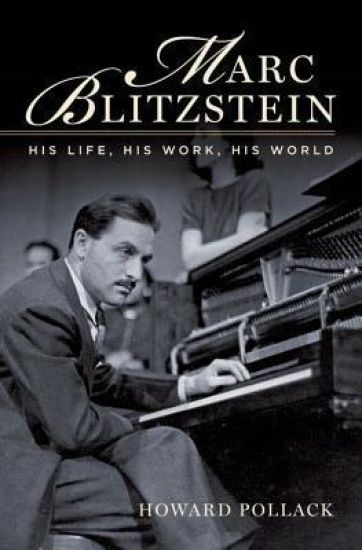
Marc Blitzstein

Marc Blitzstein

Pollack Howard

Oxford University Press Inc
2015
nidottu
A composer and lyricist of enormous innovation and influence, Marc Blitzstein remains one of the most versatile and fascinating figures in the history of American music, his creative output running the gamut from films scores and Broadway operas to art songs and chamber pieces. A prominent leftist and social maverick, Blitzstein constantly pushed the boundaries of convention in mid-century America in both his work and his life. Award-winning music historian Howard Pollack's new biography covers Blitzstein's life in full, from his childhood in Philadelphia to his violent death in Martinique at age 58. The author describes how this student of contemporary luminaries Nadia Boulanger and Arnold Schoenberg became swept up in the stormy political atmosphere of the 1920s and 1930s and throughout his career walked the fine line between his formal training and his populist principles. Indeed, Blitzstein developed a unique sound that drew on everything contemporary, from the high modernism of Stravinsky and Hindemith to jazz and Broadway show tunes. Pollack captures the astonishing breadth of Blitzstein's work—from provocative operas like The Cradle Will Rock, No for an Answer, and Regina, to the wartime Airborne Symphony composed during his years in service, to lesser known ballets, film scores, and stage works. A courageous artist, Blitzstein translated Bertolt Brecht and Kurt Weill's The Threepenny Opera during the heyday of McCarthyism and the red scare, and turned it into an off-Broadway sensation, its "Mack the Knife" becoming one of the era's biggest hits. Beautifully written, drawing on new interviews with friends and family of the composer, and making extensive use of new archival and secondary sources, Marc Blitzstein presents the most complete biography of this important American artist.
The Ballad of John Latouche

The Ballad of John Latouche

Pollack Howard

Oxford University Press Inc
2017
sidottu
Born into a poor Virginian family, John Treville Latouche (1914-56), in his short life, made a profound mark on America's musical theater as a lyricist, book writer, and librettist. The wit and skill of lyrics elicited comparisons with the likes of Ira Gershwin, Lorenz Hart, and Cole Porter, but he had too, noted Stephen Sondheim, "a large vision of what musical theater could be," and he proved especially venturesome in helping to develop a lyric theater that innovatively combined music, word, dance, and costume and set design. Many of his pieces, even if not commonly known today, remain high points in the history of American musical theater. "A great American genius" in the words of Duke Ellington, Latouche initially came to wide public attention in his early twenties with his cantata for soloist and chorus, Ballad for Americans (1939), with music by Earl Robinson-a work that swept the nation during the Second World War. Other milestones in his career included the all-black musical fable, Cabin in the Sky (1940), with Vernon Duke; an interracial updating of John Gay's classic, The Beggar's Opera, as Beggar's Holiday (1946), with Duke Ellington; two acclaimed Broadway operas with Jerome Moross: Ballet Ballads (1948) and The Golden Apple (1954); one of the most enduring operas in the American canon, The Ballad of Baby Doe (1956), with Douglas Moore; and the operetta Candide (1956), with Leonard Bernstein and Lillian Hellman. Extremely versatile, he also wrote cabaret songs, participated in documentary and avant-garde film, translated poetry, adapted plays, and much else. Meanwhile, as one of Manhattan's most celebrated raconteurs and hosts, he developed a wide range of friends in the arts, including, to name only a few, Paul and Jane Bowles (whom he introduced to each other), Yul Brynner, John Cage, Jack Kerouac, Frederick Kiesler, Carson McCullers, Frank O'Hara, Dawn Powell, Ned Rorem, Virgil Thomson, Gore Vidal, and Tennessee Williams-a dazzling constellation of diverse artists working in sundry fields, all attracted to Latouche's brilliance and joie de vivre, not to mention his support for their work. This book draws widely on archival collections both at home and abroad, including Latouche's diaries and the papers of Bernstein, Ellington, Moore, Moross, and many others, to tell for the first time, the story of this fascinating man and his work.
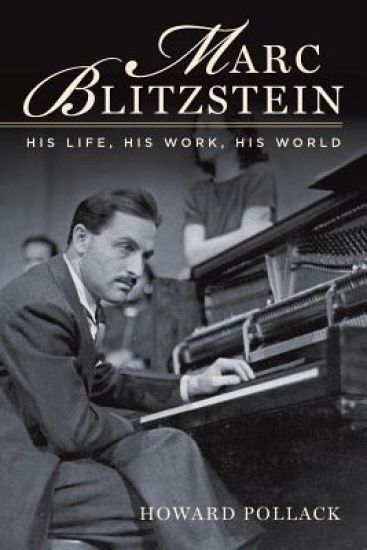
Marc Blitzstein

Marc Blitzstein

Pollack Howard

Oxford University Press Inc
2012
sidottu
A composer of enormous musical innovation and influence, Marc Blitzstein remains one of the most versatile and fascinating figures in the history of American music, his creative works running the gamut from Broadway musicals and film scores to concert and chamber pieces. As an open homosexual and a prominent leftist, Blitzstein constantly pushed the boundaries of acceptability in mid-century America in both his music and his life. Award-winning music historian Howard Pollack's new biography is the first to put Blitzstein's music on equal footing with his politics, theatrical innovation, and other aspects of the composer's life. Pollack covers Blitzstein's life in full, from his childhood in Philadelphia to his violent death in Martinique at age 58. The author describes how this student of contemporary luminaries Arnold Schoenberg and Nadia Boulanger became swept up in the stormy political atmosphere of the 1920s and 1930s and throughout his career walked the fine line between his formal training and his populist principles in his composition. Indeed, Blitzstein developed a unique sound that drew on everything contemporary, from the high modernism of Schoenberg to swing and jazz. Pollack captures the astonishing breadth of Blitzstein's musical language—?from politically scandalous Broadway musicals like The Cradle Will Rock and No for an Answer, to the patriotic Airborne Symphony, to lesser known early pieces, film scores, and chamber works. A fearless artist, Blitzstein translated Bertolt Brecht and Kurt Weill's The Threepenny Opera during the heyday of McCarthyism and the red scare, and, with Leonard Bernstein and Lotte Lenya, turned it into an off-Broadway sensation. Beautifully written, drawing on new interviews with friends and family of the composer, and making extensive use of new archival and secondary sources, Marc Blitzstein presents the most complete biography of this quintessentially American composer.
George Gershwin

George Gershwin

Pollack Howard

University of California Press
2007
sidottu
This comprehensive biography of George Gershwin (1898-1937) unravels the myths surrounding one of America's most celebrated composers and establishes the enduring value of his music. Gershwin created some of the most beloved music of the twentieth century and, along with Jerome Kern, Irving Berlin, and Cole Porter, helped make the golden age of Broadway golden. Howard Pollack draws from a wealth of sketches, manuscripts, letters, interviews, books, articles, recordings, films, and other materials - including a large cache of Gershwin scores discovered in a Warner Brothers warehouse in 1982 - to create an expansive chronicle of Gershwin's meteoric rise to fame. He also traces Gershwin's powerful presence that, even today, extends from Broadway, jazz clubs, and film scores to symphony halls and opera houses. Pollack's lively narrative describes Gershwin's family, childhood, and education; his early career as a pianist; his friendships and romantic life; his relation to various musical trends; his writings on music; his working methods; and his tragic death at the age of 38. Unlike Kern, Berlin, and Porter, who mostly worked within the confines of Broadway and Hollywood, Gershwin actively sought to cross the boundaries between high and low, and wrote works that crossed over into a realm where art music, jazz, and Broadway met and merged. The author surveys Gershwin's entire oeuvre, from his first surviving compositions to the melodies that his brother and principal collaborator, Ira Gershwin, lyricized after his death. Pollack concludes with an exploration of the performances and critical reception of Gershwin's music over the years, from his time to ours.